Iran, Turkey agree to build $1.6 billion trade rail link
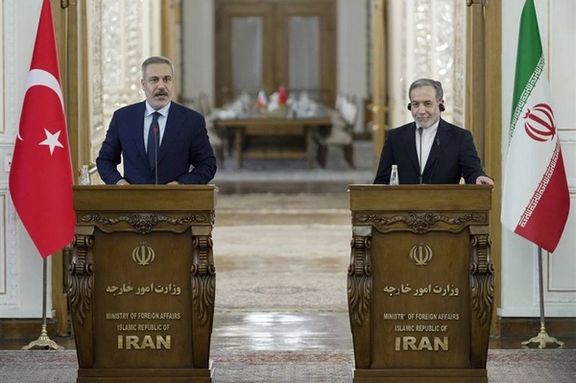
Iran and Turkey have agreed to start building a new joint rail line that will serve as a strategic trade corridor between Asia and Europe, Iranian foreign minister Abbas Araghchi said Sunday.
Iran and Turkey have agreed to start building a new joint rail line that will serve as a strategic trade corridor between Asia and Europe, Iranian foreign minister Abbas Araghchi said Sunday.
The Marand–Cheshmeh Soraya transit line, which will run toward Turkey’s Aralik border region, will span about 200 kilometres and cost roughly $1.6 billion.
Iranian authorities say construction is expected to take three to four years to complete.
Speaking in Tehran alongside his Turkish counterpart Hakan Fidan, Araghchi said the two sides had agreed in their meeting “to begin work, on a priority basis, to connect the two countries’ railway lines at the border.”
Earlier this month, Iran’s transport minister Farzaneh Sadegh said the project would transform the southern section of the historic Silk Road into an “all-rail corridor ensuring the continuity of the network between China and Europe”.
She said it would enable “fast and cheap transport of all types of cargo with minimal stops”.
The ancient Silk Road linked East Asia to the Middle East and Europe for centuries before declining with the rise of maritime trade routes.
China launched its Belt and Road Initiative in 2013, seeking to revive those connections through major maritime, road and rail projects. Despite close political relations with China, Iran has been largely left out of the initiative’s major investments.
Iran has sought to expand infrastructure and trade ties with neighbouring states as it works to revive its strained economy.


Fidan said sanctions on Iran should be lifted and that regional security, including developments in Gaza, Lebanon and Syria, required sustained cooperation between Ankara and Tehran, according to the reports.
He also said Turkey was ready to expand border crossings and deepen energy and transport links with Iran.
Araghchi said both countries backed removing obstacles to trade and investment and were preparing for the next session of their High-Level Cooperation Council in Tehran.

He called Iran a reliable energy supplier for Turkey and said the two sides discussed US sanctions and the snapback dispute at the UN Security Council.
Fidan’s visit comes ahead of the planned ninth meeting of the High-Level Cooperation Council, as the two countries seek to boost annual trade toward a $30 billion target and expand coordination on security and counterterrorism, according to TRT World.
The agenda also covered the Russia-Ukraine war, developments in the South Caucasus and efforts to ease tensions between Pakistan and Afghanistan.

Rouhani told former ministers and senior officials that Iran had entered a prolonged period of strategic uncertainty following the 12-day confrontation, arguing that the absence of clear deterrence has left the country exposed to regional pressures and foreign threats.
Rouhani said that “after five months have passed since the 12-day war, we are still in a situation of neither war nor peace, and there is no sense of security in the country. Whether actual security exists or not is another matter.”
He added that “when people do not feel secure, talking about economic growth, lowering inflation or attracting investment has little meaning. This feeling of insecurity – psychological insecurity, social insecurity, intellectual insecurity, mental insecurity – exists.”
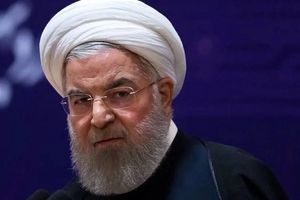
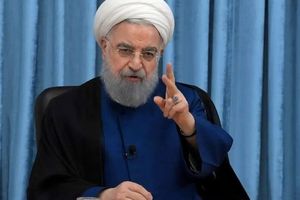
He said national security in any country rests on deterrence and on stopping adversaries from initiating conflict.
Rouhani tied Iran’s own shortfalls in deterrence to regional instability, saying neighboring states still rely heavily on the United States and Israel for security. He said Iraq, Syria, Lebanon and Jordan do not control their airspace or security environments in ways that would limit hostile activity, and that this has reduced Iran’s strategic buffer zone.
“Unfortunately, we do not currently have broad regional deterrence. Our neighboring countries – Iraq, Syria, Lebanon and Jordan – are, unfortunately, operating in environments largely shaped by the United States and Israel.”

He warned that this landscape has created what he described as unusually free access for Israel, saying “Israel moves up to our borders in undefended and open airspace” and “the sky up to Iran has become completely safe for the enemy.”
Rouhani said national cohesion and accurate assessments of Iran’s own capabilities remain essential for maintaining deterrence. He cautioned against overestimating Iran’s military or technological strengths and said misjudging adversaries could lead to strategic miscalculations.
Rouhani said renewed diplomacy remains essential even if political negotiations are difficult. “In politics, a complete dead end is very rare. We must make extra efforts to resolve issues.”
He said avoiding a renewed conflict ultimately rests with Iran, adding “whether war happens again is in our hands.”

“The continued drying and the cut in permanent flows have brought land subsidence and the death of Gavkhouni to a point of no return and even put drinking water on the threshold of threat,” said Dariush Golalizadeh, the provincial environment department chief.
“The Zayandeh-Roud played a key role in recharging aquifers and preventing subsidence. With multi-year drought and sharply reduced inflows, alongside heavier pumping from wells and wastewater use, subsidence has intensified alarmingly.”
Golalizadeh said the internationally listed Gavkhouni wetland downstream of Isfahan is turning into a dust hotspot. “When the wetland falls apart, it means there are serious problems in water and land management above it.”
He linked the ecological stress to livelihoods, saying orchards, urban green spaces and farmers have been hit across the basin. Authorities are now working on support programs for Isfahan’s eastern districts to soften the blow to agriculture, he said.
The official urged emergency measures to keep minimum flows to the river and wetland.
“At present, because of the sharp drop in river yield, drinking water is under threat,” he said. “We are looking to other sources, but rising temperatures and drought have cut inflows to a minimum.”