Iran seizes Eswatini-flagged vessel for alleged fuel smuggling
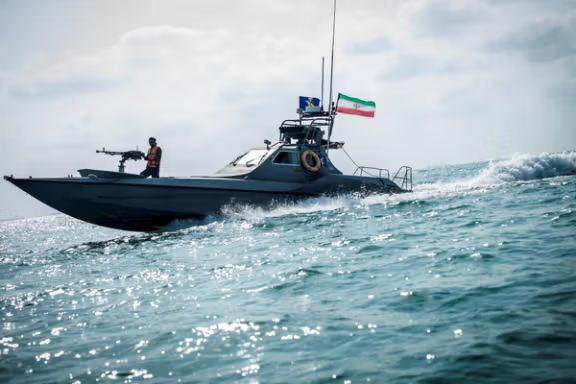
A boat with the Iranian Revolutionary Guard sails at undisclosed location off the coast of Bandar Abbas, Iran August 2019.
Iran’s Islamic Revolutionary Guard Corps (IRGC) navy said it had seized an Eswatini-flagged vessel in the Persian Gulf carrying about 350,000 liters of smuggled gasoil, according to state-linked media.
Heydar Honarian-Mojarrad, commander of the IRGC Navy’s Second Naval Zone, said the ship was detained under a judicial order and escorted to the coast of Bushehr for offloading, adding that its 13 crew members were from India and a neighboring country.
Iran, which keeps domestic fuel prices low through subsidies and has seen its currency weaken, regularly announces interceptions of boats accused of moving contraband fuel by sea to Persian Gulf states and by land to neighboring countries.
No details were given on the vessel’s ownership, its last port of call, or the timeline of the operation. Authorities did not specify the fate of the crew beyond the seizure.
The announcement follows other recent actions. On Saturday, authorities near the island of Kish said two vessels carrying a combined 80,000 liters of smuggled fuel were stopped under a judicial order, with prosecutors saying the boats had been modified with extra deck tanks to spirit fuel out of the country.
Officials said they would continue operations against trafficking networks that profit from steep price gaps with neighboring states.
Earlier this month, the IRGC said it had seized a Marshall Islands–flagged tanker off the Makran coast in the Gulf of Oman, after maritime security firms reported a ship being diverted toward Iranian waters by small craft.
Tehran says such operations are conducted under court orders to prevent illegal fuel or cargo transfers. Western officials and shipping sources have accused Iran of at times using maritime enforcement to gain leverage in regional and sanctions-related disputes.
Iran’s coastline and the Strait of Hormuz lie astride one of the world’s busiest energy corridors. Iranian forces have increased patrols there, describing the moves as efforts to safeguard national interests and curb smuggling.
Prolonged drought and the halt to permanent flows in the Zayandeh-Roud river have driven land subsidence and the Gavkhouni wetland toward an apparent point of no return, raising risks to Isfahan’s drinking-water supply, a provincial environmental official said.
“The continued drying and the cut in permanent flows have brought land subsidence and the death of Gavkhouni to a point of no return and even put drinking water on the threshold of threat,” said Dariush Golalizadeh, the provincial environment department chief.
“The Zayandeh-Roud played a key role in recharging aquifers and preventing subsidence. With multi-year drought and sharply reduced inflows, alongside heavier pumping from wells and wastewater use, subsidence has intensified alarmingly.”
Golalizadeh said the internationally listed Gavkhouni wetland downstream of Isfahan is turning into a dust hotspot. “When the wetland falls apart, it means there are serious problems in water and land management above it.”
He linked the ecological stress to livelihoods, saying orchards, urban green spaces and farmers have been hit across the basin. Authorities are now working on support programs for Isfahan’s eastern districts to soften the blow to agriculture, he said.
The official urged emergency measures to keep minimum flows to the river and wetland.
“At present, because of the sharp drop in river yield, drinking water is under threat,” he said. “We are looking to other sources, but rising temperatures and drought have cut inflows to a minimum.”
The US dollar surged to 1,160,000 rials in Iran’s unofficial market on Saturday, adding to inflationary pressures and deepening worries about the country’s worsening economic outlook.
The US dollar, which traded at about 140,000 rials in 2018, has risen roughly eight-fold since Donald Trump restored US sanctions on Iran seven years ago.
The current dollar rate of 1.16 million rials is just shy of the all-time high of 1.17 million recorded on September 30.
The reimposition of UN sanctions in September deepened the currency shock, Parliamentarian Valiollah Bayati said last month. Addressing President Masoud Pezeshkian, Bayati said public anxiety was mounting.
The sanctions were restored 30 days after Britain, France and Germany triggered the so-called snapback mechanism under the UN Security Council Resolution 2231, citing Iran's failure to comply with its nuclear obligations.
The move restored UN penalties previously suspended under the resolution, tightening external constraints on Iran’s economy.
Farid Mousavi, a member of parliament’s economic committee, warned earlier this month that the currency rise could accelerate in coming weeks. “With inflation continuing at this pace, a 1.3 million-rial dollar rate in winter is not far-fetched."
Official figures show food costs up more than 66 percent over the past year, with bread and grains up 100 percent, fruit and nuts 108 percent, and vegetables almost 69 percent.
The central bank’s latest report also indicates a record surge in capital flight during the spring, underscoring dwindling market confidence.
Rising fuel costs compound volatility
The currency rise follows a domestic fuel-price increase that legislators warn will spill into transport and retail markets.
Mohsen Biglari, secretary of parliament’s budget committee, told the Rouydad24 outlet that higher gasoline costs would influence prices across sectors. “If people have to buy fifty-thousand-rial gasoline, it will certainly affect other goods and services."
The government’s new fuel pricing system, announced on Tuesday, introduces a third rate of 50,000 rials per liter (4.4 cents per the free market rate) for drivers refueling without smart rationing cards or beyond their quota, while keeping existing 15,000- and 30,000-rial rates ((1.3 and 2.6 cents, respectively).
The accelerating dollar, mounting household costs, and weakening investor sentiment together signal a deepening inflationary cycle likely to shape Iran’s economic trajectory in the months ahead.
Iran’s Karkheh Dam hydroelectric power plant has stopped generating electricity because of a sharp drop in the reservoir’s water level, state media reported on Saturday.
Amir Mahmoudi, head of the Karkheh Dam and power plant, said water is now being released through lower outlets to supply downstream needs after the generating units went offline. He said the dam’s reservoir currently holds about one billion cubic meters of water, with the water level 40 meters below normal operating height.
Mahmoudi said the Karkheh basin has endured several years of drought and low rainfall, urging conservation of water for drinking, farming, livestock, and industrial use.
The Karkheh Dam, one of the largest earthen dams in the world and the biggest in Iran and the Middle East, was built on the Karkheh River about 22 kilometers northwest of Andimeshk in Khuzestan province. It has a total generating capacity of 400 megawatts.
The shutdown comes as Iran faces one of its worst droughts in decades, with reservoirs across the country running dangerously low. Domestic media have reported steep drops at Tehran’s Karaj and Latian dams, while officials in Mashhad, Kerman and Yazd warn of collapsing aquifers and forced water rationing.
The Kurdish rights group Hengaw said this week that authorities in western Iran have also increased pressure on local journalists covering the crisis. Reporters in the city of Baneh were summoned or threatened by security agents after publishing reports on water shortages that left some neighborhoods without running water for more than three days.
The group said some journalists were accused of “spreading public anxiety” and forced to sign written pledges not to report further on the issue.
Iranian authorities said they seized two vessels carrying 80,000 liters of smuggled fuel near the island of Kish in the Persian Gulf on Saturday.
Ali Salemizadeh, the prosecutor of Kish, said the boats were stopped under a judicial order as part of operations by a naval task force formed to combat fuel smuggling. He said the alleged smugglers had modified the structure of the boats and installed extra tanks on deck to move the fuel out of the country.
No details were given about the ownership, registration, or crew of the vessels, or about where they were headed.
Salemizadeh said authorities would continue to act firmly against fuel trafficking networks, which officials in Tehran say cause heavy losses to the state due to large price gaps with neighboring countries. Fuel smuggling is common in southern Iran, where heavily subsidized prices make it profitable to resell fuel abroad.
The announcement came amid a series of maritime enforcement operations by Iran in recent months. Earlier this month, Iran’s Revolutionary Guards said they had seized a Marshall Islands–flagged tanker off the coast of Makran, confirming reports from maritime security firms that the ship had been diverted toward Iranian waters after being approached by small boats in the Gulf of Oman.
Iran says such seizures are carried out under judicial orders to prevent illegal fuel or cargo transfers. But Western officials and shipping sources say the country has often used maritime enforcement as leverage in regional and sanctions-related disputes.
Iran’s coast and the Strait of Hormuz are key routes for global oil shipments, and Tehran has increased patrols there as part of what it calls efforts to safeguard national interests and counter smuggling.
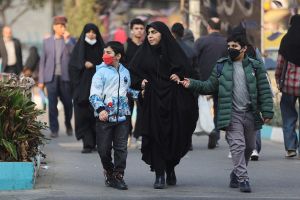
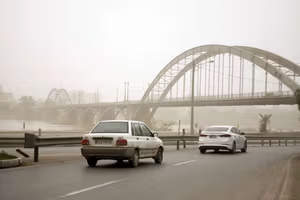
Authorities in Tehran have issued an orange pollution alert, warning that stagnant air and rising emissions could push pollution levels into the “very unhealthy” range in the days ahead.
Meteorologists say heavy smog will linger over the capital through Tuesday, with fine particulate pollution increasing sharply as calm weather prevents the dispersal of exhaust fumes and industrial emissions.
Officials have urged people to avoid unnecessary travel and limit time outdoors, especially at night and in the early morning when pollution peaks.
The city’s weather bureau warned that without stricter limits on factories and traffic, “air quality could reach very unhealthy levels” and health services should remain ready to respond.
The alert on Friday comes as air quality worsens across several major cities, including Isfahan, Tabriz, Karaj, Ahvaz, and Mashhad.
Recent readings in Tehran placed fine particulate concentrations well above safe limits, posing risks for children, the elderly, and those with respiratory or heart conditions.
Officials say calm winds have turned Tehran into a pollution trap. The Health Ministry estimates nearly 59,000 Iranians die every year from illnesses linked to poor air quality, with economic losses exceeding $17 billion — more than the country’s entire health budget.
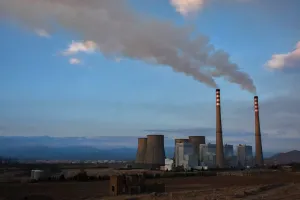
The worsening air coincides with a renewed use of mazut, a heavy, high-sulfur fuel oil, at power plants struggling with gas shortages.
Energy Minister Abbas Aliabadi acknowledged the problem, saying the move was a last resort to keep power stations running during peak demand.
Environmental groups warn that relying on mazut — together with aging cars and weak emissions controls — keeps Iran’s major cities locked in a cycle of toxic air and public health damage.
Authorities have advised residents to wear masks, avoid strenuous outdoor activity, and limit vehicle use.
Experts say the combination of outdated fuel systems, traffic congestion, and winter weather patterns means Tehran is likely to face repeated air-quality emergencies unless major reforms — such as investment in cleaner energy and transport — are implemented soon.