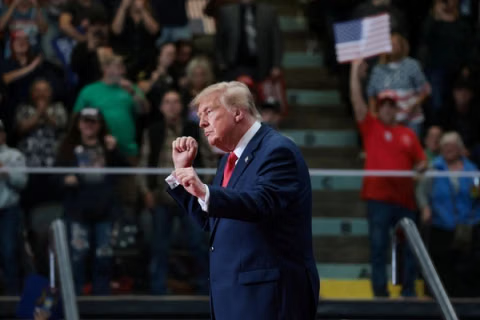
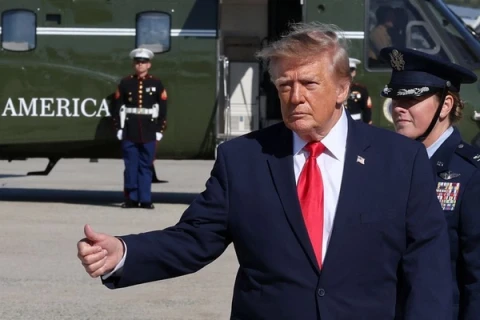
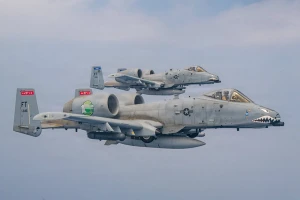
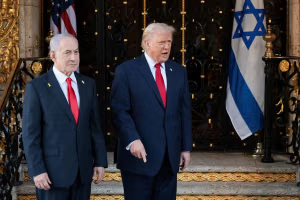
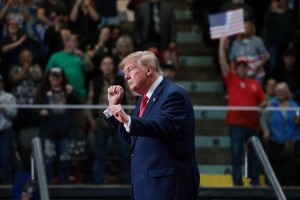
US President Donald Trump warned on Friday that the United States is “locked and loaded” if Iranian authorities use lethal force against protesters.
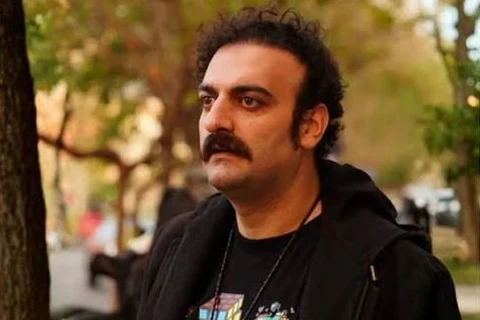
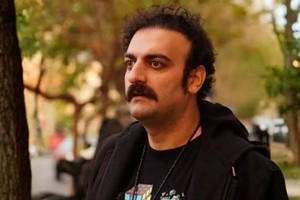
Looking back at Iranian films in 2025, one fact is hard to miss: it was underground cinema—not the country’s officially sanctioned productions—that defined the year internationally.
Canada on Wednesday rejected Iran’s decision to designate the Royal Canadian Navy as a terrorist organization, calling the move baseless and politically motivated and reaffirming its sanctions and human rights pressure on Tehran.
Iran’s official defense export agency is offering to sell ballistic missiles, drones and other advanced weapons systems to foreign governments in exchange for cryptocurrency and barter, Financial Times reported on Thursday.
As protests once again ripple across Iran, the country’s political establishment is moving quickly to revive an economic reform agenda that many Iranians say no longer speaks to the core of their anger.
A landmark criminal lawsuit filed in Argentina by victims of the 2022 Woman, Life, Freedom movement signals a new push to hold Islamic Republic officials accountable beyond Iran’s borders.
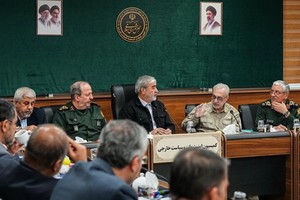
Iran’s Supreme Leader has appointed Ahmad Vahidi as deputy commander-in-chief of the Islamic Revolutionary Guard Corps (IRGC), replacing Ali Fadavi, who was moved to head an advisory group under the IRGC commander.

Iran’s foreign minister appealed directly to Donald Trump in a Guardian op-ed on Tuesday, urging him to reopen negotiations with Tehran, reconsider Washington’s alignment with Israel and acknowledge what he described as Iran’s invincibility.

An Iranian vice president on Tuesday defended Tehran’s ballistic missile capabilities as essential for deterrence, after the US president warned of further attacks if Iran moves to develop its missile program which was severely damaged in a June war.
Iran on Sunday launched three domestically built satellites into low Earth orbit aboard a Russian Soyuz rocket, deepening space cooperation between Tehran and Moscow in a program Western governments say draws on technologies applicable to long-range missiles.

There is a cruel ritual in Iranian opposition politics: some voices abroad constantly interrogate the “purity” of activists inside—why they did not speak more sharply or endorse maximalist slogans, why survival itself looks insufficiently heroic.

The Iran projected on social media these days—brunch parties, rooftop concerts, fashion shows—is real, but only as a tiny fragment of the country’s reality, where most ordinary people struggle to make ends meet.