Two bipartisan lawmakers announced on Friday they oppose a congressional bid to limit the use of force against Iran, arguing the measure would constrain Washington’s ability to respond to what they described as an evolving threat from Tehran.




In a joint statement, Representatives Josh Gottheimer, a Democrat from New Jersey, and Mike Lawler, a Republican from New York, said they would oppose the bipartisan Massie-Khanna War Powers Resolution, which seeks to require explicit congressional authorization for military action against Iran.
The lawmakers framed their stance around security concerns, saying the United States must retain operational flexibility. “This resolution would restrict the flexibility needed to respond to real and evolving threats and risks signaling weakness at a dangerous moment.”
The pushback comes as Representatives Ro Khanna and Thomas Massie prepare to force a House vote on their 2025 War Powers Resolution, which would require explicit congressional authorization before President Donald Trump could launch military action against Iran.
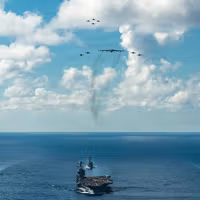
Khanna said he plans to use a procedural move to bring the measure to the floor as the US military completes its buildup in preparation for a potential strike on Iran.
Supporters say the measure is intended to reassert Congress’s constitutional authority over decisions that could lead to war and to ensure lawmakers debate any move that could put US troops in harm’s way.
Gottheimer and Lawler said they respect congressional oversight but warned against tying the hands of the executive branch.
“We respect and defend Congress’s constitutional role in matters of war. Oversight and debate are absolutely vital,” they said, adding that lawmakers should be fully briefed on any planned military action under the War Powers Act.
In their statement, the two lawmakers also accused Tehran of continuing to pursue a nuclear weapon and rebuild ballistic missile capabilities following recent regional tensions. They described Iran as “the world’s leading state-sponsor of terror” and cited its support for armed groups across the Middle East.
The lawmakers further pointed to Iran’s domestic crackdown following nationwide protests in January when nearly 40,000 people were killed, saying they stand with Iranians “demanding basic rights and dignity.”
The debate is unfolding as the United States has surged military assets closer to Iran while simultaneously pursuing talks aimed at curbing Tehran’s nuclear program. Trump recently said that regime change in Iran “would be the best thing that could happen,” underscoring the heightened stakes surrounding the congressional effort.
Brent crude rose to around $70.50 a barrel after surging more than 4% in the previous session, while US crude climbed above $65, as traders priced in the possibility of supply disruptions from the oil-producing region.
“The balance of risks now tilts to a US strike after market close Friday,” said Michael Every, senior global strategist at Rabobank, adding that any military action could last weeks rather than ending quickly.
European shares also edged 0.1% lower on Thursday after a mixed set of corporate results, with energy stocks rising alongside firmer oil prices as US-Iran tensions kept investors cautious.
Increased US military activity in the region has left markets on edge, despite diplomatic efforts in Geneva this week aimed at narrowing differences over Iran’s nuclear program.
Safe-haven demand pushed spot gold up 0.5% to around $5,004 per ounce, after a more than 2% jump the previous day. US gold futures also edged higher.
“If there’s anything fundamental you could point to that would be supporting gold prices, it’s the prospect of conflict in the Middle East and the kind of safe-haven demand that goes along with it,” said Kyle Rodda, senior market analyst at Capital.com.
Gold has also drawn support from expectations that US interest rates could ease later this year, though minutes from the Federal Reserve’s January meeting showed policymakers were in no rush to cut rates and some remained open to further hikes if inflation stays elevated.
Asian equities were mixed, with gains in technology stocks offsetting caution over geopolitics. MSCI’s broadest index of Asia-Pacific shares outside Japan rose 0.4%, while Japan’s Nikkei gained 0.7%. South Korea’s Kospi jumped more than 3% to a record high, buoyed by renewed optimism over artificial intelligence-related shares.
Still, analysts said geopolitical risk was capping broader risk appetite.
“The two nations have long been at loggerheads over Iranian nuclear activity,” one market participant in Asia told Reuters, adding that any disruption to shipping routes or energy infrastructure could ripple through global supply chains.
For now, traders say oil and gold are likely to remain sensitive to headlines from Washington and Tehran, with volatility expected to persist as the prospect of military action looms.
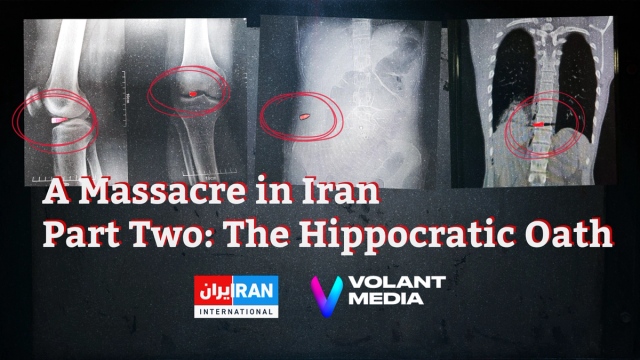
Kazem, a 40-year-old Tehran resident, says he was present as part of the state’s repression apparatus during two nights of mass violence, January 8 and 9.
He says he had previously spent a relatively long time in detention by the IRGC Intelligence Organization and was released after promising cooperation. He maintains that he did not kill anyone and that he fired only into the air.
His account, given in an extended interview, offers a detailed insider description of how forces were assembled, armed and deployed.
Certain personal and operational details are not being published for security reasons.
The call-up
Kazem says that on the afternoon of January 7, while returning home from work, he received a call from a security contact instructing him to report to the IRGC’s Vali-e Asr garrison at 10 a.m. the next morning.
The compound houses intelligence operations for Tehran province and coordinates deployments of security and plainclothes forces across the capital.
“I assumed it was related to Pahlavi’s call for January 8 and 9,” he said.
He says dozens of men were present when he arrived, some of whom he had seen during previous security mobilizations.
“There were two types of people,” he said. “Some looked like office employees or shopkeepers – probably like me, under their knife – and others looked like thugs and hooligans. Those were especially violent.”
Roughly 50 to 60 men were taken into a hall, he says, where an intelligence official outlined the “possibility of unrest” and said they would assist in “controlling riots.”
Those without firearms experience received brief weapons instruction. Pre-prepared authorizations were distributed for Kalashnikov rifles, handguns and ammunition.
“The document I received was a temporary mission order,” he said, “on the letterhead of the Mohammad Rasoulallah Corps” – the IRGC’s main Tehran command, responsible for coordinating IRGC Ground Forces and Basij operations in the capital – signed by a senior operations official at the Imam Ali headquarters, a Basij-affiliated security structure created to respond to street protests and internal unrest.
“I received a weapon from the armory and was told to report at 5 p.m. to the Qods Basij Resistance Base in Jannat Abad, northwestern Tehran”
From there, he says, groups were assigned geographic zones. Some moved two by two on motorcycles; others in Toyota Hilux or Peugeot vehicles. He says he was deployed to western Tehran before 8 p.m.
Hunting leaders and death ambushes
Kazem describes Sadeghieh, a bustling northwestern neighborhood of the capital, as one of the primary confrontation zones.
He says he observed what he calls two distinct operational patterns.
The first he describes as “hunting leaders.”
According to Kazem, experienced intelligence operatives infiltrated protest crowds while appearing to join demonstrators. Their task, he says, was to identify individuals perceived as organizers or focal points – often those who appeared physically fit or athletic.
“After identifying targets, at an opportune moment – such as in dark streets where lights had been cut – they would shoot them from behind at close range with handguns,” he said. “Or they would communicate with snipers stationed on nearby rooftops, giving descriptions of clothing so the target could be shot.”
He says rooftop snipers were positioned on multiple buildings in the area.
The second pattern, he says, involved steering crowds into enclosed spaces.
“They would drive and direct frightened people into dead-end alleys or places already under control,” he said. “This pattern was repeated many times Friday night in the part of Tehran where I was. The goal was to kill as many as possible. No one was meant to be arrested there. Many fell into ambushes and were killed.”
Multiple videos sent to Iran International, along with documented reports published by outlets including Reuters and verified by Amnesty International, indicate that snipers were positioned on rooftops – including on top of a police station – and fired at protesters’ heads and upper bodies.
One eyewitness told Iran International that on Sunday morning, January 11, even after municipal water trucks had washed the streets, blood traces were still visible along Ashrafi Esfahani Street in Sadeghieh.
According to information shared with Iran International, during an emergency meeting with Tehran medical officials on the morning of January 9, a senior health official said that aggregated figures from the city’s treatment centers up to that point showed at least 1,800 people had been killed in the crackdown on the evening of January 8.
Finishing shots
Kazem describes encountering injured protesters in southern Tehran in the early hours.
In one instance, he says, he approached a man who had lost a significant amount of blood.
“He pleaded, ‘I have a small child, don’t shoot,’” Kazem recalled.
“I told him to pretend to be dead so they wouldn’t give him a coup de grâce,” he said.
Minutes later, he says, a motorcycle stopped beside the wounded man.
“The officer kicked him to confirm he was alive, then shot him in the head at close range.”
Killing children and refrigerated trucks
Kazem says children were among those killed. Based on what he says he personally observed in Sadeghieh and in one southern Tehran district, he estimates that at least 200 children died over the two nights.
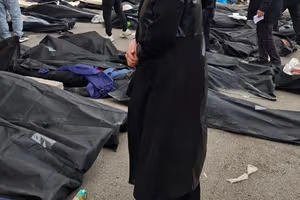
He says bodies were collected using refrigerated trucks belonging to the Mihan ice cream company, similar to methods he says were used during earlier protests.
“Like in the 2022 protests, refrigerated Mihan ice cream trucks were used,” he said. “I personally helped load corpses.”
According to Kazem, the trucks were used to remove bodies from streets and transport them to undisclosed locations.
He describes a scene that remains vivid to him.
“We were loading bodies into a Mihan truck when I saw the man next to me tear the necklace and earrings off a 9- or 10-year-old dead girl before throwing her into the truck. I looked at him in fear.”
Kazem says he did not intervene and continued loading bodies.
Reports suggest the removal operation was systematic.
Iran Human Rights said in a report published on February 3 that, citing an eyewitness in Lorestan province, security forces transported the bodies of those killed in refrigerated Mihan ice cream trucks to the courtyard of a hospital in the province.
Iran International contacted Mihan to ask whether the company’s trucks were used to move bodies during the January 8-9 protests and whether the company confirmed the account. No response had been received by the time of publication.
France 24 and Amnesty International’s Switzerland office have also reported the use of food transport vehicles and containers to move the bodies of those killed.
Burning property and foreign forces
Kazem says he personally witnessed security personnel setting fire to banks and mosques after first clearing valuables.
“They would first evacuate valuables before burning the site,” he said. “I personally witnessed instructions to remove valuable items from a mosque before it was set on fire.”
He also says he saw a small number of fighters affiliated with Iraq’s Popular Mobilization Forces in Sadeghieh on the first night.
“The absolute majority were IRGC, plainclothes, Basij and security forces,” he said. “But I did see a small number of Hashd al-Shaabi.”
In the areas where he was present, he says regular police and special units appeared less directly engaged in lethal force.
“I think they weren’t prepared for killing on that scale,” he said.
Media reports have confirmed a limited presence of Hashd al-Shaabi forces in some areas during the crackdown. Videos from inside Iran also suggest that damage to public property was carried out by security forces footage – that several outlets, including Le Monde, have verified.
Payment for the dead
Kazem says he returned his weapon to the Vali-e Asr garrison on Saturday morning and was no longer required.
He says that afterward he heard from contacts that families seeking the bodies of loved ones were sometimes required to pay money, calculated according to neighborhood and reported property damage.
“They couldn’t charge everyone for bullets,” he said. “But when they did, it was based on how much damage the neighborhood had suffered.”
Iran International has documented in multiple reports that authorities extorted money from bereaved families in exchange for returning the bodies of their loved ones.
Kazem’s narrative adds another piece to the picture: January 8 and 9 were not reactive policing, but a coordinated, military-style campaign designed to crush protests with deadly force.
Iranian media said the temporary restriction was linked to the “Smart Control of the Strait of Hormuz” exercise and was aimed at ensuring safety and navigation principles during the drill.
Tehran has repeatedly warned in the past that it could close the strait if attacked, a step that would disrupt one of the world’s most vital oil export routes.
Guards navy commander Alireza Tangsiri said Iran’s forces were ready to shut the strait if ordered by the country’s leadership.
“The decision to close the Strait of Hormuz rests with the senior leaders, and as a soldier I say we are ready to carry it out whenever our leaders say,” Tangsiri was quoted as saying while overseeing the main phase of the exercise.

Tangsiri said the weapons used in wartime could differ from those displayed in drills. “The weapons that enter the field on the day of war are not necessarily the same as the equipment used in exercises,” he said, signaling that Iran’s operational capabilities extend beyond what is shown publicly.
Iranian outlets described the drills as a combined exercise involving Guards naval combat and rapid-reaction units, with a range of offensive and defensive systems deployed. They reported that missiles were fired toward designated targets and that drone units carried out reconnaissance and attack missions under conditions of signal jamming.
The exercise began from Iran’s Persian Gulf islands – including Abu Musa, Greater Tunb, Lesser Tunb and Sirri – which Iranian media described as key positions for overseeing shipping there and the western approaches to the Strait of Hormuz. The reports said the drill included elements of electronic warfare and simultaneous launches from land and sea.
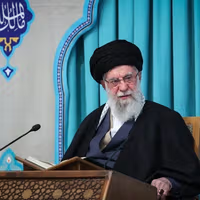
Iran’s Supreme Leader Ali Khamenei, referring to US naval deployments, was quoted as saying that an American aircraft carrier was dangerous but that “more dangerous than it is the weapon that can send it to the bottom of the sea.”