Film shot inside Iran breaks censorship ground with intimate scenes

Mo Abdi
Film critic
Film critic
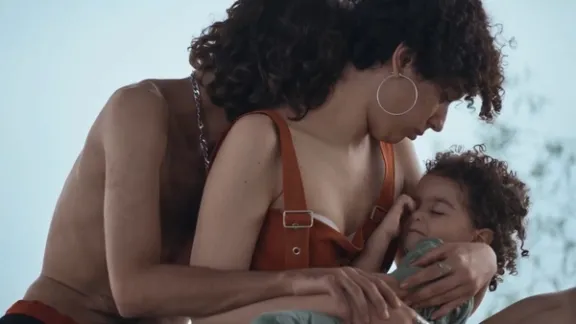
A film with intimate scenes shot inside Iran premiered at the Berlin film festival this week, marking a new escalation in Iranian artists’ defiance of censorship at home.


Directed by Mohammad Shirvani, Cesarean Weekend includes scenes of physical intimacy unseen on screens in Iran since the revolution in 1979.
Shirvani has long worked outside mainstream Iranian cinema, producing low-budget, highly personal films that reject conventional storytelling and visual norms.
His latest work follows a small group of characters in private settings, focusing less on plot than on relationships, physical presence, and emotional tension.
The film features composer Nader Mashayekhi appearing under his own name alongside other non-professional actors, blurring the line between performance and lived experience.
Shot with a handheld camera in confined domestic and natural environments, it presents bodies and personal interactions in ways that Iran’s official cinema has avoided for decades.
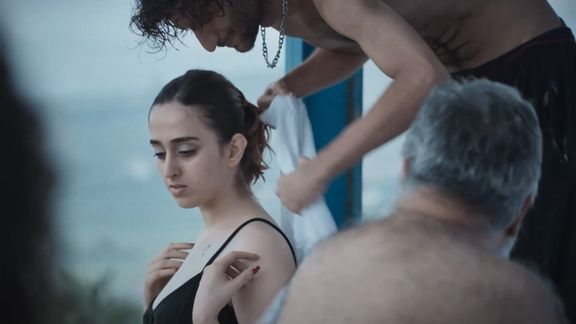
Iran’s film industry has long operated under strict state supervision. Filmmakers must obtain permits before production and submit their work for approval before release, complying with detailed regulations governing dress, gender interaction, and visual representation.
The depiction of uncovered hair, physical contact, or intimate private settings has been tightly controlled for decades.
Those restrictions remain in place. But in the years following the 2022 “Woman, Life, Freedom” protests and the subsequent crackdown, a growing number of artists appear increasingly willing to ignore them.
Rather than seeking official approval, some filmmakers are producing work independently inside Iran, outside the formal licensing system. These films are typically made with small crews, limited resources, and discreet production methods, then screened abroad.
The Berlin International Film Festival, known as the Berlinale, is one of the more prominent platforms for global cinema which has screened and awarded top prizes for such works.
This year, another Iranian underground film, , directed by Mahnaz Mohammadi, was also selected for screening outside the main competition. Together, the two films reflect the continued presence—and evolution—of filmmaking beyond state oversight.
Many unlicensed films focus on political themes or censorship itself. But a growing number of filmmakers are disregarding it altogether, treating creative autonomy as a given rather than a subject.
In this context, the significance of Cesarean Weekend lies less in its narrative than in its production. Scenes involving bodily intimacy and private life were filmed inside Iran itself, despite rules designed to prevent such imagery from being created or shown.
Several military commanders and IRGC personnel convened sessions inside the medical facility over the past week, accompanied by security teams and holding discussions unrelated to healthcare, a hospital employee in Tehran said. The source spoke on condition of anonymity due to fear of repercussions.
“The presence of these individuals, along with their protection units, has alarmed staff because the meetings had nothing to do with medical matters,” the employee said.
The reports come against a backdrop of previous allegations that security forces used public institutions during unrest, blurring the line between civilian and military functions.
Use of civilian sites during protests
During the January 8 and 9 protests and the days that followed, multiple accounts described security operations from within public buildings. Witnesses and local media reported gunfire at demonstrators from inside a governor’s office and from the roof of a hospital in Gorgan. In Arak and Sari, schools were used to station forces and hold detainees.
Similar reports emerged from Shiraz, Gorgan and Tehran describing the deployment of armed personnel in hospitals and, in some cases, gunfire from the rooftops of medical centers toward protesters. Authorities have not publicly clarified the scope or legal basis of such deployments.
Security forces have also gathered in recent days at certain sports stadiums and arenas, a move sources describe as an effort to shield personnel and equipment from potential US or Israeli strikes by embedding them in densely populated civilian areas.

“No justification for human shields”
Jamshid Barzegar, a political analyst and journalist, said the shift of military activity into hospitals reflects a pattern long seen in the Islamic Republic’s regional alliances.
“The Islamic Republic has once again brought inside the country a criminal pattern it has tested for years through its proxy forces in the region: militarizing civilian spaces and using civilians as human shields.”
Barzegar argued that similar tactics had been employed by allied groups in Syria, Gaza, Lebanon and Yemen, placing military assets in or near civilian infrastructure.
“Now that the Islamic Republic has cast the shadow of war over Iran, we are seeing the same methods being applied domestically,” he said. “In the bloodiest and largest crackdown on public protests in Iran’s history during January 8 and 9 and the days after, the presence of security forces resembled the conduct of extremist groups.”
Moving senior IRGC meetings into hospitals and deploying forces in stadiums and schools, Barzegar said, exposes civilians to heightened danger in any potential conflict.
“This is not only a sign of strategic weakness, but a message that the lives of ordinary Iranians carry little weight in the government’s calculations,” he said.
Under the Geneva Conventions and their additional protocols, he added, using medical facilities for military purposes can jeopardize their protected status under international humanitarian law.
“When commanders enter hospitals with protection teams and hold non-medical meetings, they are effectively taking patients and medical staff hostage to their own security considerations,” Barzegar said. “There is no justification for using civilians as human shields.”
Legal risks and accountability
Hossein Raisi, a human rights lawyer and academic, said international humanitarian law strictly prohibits converting civilian facilities such as hospitals, clinics, places of worship and historic sites into venues for military operations.
“Any party that knowingly turns a civilian site into a center of military activity during armed conflict commits a war crime,” Raisi said.
Even if an adversary attacks such a location, causing casualties or damage, that attack may also constitute a war crime if carried out deliberately and without regard for civilian protection, he added.

“Transferring military command functions into an active hospital where patients and medical staff are present does not transform that location into a legitimate military target,” Raisi said.
“Civilians are not aware of these hidden changes and have no meaningful opportunity to leave.”
If military units or equipment are placed near schools, children or medical facilities with knowledge that an attack could cause civilian deaths, those responsible could face serious legal consequences, Raisi said.
“Under the laws of war, both sides have an obligation to minimize harm to civilians,” he noted.
“If casualties occur because civilians were deliberately exposed to risk, responsibility can attach to those who created that situation as well as to those who launched an unlawful attack.”
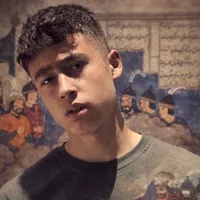
Seventeen-year-old Sam Afshari had been taken to Madani Hospital in Karaj, near Tehran, after being shot on January 8 during protests near Mehran Square in the city’s Azimieh district. Witnesses later told his family that doctors were attempting to save him and that he was still conscious when asked his name.
“He had the breathing tube in his mouth. They came and shot him. A final bullet,” his father, Parviz Afshari, told Iran International’s English podcast Eye for Iran.
That day, protests spread across Iran as demonstrators took to the streets demanding an end to the Islamic Republic. Sam was among them.
“They went for a free Iran,” Parviz said. “They went out to protest with bare hands. But they returned to their families with bullets in the back of the head and bullets in the back.”
Sam was his only child—an unimaginable loss, his father said, that many Iranian families are now struggling to understand and explain.

Sam was born in 2008 in Karaj and had turned 17 just weeks before his death. He was studying computer networks and hoped to continue his education abroad.
“This year he was supposed to come here so we could sort out his papers,” his father said, speaking from Germany. “He wanted to continue his studies, go to university and study computer engineering.”
His father described him as cheerful and ambitious.
“He joked a lot. We laughed so much,” Afshari said. “We were always in video contact, talking about the future.”
“I don’t think he went out because of poverty,” he added. “He went out because of his beliefs. He wanted democracy and the right to speak his mind.”
According to accounts later gathered by the family, Sam was shot from behind near a security police post at Mehran Square. Residents in a nearby apartment building attempted to pull the wounded teenager into their parking area to protect him.
Security forces arrived shortly afterward and took him away, his father said.
“They took my child with them.”
A hospital employee later informed the family that Sam had been transported to Madani Hospital along with other injured protesters. Witnesses told relatives that when medical staff asked his name, he answered “Sam,” indicating he was still conscious.
Hours later, he was dead.
"At the hospital they finished him off with a shot to the back of the head. The bullet came out through his cheek," Parviz said.

Because internet access had been cut during the unrest, Afshari said he did not learn what had happened until days later, when communication was briefly restored. Family members searched hospitals and morgues before his brother located the name “Sam Afshari” on a list of the dead at Beheshte Sakineh morgue in Karaj.
When Sam’s mother was brought to identify the body, she initially could not recognize him because of severe injuries.
“One side of my child’s face was destroyed,” Afshari said. “The back of his head too.”
She confirmed his identity only after asking officials to uncover a tattoo on his chest bearing the word “Mother” written in Latin script.
“When they saw the tattoo, they realized, yes, tragically — it was Sam.”
According to the family, authorities initially ordered that Sam be buried quietly at night in a remote area. After negotiations and payments, relatives secured permission to bury him closer to Karaj, but cemetery space was scarce.
“There were so many graves,” his father said. “They said there was simply no space.”
At Kalak-e Bala cemetery in Karaj, Sam was buried above another young protester because burial plots were already filled.
“Under his grave there is another martyr, Amir Bayati, and above is my son, Sam Afshari,” Afshari said.
Relatives described morgue halls crowded with bodies and refrigerated trucks waiting outside — scenes they said reflected the scale of deaths families were confronting in the days after the crackdown.
'He wanted a free Iran'
As the interview continued, Afshari’s grief gave way to anger and appeals for accountability.
“This is no longer the time for my tears. Now I feel rage,” he said. “If nothing happens, the blood of our children will be trampled. Our people—90 million human beings—are now hostages. Hostages of the Islamic Republic.”
He urged the international community not to remain silent. “The terrorist Islamic Republic must be brought to an end,” he said.
Throughout the interview, he returned repeatedly to the future his son never had.
“He had so many dreams, and I had so many dreams for him,” he said. “We buried this child with thousands of dreams.”
For Afshari, the story ends where it began—with a teenager who left home hoping for a different future. “He went for a free Iran,” his father said. “And we buried him instead.”
The sentences were issued on February 6, the source said, despite the defendants’ claims that they were trapped inside the building after it was set ablaze.
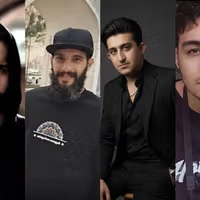
Mohammad Amin Biglari, 19, and six other men were convicted of arson of public property, “corruption on earth,” collusion against national security, and “enmity against God”—capital charges under Iranian law.
The others sentenced to death are Shahin Vahedparast Kalur, Shahab Zohdi, Abolfazl Salehi Siavashani, Amirhossein Hatami, Yaser Rajaeifar and Ali Fahim.
Their lawyer, Hassan Aghakhani, told the Emtedad news outlet that the defendants were tried jointly before Judge Abolghasem Salavati, who is under US sanctions, and received the maximum punishment.
Aghakhani said he had been denied access to the case file and that it remained unclear what confession his client was alleged to have made.

State television previously aired what it described as confessions by several detainees. In the broadcast, men with blurred faces and closely shaved heads said they had entered the building but did not set it on fire and were trapped inside after others ignited the entrance, blocking their exit.
The charges stem from a January 7 fire at the Kaveh Basij Base near Namjoo Street in eastern Tehran.
Two eyewitnesses who spoke to Iran International said they saw several men set motorcycles ablaze outside the base before others were pushed inside and the entrance was set on fire. One witness said security forces were present but did not intervene.
Iran International cannot independently verify these accounts.
Biglari, who works at a men’s hair salon, was arrested on January 7 and is being held in Qezel Hesar prison, according to information received by Iran International. The detention conditions of the other six defendants remain unclear.
Iran’s judiciary has previously announced thousands of indictments linked to arrests made during the January protests.

