• العربية
  • فارسی
Brand
  • Iran Insight
  • Politics
  • Economy
  • Analysis
  • Special Report
  • Opinion
  • Podcast
  • Iran Insight
  • Politics
  • Economy
  • Analysis
  • Special Report
  • Opinion
  • Podcast
  • Theme
  • Language
    • العربية
    • فارسی
  • Iran Insight
  • Politics
  • Economy
  • Analysis
  • Special Report
  • Opinion
  • Podcast
All rights reserved for Volant Media UK Limited
volant media logo

France picks Jafar Panahi’s ‘It Was Just An Accident’ as Oscar entry

Sep 18, 2025, 11:45 GMT+1Updated: 00:39 GMT+0

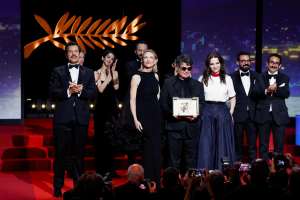
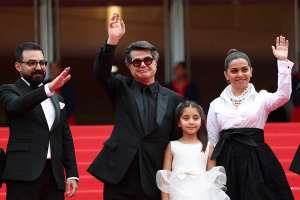
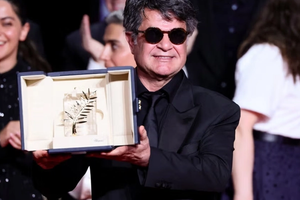
France has selected Iranian director Jafar Panahi’s It Was Just An Accident, winner of this year’s Cannes Palme d’Or, as its submission for the Academy Awards in the international feature category, giving the exiled filmmaker a path to Hollywood that Tehran was unlikely to offer.

The revenge drama, produced largely in France and shot in Iran without government approval, follows a group of former political prisoners confronting a man they believe tortured them decades earlier.

The decision, announced on Wednesday, was made by an 11-member committee convened by France’s culture ministry after reviewing five finalists, including Richard Linklater’s Nouvelle Vague and Rebecca Zlotowski’s A Private Life.

Panahi, long banned from working or traveling in Iran, has spent much of the past 15 years under house arrest or in prison. He was released from jail in 2023 after a hunger strike, and edited the new film in France.

US distributor Neon has acquired the film and is planning an awards campaign, while Mubi has taken international rights.

“This Iranian drama, directed by the great Jafar Panahi and produced with the decisive support of France … is proof that our country, 130 years after inventing cinema, remains the beating heart of international co-productions,” Gaëtan Bruel, head of the CNC film body, said in a statement.

The move also highlights stark contrasts with Iran’s own Oscar choice. A day earlier, Tehran selected Ali Zarnegar’s Cause of Death: Unknown, a moral drama that won praise abroad but was pulled from Iran’s state-run Fajr Festival in 2022. Independent filmmakers in Iran continue to face censorship, surveillance and travel bans.

The 98th Academy Awards will take place in Los Angeles on March 15, 2026.

Most Viewed

Iran negotiators ordered to return after internal rift over Islamabad talks
1
EXCLUSIVE

Iran negotiators ordered to return after internal rift over Islamabad talks

2
ANALYSIS

US blockade enters murky phase as tankers spoof signals and buyers hesitate

3
ANALYSIS

Why the $100 billion Hormuz toll revenue is a myth

4

US tightens financial squeeze on Iran, warns banks over oil money flows

5
ANALYSIS

US blockade targets Iran oil boom amid regional disruption

Banner
Banner

Spotlight

  • Hardliners push Hormuz ‘red line’ as US blockade tests Iran’s leverage
    INSIGHT

    Hardliners push Hormuz ‘red line’ as US blockade tests Iran’s leverage

  • Ideology may be fading in Iran, but not in Kashmir's ‘Mini Iran'
    INSIGHT

    Ideology may be fading in Iran, but not in Kashmir's ‘Mini Iran'

  • War damage amounts to $3,000 per Iranian, with blockade set to add to losses
    INSIGHT

    War damage amounts to $3,000 per Iranian, with blockade set to add to losses

  • Why the $100 billion Hormuz toll revenue is a myth
    ANALYSIS

    Why the $100 billion Hormuz toll revenue is a myth

  • US blockade targets Iran oil boom amid regional disruption
    ANALYSIS

    US blockade targets Iran oil boom amid regional disruption

  • Iran's digital economy battered by prolonged blackout
    INSIGHT

    Iran's digital economy battered by prolonged blackout

  • Jafar Panahi’s Cannes victory sparks praise and political reaction

    Jafar Panahi’s Cannes victory sparks praise and political reaction

  • France-Iran rift spills into cinema after dissident director wins in Cannes

    France-Iran rift spills into cinema after dissident director wins in Cannes

  • Mahsa Amini’s death sparked irreversible change in Iran, Jafar Panahi says

    Mahsa Amini’s death sparked irreversible change in Iran, Jafar Panahi says

•
•
•

More Stories

US fired $500mn in THAAD missiles defending Israel, Pentagon papers show

Sep 18, 2025, 11:34 GMT+1

Pentagon budget documents seeking urgent new funding show that the US has fired around $500 million worth of its Terminal High Altitude Area Defense (THAAD) interceptor missiles to defend Israel, primarily during its June war with Iran.

"This reprogramming action provides funding for the replacement of defense articles from the stocks of the Department of Defense expended in support of Israel or identified and notified to Congress for provision to Israel," the document said.

The budget document dated August 1, is titled Israel Security Replacement Transfer Fund Tranche 9, and requested $498.265 million in funding for THAAD systems alone.

“Funds are required for the procurement of replacement THAAD Interceptors expended in support of Israel. This is a congressional special interest item. This is an emergency budget requirement,” the document said.

The War Zone reported that the US fired more than 150 THAAD missiles during the Iran war alone.

The publication also said details of US bombings of Iranian nuclear facilities, known as Operation Midnight Hammer, are only just coming to light now, though the full cost is still unknown.

  • US depleted quarter of THAAD interceptors in Israel-Iran war - CNN

    US depleted quarter of THAAD interceptors in Israel-Iran war - CNN

The US announced it had deployed THAAD defences in Israel in October, more than a year after the Gaza war broke out, seeing Iran's allies in the region firing on the Jewish state from Lebanon, Yemen, Iraq and Syria.

It also came after Iran's second direct attack on Israel when hundreds of missiles and drones were fired in a massive aerial barrage.

"This reprogramming action addresses funds for the replacement of defense articles expended in support of Israel through US combat operations executed at the request of and in coordination with Israel and for the defense of Israeli territory, personnel, or assets during attacks by Iran, and subsequent or anticipated attacks by Iran and its proxies," the document said.

The documents show the extent of the cost of the US military's defense of Israel and also the cost of weapons that American forces used during their extensive bombing of Iran’s three main nuclear facilities in June, Natanz, Fordow and Isfahan.

Among the funds requested were those to "replace GBU-39s expended during Operation Midnight Hammer in support of Israel", the document detailed. "This is a congressional special interest item. This is an emergency budget requirement."

Made by US defense contractor, Lockheed Martin, THADD intercepts short, medium and intermediate-range ballistic missiles, engaging targets directly at ranges of 93 to 124 miles both inside and outside the atmosphere.

Each THAAD battery system requires around 100 soldiers, and has been used to help defend Israel from ballistic missiles from both Iran and its military ally, the Houthis, in Yemen.

  • Houthis, short of Iranian missiles, ramp up drone strikes on Israel

    Houthis, short of Iranian missiles, ramp up drone strikes on Israel

  • Trump u-turn on Houthis driven by billions of dollars in financial losses - NYT

    Trump u-turn on Houthis driven by billions of dollars in financial losses - NYT

US Missile Defense Agency documents say that each THAAD interceptor costs roughly $12.7 million, and now there are concerns about insufficient American stockpiles.

In addition to Iranian attacks, Israel says dozens of drones and ballistic missiles have been fired from Yemen to Israel since the outbreak of the Gaza war. The Iran-backed Houthis say their actions are in allegiance with Iran’s ally Hamas in Gaza.

During the 12-day war in June, Iran fired over 500 ballistic missiles in response to Israel’s surprise attacks on June 13, in which dozens of military and nuclear figures were killed.

Iran-linked networks amplify false claims after Charlie Kirk killing, researchers say

Sep 18, 2025, 10:25 GMT+1

Iran-aligned media and online networks joined Russia- and China-linked actors in pushing false or inflammatory narratives after US conservative activist Charlie Kirk was shot dead earlier this month according to US officials and outside researchers.

Monitoring firm NewsGuard said on Wednesday that official outlets in China, Russia and Iran mentioned Kirk more than 6,000 times from September 10–17, frequently framing the shooting as a conspiracy and recycling unsubstantiated claims.

“The more confusion and mistrust they can inject right after a breaking news event, the harder it becomes for people to know what’s true,” McKenzie Sadeghi, NewsGuard’s editor for AI and foreign influence, said.

Utah Governor Spencer Cox said earlier this week that authorities were tracking “a tremendous amount of disinformation” and bot activity urging violence; he did not cite specific accounts.

Police have charged a 22-year-old suspect and said he acted alone. Authorities have not linked the killing to any foreign government.

Analysts and media reports say the narratives diverged: pro-Kremlin channels sought Ukraine links; Beijing-aligned accounts highlighted US polarization and gun violence; and Iran-linked outlets and influencers promoted anti-Israel conspiracy theories.

Pro-Iranian groups say Israel was behind Kirk’s death and that the suspect was set up to take the fall, according to New York Times.

“They’re picking up domestic actors and amplifying them,” said Joseph Bodnar of the Institute for Strategic Dialogue.

Cox urged Americans to ignore viral claims that appear designed to provoke fear.

The activity fits a longer pattern US officials have attributed to Tehran. Microsoft’s Threat Analysis Center reported in August 2024 that Iranian operators stood up US-facing pseudo-news sites such as “Savannah Time” and “Nio Thinker,” sometimes using generative AI, and in June 2024 attempted to compromise accounts tied to US presidential campaigns.

The Foundation for Defense of Democracies said in September 2024 it had identified at least 19 pro-Iran sites targeting minority and veteran voters. Google Cloud’s Mandiant and Meta have separately flagged Iran-linked efforts aimed at US audiences.

Washington has sanctioned Iranian and Russian entities over alleged interference. In December 2024, the US Treasury blacklisted an Islamic Revolutionary Guard Corps subsidiary known as the Cognitive Design Production Center and Russia’s Center for Geopolitical Expertise, accusing both of seeding disinformation and, in Moscow’s case, using AI-generated deepfakes.

Russia, China and Iran have all denied targeting Americans with disinformation.

  • Slain activist Charlie Kirk praised Iranians, backed nuclear sites attack

    Slain activist Charlie Kirk praised Iranians, backed nuclear sites attack

  • Charlie Kirk urged Trump in Oval Office to avoid war with Iran, Carlson says

    Charlie Kirk urged Trump in Oval Office to avoid war with Iran, Carlson says

Kirk, founder of Turning Point USA, had mixed public views on Iran over the years. In 2020 he warned against a broader war after the US killed Iranian commander Qassem Soleimani. In June 2025, after US strikes on Iranian nuclear sites, he publicly backed the action while praising Iranian-Americans in earlier campus remarks widely shared online.

US officials say foreign exploitation of domestic crises predates the 2024 election cycle. A 2021 declassified assessment found Iran sought to undercut Donald Trump’s prospects in 2020 while eroding trust in US institutions; security agencies warned again in 2022 and 2024 that Tehran aims primarily to inflame social divisions.

The Center for Countering Digital Hate said posts calling for retaliatory violence after Kirk’s killing were viewed 43 million times on X, though the share from foreign sources is unclear.

Iran cites wartime-like conditions, ties IAEA inspections to new safeguards

Sep 18, 2025, 07:24 GMT+1

The country faces conditions similar to wartime following Israeli and US airstrikes on its nuclear facilities, Iran’s nuclear chief said on Wednesday, warning that inspections by the International Atomic Energy Agency would not fully resume without new safeguards.

“This is the first time in history that safeguarded nuclear facilities have come under military attack,” Mohammad Eslami, head of the Atomic Energy Organization of Iran, said in an interview by Japan’s Kyodo News.

“Special precautions must be taken before inspections can return to normal.”

Israeli strikes on June 13 killed senior Iranian military commanders and dozens of nuclear scientists, and US air raids days later targeted three major sites at Fordow, Natanz and Isfahan. The attacks led parliament to approve a law to suspend cooperation with the UN nuclear watchdog, forcing most inspectors to leave.

Iran and the agency reached a September 9 accord to establish new procedures under what Tehran calls “postwar conditions,” but implementation has been slow. Inspectors returned briefly to oversee a fuel swap at the Bushehr power plant before departing again without access to Fordow or Natanz.

Eslami accused the IAEA of failing to defend the integrity of confidential information and said its silence over the attacks was “an unforgivable mistake that will go down in history.”

While insisting Iran’s nuclear program is for peaceful purposes under the Nuclear Non-Proliferation Treaty, Eslami said inspection obligations must be balanced with national security.

“The threats from our enemies persist, and no country places any issue above its sovereignty and national security,” he said.

The standoff comes as Western governments push the IAEA to continue strict monitoring of enriched uranium stockpiles despite the heavy damage to Iranian sites.

Focus on Society and Justice, by Narges Mohammadi

Sep 17, 2025, 21:00 GMT+1

Below is the full text of an editorial penned by Iranian Nobel Laureate Narges Mohammedi for Iran International on the occasion of the third anniversary of Mahsa "Jina" Amini's death in morality police custody:

From the very start of the killings, imprisonments, torture, murders and executions in the early days of the Islamic Republic, the pursuit of justice began in Iranian society.

In every era, under every condition and in every place, justice-seeking in Iran has taken on a form shaped by its social circumstances — but it has never been extinguished.

The images of the mothers and fathers of those killed and executed, the handwritten notes, the histories, the testimonies and memoirs of prisoners and torture survivors, and the protest actions carried out through public and private letters, petitions to judicial and security authorities, and appeals to international human rights bodies — all these have been part of the ongoing struggle over the past 46 years.

These acts — through their representation in poetry composed by renowned poets; in songs and ballads performed by celebrated singers from Marjan and Marzieh to the rap verses of young artists; in films created underground or in exile; in clandestine theater staged under fear; and in powerful stories penned by gifted and conscientious writers — have formed another part of our society’s effort to keep the pursuit of justice alive.

In truth, justice-seeking as a collective process has spread through every layer of society, accompanied by actions, reactions, creative and influential events and both individual and collective protests.

In recent years, civil activists have worked alongside prisoners, torture survivors, the wounded and the families of those killed and executed, bringing wider segments of society into this process and strengthening the justice-seeking movement.

Families and survivors of the executed, the killed, the imprisoned, the tortured, the abused, the oppressed and the wronged have all played a vital role in advancing this movement in Iran.

In the 1980s, when the solidarity of society, political and social forces and the broader public was not as widespread as in recent years, families endured indescribable suffering under government — and at times social — pressure, in order to plant the seeds of justice-seeking in society.

They made the historical tradition of justice-seeking in Iran richer and more meaningful.

With the continuation and intensification of the Islamic Republic’s oppression, every decade, every year and every day the number of justice-seekers has grown, as has the depth of their demand for justice.

Survivors of the 1980s executions and massacres, the chain murders, the 1999 student protests, the Green Movement, the protests of 2017 and 2019, and the “Woman, Life, Freedom” uprising have all been interconnected threads sustaining the pursuit of justice.

Together with civil, professional, social, political, and cultural circles, they have forged a powerful chain within society.

From the image of the Khavaran mother standing tall over an unmarked grave, to the embrace of Mahsa Jina Amini’s parents in a hospital corridor as they endured her final moments in pain and tears, countless scenes have been created that will remain eternal in the history of our nation’s quest for justice.

From the images of anti-execution activists outside prison walls who kept vigil with families through the night of darkness until the dawn of execution, to the journalists who paid the price of reporting and speaking with families through imprisonment, torture, solitary confinement and the silent suffering of exile — all attest to the hidden strength of the justice-seeking movement.

Justice-seeking is a path toward liberation through the realization of justice itself — justice trampled by a tyrannical government and stripped of the tools to achieve it. In the wasteland of injustice and oppression, justice-seeking is a lamp to light the way, a hope in the darkness of despair and an effort to resist defeat and passivity.

Our society, in its pursuit of justice and its struggle to expose oppression and discrimination so that history cannot erase them, stands among the greatest in the world.

Long live the justice-seeking movement.

Iran’s struggle for justice lights the way forward, Nobel laureate says

Sep 17, 2025, 21:00 GMT+1

Nobel laureate Narges Mohammadi praised Iranian civil society on the third anniversary of Mahsa Amini’s death in morality police custody, saying victims' families have kept the pursuit of justice alive by turning grief into a force for change.

In an exclusive editorial for Iran International, Mohammadi said the slogan Woman, Life, Freedom which became the mantra of the protest movement ignited by her death carries forward a decades-old struggle for human rights in Iran.

"From the image of the Khavaran mother standing tall over an unmarked grave, to the embrace of Mahsa Jina Amini’s parents in a hospital corridor as they endured her final moments in pain and tears, countless scenes have been created that will remain eternal in the history of our nation’s quest for justice," Mohammadi said, referring to mass graves for dissidents executed in 1988.

"In the wasteland of injustice and oppression, justice-seeking is a lamp to light the way, a hope in the darkness of despair, and an effort to resist defeat and passivity," Mohammadi wrote.

She traced a continuous line of activism from executions since the Islamic Republic's earliest days and the so-called chain murders of intellectuals inside Iran in the nineties to student protests, the Green Movement, 2017 and 2019 demonstrations and most recently the Women, Life, Freedom movement.

"Our society, in its pursuit of justice and its struggle to expose oppression and discrimination so that history cannot erase them, stands among the greatest in the world,” Mohammadi said.

Iran’s human rights situation remains dire according to watchdogs, with widespread state surveillance, arbitrary arrests and harsh crackdowns on political activists, journalists and women’s rights defenders.

Ethnic and religious minorities face systemic discrimination, international and Iran-focused rights groups say, and the ruling system continues to suppress protests and civil society movements with imprisonment, torture and executions.

Read the full text: Focus on Society and Justice, by Narges Mohammadi