• العربية
  • فارسی
Brand
  • Iran Insight
  • Politics
  • Economy
  • Analysis
  • Special Report
  • Opinion
  • Podcast
  • Iran Insight
  • Politics
  • Economy
  • Analysis
  • Special Report
  • Opinion
  • Podcast
  • Theme
  • Language
    • العربية
    • فارسی
  • Iran Insight
  • Politics
  • Economy
  • Analysis
  • Special Report
  • Opinion
  • Podcast
All rights reserved for Volant Media UK Limited
volant media logo

IAEA chief says new Iran deal to cover all facilities, including bombed sites

Sep 10, 2025, 10:51 GMT+1Updated: 01:15 GMT+0
UN nuclear watchdog chief Rafael Grossi holds a press conference on the opening day of the International Atomic Energy Agency's (IAEA) quarterly Board of Governors meeting in Vienna, Austria, September 8, 2025.

The head of the UN nuclear watchdog said on Wednesday that its new deal with Iran covers inspections at all of the country’s declared nuclear sites, including those hit by Israeli and US strikes in June, in what he called a step in the right direction toward restoring safeguards.

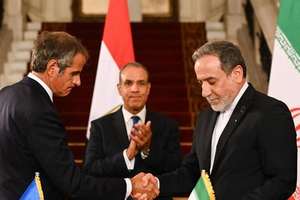
International Atomic Energy Agency (IAEA) Director General Rafael Grossi told member states in Vienna that the technical document signed in Cairo on Tuesday with Iranian Foreign Minister Abbas Araghchi sets out procedures for inspections, notifications, and reporting obligations.

“This includes all facilities and installations in Iran, and it also contemplates the required reporting on all the attacked facilities, including the nuclear material present at those,” Grossi said.

Grossi acknowledged the challenges posed by the aftermath of June’s Israeli and US airstrikes on Iranian nuclear facilities, which forced the withdrawal of inspectors for safety reasons.

“Safeguards approaches to each facility will be reviewed at technical level, always in line with the rights and obligations of Iran and the agency under the NPT safeguards agreement, which are not modified or amended as a result of these practical steps,” he said.

“Resuming this indispensable work would not be an automatic or simple bureaucratic process,” he said, adding that Iran’s parliament had since adopted a law suspending cooperation, creating the risk of non-compliance with safeguards obligations.

But he pointed to what he called “Iran’s declared willingness not to leave the NPT and to continue working inside the international nonproliferation regime” as a positive signal.

Grossi said the new arrangement reflected both Iran’s concerns and the agency’s technical requirements. “Iran and the agency will now resume cooperation in a respectful and comprehensive way,” he told diplomats.

He said the talks were aimed at finding ways to reconcile Iran’s new legislation with its binding treaty obligations, adding: “This required dialogue and a thorough understanding of the situation and Iran’s specific views.”

"Iran expressed concerns, and it is our duty as an international organization to listen to those and find ways and means to address them in a form which would reconcile these important parameters, Iran's new law and the existing legal obligations emanating from the NPT safeguards agreement”

While he cautioned that “there may be difficulties and issues to be resolved,” he underlined the broader importance of the agreement.

“It is my sincere hope that the resumption of our inspection activity in Iran may serve as a good sign, as a reference, an indication that agreements and understandings are possible,” Grossi said.

Iran suspended all cooperation with the IAEA following the June attacks, and last month Britain, France and Germany triggered a UN “snapback” process to restore sanctions unless inspections resumed and Iran provided clarity on its enriched uranium stockpile.

Araghchi, speaking in Cairo on Tuesday, said the agreement created “a practical mechanism for cooperation” but warned that Iran would void it if hostile measures, including renewed UN sanctions, were imposed.

Diplomats say whether the new steps will be sufficient to head off European sanctions will depend on how quickly inspectors can resume work and whether Tehran provides full accounting of its highly enriched uranium.

Most Viewed

Iran negotiators ordered to return after internal rift over Islamabad talks
1
EXCLUSIVE

Iran negotiators ordered to return after internal rift over Islamabad talks

2
ANALYSIS

US blockade enters murky phase as tankers spoof signals and buyers hesitate

3
ANALYSIS

Why the $100 billion Hormuz toll revenue is a myth

4

US tightens financial squeeze on Iran, warns banks over oil money flows

5
ANALYSIS

US blockade targets Iran oil boom amid regional disruption

Banner
Banner

Spotlight

  • Hardliners push Hormuz ‘red line’ as US blockade tests Iran’s leverage
    INSIGHT

    Hardliners push Hormuz ‘red line’ as US blockade tests Iran’s leverage

  • Ideology may be fading in Iran, but not in Kashmir's ‘Mini Iran'
    INSIGHT

    Ideology may be fading in Iran, but not in Kashmir's ‘Mini Iran'

  • War damage amounts to $3,000 per Iranian, with blockade set to add to losses
    INSIGHT

    War damage amounts to $3,000 per Iranian, with blockade set to add to losses

  • Why the $100 billion Hormuz toll revenue is a myth
    ANALYSIS

    Why the $100 billion Hormuz toll revenue is a myth

  • US blockade targets Iran oil boom amid regional disruption
    ANALYSIS

    US blockade targets Iran oil boom amid regional disruption

  • Iran's digital economy battered by prolonged blackout
    INSIGHT

    Iran's digital economy battered by prolonged blackout

  • China, Russia urge Europe to halt UN snapback after Iran-IAEA deal

    China, Russia urge Europe to halt UN snapback after Iran-IAEA deal

  • Iran, UN nuclear watchdog reach agreement on resuming inspections

    Iran, UN nuclear watchdog reach agreement on resuming inspections

•
•
•

More Stories

Israel's Qatar strikes aim to intimidate Iran but unsettle Arab states

Sep 10, 2025, 10:50 GMT+1

Tuesday’s strike on the leadership of the Iran-backed Palestinian group Hamas in Doha aims to intimidate Tehran but also sows unease among Arab states, Israeli and American experts told Iran International.

The airstrikes on Tuesday apparently sought to assassinate Hamas's leadership and negotiating team, drawing condemnation from Qatar and its Arab neighbors.

They seemed to miss their intended targets, killing a Qatari security official and five lower-ranking Hamas personnel.

Miri Eisin, a retired colonel in the Israeli military who served in the intelligence establishment, said the attacks' upshot for Israel remains unclear, but even if unsuccessful sends a message of strength to Iran.

“This is actually something that shows Israel’s intelligence prowess. Even if the operation wasn’t successful and the leaders of Hamas left a few minutes before, we still know where they were,” she said.

“It makes everyone go ‘oh my god, Israel has amazing intelligence and operational capabilities and that threatens Iran’," Eisin added.

A 12-day surprise Israeli campaign against Iran in June battered the Islamic Republic's military and nuclear infrastructure and killed hundreds of civilians and military personnel along with several top nuclear scientists.

Israeli leaders mooted assassinating Iran's Supreme Leader Ali Khamenei but apparently made no attempt to do so, while Iran's President Massoud Pezeshkian, the parliament speaker and the judiciary chief survived an attack.

32 Israelis were killed in Iranian counterattacks, even as Israeli attacks on Iranian air defenses appeared to give Israeli planes free reins in enemy skies.

“They see that we have Qatar, and anywhere in Iran," Eisin said. "That’s very threatening and has an intimidating effect on Tehran. However, it also intimidates a lot of our other allies like the UAE and Bahrain.”

Those two Persian Gulf states had opened formal relations with Israel in the so-called Abraham Accords in 2020, but both condemned the attacks.

Qatar’s Emir Sheikh Tamim bin Hamad Al Thani condemned what he called a “reckless criminal attack” in a phone call with US President Donald Trump according to an official readout, adding it was “a flagrant violation of its sovereignty and security."

Trump told reporters he was "very unhappy about it, very unhappy about every aspect."

'Loose cannon'

Former Israeli military intelligence chief, Danny Citronowicz, said the move may bring diplomatic fallout and that Iran may now seek to exploit the strikes to drive a wedge between the Persian Gulf powers and Israel.

“It makes Israel seem like a loose cannon so it’s something Israel must take into consideration,” Citronowicz said. “The possible risk of spillover will worry the UAE and Saudi Arabia. Iran will now be able to pressure these countries with connections to Israel and exploit this to push their own agenda.”

Saudi Arabia is widely seen as the an ultimate diplomatic prize for Israel's drive to normalize its relations with regional powers. The world's top oil exporter is weary of Iran's regional policies but has said it will not recognize Israel until a Palestinian state is established.

Benham Ben Taleblu, an Iran expert at the US think tank the Foundation for the Defense of Democracies (FDD), told Iran International that the strikes conveyed that Israel is prepared to carry out assassinations despite diplomatic risks.

"Israel’s strike against Hamas leaders in Doha is yet another sign to the Islamic Republic and its Axis of Resistance that its terrorist leaders will not be be safe hiding in plain sight," he said.

However, the Iranian-American director of FDD"s Iran program said Iran will capitalize on the Doha attack for its political gains.

"Tehran is trying to spin the attack as a growing ring of Israeli aggression and part of quest for hegemony, which is quite rich for a regime which just orchestrated a multi-front war against Israel," he added.


Israel strike in Qatar signals drive for regional dominance, Iran security chief warns

Sep 10, 2025, 09:44 GMT+1

Ali Larijani, Iran’s top security official, reacted to Israel’s strike on Qatar with a pointed message in Arabic on social media, casting the attack as a signal of Israel’s future ambitions for regional dominance.

Larijani, secretary of Iran’s Supreme National Security Council, wrote, “The message of the Zionist entity’s recent crime in Qatar is clear: O countries of the region! Prepare yourselves for my coming domination.”

His comments came a day after Israeli warplanes bombed a Hamas office in Doha, in what Israel called an operation against the group’s senior leadership. Qatar condemned the attack as “criminal and cowardly,” while Iran labeled it an “extremely dangerous” violation of sovereignty and international law.

President Masoud Pezeshkian also condemned the strike as an “illegal, inhumane and anti-peace action,” telling Qatar’s Emir Sheikh Tamim bin Hamad Al Thani by phone that Tehran stood in solidarity with its Persian Gulf neighbor. “Attacking an independent country is a clear violation of national sovereignty and the UN Charter,” he said.

  • Iran condemns 'extremely dangerous' Israeli strike on Hamas in Qatar

    Iran condemns 'extremely dangerous' Israeli strike on Hamas in Qatar

The strike in Doha, coordinated with Washington according to Israeli media, killed members of Hamas’s political bureau, though both Qatar and Hamas gave no details on casualties. Israeli Prime Minister Benjamin Netanyahu later insisted the raid was “a wholly independent Israeli operation.”

Hamas, which has based its political leadership in Qatar for years, said its ceasefire delegation had survived the attack and accused the United States of enabling Israel’s actions while presenting itself as mediator.

The incident comes as Iran recalibrates its foreign policy after a June war with Israel and the United States devastated its military and nuclear infrastructure.

  • Calls for Larijani to lead nuclear talks may signal push for rethink

    Calls for Larijani to lead nuclear talks may signal push for rethink

Supreme Leader Ali Khamenei has in recent weeks sought Qatari mediation with the West, and Larijani is seen as a potential lead negotiator in renewed nuclear talks as UN sanctions loom.

Iranian media and analysts have floated his possible return to leading nuclear negotiations, amid suggestions the Supreme National Security Council could regain control of the dossier as Tehran faces looming UN sanctions under the European-triggered “snapback” mechanism.

The strike on Qatar marks a dangerous new front in a region still unsettled by June’s 12-day war, when Israeli and US forces targeted Iran’s nuclear facilities and military infrastructure.

China, Russia urge Europe to halt UN snapback after Iran-IAEA deal

Sep 10, 2025, 07:13 GMT+1

China and Russia welcomed Iran’s deal with the UN nuclear watchdog to resume inspections, with Beijing calling it a positive step to ease tensions over Tehran’s nuclear program and Moscow urging European powers to halt their move to reimpose UN sanctions.

China’s foreign ministry said on Wednesday the resumption of supervision by the International Atomic Energy Agency (IAEA) was “a positive step in promoting the easing of the Iran nuclear issue.”

“Congratulations! It is a good moment for the E3 to stop and cancel the SnapBack procedure in order to keep the positive trend,” Moscow’s envoy to international organizations in Vienna, Mikhail Ulyanov, wrote on X shortly after IAEA chief Rafael Grossi unveiled the deal in Cairo.

Grossi said he and Iranian Foreign Minister Abbas Araghchi had agreed on “practical modalities” for inspections during talks in the Egyptian capital, describing the step as “a door we are opening” toward restoring verification activities that were cut off after Israeli and US airstrikes on Iranian nuclear facilities earlier this year.

Araghchi told reporters the understanding was designed to reflect “Iran’s exceptional security conditions and the Agency’s technical requirements,” while warning that Tehran would void the deal if “hostile actions” such as the reinstatement of Security Council resolutions were pursued.

The European powers triggered the snapback mechanism under UN Security Council resolution 2231 in late August, a process that will restore international sanctions unless the Council adopts a new resolution by the end of September to extend relief. The mechanism was activated after the three accused Tehran of failing to comply with nuclear obligations.

The resumption of inspections is seen as a critical step in assessing Iran’s stockpiles of enriched uranium and its compliance with the Non-Proliferation Treaty. Western diplomats say any suspension of the snapback move would depend on Iran’s willingness to implement the deal in full.

Israeli academic released from militia custody in Iraq, Trump says

Sep 9, 2025, 21:37 GMT+1

An Israeli-Russian academic abducted and held hostage by an Iran-backed militia in Iraq has been released, US President Donald Trump said in a social media post on Tuesday.

"I am pleased to report that Elizabeth Tsurkov, a Princeton Student, whose sister is an American Citizen, was just released by Kata’ib Hezbollah (MILITANT Hezbollah), and is now safely in the American Embassy in Iraq after being tortured for many months," Trump wrote on Truth Social, without elaborating.

"I will always fight for JUSTICE, and never give up. HAMAS, RELEASE THE HOSTAGES, NOW!"

Tsurkov, a PhD student at Princeton University in New Jersey and fellow at the New Lines Institute, disappeared in March 2023 while conducting research in Iraq.

Her sister Emma confirmed Tsurkov's release after 903 days in captivity and thanked the Trump administration.

No group among Iraq's kaleidoscope of armed militias had claimed responsibility for her disappearance. Israeli officials believed she was being held by Kata’ib Hezbollah, an Iran-backed Shi’ite militia.

While the group has denied involvement, an Iraqi official had told Israel’s Channel 11 that she was first detained by Iraq’s intelligence service—or by individuals impersonating officers—before being transferred to the militia.

Kata’ib Hezbollah is one of several Iran-backed and funded armed groups which took part in Iraq's conflict against Islamic State militants but amassed power and influence by maintaining their arms after the fighting largely winded down.

While no official comment was made on the case by Tehran, an Iraqi security source told Iran International that among those considered for the exchange was Mohammadreza Nouri, a member of Iran’s Islamic Revolutionary Guard Corps (IRGC) Quds Force.

Nouri was sentenced to life imprisonment in Iraq in September 2023 for orchestrating the murder of American citizen Stephen Troell in Baghdad in November 2022. It was not clear if he was ultimately released.

Mohammadreza Nouri and slain IRGC Quds Force commander Qassem Soleimani
100%
Mohammadreza Nouri and slain IRGC Quds Force commander Qassem Soleimani

Iran, UN nuclear watchdog reach agreement on resuming inspections

Sep 9, 2025, 18:30 GMT+1

The UN nuclear watchdog says it has reached an agreement with Iran on the practical modalities to resume inspection activities in Iran, which were halted following the Israeli and US airstrikes on Iranian atomic facilities in June.

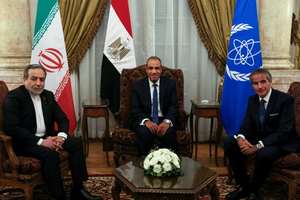
The deal was reached following negotiations between Iran's top diplomat Abbas Araghchi and the UN nuclear watchdog's chief Rafael Grossi in Cairo.

"In Cairo today, agreed with Iran's foreign minister Araghchi on practical modalities to resume inspection activities in Iran," Grossi said in a post on X.

"This is an important step in the right direction. Grateful to Egypt's Foreign Minister Badr Abdelatty for his commitment and engagement," he added.

In a press conference in Cairo, Araghchi said the two sides reached "an understanding on how to implement Iran’s Safeguards commitments in light of developments stemming from the unlawful attacks against Iran’s nuclear facilities."

"This agreement establishes a practical mechanism for cooperation that reflects both Iran’s exceptional security conditions and the Agency’s technical requirements. It also ensures that cooperation continues in a manner that respects Iran’s national sovereignty and fulfills the Agency’s verification requirements," Araghchi added.

However, he warned that "should any hostile action be taken against Iran — including the reinstatement of revoked UN Security Council resolutions — Iran will consider these agreed practical steps null and void."

Addressing the same press conference, Grossi described the agreement with Iran on resuming inspections as a "step in the right direction."

“This is a door we are opening and of course, there are many things that still need to happen, we have to implement it in good faith. Others around the world can help us and I am sure that they will do right that," he told reporters without giving further details.

Iran suspended all cooperation with the agency including international inspections after Israel and the United States attacked its nuclear facilities in June.

The resumption of IAEA inspections is seen as critical for verifying Iran’s compliance with the Non-Proliferation Treaty (NPT) and preventing further escalation.

France, Germany, and the United Kingdom, before moving to trigger the UN snapback sanctions mechanism on August 28, urged Iran to fully cooperate with the agency and engage in dialogue with the United States.

The Security Council must vote by late September on whether to make sanctions relief permanent. For the resolution to pass, it would need at least nine votes in favor and no vetoes from the five permanent members: the United States, Britain, France, Russia, and China.