• العربية
  • فارسی
Brand
  • Iran Insight
  • Politics
  • Economy
  • Analysis
  • Special Report
  • Opinion
  • Podcast
  • Iran Insight
  • Politics
  • Economy
  • Analysis
  • Special Report
  • Opinion
  • Podcast
  • Theme
  • Language
    • العربية
    • فارسی
  • Iran Insight
  • Politics
  • Economy
  • Analysis
  • Special Report
  • Opinion
  • Podcast
All rights reserved for Volant Media UK Limited
volant media logo

South Korea drafts new UN resolution on Iran sanctions snapback

Sep 9, 2025, 01:37 GMT+1Updated: 01:30 GMT+0

South Korea, the rotating president of the United Nations Security Council this month, has finalized a draft resolution that would permanently lift international sanctions on Iran but is unlikely to be adopted, Reuters reported on Monday citing diplomats.

South Korea’s draft is not an initiative of its own, but a legal requirement under Resolution 2231 which endorsed the 2015 nuclear deal with Iran and is due to expire on October 18.

According to Resolution 2231, sanctions will automatically return unless the Council votes to keep them lifted. That is why the Council president must first table a resolution to “permanently lift” sanctions as its failure is what triggers the re-imposition.

The procedural step comes as part of the so-called “snapback” mechanism triggered by Britain, France, and Germany late last month, after they accused Tehran of violating its commitments under the deal.

The Security Council must vote by late September on whether to make sanctions relief permanent. For the resolution to pass, it would need at least nine votes in favor and no vetoes from the five permanent members: the United States, Britain, France, Russia, and China.

The adoption of the South Korean resolution is regarded as highly unlikely, as Washington and its European allies remain adamant that Tehran has failed to live up to its obligations, Reuters reported.

As no member tabled a resolution within ten days of the process being launched, it fell to South Korea, as Council president for September, to do so. Seoul’s move on Monday fulfills that requirement, though a date for the vote has not yet been set.

Britain, France, and Germany are still pressing Iran to meet three conditions before the end of the month, which could allow for a temporary delay in sanctions snapback and create space for new negotiations.

Russia and China

Moscow and Beijing have taken a different approach. Late last month, they finalized their own draft resolution calling for a six-month extension of the nuclear deal, urging all parties to return to negotiations.

The resolution of extension of sanctions is expected to be put to vote once Tehran and European powers reach an agreement.

Should Russia and China move first, their text would almost certainly face a veto from the United States, France, or Britain.

Most Viewed

Iran negotiators ordered to return after internal rift over Islamabad talks
1
EXCLUSIVE

Iran negotiators ordered to return after internal rift over Islamabad talks

2
ANALYSIS

US blockade enters murky phase as tankers spoof signals and buyers hesitate

3
ANALYSIS

Why the $100 billion Hormuz toll revenue is a myth

4

US tightens financial squeeze on Iran, warns banks over oil money flows

5
ANALYSIS

US blockade targets Iran oil boom amid regional disruption

Banner
Banner

Spotlight

  • Hardliners push Hormuz ‘red line’ as US blockade tests Iran’s leverage
    INSIGHT

    Hardliners push Hormuz ‘red line’ as US blockade tests Iran’s leverage

  • Ideology may be fading in Iran, but not in Kashmir's ‘Mini Iran'
    INSIGHT

    Ideology may be fading in Iran, but not in Kashmir's ‘Mini Iran'

  • War damage amounts to $3,000 per Iranian, with blockade set to add to losses
    INSIGHT

    War damage amounts to $3,000 per Iranian, with blockade set to add to losses

  • Why the $100 billion Hormuz toll revenue is a myth
    ANALYSIS

    Why the $100 billion Hormuz toll revenue is a myth

  • US blockade targets Iran oil boom amid regional disruption
    ANALYSIS

    US blockade targets Iran oil boom amid regional disruption

  • Iran's digital economy battered by prolonged blackout
    INSIGHT

    Iran's digital economy battered by prolonged blackout

  • Nuclear crisis looms as Iran faces sanctions snapback, expert warns

    Nuclear crisis looms as Iran faces sanctions snapback, expert warns

•
•
•

More Stories

Iran taps Doha to broker nuclear talks, signals flexibility on uranium stocks

Sep 9, 2025, 00:33 GMT+1

Iran’s Supreme Leader has sought Qatar’s mediation with the West as Tehran signals rare flexibility on its enriched uranium as part of efforts to avert UN sanctions snapback, multiple sources told Iran International.

On September 4, the emir of Qatar received Iranian President Masoud Pezeshkian's verbal message in a meeting in Doha with Iran's top diplomat Abbas Araghchi, the Qatari state news agency confirmed at the time.

Informed sources told Iran International that the message, sent upon Khamenei’s instruction, was a request for Sheikh Tamim bin Hamad to mediate between Tehran and Western powers to avert the reimposition of UN sanctions under the so-called “snapback” mechanism.

Sheikh Tamim has been asked to facilitate contacts with the United States and the E3 (France, Germany, UK) to resume nuclear diplomacy and prevent the return of sanctions, Iran International has learned.

According to the sources, Tehran is showing greater flexibility over discussions concerning the whereabouts and handling of its highly enriched uranium stockpiles, an issue it had refused to broach with interlocutors after recent US airstrikes.

UN nuclear watchdog

Foreign Minister Araghchi will meet with IAEA Director General Rafael Grossi in Cairo on Tuesday, Iranian foreign ministry spokesman Esmail Baghaei confirmed on Monday.

He said the meeting will aim to wrap up negotiations on the framework of Iran-IAEA cooperation.

The developments come amid intensified scrutiny from UN inspectors. The UN nuclear watchdog has said it has lacked visibility into the status or location of Iran’s highly enriched uranium since attacks on Iranian enrichment facilities began in mid-June.

The IAEA reported in August that Iran held roughly 440.9 kg of 60% enriched uranium, enough, if further refined, for around ten nuclear devices.

Diplomatically, the stakes are rising. Britain, France and Germany triggered the snapback mechanism under UN Security Council Resolution 2231 in late August, setting a timetable under which sanctions relief will lapse unless extended by another resolution.

The E3 are still pressing Iran to meet three conditions before the end of the month, which could allow for a temporary delay in sanctions snapback and create space for new negotiations.

These include allowing UN inspectors access to nuclear sites damaged in Israeli strikes, clarifying the status of its enriched uranium stockpile, and entering direct talks with the United States.

South Korea's resolution to lift sanctions

As the Council president for September, South Korea on Monday finalized a draft resolution that would permanently lift international sanctions on Iran. However, the resolution is unlikely to be adopted, Reuters reported citing diplomats.

South Korea’s draft is not an initiative of its own, but a legal requirement under Resolution 2231 which endorsed the 2015 nuclear deal with Iran and is due to expire on October 18.

According to Resolution 2231, sanctions are presumed to return automatically unless the Council votes to keep them lifted. That is why the Council president must first table a resolution to “permanently lift” sanctions as its failure is what triggers the automatic re-imposition.

The procedural step comes as part of the so-called “snapback” mechanism. Under the process, the Security Council must vote by late September on whether to make sanctions relief permanent.

For the resolution to pass, it would need at least nine votes in favor and no vetoes from the five permanent members: the United States, Britain, France, Russia, and China.

The adoption of the resolution is largely regarded as highly unlikely, as Washington and its European allies remain adamant that Tehran has failed to live up to its obligations.

If no member tabled a resolution within ten days of the process being launched, it fell to South Korea, as Council president for September, to act. Seoul’s move on Monday meets that requirement, though no vote date has yet been set.

Calls for Larijani to lead nuclear talks may signal push for rethink

Sep 9, 2025, 00:30 GMT+1
•
Behrouz Turani

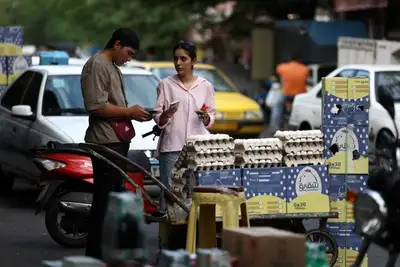
A proposal to return control of Iran’s nuclear negotiations to the Supreme National Security Council (SNSC) has highlighted the growing influence of its new chief, Ali Larijani—and a potential readjustment of Tehran’s negotiation strategy as UN sanctions loom.

Supporters of the move argue that only the SNSC can bring coherence to policymaking, uniting rival political factions in a way the Foreign Ministry cannot.

That case was made most clearly in a rare joint commentary by moderate journalist Mohammad Ghoochani and conservative commentator Mohammad Mohajeri, published September 7 in the centrist daily Ham Mihan.

“(The council) is the only body capable of coordinating between the military, diplomats, revolutionaries, reformist and conservative politicians, the President and the Supreme Leader, or indeed between the government and the people,” they wrote.

Notably, they criticized the continued involvement of former SNSC secretary Ali Shamkhani in the nuclear talks and dismissed the idea of handing the file to Foreign Minister Abbas Araghchi, arguing that Iran could no longer afford the stagnation of recent years.

A day after the joint editorial, Iran’s former ambassador to Germany, Alireza Sheikh Attar, told the conservative daily Farhikhtegan that Larijani had been appointed on September 5 to oversee Iran’s entire nuclear dossier.

If confirmed, Larijani would once more take center stage in tough negotiations in the weeks ahead.

Regroup or rethink?

Although final authority rests with Khamenei, the emphasis on the Council’s coordinating role by Ghoochani and Mohajeri may point to Larijani’s potential to nudge the Leader toward a definitive decision on engagement with Washington.

Khamenei appeared to be abandoning his “neither war nor talks” line in his meeting with President Masoud Pezeshkian and his cabinet. The state of “no war, no peace,” he said, was “the enemies’ plan” and harmed the country.

Hints of movement are already emerging.

Conservative diplomat Alireza Sheikh Attar suggested on Monday that decisions have been made about resuming talks with the United States, possibly coupled with a request to delay activation of the snapback mechanism until negotiations yield results.

Whether these shifts mark a genuine rethink or simply a bureaucratic reshuffle remains uncertain.

Council on the rise?

The proposal by the two prominent editors also reflects frustration at the Council’s long decline.

Created in 1990 amid post-war turmoil, the SNSC was designed as a mechanism for cohesion, tasked with protecting national interests and reconciling state institutions with public needs.

Its first secretary, Hassan Rouhani, held the post for 16 years and was credited with pragmatism, particularly in preventing new wars.

The nuclear dossier was assigned to the Council in the early 2000s, but under president Mahmoud Ahmadinejad control shifted to the foreign ministry—and effectively to Ahmadinejad himself, whose chaotic management eventually forced Khamenei to open backchannels of his own.

Larijani’s return has been welcomed by moderates as a potential revival of rational governance, though his occasional firebrand remarks—such as threats against IAEA chief Rafael Grossi—have raised doubts.

Larijani may bring new energy to the Council. The question is whether he can direct diplomacy in ways others could not or his ascent merely repackages decisions that still flow from the top.

Iran urges IAEA chief to condemn attacks on atomic sites ahead of Cairo talks

Sep 8, 2025, 22:00 GMT+1

Iran has urged the International Atomic Energy Agency (IAEA) chief to denounce US and Israeli attacks on its nuclear facilities, ahead of a planned meeting between Rafael Grossi and Iran's foreign minister in Cairo.

In a speech to the IAEA on Monday, Iran’s ambassador to the United Nations and other international organizations in Vienna condemned the attacks and said the nuclear watchdog must address them in future.

"The unprecedented attacks by the US and the Zionist regime on Iran's nuclear facilities must be reflected in the IAEA Director General’s reports on nuclear safety and security," Reza Najafi said.

“These unprecedented and illegal actions pose a serious threat to international peace and security, undermine nuclear safety and security, and damage the non-proliferation regime,” Tasnim News quoted Najafi as saying.

His comments came shortly before Iran's foreign ministry confirmed that Foreign Minister Abbas Araghchi plans to meet the UN nuclear watchdog's chief during his Tuesday visit to Egypt.

The two sides will meet to finalize negotiations on the new framework for Iran-IAEA cooperation, Esmail Baghaei said.

The meeting will be held in Cairo, where Araghchi will stop over en route to Tunis, Iran Nuance website reported, adding that it will aim to “finalize the Iran-IAEA deal.”

Grossi delivered his report to the Board of Governors on Monday, outlining discussions with Iran on a possible agreement to resume inspections.

The Trump administration began 60 days of negotiations with Iran in April, setting a deadline for a new agreement. On June 13, one day after the deadline expired, Israel launched a surprise military campaign against Iran, targeting nuclear and military facilities and killing senior commanders and nuclear scientists.

On June 22, the United States began its own military intervention, dubbed Operation Midnight Hammer, striking three major nuclear sites in Esfahan, Natanz and Fordow.

The Israeli and US strikes were reportedly aimed at sites suspected of uranium enrichment activity, not civilian nuclear power plants such as Bushehr.

Iran drafting resolution to ban attacks

Najafi said that in recent years Iran has repeatedly urged the IAEA Board to include language prohibiting attacks or threats against nuclear facilities, but those calls went unanswered.

According to state media, Iran now plans to present a draft resolution on banning such attacks at the upcoming IAEA General Conference.

The General Conference is distinct from the Board of Governors and serves as a broad, annual policy-setting assembly for all member states. The Board of Governors is a smaller executive body that meets more frequently to handle ongoing issues.

The 69th Regular Session of the IAEA General Conference will convene from September 15 to 19 in Vienna.

Even if Iran’s draft on nuclear facility attacks fits the General Conference for its policy-oriented, normative goal, a Board resolution would be more relevant for enforcing specific safeguards or addressing violations.

Former Iran defense ministry advisor resurfaces after Egypt abduction

Sep 8, 2025, 21:49 GMT+1

Amir Mousawi, a former Iranian diplomat and defense ministry adviser whose abduction in Egypt had earlier been confirmed by Tehran, wrote on X that he has returned to Iraq.

Earlier in the day, foreign ministry spokesman Esmail Baghaei confirmed that Mousawi had entered Egypt on an Iraqi passport and was abducted there.

“We heard this morning about the disappearance of Mr. Amir Mousawi in Egypt. He is not currently a diplomat. He had previously served as a cultural attaché," Baghaei told reporters in Tehran.

On Monday Mousawi’s account on X posted a message in Arabic saying "Mr. Amir Mousawi has gone missing at Egypt airport after arriving on an official invitation! His disappearance raises major questions about his safety, and there are urgent demands to reveal the truth immediately.”

The post was addressed to Egypt’s prime minister, parliament speaker and judiciary chief.

Iranian news website Didban Iran cited suggestions in regional media that he may have been abducted by agents of Israel’s Mossad in Cairo.

Mousawi -- also spelled Mousavi -- has previously been active as a Middle East analyst on Iranian state-linked channels including Al-Alam and Al-Mayadeen, as well as on Qatar’s Al Jazeera, where he frequently expressed anti-Israeli views.

He also headed the Islamic Republic’s Center for Strategic and International Studies and served as an adviser to Iran’s defense ministry.

He left Algeria in 2018 after four years as Iran’s cultural attaché there.

The Al-Monitor news site reported that Mousawi faced accusations of spreading Shi’ite ideology on behalf of Tehran. Algerian commentators and political activists had demanded his expulsion, describing his activities as “dangerous and suspicious.”

In 2017, he sparked controversy in Algeria with remarks against Anissa al-Mansali, the widow of former Algerian president Houari Boumédiène. On Facebook, Mousawi criticized her comments on Iran, saying she wished for the fall of the Islamic Republic. The post drew backlash from Algerians who rallied in support of al-Mansali.

Mousawi also drew attention last month, after telling an Iraqi outlet that Iran could build nuclear weapons within “a few hours,” saying the country had sufficient enriched uranium and infrastructure to produce up to “24 nuclear bombs.”

Zarif urges US talks, tempts Trump with Iran interest section as legacy

Sep 8, 2025, 20:14 GMT+1

Former Iranian foreign minister Mohammad Javad Zarif on Monday called for direct talks with the United States and proposed opening stand-alone US and Iranian interest sections, saying Donald Trump could frame such a move as a legacy achievement.

“This is a good opportunity for Iran to begin its direct and comprehensive negotiations with the United States with the establishment of interests sections in Tehran and Washington,” Zarif said at the general assembly of Iran's Reform Front.

Switzerland has been representing US interests in Iran since Washington and Tehran cut ties shortly after the 1979 Islamic Revolution. Iran also has an Interests Section inside the Pakistani embassy in Washington DC.

What Zarif is proposing is a stand-alone Interests Section, similar to the one Iran currently operates in Cairo, Egypt, which protects the Islamic Republic's interests in the absence of an ambassador.

"The establishment of interests sections in the two countries could be an important achievement for the current US president, as he could then claim that he accomplished something his predecessors were unable to do," Zarif said.

Zarif said Iran must recognize the strategic differences between its adversaries.

“The difference between the United States and Israel in relation to Iran is in strategy; meaning that Israel is seeking the collapse of the system and the disintegration of Iran, but the United States wants a weakened Iran," he said. "On the other hand, Iran still has the ability to strike Israel, and at the same time the region is worried about Israel’s unilateralism.

An architect of Iran's now mostly-defunct nuclear deal, Zarif has been out of favor since he resigned as vice-president in March a few days after Supreme Leader Ali Khamenei voiced his opposition to US talks.

Last month, Khamenei reiterated his opposition to calls by Tehran moderates for direct negotiations with the United States, insisting that Washington’s hostility could not be resolved through talks and those calling for talks are short-sighted.

Snapback and domestic woes

Zarif warned that the snapback mechanism launched by European powers at the UN Security Council threatens to end the 2015 nuclear agreement permanently,

“Those who say the activation of the snapback mechanism has no economic impact do not realize that if Europe and the United Nations reinstate their sanctions, its severe negative impact will be felt not only on the macroeconomy but also directly on the daily life of the people,” Zarif said, adding that failure to act could consign the JCPOA to history within weeks.

Domestically, he called for a careful narrative that maintains Iran’s nuclear rights while avoiding a sense of retreat.

“We must inside the country produce a narrative that does not create a feeling of defeat and retreat, and at the same time stand firm on our positions and not retreat from having the right to enrichment," Zarif said.