• العربية
  • فارسی
Brand
  • Iran Insight
  • Politics
  • Economy
  • Analysis
  • Special Report
  • Opinion
  • Podcast
  • Iran Insight
  • Politics
  • Economy
  • Analysis
  • Special Report
  • Opinion
  • Podcast
  • Theme
  • Language
    • العربية
    • فارسی
  • Iran Insight
  • Politics
  • Economy
  • Analysis
  • Special Report
  • Opinion
  • Podcast
All rights reserved for Volant Media UK Limited
volant media logo

Iran parliament presses government to apply law limiting IAEA cooperation

Aug 26, 2025, 12:00 GMT+1

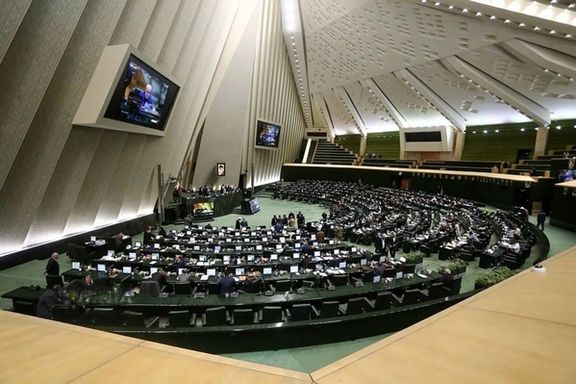
Iran’s parliament on Tuesday urged the Foreign Ministry and Atomic Energy Organization to fully implement existing legislation limiting cooperation with the International Atomic Energy Agency, amid growing pressure from Western powers and renewed nuclear talks in Geneva.

In a strongly worded statement, the National Security and Foreign Policy Committee of Iran’s parliament described IAEA chief Rafael Grossi as “a servant of the US and the Zionist regime,” accusing him of siding with hostile powers and remaining silent over attacks on Iranian nuclear sites, according to remarks published by state media.

The committee said the agency’s failure to condemn the June strikes on Iranian nuclear facilities showed its bias and warned that continued cooperation without security guarantees could risk more attacks. “We do not trust the agency. Do not allow them to pave the way again,” the statement said.

Law passed after June attacks shifts oversight

The legislation referenced by parliament was passed after the June 22 military strikes by the US and Israel on Fordow, Natanz, and Isfahan. The law stipulates that any future inspection by the International Atomic Energy Agency must receive approval from the Supreme National Security Council.

Foreign Minister Abbas Araghchi said following the law’s passage that Iran remains committed to the Nuclear Non-Proliferation Treaty. He said reports of a total suspension were “fake news” and that Iran’s core obligations would be upheld, but on a new, more limited basis.

“The Parliament of Iran has voted for a halt to collaboration with the IAEA until the safety and security of our nuclear activities can be guaranteed,” Araghchi said on X in July.

Talks resume as UN sanctions deadline approaches

The parliamentary message comes as Iranian diplomats prepare for talks with the E3 — Britain, France, and Germany — in Geneva. The negotiations aim to prevent the possible reimposition of United Nations sanctions under the snapback mechanism, which European powers have warned they may activate if Iran is found to be in non-compliance with the 2015 deal.

On Tuesday, Foreign Ministry spokesperson Esmail Baghaei said Iran is concerned about the consequences of snapback but emphasized the issue should not cause public anxiety. He confirmed that Tehran is reviewing a Russian-drafted UN resolution that would delay the expiration of Resolution 2231 by six months.

Iran says the European parties no longer have legal authority to activate the mechanism. “When we say they have no legal standing, it means we not only reject their authority but are also deeply concerned about the implications,” Baghaei said.

Khamenei rejects direct talks with US

The renewed tensions follow public comments by Supreme Leader Ali Khamenei, who on Sunday rejected proposals for direct negotiations with the United States. He said US hostility was structural and could not be resolved through talks.

“Those who say, ‘Why don’t you negotiate directly with the United States and solve the issues,’ are superficial,” Khamenei said in Tehran. “Given America’s true objective, these issues are unsolvable.”

He also accused the US of preparing for regime change following the June attacks, saying American agents met in Europe a day later to discuss a future Iranian government. “They even appointed a king,” he said.

Khamenei’s remarks came after reformist leaders urged engagement with Washington and full IAEA cooperation in exchange for sanctions relief. He rejected the call as naive and dangerous.

Most Viewed

Iran negotiators ordered to return after internal rift over Islamabad talks
1
EXCLUSIVE

Iran negotiators ordered to return after internal rift over Islamabad talks

2
ANALYSIS

US blockade enters murky phase as tankers spoof signals and buyers hesitate

3
ANALYSIS

Why the $100 billion Hormuz toll revenue is a myth

4

US tightens financial squeeze on Iran, warns banks over oil money flows

5
INSIGHT

Ideology may be fading in Iran, but not in Kashmir's ‘Mini Iran'

Banner
Banner

Spotlight

  • Hardliners push Hormuz ‘red line’ as US blockade tests Iran’s leverage
    INSIGHT

    Hardliners push Hormuz ‘red line’ as US blockade tests Iran’s leverage

  • Ideology may be fading in Iran, but not in Kashmir's ‘Mini Iran'
    INSIGHT

    Ideology may be fading in Iran, but not in Kashmir's ‘Mini Iran'

  • War damage amounts to $3,000 per Iranian, with blockade set to add to losses
    INSIGHT

    War damage amounts to $3,000 per Iranian, with blockade set to add to losses

  • Why the $100 billion Hormuz toll revenue is a myth
    ANALYSIS

    Why the $100 billion Hormuz toll revenue is a myth

  • US blockade targets Iran oil boom amid regional disruption
    ANALYSIS

    US blockade targets Iran oil boom amid regional disruption

  • Iran's digital economy battered by prolonged blackout
    INSIGHT

    Iran's digital economy battered by prolonged blackout

•
•
•

More Stories

Iran says it is concerned about return of UN sanctions, ahead of Geneva talks

Aug 26, 2025, 09:54 GMT+1

Iran said on Tuesday it is concerned about the possible return of United Nations sanctions under the snapback mechanism and is taking diplomatic steps to manage the fallout, ahead of a looming deadline and scheduled nuclear talks with European powers in Geneva.

Foreign Ministry spokesperson Esmail Baghaei said Tehran is fully aware of the risks and warned that the issue should not become a source of psychological pressure on the public. “We are not trying to reduce the importance of this issue,” he told reporters in Tehran. “We are concerned about the consequences and have long been working on this. But it should not turn into a source of anxiety for our citizens.”

Baghaei said Iran has included the snapback issue in its foreign policy planning for months and is engaged in consultations with China and Russia. He confirmed that Iranian officials are reviewing the text of a Russian-drafted UN Security Council resolution that proposes delaying the expiration of Resolution 2231 by six months.

Talks with Europe scheduled as deadline nears

The comments come ahead of a new round of nuclear talks scheduled to take place in Geneva on Tuesday between Iran and the E3 — Britain, France, and Germany.
Iran’s Deputy Foreign Minister Majid Takht-Ravanchi is set to lead the delegation. European diplomats have said the talks will focus on Iran’s nuclear program and efforts to avoid the reimposition of UN sanctions.

The E3 have warned they may trigger the snapback mechanism by the end of August if Iran does not return to talks with concrete results. Under UN Security Council Resolution 2231, all UN sanctions lifted under the 2015 nuclear deal could automatically be reimposed if one party accuses Iran of non-compliance.

Tehran argues the European countries no longer have legal standing to activate the measure and has rejected the legitimacy of such a move. “When we say the European parties have no legal standing, that means we not only reject their authority, but are also deeply concerned about the implications,” Baghaei said.

Iran’s position on extension remains unclear

In recent weeks, Iranian officials have sent mixed signals about the prospect of extending the timeline. Top security official Ali Larijani has rejected the idea, saying the deal was never meant to be extended repeatedly and warning that “rule-twisting” would not be accepted.

However, according to Axios, Foreign Minister Abbas Araghchi has shown some openness to the Russian proposal in private talks with his European counterparts. A final decision has not been made.

Iran slams Australia envoy's ouster, warns of response

Aug 26, 2025, 09:34 GMT+1

Iran has condemned Australia’s decision to expel its ambassador and said the move will not go unanswered, calling it a politically driven act tied to Australia’s internal affairs.

Foreign Ministry spokesperson Esmail Baghaei said on Tuesday that “any inappropriate diplomatic action will be answered in kind,” and that Iranian officials were reviewing their response. He said the allegations were “completely baseless” and described the accusations as part of a broader Western narrative.

Australia on Tuesday ordered Ambassador Ahmad Sadeghi and three other diplomats to leave the country within seven days. Prime Minister Anthony Albanese said intelligence from the Australian Security Intelligence Organisation indicated Iran was behind two arson attacks targeting Jewish sites in Sydney and Melbourne last year. He also said Australian diplomats had already left Tehran and were now in a third country.

Iran rejects charges, links move to public pressure

Baghaei said the accusations were unfounded and rejected suggestions of religious or ethnic bias. “The concept being invoked [antisemitism] has no place in our religion,” he said, adding that it is a Western construct used for political purposes.

He also suggested the decision was linked to domestic political pressure in Australia. “Millions have protested in Australia against the genocide in Gaza,” he said. “This move against Iran, which is a move against diplomacy, appears to be compensation for the limited criticism Australia has directed at the Zionist regime.”

Earlier this month, during a pro-Palestinian march across Sydney’s Harbour Bridge, some demonstrators carried images of Iran’s Supreme Leader Ali Khamenei. Israel’s Foreign Minister Gideon Sa’ar condemned the protest, describing Khamenei as “the most dangerous leader of fundamentalist Islam” and accusing participants of aligning with radical elements.

Iran warns next war with Israel will spread to new battlefronts

Aug 26, 2025, 08:58 GMT+1

Iran will abandon military restraint and open new battlefronts if another war erupts with Israel, parliament speaker Mohammad Bagher Ghalibaf said on Tuesday, as both sides signal that another conflict may be near.

“In the next possible war, our restraint will end,” Ghalibaf told parliament. “New geographic areas and targets will be added to our response. And if the enemy overreaches again, the war could expand into economic and political arenas as well.”

Ghalibaf said Iran’s military had learned from the June war, addressed weaknesses, and was ready to act more forcefully. He cited recent naval missile drills as a message to prevent “enemy miscalculation.”

“Our armed forces have planned in a way that leaves no room for misjudgment,” he said. “That exercise made clear: the next conflict will not be limited in scope.”

His remarks came days after former Israeli intelligence officer Jacques Neriah said a second round of conflict with Iran is “imminent,” warning Tehran may soon act to restore its deterrence. “The Iranians will not be able to live with this humiliation for long,” he said.

Military rhetoric hardens as both sides prepare for escalation

Ghalibaf’s comments come amid a series of increasingly combative statements from Iranian and Israeli military leaders following the 12-day war in June.

Iran’s Defense Minister Aziz Nasirzadeh said last week that Tehran had developed a new generation of missiles with greater capabilities than those used during the conflict. “The missiles we used in the 12-day war were built several years ago. Today we possess missiles with far better capabilities, and if the Zionist enemy embarks on another adventure, we will certainly use them,” he told reporters in Tehran.

Nasirzadeh said Iranian forces relied entirely on domestically produced systems during the war and accused Israeli media of hiding the damage caused. “The world saw that the missiles we used struck their targets and inflicted heavy losses on the Zionist enemy,” he said. He said Israel’s defense systems, including US-made THAAD and Patriot batteries, had failed to intercept most of Iran’s missiles by the end of the war.

“In the early days, about 40% of our missiles were intercepted, but by the end of the war, 90% were striking their targets,” Nasirzadeh said. “This showed that our experience was growing while the defensive power of the other side was decreasing.”

Adding to the pressure, senior IRGC general and Supreme Leader adviser Yahya Rahim Safavi said earlier this month that Iran is still in a “stage of war” with Israel and the United States. He warned that Iran was preparing for multiple forms of confrontation — not only military, but also cyber, diplomatic and media-based — and urged the country to build strength across all domains to prevent further aggression.

The June conflict began with a surprise Israeli strike on Iranian military and nuclear sites on June 13. Tehran said 1,062 people were killed, including 786 military personnel and 276 civilians. Israel said it killed more than 30 senior Iranian security officials and 11 nuclear scientists. Iran retaliated with missile strikes that killed 31 civilians and one off-duty Israeli soldier.

Australia expels Iranian envoy after blaming Tehran for antisemitic attacks

Aug 26, 2025, 07:00 GMT+1

Australia accused Iran of two antisemitic arson attacks and ordered its ambassador to leave the country within seven days, Prime Minister Anthony Albanese said on Tuesday.

Albanese said intelligence gathered by the Australian Security Intelligence Organisation showed Iran had directed attacks on a kosher restaurant in Sydney and a synagogue in Melbourne last year.

“These were extraordinary and dangerous acts of aggression orchestrated by a foreign nation on Australian soil,” Albanese told reporters.

ASIO Director-General Mike Burgess said Iran had “sought to disguise its involvement,” but the agency assessed it was behind the attacks on the Lewis Continental Kitchen in Sydney on 20 October last year, and the Adass Israel Synagogue in Melbourne on 6 December. He said Iran was “likely” behind further incidents targeting Jewish Australians.

Revolutionary Guards to be listed as terrorist group

Albanese also said Iran’s Revolutionary Guards would be listed as a terrorist group and confirmed Australia’s diplomats had left Tehran and were now in a third country.

Foreign Minister Penny Wong said Iran’s ambassador Ahmad Sadeghi and three officials must leave within a week. This is the first time Australia has expelled an envoy since World War Two.

The Australian government had previously warned Ambassador Ahmad Sadeghi over inflammatory social media posts, including a June message where he described Israel as “the most venomous snake on the planet” and a “genocidal regime.”

The remarks were made during the June conflict between Iran and Israel. A spokesperson told Iran International that Australia had made clear to Tehran that such rhetoric was unacceptable and urged all sides to de-escalate. Sadeghi had also faced past warnings for praising Hezbollah and calling for Israel’s destruction.

Politicians condemn Iran as Jewish community says fears were long ignored

Australian politicians condemned Iran’s alleged role in antisemitic attacks. Victorian Premier Jacinta Allan said her anger “will never subside,” calling the synagogue fire an act of terror. NSW Premier Chris Minns said the revelations were “deeply disturbing and utterly unacceptable.” Independent MP Allegra Spender, whose electorate includes the targeted Bondi restaurant, urged the government to continue working with Jewish communities to address security concerns.

Jewish community figures said the announcement confirmed long-standing concerns. Rabbi Gabi Kaltmann, whose synagogue is near the one targeted in Melbourne, called it “an I told you so moment” that had shaken community trust. Naomi Levin, CEO of the Jewish Community Council of Victoria, said the attacks were acts of international terrorism and a threat to national security.

Israel also welcomed the expulsion, with its embassy in Australia saying Iran was a threat not only to Jews or Israel but to the free world.

Former detainee says response is overdue

Australian academic Kylie Moore-Gilbert, who was imprisoned in Iran and is a vocal critic of Tehran, welcomed the move but said it had been too long coming.

In a post on X, she applauded the government's "decisive action against a brutal regime" but called it "a shame that it's taken them so long."

“For years now the Iranian-Australian community and other victims of the IRGC, including myself, have been literally screaming at rallies... that Iranian agents are operating brazenly and with few consequences here on Australian soil,” she wrote.

Travel warning for Australians in Iran

The Department of Foreign Affairs has advised Australians and dual nationals in Iran to leave the country if it is safe to do so. The Australian embassy in Tehran has suspended operations, and the government has warned of a high risk of arbitrary detention for foreigners.

Albanese said the government’s actions sent a message that foreign-directed aggression on Australian soil would not be tolerated.
Russia drafts UN resolution to delay snapback of Iran sanctions

Aug 25, 2025, 23:00 GMT+1

Russia has circulated a UN Security Council draft resolution to extend the implementation period of Resolution 2231 by six months in a bid to postpone the looming reimposition of sanctions on Iran under the resolution's snapback mechanism.

"The Russian resolution was circulated, but not put in blue yet," the French mission to the UN confirmed to Iran International.

Britain, France, and Germany have warned Iran they would restore UN sanctions by the end of August by triggering the mechanism unless Tehran reengages in talks on its nuclear program immediately and produced concrete results.

The new draft resolution proposed by Russia at the UN Security Council calls for a six-month technical extension of Resolution 2231, which underpins the 2015 Iran nuclear deal.

The draft, seen by Iran International, seeks to delay until 18 April 2026 the expiration of the resolution’s ten-year term, with the possibility of further extensions.

According to the text, the Council would suspend "any substantive consideration of matters related to resolution 2231 and the Joint Comprehensive Plan of Action (JCPOA)" during the extension, while urging all original participants to resume negotiations immediately.

The resolution was first reported by UK-based news outlet Amwaj.

The report came shortly after a phone call between Iranian President Masoud Pezeshkian and his Russian counterpart Vladimir Putin and on the eve of Iran's nuclear talks with Europe in Geneva.

In the call, Putin expressed optimism that discussions on the “snapback” mechanism would yield a “desirable result,” according to Tehran’s readout.

Iran's stance on deadline extension

In July negotiations with Iran held in Turkey, the three European powers reportedly proposed sidestepping a confrontation by agreeing to a six-month extension of their "snapback" authority in return for a set of concessions.

Last week, Iran's top security official rejected the European proposal for the extension of the August deadline, saying, "Some countries have requested a six-month extension [of snapback deadline], but Iran does not agree."

"We had an agreement that was supposed to be completed within 10 years; it's not meant to be extended repeatedly. This is just rule-twisting, and we do not accept it," Ali Larijani said in an interview with the Supreme Leader's website.

However, a Friday report by Axios said Iran's foreign minister Abbas Araghchi expressed some openness to the extension of the snapback during a phone call with his European counterparts on the same day.

Araghchi, however, has stressed this is for the United Nations Security Council to decide, not for Iran,” the report said citing an unnamed source.

European officials have pressed Iran to re-engage with Washington and cooperate fully with the International Atomic Energy Agency (IAEA) to avert the return of sanctions. EU foreign policy chief warned last week that Iran’s cooperation was crucial as the deadline neared.

Despite Western pressure, Supreme Leader Ali Khamenei on Sunday rejected calls by moderates in Tehran for direct talks with the United States, insisting that hostility from Washington could not be resolved through negotiations.