• العربية
  • فارسی
Brand
  • Iran Insight
  • Politics
  • Economy
  • Analysis
  • Special Report
  • Opinion
  • Podcast
  • Iran Insight
  • Politics
  • Economy
  • Analysis
  • Special Report
  • Opinion
  • Podcast
  • Theme
  • Language
    • العربية
    • فارسی
  • Iran Insight
  • Politics
  • Economy
  • Analysis
  • Special Report
  • Opinion
  • Podcast
All rights reserved for Volant Media UK Limited
volant media logo

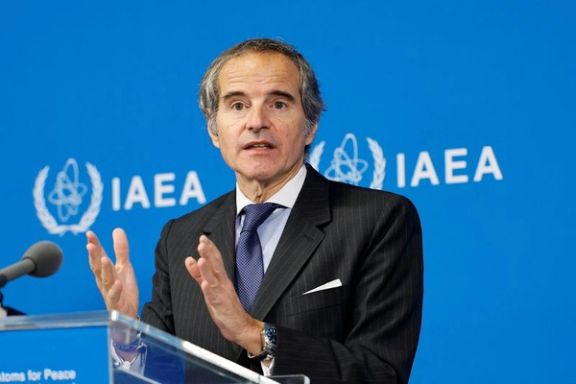
Tehran could resume enriching uranium in a matter of months, Grossi says

Jun 29, 2025, 06:25 GMT+1Updated: 07:57 GMT+0

There has been significant damage to Iran’s nuclear facilities, yet the country could restart uranium enrichment within months, the head of the International Atomic Energy Agency (IAEA) said.

“The capacities they have are there. They could have, in a matter of months—or even less—a few cascades of centrifuges spinning and producing enriched uranium,” Grossi told CBS News' Face the Nation on Sunday.

“Frankly speaking, one cannot claim that everything has disappeared. There is still something there.”

Asked about the extent of damage from US military actions on nuclear sites, Grossi said it depends on how one defines damage.

“What happened—particularly in Fordow, Natanz, and Isfahan, where Iran used to have, and still retains to some extent, capabilities for uranium treatment, conversion, and enrichment—has been significantly destroyed,” he said.

US special envoy Steve Witkoff said on Wednesday there are “signs” that an agreement can be reached with Iran.

“We’re having conversations with the Iranians. There are multiple interlocutors reaching out to us. I think that they’re ready,” he told CNBC.

In his interview with CBS, Grossi clarified that the IAEA is not involved in those negotiations. “Our role is to monitor and verify. We’re not part of the direct talks,” he explained.

On whether Iran’s nuclear activity before the US and Israeli strikes indicated weaponization, Grossi said: “We haven’t seen a program aiming in that direction. But they are not answering very important, pending questions. That’s the truth.”

Last week, Iran’s parliament passed a bill to suspend cooperation with the IAEA. The Guardian Council approved it shortly afterward.

Grossi said that Iran remains a signatory to the Non-Proliferation Treaty (NPT), which overrides domestic law.

“An international treaty takes precedence. You cannot cite internal legislation to avoid your international obligations. Iran has not done so yet, which I see as constructive,” Grossi added.

Most Viewed

Iran negotiators ordered to return after internal rift over Islamabad talks
1
EXCLUSIVE

Iran negotiators ordered to return after internal rift over Islamabad talks

2
ANALYSIS

US blockade enters murky phase as tankers spoof signals and buyers hesitate

3
ANALYSIS

Why the $100 billion Hormuz toll revenue is a myth

4

US tightens financial squeeze on Iran, warns banks over oil money flows

5
ANALYSIS

US blockade targets Iran oil boom amid regional disruption

Banner
Banner

Spotlight

  • Hardliners push Hormuz ‘red line’ as US blockade tests Iran’s leverage
    INSIGHT

    Hardliners push Hormuz ‘red line’ as US blockade tests Iran’s leverage

  • Ideology may be fading in Iran, but not in Kashmir's ‘Mini Iran'
    INSIGHT

    Ideology may be fading in Iran, but not in Kashmir's ‘Mini Iran'

  • War damage amounts to $3,000 per Iranian, with blockade set to add to losses
    INSIGHT

    War damage amounts to $3,000 per Iranian, with blockade set to add to losses

  • Why the $100 billion Hormuz toll revenue is a myth
    ANALYSIS

    Why the $100 billion Hormuz toll revenue is a myth

  • US blockade targets Iran oil boom amid regional disruption
    ANALYSIS

    US blockade targets Iran oil boom amid regional disruption

  • Iran's digital economy battered by prolonged blackout
    INSIGHT

    Iran's digital economy battered by prolonged blackout

•
•
•

More Stories

Digging at bombed nuclear site in Iran invites further attacks, expert warns

Jun 28, 2025, 23:00 GMT+1

The recent reports of Iran's secret activities at the nuclear sites bombed by the US invite further attacks and heighten nuclear risks despite the current ceasefire with Israel, a former UN nuclear watchdog inspector told Iran International.

“This is a ceasefire agreement. This is not arms control. This is a ceasefire agreement, and the war can start at any moment,” said David Albright, the president of the Institute for Science and International Security in Washington, DC.

“There were reports yesterday in the media or on X that Iran was digging back into the Isfahan mountain complex where enriched uranium may be stored. It is inviting attacks.”

Following the Israeli and US airstrikes against Iran's nuclear facilities, around 400 kilograms—more than 900 pounds—of uranium enriched to 60% purity is unaccounted for, and their whereabouts is not known.

Albright warned that Iran’s highly enriched uranium stockpiles remain “very dangerous if there’s some remaining numbers of gas centrifuges that can be activated.”

"While the centrifuge program of Iran has essentially been destroyed, there are these remaining stocks of enriched uranium and there's 60% enriched, there's 20% enriched, and there's 5% enriched," he said.

"And Iran had the time and the motivation to move portions of these stocks, but it's really hotly debated on the outside where they are."

US President Donald Trump in an interview with Fox News ruled out the possibility that the stockpiles had been moved.

“They didn't move anything. You know, they moved themselves. They were all trying to live,” Trump said, adding that moving those uranium stockpiles would have been “very heavy, very, very heavy” and “very dangerous to do.”

Albright referred to the ongoing uncertainty about the amount and whereabouts of Iran’s enriched uranium: “It’s really hotly debated on the outside where they are. Some argue many of them are in Fordow where Iran thought Fordow was invincible… Others think maybe there’s some in the mountain complex near the Isfahan nuclear site.”

“It would be very risky for Iran to move forward with these things in the present climate,” he warned, adding that if Iran did restart enrichment using its existing stocks, “you’re talking weeks and months to get enough for several nuclear weapons.”

Nuclear weapon still an option for Iran

Albright said Iran’s centrifuge program and nuclear weapons infrastructure have been destroyed in Israeli and American airstrikes, but in the long term, Tehran “could reconstitute perhaps a very small enrichment program, a fraction of what it had, but that could be enough to give it weapon grade uranium for a bomb.”

“They would end its enrichment program and give up its stocks of enriched uranium in a verifiable manner. And that’s the expectation,” the expert added.

Albright urged the US to push the Islamic Republic to acknowledge defeat and avoid sacrificing its people for a nuclear weapon.

“Our challenge in the United States is to get the regime to realize they’ve lost this war… and that they shouldn’t take the view of some authoritarian leaders or dictators where they feel that they’re gonna fight and sacrifice their own people’s welfare… in order to hang on to some… enriched uranium. Is that really worth it?”

“If Iran continues down this path, it could end up sparking some retaliation, or not retaliation, but efforts by Israel to shut the tunnels again and make sure that the sites cannot be used," he warned.

Evin prison chief fled Israeli strike after secret warning to son – Fox News

Jun 28, 2025, 19:52 GMT+1

Hedayatollah Farzadi, the head of Iran’s notorious Evin Prison fled the site moments before Israeli airstrikes, Fox News reported Saturday, citing leaked messages between Israeli intelligence and Farzadi's son.

Israeli agents warned Amir-Hossein Farzadi that his father would be targeted unless political prisoners were released.

“It will happen in a few minutes,” one message read. Amir relayed the threat to his uncle, who then evacuated Farzadi from the prison compound just before the deadly strikes, the report said.

  • 'Repression bodies': inside the Iranian security apparatus hit by Israel

    'Repression bodies': inside the Iranian security apparatus hit by Israel

The Tehran Province Prisons Department dismissed the report, saying that Farzadi was inspecting the prison wards at the time of the strike.

Farzadi has led the notorious prison since 2022 and has been sanctioned by the US and EU for human rights abuses.

“Numerous protesters have been sent to Evin Prison… where they have been subjected to torture and other forms of physical abuse,” the US Treasury Department said in April.

Prior to Evin, Farzadi served at prisons in Kermanshah and Tehran where he oversaw amputations, torture, and alleged sexual violence against inmates. He remains on the US Specially Designated Nationals list.

Throughout its 12-day war on Iran, Israel launched strikes on key state organs tasked with domestic surveillance, protest suppression, detention and propaganda, targeting what it called “repression infrastructure.”

The attacks focused on intelligence and security agencies, judicial and detention systems, and officials overseeing internal control.

Israel framed the strikes as a show of solidarity with Iranian protesters and an effort to disrupt the Islamic Republic’s repressive capacity.

Jewish community targeted in Iran after Israel war, rights group says

Jun 28, 2025, 17:19 GMT+1

Iranian authorities have summoned and interrogated at least 35 Jewish citizens in Tehran and Shiraz over their contact with relatives in Israel, the US-based human rights group HRANA said.

The inquiries, which focused on personal ties with relatives in Israel, mark the most expansive state action against Iranian Jews in decades, HRANA reported.

“Emphasis was placed on avoiding any phone or online communication with abroad,” the rights group cited a source close to the families as saying.

Jews are not the only minority group being targeted. Iranian security forces raided at least 19 homes belonging to members of the Baha’i community during and after the Israel war, human rights groups say.

Analysts say the moves reflect both the state’s effort to project strength and its its reliance on targeting minorities when facing external setbacks.

Rights concerns

Pegah Bani-Hashmi, a senior legal researcher, told Iran International that the accusations of espionage against Jewish and Bahai citizens are “factually baseless and violate Iran’s own constitution.”

“These communities usually stay out of political activism,” she said. “There’s no legal or security justification for what the state is doing.”

Shahin Milani, director of the Human Rights Documentation Center, told Iran International the arrests expose the government’s failure to identify actual threats.

“Baha’is and other citizens don’t have access to classified information. They’re always under surveillance. Accusing them of spying is just an excuse to deflect blame and intimidate the population,” he said.

Iran’s parliament passed a law in 2011 banning travel to Israel. Many Iranian Jews maintain familial and religious ties there, and rights experts say the law has become a tool for suppression.

Community fears grow

A senior figure in Tehran’s Jewish community told HRANA that “we’ve seen limited cases before, but this is unprecedented.” He said the scale of recent summonses has triggered deep concern about the safety of their community.

Authorities have not issued formal charges but told families the actions are intended to gather information to prevent crimes.

Rights lawyers warn that these measures could constitute discrimination based on religion and ethnicity, in breach of Iran’s obligations under international law.

Rani Omrani, an independent journalist, told Iran International that Tehran’s tactics reflect its inability to confront Israel directly.

“Because they can’t reach Israel, they’re punishing innocent Jews at home,” he said.

Iran says open to transferring highly enriched uranium abroad - Al Monitor

Jun 28, 2025, 01:50 GMT+1

Tehran would be open to a nuclear deal in which it transfers its stockpile of highly enriched uranium abroad, Iran's ambassador to the United Nations said in an interview with Al-Monitor.

The dovish comments were the most expansive official expression of Iran's nuclear stance since the end of a twelve-day war which saw the Islamic Republic's nuclear sites attacked by Israel and the United States.

However, the whereabouts of Iran's near-bomb-grade uranium stockpiles remains unknown.

"We would be prepared to transfer our stockpiles of 60% and 20% enriched uranium to another country and have them transferred out of Iranian territory in return for receiving yellowcake," Ambassador Amir Saeid Iravani told Al-Monitor in a written interview.

Before the conflict, Iranian officials had loudly rejected the idea of such a transfer.

Around 400 kilograms—more than 900 pounds—of uranium enriched to 60% purity is unaccounted for. A former top UN nuclear official told Iran International that the risk of Iran's acquisition of a nuclear weapon remains until the International Atomic Energy Agency (IAEA) confirms its location.

“One should not relax because this material as such is enough for 10 nuclear weapons if it is enriched further to 90%,” former Deputy Director General of the IAEA Olli Heinonen told Eye for Iran.

Regional consortium

In his interview with Al-Monitor, Iravani added Tehran is open to a regional nuclear consortium broached in US-Iran talks but does not see the plan as a substitute for a domestic nuclear program.

Iran, the envoy said, is willing to “collaborate with all countries in our region that operate nuclear reactors — whether on issues of reactor safety or the supply of reactor fuel,” if such a move is a “complementary initiative” and not a substitute for Iran’s domestic nuclear program.

The United States, according to domestic media reports, proposed to Iran in talks preceding the war the creation of a nuclear consortium potentially including Saudi Arabia, Oman, the United Arab Emirates, Qatar and the United States.

The arrangement would aim to supply Iran with enriched uranium for civilian use in exchange for partial sanctions relief on Iran’s oil exports, central bank, and the shipping sector.

Address unknown

The location of the proposed consortium was not determined in the talks as Tehran insisted enrichment must occur on its own soil.

Axios and The New York Times reported earlier this week that US negotiator Steve Witkoff has proposed creating a regional consortium to break the deadlock in stalled nuclear talks.

Iran's foreign ministry early this month rejected giving up domestic enrichment, but Iravani appeared to give the consortium idea its biggest official endorsement yet.

“A consortium could very well be one of the forms such cooperation might take,” Al-Monitor quoted Iravani as saying.

Asked if Iran would limit enrichment to the auspices of the consortium operating within Iran, Iravani told the outlet: “In principle, we have no objection to that; however, we should consider it based on the details of any potential proposals we receive.”

Iravani told the outlet that the Iranian parliament's recent move to bar cooperation with the International Atomic Energy Agency "does not signify Iran’s withdrawal from the NPT," or non-proliferation treaty.

A nuclear deal with the United States, Iravani added, must respect “Iran’s rights as a responsible (NPT) member”.

'Repression bodies': inside the Iranian security apparatus hit by Israel

Jun 27, 2025, 23:40 GMT+1
•
Maryam Sinaiee

Throughout Israel's 12-day war on Iran, it launched strikes on key state organs tasked with domestic surveillance, protest suppression, detention and propaganda, targeting what it called “repression infrastructure.”

The attacks focused on intelligence and security agencies, judicial and detention systems, and officials overseeing internal control.

Israel framed the strikes as a show of solidarity with Iranian protesters and an effort to disrupt the Islamic Republic’s repressive capacity.

"The Israeli Defense Force is now attacking with unprecedented force regime targets and government repression bodies in the heart of Tehran," the Israeli military said on Monday.

The targeted institutions included the following:

Islamic Revolutionary Guard Corps Intelligence Organization (SAS)

Established in 2009, SAS operates alongside the Ministry of Intelligence (MOIS) and reports directly to Supreme Leader Ali Khamenei.

Known for ideological rigidity, it suppresses dissent, especially through social media monitoring. It controls Evin Prison’s Ward 2A and other black sites nationwide.

Israel struck the SAS headquarters in Tehran on June 15, reportedly killing:

  • Brigadier General Mohammad Kazemi (SAS chief)
  • Hassan Movahed (or Mohaqeq) (deputy)
  • General Mohsen Bagheri (senior officer)

A separate strike on June 13 heavily damaged the Internal Security Bureau building in Tehran. Casualties remain undisclosed.

Sarallah Headquarters

This key IRGC base oversees security across Tehran and coordinates Basij deployments during unrest.

Israel struck Sarallah HQ on June 23, a day before a ceasefire.

Social media reports indicate the facility was destroyed.
Multiple officers and personnel are believed killed, but names have been withheld.

Tehran Basij Headquarters

On June 13, a central Tehran Basij building sustained heavy damage from an Israeli strike.

Israel also hit Basij bases in the cities of Zarandiyeh, Behbahan and Karaj.

Casualties remain undisclosed.

Ministry of Intelligence (MOIS)

Known as VAJA, the ministry leads Iran’s domestic and foreign intelligence operations, including political repression. It controls Evin’s Wards 209 and 240.

Israel targeted the MOIS building in Tehran on June 15.

Casualties are likely but remain unnamed.

Internal Security Bureau of Law Enforcement Forces

This unit of Iran’s national police force (FARAJA) handles surveillance, riot control, and arrests.

Its Tehran HQ was struck on June 22 and 23.

Brigadier General Alireza Lotfi, acting head of the bureau, was killed in the June 22 attack.

The Islamic Republic of Iran Broadcasting (IRIB)

Israel labeled IRIB as a key “propaganda tool” of the Islamic Republic.

Its headquarters in Tehran was bombed on June 16, about an hour after civilian evacuation alerts.

Confirmed dead:

  • Nima Rajabpour (staff)
  • Masoumeh Azimi (staff)
  • One civilian bystander

Evin Prison in Tehran

Evin holds political detainees, dual nationals, those deemed as threats to national security, as well as others serving time for financial crimes.

The prison was struck on June 23, causing extensive damage to the main gate, administration offices, library, infirmary and Wards 4, 6 and the Women’s Ward.

Confirmed dead in the strike so far were:

  • Ruhollah Tavasoli and Vahid Heydarpour (prison officials)
  • Ali Ghanatkar (judicial official)
  • Several conscript soldiers
  • Two physicians, a social worker, her 5-year-old child, a visiting family member, and a bystander.

All inmates were later transferred to other facilities.