• العربية
  • فارسی
Brand
  • Iran Insight
  • Politics
  • Economy
  • Analysis
  • Special Report
  • Opinion
  • Podcast
  • Iran Insight
  • Politics
  • Economy
  • Analysis
  • Special Report
  • Opinion
  • Podcast
  • Theme
  • Language
    • العربية
    • فارسی
  • Iran Insight
  • Politics
  • Economy
  • Analysis
  • Special Report
  • Opinion
  • Podcast
All rights reserved for Volant Media UK Limited
volant media logo

Island vibes? US and Iran joust over where to enrich uranium

Maryam Sinaiee
Maryam Sinaiee

Iran International

Jun 5, 2025, 19:21 GMT+1Updated: 08:07 GMT+0
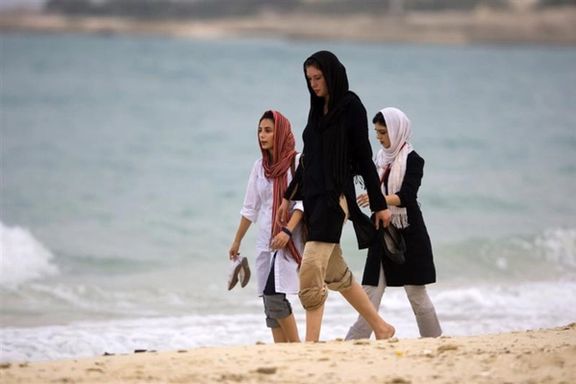
Iranian women walk along the southern beach on the island of Kish in the Persian Gulf

The location of a proposed uranium enrichment consortium to help resolve Iran's nuclear impasse is emerging as a central point of contention, as Tehran insists enrichment must occur on its own soil.

Axios and The New York Times reported earlier this week that US negotiator Steve Witkoff has proposed creating a regional consortium to break the deadlock in stalled nuclear talks.

In a June 4 speech, Supreme Leader Ali Khamenei rejected the US proposal—delivered by Oman’s Foreign Minister Badr Albusaidi on May 31—saying a halt to enrichment inside Iran was “out of the question.”

Iranian Foreign Ministry Spokesman Esmail Baghaei had earlier said Tehran would welcome a nuclear fuel consortium “if it were proposed,” but added: “It cannot be a substitute for enrichment within Iran.”

Details of the proposal

According to Axios on June 2, Witkoff’s proposal would, restrict enrichment to civilian-grade levels (3%), suspend underground enrichment for a negotiated period, limit above-ground enrichment to reactor fuel standards under IAEA guidelines and require Iran’s immediate adoption of the IAEA’s Additional Protocol

On June 3, Axios quoted a senior Iranian official as saying Iran might accept a consortium based in Iran—but not if enrichment occurred elsewhere.

Qeshm, Kish or some other island?

A New York Times report on the same day noted that Omani and Saudi officials had discussed placing the facility on a Persian Gulf island.

“This would potentially give both sides a talking point,” the Times wrote, with Iran claiming enrichment is still happening and the US saying it isn’t on Iranian soil.

Israel Hayom cited an unnamed Arab source suggesting the facility might be built on one of three disputed islands: Greater Tunb, Lesser Tunb or Abu Musa. All are controlled by Iran but claimed by the UAE.

The outlet described the idea as a “diplomatic sleight of hand,” sparking backlash on Iranian social media, where critics warned it would undermine Iran’s sovereignty claims.

Alternative: the Oman model

Some nuclear experts, including former Iranian negotiator Hossein Mousavian, have promoted a model where Oman would host the facility, operated by Iran under IAEA supervision.

In this setup, ore would be processed in Saudi Arabia, enriched product would be stored there and a commercial office based in the UAE.

Possible participants

Axios reported the consortium could include the US, Iran, Saudi Arabia, the UAE, Qatar, and possibly Turkey. Other outlets have mentioned Oman, Egypt, and Russia.

A June 3 editorial in Arman-e Melli argued Egypt’s inclusion would offer both regional legitimacy and diplomatic utility.

“Egypt’s good relations with the US and Europe could serve as a bridge between Iran and the West,” it noted.

Most Viewed

Iran negotiators ordered to return after internal rift over Islamabad talks
1
EXCLUSIVE

Iran negotiators ordered to return after internal rift over Islamabad talks

2
ANALYSIS

US blockade enters murky phase as tankers spoof signals and buyers hesitate

3
ANALYSIS

Why the $100 billion Hormuz toll revenue is a myth

4

US tightens financial squeeze on Iran, warns banks over oil money flows

5
ANALYSIS

US blockade targets Iran oil boom amid regional disruption

Banner
Banner

Spotlight

  • Hardliners push Hormuz ‘red line’ as US blockade tests Iran’s leverage
    INSIGHT

    Hardliners push Hormuz ‘red line’ as US blockade tests Iran’s leverage

  • Ideology may be fading in Iran, but not in Kashmir's ‘Mini Iran'
    INSIGHT

    Ideology may be fading in Iran, but not in Kashmir's ‘Mini Iran'

  • War damage amounts to $3,000 per Iranian, with blockade set to add to losses
    INSIGHT

    War damage amounts to $3,000 per Iranian, with blockade set to add to losses

  • Why the $100 billion Hormuz toll revenue is a myth
    ANALYSIS

    Why the $100 billion Hormuz toll revenue is a myth

  • US blockade targets Iran oil boom amid regional disruption
    ANALYSIS

    US blockade targets Iran oil boom amid regional disruption

  • Iran's digital economy battered by prolonged blackout
    INSIGHT

    Iran's digital economy battered by prolonged blackout

•
•
•

More Stories

Khamenei rebuffed US nuclear offer, not talks

Jun 5, 2025, 16:45 GMT+1
•
Behrouz Turani

Tehran’s response to Washington’s proposal to halt uranium enrichment in exchange for sanctions relief has been marked by deep distrust and combative rhetoric—but not a complete break from diplomacy.

The proposal has yet to be revealed officially, but it is said to include a halt-for-sanctions-relief clause and an enrichment consortium involving the United States and some of Iran’s Arab neighbors.

“Why do you interfere in whether Iran enriches uranium or not—what business is it of yours?” Supreme Leader Ali Khamenei said on Wednesday, dismissing US objections to domestic enrichment by Iran.

Khamenei delivered one of his harshest speeches in recent memory, denouncing the proposal and pouring cold water on hopes of an immediate resolution to the nuclear standoff.

Minutes later, Foreign Minister Abbas Araghchi reiterated that no deal excluding enrichment would be accepted, and Nuclear Chief Mohammad Eslami declared that Iran’s program would continue “with full force.”

Strategic ambiguity

Despite the sharpness of his remarks, Khamenei stopped short of ending negotiations—a nuance not lost on Iranian analysts, many of whom saw room for continued backchannel diplomacy.

His tone of suspicion echoed deeper cultural themes. Some commentators likened it to the writings of novelist Sadeq Hedayat, whose characters in Alaviyeh Khanom and Haji Aghaview the world as a web of deception and distrust, responding with preemptive cynicism.

Even before Khamenei’s speech, Iranian outlets had rallied against any framework that excluded enrichment. The official news agency IRNA published two sharply worded pieces on Tuesday.

One called Washington’s position “a gamble doomed to fail,” while the other warned the talks were headed for deadlock unless Tehran’s right to enrich was preserved.

State broadcaster IRIB maintained its usual pessimism.

In a symbolic moment following Khamenei’s address, it abruptly cut a weather update to broadcast a Moscow street interview, where Russian citizens praised Iran’s founder, Ayatollah Ruhollah Khomeini, and his prophecy of communism’s fall—blending nostalgia with present-day complexity.

Press looking ahead

Wednesday marked the anniversary of Khomeini’s death in 1989, a national holiday with no newspapers in circulation. Even online publications were dominated by reverential pieces about the former Supreme Leader.

But Tuesday’s press and foreign-based Persian outlets struck a more somber tone. The reformist site Rouydad24 warned that what it called the achievements of five rounds of talks remained fragile, and that issues like zero enrichment could trigger collapse.

Though few in Iran or abroad believe war is imminent, some exiled Iranian analysts suggested the impasse could embolden Israel, long bent on dismantling Tehran’s nuclear infrastructure.

Meanwhile, U.S. media reported that a new round of indirect talks—possibly in Oman—could take place as early as next week.

Iran says it uses US-made reactors, enrichment level ‘not important’

Jun 5, 2025, 11:44 GMT+1

Iran is using American-made nuclear reactors and maintains that the level of uranium enrichment is not inherently important, the head of the Atomic Energy Organization of Iran (AEOI) said, as negotiations between Tehran and Washington remain stalled.

"The Tehran reactor we use was built by the Americans. In Canada and the United States, reactors operate with 90% enriched fuel," Mohammad Eslami said on Iranian state television. "So the percentage of enrichment has no particular significance."

The nuclear chief also stressed that 20% enrichment is necessary for research reactors. "Without the capability to design and manufacture reactors and complete the fuel cycle, one cannot claim to be nuclear-capable — and we are now at that level," he said.

Eslami emphasized that Iran’s nuclear development is rooted in national capability. "We have now reached full maturity in the nuclear fuel cycle, which is the foundation of the nuclear industry," he said.

"The West cannot tolerate this and continues to escalate its hostility toward us in every possible way."

He accused the United States and its allies of trying to maintain monopolistic control over nuclear technology. "They have always said Iran should have no domestic reactor and must import fuel indefinitely," Eslami said. "Our response has always been clear: we will not accept such dependency."

  • Khamenei dismisses US proposal: ‘US can’t do a damn thing about our program’

    Khamenei dismisses US proposal: ‘US can’t do a damn thing about our program’

  • Nuclear chief aligns with Khamenei: No retreat on Iran’s program

    Nuclear chief aligns with Khamenei: No retreat on Iran’s program

He said the West’s portrayal of Iran’s nuclear intentions was misleading. "They do not want development unless it’s under their flag," he said. "But all our progress has been achieved by our own youth."

On Wednesday, Eslami vowed to continue advancing the country’s nuclear program with “faith, revolutionary spirit, and heartfelt conviction,” asserting that Iran will resist excessive demands from the United States and other global powers in a statement addressed to Supreme Leader Ali Khamenei.

Diplomatic talks mediated by Oman between Iranian Foreign Minister Abbas Araghchi and US envoy Steve Witkoff have stalled over Iran’s insistence on maintaining enrichment activities inside the country.

US and Iran want an agreement, UN nuclear watchdog says

International Atomic Energy Agency (IAEA) Director-General Rafael Grossi, speaking in Damascus, said that the agency is not party to the negotiations but remains in close contact with both sides.

"They are negotiating, not us, but it is obvious that the IAEA will have to be the guarantor of whichever agreement they come to," he said.

Grossi expressed cautious optimism. "I think they both want an agreement, which doesn’t mean that it’s easy to get," he said. "But having two sides that want a deal is already a big advantage."

On Wednesday, US President Donald Trump urged Tehran to respond swiftly to American demands. "Time is running out on Iran’s decision pertaining to nuclear weapons, which must be made quickly!" Trump wrote on Truth Social. He also said that Russian President Vladimir Putin had offered to mediate.

In March, Trump warned that if a deal was not agreed upon within two months, the US would bomb Tehran, though he did not state a deadline.

Iran has consistently said that its nuclear program is for peaceful purposes. However, Western powers have accused Tehran of seeking nuclear weapons capabilities—allegations Iran denies.

Iran is the only non-nuclear weapon state enriching uranium to 60% U-235. The IAEA has consistently maintained that there is no credible civilian use for uranium enriched to this level, which is a short technical step from weapons-grade 90% fissile material.

Top Iran envoy's Cairo visit may signal thaw to long frozen ties

Jun 4, 2025, 20:34 GMT+1
•
Maryam Sinaiee

The Iranian Foreign Minister’s recent visit to Cairo could signal progress toward healing one of the explosive region's deepest rifts, which has lingered from the Iranian Revolution and Egypt's peace treaty with Israel.

The relationship between the Sunni Muslim heavyweight and the Shi'ite theocracy has been in a deep freeze ever since.

Following Araghchi’s June 2 meeting with Abdel Fattah al-Sisi, the top Iranian envoy himself wrote in an Arabic post on X that diplomacy between Iran and Egypt had entered a new phase.

“The level of interaction and political cooperation, and most importantly, the level of trust and confidence in the relations between the two countries, is unprecedented.”

In a diplomatically worded but significant statement, the Egyptian presidency said sides had emphasized “the importance of pursuing the current path to explore prospects for further advancing the two countries’ relations.”

Egyptian media similarly adopted an optimistic tone, with Egypt Today describing Araghchi’s visit as “one of the most visible signs of rapprochement” and noting it could signal “potential shifts in regional alliances and cooperation.”

What might resumed relations mean?

Egypt is a close US ally and maintains official relations with Israel. For Iran, mending the 45-year rift with Egypt could signal a softening of its revolutionary-era, anti-American posture.

Ayatollah Ruhollah Khomeini famously called for the Egyptian people to rise up and overthrow Anwar Sadat after he normalized ties with Israel.

It would also send a strong message across the region that longstanding hostilities and rivalries can give way to cooperation.

Cairo, whose influence in the Arab world is much diminished following the quashing of Arab Spring protests and ongoing economic challenges—could bolster its image as a leading Arab power by positioning itself as an interlocutor between Iran and both Western and Arab nations.

Arab states in the Persian Gulf have taken Egypt's mantle of regional leadership following the unrest starting in 2011, but while all have a testy relationship with Tehran but only Cairo has not revived diplomatic ties or reopened its embassy in Iran.

The timing of Araghchi’s visit with that of International Atomic Energy Agency (IAEA) Director General Rafael Grossi—leading to a trilateral meeting—may be an indication of Egypt’s intent to play a mediating role in the Iranian nuclear file.

How did relations break down?

Tehran and Cairo have not had full diplomatic relations since 1979, when Iran’s Islamic Revolution ousted the Shah.

Egypt’s decision to host Iran's exiled monarch—who died and was buried in Cairo in 1980—sparked Iranian anger.

That same year, Iran officially cut ties with Egypt after it became the first Arab country to recognize Israel by signing the Camp David Accords.

Relations deteriorated further when Egyptian President Anwar Sadat was assassinated in 1981 by Islamist army officer Khaled Al-Islambouli.

In a controversial move, Iran named a street in Tehran after Islambouli—an act Egypt has long viewed as a profound insult.

Despite the hostility, the two countries agreed in the early 1990s to restore diplomatic relations at the level of chargé d'affaires—a status that has remained in place for more than three decades.

What are the obstacles to full resumption of diplomatic relations?

Iran’s strong opposition to the Camp David treaty and its revolutionary posture in the post-1979 era set the foundation for decades-long rift with Egypt.

While successive governments have considered changing the street’s name as a goodwill gesture, hardliners have repeatedly blocked such efforts.

Though there have been several high-level encounters between Iranian and Egyptian officials since 2012, most have occurred on the sidelines of international or regional summits.

In August 2012, Egyptian President Mohamed Morsi made a landmark visit to Tehran to hand over the rotating presidency of the Non-Aligned Movement (NAM) summit to Iran.

It was the first visit by an Egyptian head of state to Iran since 1979 and marked a sharp departure from the policies of Morsi’s predecessor, Hosni Mubarak.

That visit was followed by Iranian President Mahmoud Ahmadinejad’s trip to Cairo in February 2013 to attend the Organization of Islamic Cooperation (OIC) summit—another rare show of diplomacy between the two sides.

Fast forward to 2023, Iranian President Ebrahim Raisi ordered steps to improve ties with Cairo. Later that year, in November, he met al-Sisi during the Joint Arab-Islamic Summit in Riyadh.

In December 2024, Raisi’s successor, President Masoud Pezeshkian, visited Cairo at al-Sisi's invitation to attend the D-8 Organization for Economic Cooperation summit. During the visit, Pezeshkian held meetings with al-Sisi and other top Egyptian officials.

Accompanying him was Araghchi, who has since made three subsequent visits to Cairo.

Tehran hardliners bash US-educated nominee for economy minister

Jun 4, 2025, 19:08 GMT+1
•
Behrouz Turani

Iran has been without an economy minister since March—and may remain so even longer—as President Massoud Pezeshkian’s nominee faces mounting opposition from hardliners inside and outside parliament.

The moderate president has struggled for nearly three months to name a replacement after his previous minister was impeached, drawing criticism from rivals for indecision.

Now, his choice Ali Madanizadeh, a prominent academic with degrees from Stanford and the University of Chicago—is under intense scrutiny, with opponents questioning his qualifications and ideological loyalties.

“I am not saying he is an infiltrator, but he received a scholarship from a Western influence network that recruits elite students, indoctrinating them before placing them in key positions in Iran to serve Western interests,” MP Hossein Samsami told parliament.

Another lawmaker, Sara Fallahi, argued that Madanizadeh is unfit for office because his child was born in the United States.

Madanizadeh, 43, currently serves as dean of the Faculty of Economics at Iran’s top technical school, Sharif University of Technology, where he obtained his first degree before going to the U.S. for advanced studies.

He has also advised Iran’s Central Bank and the Planning and Budget Organization.

Ultraconservatives, particularly the Paydari Party, have led the charge against Madanizadeh—just as they did in the impeachment of the former economy minister and the push to oust Pezeshkian’s transport minister over the port blast in southern Iran in late April.

MP Amir Hossein Sabeti claimed—without naming Madanizadeh—that the nominee “lacks managerial experience” and is no different from the minister they removed.

The moderate news site Khabar Online on Tuesday framed the criticisms as political revenge for Pezeshkian’s defeat of Paydari’s preferred candidate, Saeed Jalili, in the 2024 election.

Moderates push back

Although parliament initially approved all of Pezeshkian’s cabinet picks, that backing has eroded.

Pezeshkian’s allies have defended the nomination.

Moderate MP Alireza Novin called the criticisms “unethical behavior” that denies Madanizadeh a chance to prove his qualifications.

Renowned sociologist Mohammad Fazeli said hardliners “routinely brand political and academic elites as infiltrators to deprive the system of capable individuals.”

Shadow of supreme power

In the debates surrounding the impeachment of former economy minister Abdolnasser Hemmati, his supporters argued that Iran’s economic failings are structural and often rooted in decisions not made by the administration.

What most mean by that—but do not say—is that the one ultimately responsible is Supreme Leader Ali Khamenei.

Khamenei has long promoted his concept of a “resistance economy,” a loosely defined model grounded in anti-Americanism, self-sufficiency and ideological discipline.

While he frequently calls for higher productivity, critics argue that Tehran’s foreign policy—set and directed by Khamenei—has led to sanctions and international isolation that make such goals unachievable.

Nuclear chief aligns with Khamenei: No retreat on Iran’s program

Jun 4, 2025, 11:15 GMT+1

Iran’s nuclear chief on Wednesday pledged to continue advancing the country’s nuclear program with what he described as “faith, revolutionary spirit, and heartfelt conviction,” vowing to resist demands from the United States and other powers.

“I assure [you] that... we will stand against the excessive demands of the United States and other hegemonic powers,” Atomic Energy Organization head Mohammad Eslami said in a statement addressed to Supreme Leader Ali Khamenei, as reported by Iranian news agency ISNA.

His remarks followed a speech by Khamenei in which the Supreme Leader dismissed a US proposal for a new nuclear deal and said uranium enrichment was the backbone of Iran’s nuclear program.

Speaking at a ceremony marking the anniversary of Islamic Republic founder Ruhollah Khomeini’s death, Khamenei rejected any compromise on enrichment and said the US “cannot do a damn thing in this matter.”

While Eslami did not mention enrichment directly, he praised progress in areas such as the nuclear fuel cycle and credited Iran’s advances to Khamenei’s leadership.

Talks mediated by Oman between Iranian Foreign Minister Abbas Araghchi and US envoy Steve Witkoff have stalled over key issues, including Iran’s insistence on keeping enrichment activities on its soil.