• العربية
  • فارسی
Brand
  • Iran Insight
  • Politics
  • Economy
  • Analysis
  • Special Report
  • Opinion
  • Podcast
  • Iran Insight
  • Politics
  • Economy
  • Analysis
  • Special Report
  • Opinion
  • Podcast
  • Theme
  • Language
    • العربية
    • فارسی
  • Iran Insight
  • Politics
  • Economy
  • Analysis
  • Special Report
  • Opinion
  • Podcast
All rights reserved for Volant Media UK Limited
volant media logo

UN rapporteur warns Iran is accelerating use of executions to crush dissent

Mar 18, 2025, 10:52 GMT+0Updated: 13:24 GMT+0

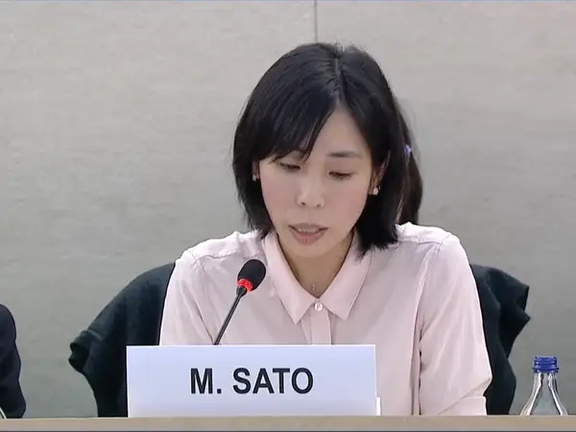
The United Nations special rapporteur on human rights in Iran, Mai Sato, has warned that the Islamic Republic is increasing its use of executions as a tool to suppress dissent as she presented her first report to the UN Human Rights Council in Geneva on Tuesday.

“The pace is accelerating with at least 169 known executions identified in January and February alone. Should this alarming rate remain consistent, the total number of executions could exceed 1,000 this year, a chilling threshold that demands a collective global response,” Sato warned.

Last year, at least 975 people were executed in Iran, a 17% increase from the 834 executions recorded the previous year, according to a joint report released by the Iran Human Rights Organization (IHRNGO) and Together Against the Death Penalty (ECPM).

It has stepped up since the 2022 uprising. In 2023, the UN quickly identified Tehran's utilising the death penalty to quash dissent.

"Criminal proceedings and the death penalty are being weaponised by the Iranian government to punish individuals participating in protests and to strike fear into the population so as to stamp out dissent, in violation of international human rights law," the UN Human Rights Office (OHCHR) said at the time.

Sato also highlighted the ongoing discrimination against religious and ethnic minorities, the lack of transparency in human rights cases, and the continued crackdown on protests and dissent.

Religious minorities, including Baha’is, Sunnis, and Christian converts, as well as ethnic groups such as Turks, Kurds, Arabs, and Baluchis, remain targets of state repression, she said.

She cited reports of arbitrary arrests, unfair trials, and executions targeting these communities.

Sato also raised concerns about the rising number of executions of women, naming three political prisoners—Pakhshan Azizi, Varishe Moradi, and Sharifeh Mohammadi—who are currently on death row.

At least 179 cases of femicide were documented in Iran last year, she said, adding that women in Iran continue to face systemic discrimination under laws that devalue their testimony in court and restrict their rights in employment and other areas.

Sato said human rights defenders, journalists, and lawyers are being harassed, intimidated, and threatened, particularly in Iranian prisons, where many are denied medical treatment.

She also noted that families of political prisoners face threats outside of prison.

UN fact-finding mission reports sexual violence in Iranian prisons

Sara Hussain, the head of the UN Independent Fact-Finding Mission on Iran, told the council that Iranian authorities have committed widespread human rights violations, including extrajudicial detentions, torture, and sexual violence against prisoners.

"These acts constitute crimes against humanity and gender-based violence," she said.

The fact-finding mission has previously documented the use of torture, forced confessions, and intimidation tactics against detainees.

Calls for Iran to end repression

Representatives from multiple countries called on Iran to halt executions and end its crackdown on dissent.

Germany urged the Islamic Republic to stop executions and guarantee fundamental freedoms, while Switzerland highlighted multiple human rights violations and called for an end to repression.

Spain, Australia, and North Macedonia demanded an end to the persecution of human rights activists and the execution of political prisoners.

The Netherlands called for an extension of the UN fact-finding mission’s mandate, saying Iran has committed "crimes against humanity."

Belgium said the sharp rise in executions was deeply concerning, while Albania condemned the Islamic Republic’s attempts to assassinate dissidents.

Chile described a recent visit by a UN human rights delegation to Iran as a positive step but stressed that "without gender equality, there is no democracy."

Iran's allies push back against criticism of Tehran's human rights record

In contrast, Iran's ally, Venezuela, dismissed the UN fact-finding mission as a politically motivated effort to pressure Iran.

North Korea, also an ally of Iran, accused the international community of systematically targeting Iran and called on the Human Rights Council to end its "double standards."

Allies China, Venezuela, Cuba, and Ethiopia also defended Iran’s human rights record, with Ethiopia criticizing what it called the "politicization" of the issue.

Sudan also said that Iran’s human rights situation was improving and called for respect for each country’s right to determine its own approach to human rights.
Most Viewed

Iran negotiators ordered to return after internal rift over Islamabad talks
1
EXCLUSIVE

Iran negotiators ordered to return after internal rift over Islamabad talks

2
ANALYSIS

US blockade enters murky phase as tankers spoof signals and buyers hesitate

3
ANALYSIS

Why the $100 billion Hormuz toll revenue is a myth

4

US tightens financial squeeze on Iran, warns banks over oil money flows

5
ANALYSIS

US blockade targets Iran oil boom amid regional disruption

Banner
Banner

Spotlight

  • Hardliners push Hormuz ‘red line’ as US blockade tests Iran’s leverage
    INSIGHT

    Hardliners push Hormuz ‘red line’ as US blockade tests Iran’s leverage

  • Ideology may be fading in Iran, but not in Kashmir's ‘Mini Iran'
    INSIGHT

    Ideology may be fading in Iran, but not in Kashmir's ‘Mini Iran'

  • War damage amounts to $3,000 per Iranian, with blockade set to add to losses
    INSIGHT

    War damage amounts to $3,000 per Iranian, with blockade set to add to losses

  • Why the $100 billion Hormuz toll revenue is a myth
    ANALYSIS

    Why the $100 billion Hormuz toll revenue is a myth

  • US blockade targets Iran oil boom amid regional disruption
    ANALYSIS

    US blockade targets Iran oil boom amid regional disruption

  • Iran's digital economy battered by prolonged blackout
    INSIGHT

    Iran's digital economy battered by prolonged blackout

•
•
•

More Stories

Yemen’s Houthis vow to continue Red Sea attacks, defying Iran's plea for calm

Mar 18, 2025, 10:24 GMT+0

Yemen's Houthi foreign minister said the group will not halt its Red Sea attacks on shipping, despite Iran's reported calls for de-escalation.

Jamal Amer told Reuters late on Monday that the Houthis would continue their actions despite US military strikes and requests from allies, including Iran.

"There will be no talk of any dialing down of operations before ending the aid blockade in Gaza. Iran is not interfering in our decision but what is happening is that it mediates sometimes but it cannot dictate things," Amer said.

This comes as two senior Iranian officials told Reuters on condition of anonymity that Tehran had delivered a verbal message to the Houthi envoy in Tehran on Friday, urging them to de-escalate. Amer said, however, that he had not been informed of any message Iran delivered to the Houthi envoy in Tehran.

Iran's Foreign Minister asked Oman, a known mediator with the Houthis, to convey a similar message during a visit to Muscat earlier this week, according to Reuters.

Iran has not made any public comment about recent outreach to the Houthis over their renewed action. Tehran says the group takes decisions independently, a statement echoed by the Houthis themselves.

"(The US) is threatening Iran and hitting Yemen. Now all scenarios are possible. We will do what they will do to us. If they are hitting us from (US aircraft carrier USS Harry S) Truman, we will retaliate by hitting Truman," the Houthi foreign minister said.

Amer acknowledged messages from other powers to de-escalate, but declared, "Now we see that Yemen is at war with the US and that means that we have a right to defend ourselves with all possible means, so escalation is likely."

US President Donald Trump warned Iran on Monday that it will be punished if its Yemeni allies the Houthis retaliate against a US air assault over the weekend, escalating his rhetoric against Tehran.

"Every shot fired by the Houthis will be looked upon, from this point forward, as being a shot fired from the weapons and leadership of IRAN, and IRAN will be held responsible, and suffer the consequences, and those consequences will be dire!" Trump wrote on his Truth Social platform.

Trump on Saturday ordered large-scale military strikes against dozens of targets in Yemen controlled by Tehran-backed Houthi armed group, saying the attacks aimed at ensuring freedom of navigation through shipping lanes the militants have targeted.

Earlier this week, IRGC Commander Hossein Salami denied US accusations of Iranian control over the Houthis' actions.

"We have always declared, and we declare today, that the Yemenis are an independent and free nation in their own land and have an independent national policy," Salami said.

"Ansarullah, as the representative of the Yemenis, makes its own strategic decisions, and the Islamic Republic of Iran has no role in setting the national or operational policies of any movement in the resistance front, including Ansarullah in Yemen," he added.

Six dead, hundreds injured in Iran's fire festival mishaps

Mar 18, 2025, 09:12 GMT+0

Six people have died and 770 others injured in incidents related to Iran's traditional fire festival since mid-February, the country's emergency services said on Tuesday.

"Since the start of Esfand (February 19), at least 770 people have been injured in these incidents, a 26% increase compared to last year," said Babak Yektaparast, spokesperson for Iran's Emergency Organization, in an interview with state broadcaster IRIB.

He added that 91 people remain hospitalized due to severe injuries, 57 have suffered amputations, 200 sustained eye injuries, and 285 suffered burns.

The Islamic Republic’s crackdown over the years has gradually turned the ancient festival of lighting bonfires before Nowruz, known as Chaharshanbeh Suri, into a night of youth defying authorities.

Despite its evolving nature, the festival remains a deeply rooted cultural event—one that continues to reflect both the resilience of tradition and the defiance of Iran’s youth.

Cyber group says it disrupted Iranian shipping communications

Mar 18, 2025, 09:01 GMT+0

A hacker group called Lab Dookhtegan said it has disrupted the communication networks of 116 ships belonging to two major Iranian shipping companies in one of the biggest attacks against Iranian maritime operations, critical to the country's oil sales.

“In an unprecedented move, we successfully disrupted the communication network of two Iranian companies that, among various terrorist activities, are responsible for supplying munitions to Houthis,” the group wrote on Telegram.

The attack, which the group says was timed to coincide with US military operations against the Iran-backed Yemeni Houthis, severed the ships' connections to each other, their ports, and external communication channels.

“As part of this operation, we targeted the communication network of 116 ships belonging to two major Iranian companies sanctioned by the US Department of the Treasury, the United Kingdom, and the European Union: 50 ships belonging to the National Iranian Tanker Company (NITC) and 66 ships belonging to the Islamic Republic of Iran Shipping Lines (IRISL)."

100%

According to the group, these companies facilitate the sale of Iranian oil at reduced prices, with China as a key buyer, while also allegedly supplying munitions to the Houthis in Yemen.

By disrupting ship communications, Lab Dookhtegan says it has significantly hindered operations, adding that full restoration of the affected systems could take weeks. "Ship personnel can no longer communicate with one another, and their connection to the ports and outside world has been severed," the statement read.

There is limited publicly available information on the specific communication systems used by Iranian shipping fleets. However, open-source data and industry analysis suggest that Iranian commercial and military vessels employ a combination of satellite, radio, and encrypted digital networks.

Some reports indicate that NITC's fleet relies on VSAT (Very Small Aperture Terminal) satellite technology for offshore coordination. The attack's success suggests that vulnerabilities may exist in these systems, despite previous efforts to safeguard them.

Lab Dookhtegan, known for previous cyber activities against Iran’s military and intelligence operations, framed the attack as part of a broader strategy to weaken Iranian-backed forces in the region.

Iranian authorities have yet to comment on the attack. In past incidents, state media and officials have either denied cyber intrusions or attributed them to foreign intelligence services. If confirmed, this latest operation would mark one of the most significant cyber disruptions targeting Iran’s maritime sector.

With global attention focused on Iran's regional activities and US military strikes against the Houthis, the implications of the attack extend beyond immediate logistical disruptions. If sustained, communication failures could affect oil exports, insurance risks, and maritime security assessments for Iranian-flagged vessels navigating international waters.

The full extent of the damage remains unclear, but Lab Dookhtegan has indicated that this is only the "tip of the iceberg," suggesting that further operations may follow.

PS752 case advances as Iran's legal challenge fails

Mar 18, 2025, 08:37 GMT+0

The International Civil Aviation Organization (ICAO) has rejected Iran's objection to a lawsuit filed by four nations over the 2020 downing of Ukraine Flight PS752, bringing them a step closer to holding Tehran accountable, officials said Monday.

"Today, on 17 March 2025, the Council of the International Civil Aviation Organization (ICAO) rejected Iran’s preliminary objection in the case of Flight PS752," a UK Government spokesperson said.

"This decision takes us a step closer to holding Iran to account for its illegal downing of Flight PS752 in January 2020."

The ICAO Council's decision allows Canada, Sweden, Ukraine, and the United Kingdom to proceed to the next phase of their case against Iran, which alleges the downing of the civilian airliner was unlawful.

Ukrainian Foreign Minister Andrii Sybiha confirmed the ruling on X, saying, "Iran attempted to challenge the jurisdiction of the ICAO Council regarding the complaint over the downing of the civilian airliner. But the Council ruled in favor of Ukraine, Canada, Sweden, and the UK and moving the case to the merits."

The Boeing 737-800 NG, operating flight PS752 from Tehran to Kyiv, was shot down by Iran's Islamic Revolutionary Guard Corps (IRGC) shortly after takeoff on January 8, 2020, killing all 176 passengers and crew. Iran initially denied responsibility but later admitted its air defense operator mistakenly identified the plane as a hostile target.

The ICAO ruling comes after years of legal battles and demands for accountability from the families of the victims. "We remain committed to seeking justice, transparency, and accountability for the 176 innocent victims and their families," the UK government spokesperson said.

The Association of Families of Flight PS752 Victims welcomed the decision, saying, "Now, with this condemnation, it is clear to all how little credibility this regime and its deceptive statements hold in the international community."

The four countries initiated a dispute review at ICAO in January 2024, alleging Iran violated the Chicago Convention, which guarantees the safety of civilian flights. They have also filed a complaint with the International Court of Justice (ICJ).

Iran's Foreign Ministry criticized the legal actions as hasty and unjustified, maintaining the downing of the plane was not intentional or deliberate. Ali Mousavi, the ministry’s director-general of legal affairs, urged the four countries to reconsider their stance.

Families of the victims have also pursued legal action within Iran, but have criticized the process for lacking transparency. Lawyer Mahmoud Alizadeh Tabatabai, representing several families, said they were denied access to key evidence.

'Make it my birthday present', court hears evidence on Iran murder-for-hire case

Mar 18, 2025, 00:21 GMT+0
•
Negar Mojtahedi

The testimony of an FBI agent Monday in Manhattan Federal court reveals Iran’s ties with the mobsters who they allegedly hired to kill dissident Iranian American journalist Masih Alinejad.

Supervising special agent Justin Tuerack, who oversees the Iran squad at the bureau, took to the stand Monday, detailing the investigation into digital communications of the suspects.

Tuerack said he analyzed the meta data and IP addresses belonging to the cloud, Whats App, Apple IDs and Google Accounts of defendants Rafat Amirov, Polad Omarov and Islamic Revolutionary Guard Corps (IRGC) Ruhollah Bazghandi and members of his Iran-based network - Haj Taher, Hossein Sedighi and Seyed Mohammad Forouzan.

Federal prosecutors said Bazghandi orchestrated the alleged 2022 plot to kill the journalist in Brooklyn. Bazghandi, the brigadier general in the IRGC was previously chief of the Revolutionary Guard's counterintelligence department.

Orders from Iran to assassinate Alinejad

Khaled Mehdiyev, who pleaded guilty to attempting to assassinate Alinejad, testified that he received direct orders from fellow mobsters Amirov and Omarov. These men were acting on instructions from a network led by Bazghandi, according to prosecutors.

Mehdiyev, the would-be assassin, admitted in court that he had been stalking Alinejad outside her Brooklyn home in 2022 with one objective: “Shoot the journalist, kill the journalist.”

The prosecution claims that the Iranian government paid Amirov and Omarov $500,000 to orchestrate the assassination in retaliation for Alinejad’s human rights activism.

The plot was thwarted on July 28, 2022 when police arrested Mehdiyev of Yonkers, New York, as he passed a stop sign driving away from Alinejad’s house.

Digital evidence

Now web searches, text messages, calls and images stored on the cloud of the suspects is revealing the web of connections between the mobsters and Iran.

FBI-submitted evidence included WhatsApp messages from accounts allegedly belonging to Omarov and Amirov. These texts documented their communications with Mehdiyev, Bazghandi, and the IRGC network regarding the assassination attempt.

On July 23, 2022, Omarov sent a chilling message to Amirov: "we blocked it from both sides, it will be a show once she/he steps out of the house," according to FBI metadata evidence submitted in court.

Amirov's IP address showed him as being located in Iran's Western province of Azerbaijan, according to Tuerack at the time. “God willing we will have good news." he wrote back to Omarov.

A few days later on July 27, 2022 Omarov texted Amirov that Mehdiyev's hit on Alinejad would be his birthday gift, which is July 30 according to Omarov's passport.

"I told him to make this a birthday present for me," Omarov text message read said the FBI.

The conversation between the two would-be assassins reflects Mehdiyev's arrest. arrested.

“The fat one did not get in touch” Amirov texted Omarov in early August, apparently referring to Mahdiyev. "Damn him. I don’t want him to cause trouble,” Omarov texted back.

Rafat the Thief

After Mehdiyev’s arrest in July 2022, google searches from the IRGC network show the men searching “Rafat the Thief”, testified Tuerack.

Notably, this search occurred before any public knowledge of Amirov’s alleged involvement in the plot, a detail federal prosecutors emphasized.

Google map searches of Alinejad home, the pharmacy she used, photos and google searches of her husband Kambiz Foroohar were also made from the accounts affiliated with the IRGC network.

On September 5, 2022, a member of Bazghandi team, Sadighi, sent fellow member Haj Taher a message allegedly addressed to yet another alleged member of their network named Forouzan: "this is addressed to you, your boss and the mafia."

There were youtube searches "who wants to kidnap Masih Alinejad" coming from their work, said the FBI.

Forouzan,, according to Tuerack had three entries to describe a phone number allegedly belonging to Amirov: brotherhood, Rome and Rome/Rafat.

From Sept 14, 2022 - to Nov 27, 2022 - Forouzan allegedly contacted Amirov over text 362 times and made 226 calls to each other.

The Bazghandi Network continued to collect information on Alinejad until at least May 2023. The FBI thwarted two plots prior to the attempt to kill Alinejad, one in 2020 and the other in 2021, also by Iranian state agents trying to kidnap the journalist and take her to Iran.