• العربية
  • فارسی
Brand
  • Iran Insight
  • Politics
  • Economy
  • Analysis
  • Special Report
  • Opinion
  • Podcast
  • Live TV
  • Iran Insight
  • Politics
  • Economy
  • Analysis
  • Special Report
  • Opinion
  • Podcast
  • Live TV
  • Theme
  • Language
    • العربية
    • فارسی
  • Iran Insight
  • Politics
  • Economy
  • Analysis
  • Special Report
  • Opinion
  • Podcast
  • Live TV
All rights reserved for Volant Media UK Limited
volant media logo
INSIGHT

Xi snub reignites Iran’s doubts about China

Maryam Sinaiee
Maryam Sinaiee

Iran International

Sep 4, 2026, 04:23 GMT+1
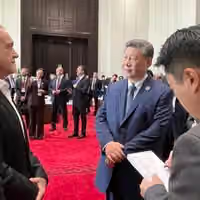
Iran's President Masoud Pezeshkian briefly met Chinese President Xi Jinping in Bishkek, Kyrgyzstan, on the sidelines of the Shanghai Cooperation Organisation summit on September 1, 2026.

A fleeting encounter between Iranian President Masoud Pezeshkian and China’s Xi Jinping in Bishkek has reignited an uncomfortable debate in Tehran: just how strategic is Iran’s much-vaunted partnership with Beijing?

The two presidents exchanged only briefly on the sidelines of the Shanghai Cooperation Organization summit on Tuesday, with no dedicated bilateral meeting—an absence seized on by Iranian critics as evidence of Beijing’s reluctance to embrace Tehran more closely.

The optics were particularly sensitive in Tehran, where closer ties with China and Russia have for years been promoted as the cornerstone of a “Look East” strategy intended to reduce Iran’s dependence on the West.

Heshmatollah Falahatpisheh, a former member of parliament’s National Security and Foreign Policy Committee, said Xi’s treatment of Pezeshkian sent a message from China to the United States amid the war.

“Xi's cold reception of Pezeshkian was this Eastern vendor's message to America amid the war,” he wrote on X. “What some in Iran called a strategic partnership was, for China, nothing more than a superficial relationship.”

Prominent moderate politician Davoud Heshmati also pointed to the absence of a bilateral meeting, arguing that it was “rejected by the Chinese side.”

A serious warning

Conservative commentator Mostafa Najafi described the encounter as “a serious warning and negative signal in Iran-China relations,” particularly if Tehran had requested a meeting and Beijing had declined.

He warned that continued ambiguity in the relationship could have significant consequences for Iranian foreign policy at a time when Tehran’s international options are already limited.

The unease over Pezeshkian’s encounter has been amplified by a separate, disputed claim that Beijing has attached conditions to deeper cooperation with Tehran.

Hossein Marashi, secretary-general of the centrist Executives of Construction Party, said in an interview with EcoIran that China had set specific conditions for implementing parts of a 25-year cooperation agreement and for a planned visit to Beijing by parliament speaker Mohammad-Bagher Ghalibaf.

Ghalibaf was appointed Supreme Leader Mojtaba Khamenei’s special envoy for China affairs in May but has yet to travel to China or meet Chinese officials in that capacity.

“The Chinese have told us very clearly: You open the Strait of Hormuz, you do not charge [transit] fees, you resolve your issues with Saudi Arabia and the United States, before Ghalibaf comes to China,” Marashi claimed.

Hardliners hit back

Ghalibaf’s office rejected the attribution of such conditions to China and urged media outlets to refrain from publishing claims that could “affect Iran’s national interests and its foreign relations.”

There is no independent evidence that Beijing imposed the conditions described by Marashi.

Marashi’s comments prompted a fierce response from conservative and hardline media, where questioning the relationship with Beijing was portrayed by some as serving Washington’s interests.

The hardline Kayhan newspaper called Marashi “a facilitator of White House policies” and accused him of seeking to “poison Iran’s strategic relations with its Eastern partners from within.”

A commentary published by the Fars news agency went further, accusing reformists of trying to portray relations with China as unstable and dependent on Washington and calling for Marashi’s prosecution.

The dispute also spilled onto Persian-language social media, where hardline users accused Pezeshkian of placing greater importance on reaching an agreement with the United States than on relations with China.

Others argued that the absence of a bilateral meeting reflected Beijing’s choices rather than the Iranian president’s diplomacy.

The argument exposes a deeper uncertainty over Iran’s “Look East” strategy. Its advocates have presented China as a strategic partner capable of helping Tehran withstand Western pressure, while critics increasingly question whether Beijing sees the relationship in comparable terms.

The brief encounter in Bishkek cannot by itself answer that question. At a moment when Iran’s options are narrowing, it remains unclear how far its most important partner is actually prepared to go.

Most Viewed

Iran’s economy is a powder keg. Tehran is preparing for the spark
1
ANALYSIS

Iran’s economy is a powder keg. Tehran is preparing for the spark

2
INSIGHT

Xi snub reignites Iran’s doubts about China

3
INSIGHT

Five years ago, Iran’s planners put today’s crisis on paper

4

Iran drug shortages hit 800 medicines as costs could triple

5
ANALYSIS

Women footballers came home under pressure. Now Iran wants them on camera

Banner
Banner

Spotlight

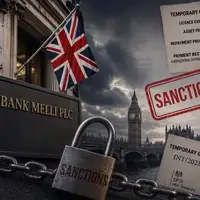
  • If Britain backs US plan, Iran's London bank shuts down on October 22
    ANALYSIS

    If Britain backs US plan, Iran's London bank shuts down on October 22

  • US strikes deepen Tehran debate over compromise or confrontation
    INSIGHT

    US strikes deepen Tehran debate over compromise or confrontation

  • Xi snub reignites Iran’s doubts about China
    INSIGHT

    Xi snub reignites Iran’s doubts about China

  • Trump’s call for an Iranian uprising runs into a trust problem
    ANALYSIS

    Trump’s call for an Iranian uprising runs into a trust problem

  • Five years ago, Iran’s planners put today’s crisis on paper
    INSIGHT

    Five years ago, Iran’s planners put today’s crisis on paper

  • Women footballers came home under pressure. Now Iran wants them on camera
    ANALYSIS

    Women footballers came home under pressure. Now Iran wants them on camera

Banner
•
•
•

More Stories

Five years ago, Iran’s planners put today’s crisis on paper

Sep 4, 2026, 00:43 GMT+1
•
Behrouz Turani
100%
Shopkeepers chat in the carpet section of the Bazaar in Iran's northern city of Qazvin, August, 31, 2026

An economic forecast produced by Iran’s own government planners more than five years ago projected where continued sanctions would leave inflation and the national currency by 2026—and the numbers have proved strikingly accurate.

The model projected inflation of 66% and the dollar at 178,000 tomans in the current Iranian year under a scenario in which sanctions remained in place.

The forecast has resurfaced after Iranian economic journalist Marzieh Mahmoudi highlighted it in a widely shared YouTube video, arguing that successive governments disregarded warnings their own planners had put on paper.

The model was produced by economist Mohammad Hossein Rahmati, then head of the Macroeconomics Office at Iran’s Planning and Budget Organization (PBO).

It projected government revenues and spending, economic growth, inflation, exchange rates and other fiscal indicators through the Iranian year 1406, ending in March 2028.

Best case, worst case

Crucially, it offered policymakers two possible futures: one in which sanctions were lifted and another in which they continued.

Under the continued-sanctions scenario, the model projected the dollar reaching 284,000 tomans in 2027. It now stands at 220,000, having exceeded Rahmati’s 178,000.

Under the alternative scenario, in which sanctions were lifted, Rahmati projected a dramatically stronger rial, with the dollar at around 50,000 to 60,000 tomans by the end of the period.

Several of the projections now bear a striking resemblance to Iran’s economic trajectory, although comparisons are complicated by the multiple exchange rates operating in Iran and the extraordinary volatility of the rial during the war.

In a recent episode of the YouTube-based daily news program Hasht-e Shab (8 PM), Mahmoudi displayed the table and argued that what now looks prescient was politically inconvenient when it first appeared.

The numbers were alarming even in 2021. But rather than treating the projections as a constraint around which policy needed to be built, Mahmoudi said, officials largely sought to distance themselves from them.

‘The dollar sage’

The controversy extended to the Planning and Budget Organization itself. After the table was published and debated in the Iranian press in 2021, the PBO issued a formal denial disputing the forecast attributed to it, despite the model having emerged from its own economic planning apparatus.

The table remains available in the archives of the Iranian Parliament’s Research Center and was also published at the time by Iranian news outlets including Tabnak and Khabar Online.

Rahmati subsequently left his position following disagreements over budget formulation. He became known in Iranian media as “the man of the dollar forecast,” while Mahmoudi argues that his warnings about the fiscal and inflationary consequences of continued sanctions were marginalized rather than acted upon.

The significance of the model goes beyond whether Rahmati correctly guessed the future price of the dollar.

Its two scenarios attempted to show how sanctions would shape Iran’s broader fiscal trajectory. Continued sanctions meant weaker revenues and growth alongside mounting inflationary and exchange-rate pressure, while their removal produced a substantially less damaging outlook.

Five years later, Iran has moved much closer to the former scenario.

Everybody knew

The period covered by Rahmati’s projections has spanned three presidencies—those of Hassan Rouhani, Ebrahim Raisi and Masoud Pezeshkian—and the rial has weakened substantially under each.

The market rate stood at roughly 30,000 tomans to the dollar when Rouhani left office in 2021. It weakened to around 60,000 during Raisi’s presidency before depreciating much more sharply under Pezeshkian amid war, sanctions and mounting fiscal pressure.

The official exchange rate, meanwhile, remained politically managed and increasingly detached from the price at which ordinary Iranians and businesses could obtain dollars.

The result is a trajectory remarkably similar in direction to the one Rahmati’s model warned about more than five years ago, even if individual figures cannot be compared precisely with today’s volatile exchange rates.

Mahmoudi’s central argument is therefore less that one economist successfully predicted the price of the dollar than that Iran’s own economic planners had already modeled the consequences of allowing existing pressures to continue.

Women footballers came home under pressure. Now Iran wants them on camera

Sep 3, 2026, 11:15 GMT+1
•
Raha Pourbakhsh
100%
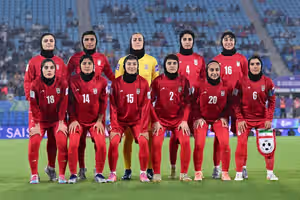
A file photo of the Iranian national football team in Australia

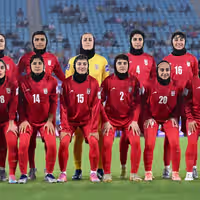
Five months after Iran's women footballers sought asylum in Australia, the football federation has called the squad back into camp, not to train but to film a documentary about what happened there. Some of the players it wants on camera are the ones who came home under pressure.

While two of those players are building new lives in Australia, thousands of kilometers from their families, having received citizenship there, the Islamic Republic's football federation has summoned their former teammates to record the state's account of the same events.

  • Iran women’s footballers who sought asylum become Australian citizens

    Iran women’s footballers who sought asylum become Australian citizens

  • Brisbane Roar welcomes Iranian players who sought refuge in Australia

    Brisbane Roar welcomes Iranian players who sought refuge in Australia

Farideh Shojaei, the federation's vice-president for women's football, has confirmed that a documentary about Iran's participation in the AFC Women's Asian Cup will be filmed at the camp. She described the purpose as completing the tournament archive and setting down part of the history of Iranian women's football.

The outlet Football 360 had reported earlier that the project belongs to a body outside football, and that most of the players who returned from Australia have no wish to sit in front of the federation's camera and recount what happened on that trip.

A camp that does not add up

The camp has pushed back the start of Iran's women's premier league by a week, and the federation's explanations for holding it have not been consistent.

According to Iranian media, when club coaches objected to the timing, Shojaei assured them the players would not be put under any football training load, because the point of the camp was to film the documentary. Later, explaining why a camp was being held outside a FIFA international window with no fixture ahead of the national team, she said it had been convened at the request of Marzieh Jafari, the national coach, to prepare the players.

  • What the Islamic Republic does to its women footballers

    What the Islamic Republic does to its women footballers

Jafari does not currently hold an active contract with the federation. She is head coach of Khatoon Bam, the club that supplies the core of the national squad, which has just come through Asian Champions League qualifying and now needs to prepare for a new league season.

So a camp that has forced clubs to rearrange their calendars is attributed to a coach with no active federation contract, and was described to the objecting coaches as not being about training at all.

The version the state told first

The documentary is being made several months after Iranian officials gave their own account of what happened in Australia.

In the team's final days there, federation president Mehdi Taj claimed Australian police had separated the women from the men in the delegation and pressured the players into staying and claiming asylum. Esmail Baghaei, the foreign ministry spokesman, went further on television, accusing the Australian government of "taking members of the team hostage."

  • Iran pressuring women footballers who defected in Australia to return

    Iran pressuring women footballers who defected in Australia to return

  • Iran women’s football team kept under tight security in Kuala Lumpur

    Iran women’s football team kept under tight security in Kuala Lumpur

While those claims were being made in public, according to one club executive, money was being raised inside Iranian football to encourage the players to come home.

Alireza Babaei, chief executive of Chadormalou Ardakan, told a Football 360 live program that while the federation was working to bring the whole delegation back, its general secretary Hedayat Mombeini asked Chadormalou to pay 30 billion rials, about $15,000, for the women's national team. Chadormalou does not have a women's team.

According to Babaei, Mombeini also mentioned a payment of 50 billion rials, roughly $25,000, from the Gol Gohar club, and named Sepahan of Isfahan, a club that at that moment was weighing whether to continue fielding teams at all because of war damage to the steel industry.

In Iranian women's football, 50 billion rials from a single club is not a sum to be waved away. Afsaneh Chatrenoor, the national team forward who plays for Gol Gohar, was the premier league's leading scorer last season. She is also the player who sat across from Gholamhossein Mohseni-Ejei a few months ago and asked the head of the judiciary to help her find work for when her football career ends. At the top level of the Iranian women's game, the contracts of prominent players are still measured in a few billion rials.

  • Inside the dramatic escape of Iranian women footballers seeking asylum

    Inside the dramatic escape of Iranian women footballers seeking asylum

  • Australia grants asylum to five players of Iran women’s football team

    Australia grants asylum to five players of Iran women’s football team

  • Protests and crackdown spill into Iranian sport

    Protests and crackdown spill into Iranian sport

What the tournament was always about

For the Islamic Republic's officials, the Women's Asian Cup in Australia was never only a football tournament.

Several members of the delegation applied for humanitarian protection from the Australian government during the war and after the killing of Ali Khamenei. Some later abandoned their asylum applications and returned to Iran under pressure from security forces on their families.

In those same days, Iranian officials were assembling their own version of events. They spoke of hostage-taking and of players being deceived, while simultaneously turning to threats, intimidation and financial inducements to get the asylum seekers back.

Now some of the same players who returned after that pressure are to sit in front of a camera, in a project belonging to a body outside football, and describe those days again.

It looks less like archiving history than like producing a state edition of it.

This time the Islamic Republic is not only constructing its own account of Australia. It wants the players inside the rewriting.

Peru cuts diplomatic ties, accuses Iran of escalating Middle East war

Sep 2, 2026, 06:19 GMT+1
100%

Peru severed diplomatic relations with Iran on Tuesday, accusing Tehran of escalating conflicts in the Middle East, restricting shipping through the Strait of Hormuz and obstructing nuclear inspections.

“The government of the Republic of Peru has decided to sever diplomatic relations with the Islamic Republic of Iran,” the Foreign Ministry said.

Lima cited what it described as Iran’s repression of peaceful protests, restrictions on press freedom, discrimination against women and girls, and persecution of political opponents.

“Within the framework of its firm commitment to defending democracy, a fundamental principle of its foreign policy, Peru has observed with growing concern the deterioration of democracy in Iran, as documented by various United Nations mechanisms, particularly regarding the repression of peaceful protests, violations of press freedom, discrimination against women and girls, and the persecution of political opponents,” read the statement.

The ministry said Iranian restrictions and disruptions to international trade through Hormuz since March violated freedom of navigation, harmed energy markets and threatened global supply chains.

“The government of Peru views with deep concern the severe restrictions imposed by the Iranian regime, as well as the disruption of international trade through the Strait of Hormuz since March 2026, because they contravene principles such as freedom of navigation and the right of passage through straits used for international maritime transit, which cannot be subject to unilateral conditions, while also affecting navigational safety, the protection of human life at sea and the preservation of the marine environment, in addition to their repercussions for energy prices and the stability of global supply chains,” the foreign ministry said.

Lima also linked the diplomatic rupture to broader security concerns, accusing Tehran of fueling regional violence and denying UN nuclear inspectors’ access to facilities needed to verify that Iran was not developing nuclear weapons.

“The government of Peru also strongly rejects Iran’s incitement to violence and the escalation of conflicts in the Middle East, as well as its obstruction of the work of the International Atomic Energy Agency,” it said.

Peru will maintain consular relations to protect the two countries’ citizens and interests. The decision was communicated to Tehran through Iran’s embassy in Ecuador, which also covers Peru.

Iranian authorities did not immediately respond to Peru’s decision.

US-Iran escalation prompts debate in Iran over preemptive strikes

Sep 2, 2026, 02:57 GMT+1
•
Maryam Sinaiee
100%
Smoke rises following a US strike on Iran’s Larak Island on August 30, 2026.

Calls for preemptive strikes on US forces are growing in Iran after renewed US attacks, intensifying debate over whether Tehran should shift away from a mainly retaliatory strategy.

The latest cycle began with a US strike on Revolutionary Guards targets on Larak Island in Hormozgan province Sunday night, after a period in which Washington had increasingly emphasized economic pressure, a naval blockade and additional sanctions on Iran.

Iranian authorities initially reported two deaths, but the toll later rose to three after one of the wounded died in hospital, according to the IRGC-affiliated Tasnim news agency.

US Central Command said the Larak strike targeted an “imminent threat,” alleging Revolutionary Guards forces were preparing to launch rockets carrying sea mines toward the Strait of Hormuz. Tehran rejected that account.

Iran responded early Monday with missile and drone attacks on two US bases in Jordan, according to the Revolutionary Guards, which said it had targeted technical and maintenance infrastructure and areas where fighter jets were stationed. Iran’s army separately said it had launched dozens of explosive drones at US personnel and helicopters at Al Minhad Air Base in the United Arab Emirates.

Iran also said after the Larak strike that its forces had shot down US MQ-9 drones over and east of the Strait of Hormuz. There was no immediate US confirmation of those claims.

The confrontation escalated further Tuesday when President Donald Trump announced “large and powerful” US strikes on Iranian targets near the Strait of Hormuz, warning Tehran that retaliation would trigger attacks at a “much harder and higher level.”

CENTCOM later said it had completed a new wave of strikes against Iranian military targets including air defenses, radar systems, maritime assets, mine-laying capabilities and communications sites. US officials told Axios that around 100 targets were struck.

Trump later told Fox News that Iranian radar systems were among the targets.

“They tried to rebuild their radar because they can’t see anything,” he said. “We waited until it was almost built and then we hit it.”

Iran responded with another round of missile and drone attacks on US positions across the region. The Revolutionary Guards said it targeted US facilities in Jordan and Erbil, while Iran’s army said it launched a large-scale drone attack on Sheikh Isa Air Base in Bahrain. Bahrain said its air defenses intercepted and destroyed Iranian drones over the kingdom.

The IRGC also said it had begun responding to the latest US strikes and claimed its air defenses had shot down what it called the 50th US MQ-9 drone. The claim has not been independently confirmed.

Calls for a change in strategy

The widening exchange has unfolded alongside an increasingly explicit debate inside Iran over whether its armed forces should move from retaliating after attacks toward acting when they detect signs that an attack is imminent.

Iran’s leadership has not formally announced any shift toward a preemptive doctrine.

But even before Trump announced Tuesday’s new strikes, political figures close to the establishment were arguing that the confrontation had exposed the limits of diplomacy and of waiting to respond after US military action.

Ali Gholhaki, a political activist close to parliament speaker Mohammad Bagher Ghalibaf, argued Tuesday that the Larak strike had demonstrated the “audacity of the United States” and showed that Washington was prepared to resume significant military action after a period of relative restraint.

He also said expectations of reviving the Islamabad understanding had been disappointed.

“It seems that resolving the issues in the ‘military field’ — given the conditions inside and outside Iran — will be more feasible than ‘diplomacy,’” he wrote.

The argument contrasts with President Masoud Pezeshkian’s continued insistence Tuesday that Iran was prepared to return to the Islamabad memorandum if the United States resumed compliance with its commitments.

Nour News, a website close to Iran’s Supreme National Security Council, said Tuesday that the Larak attack and Iran’s response should not be viewed simply as another cycle of “attack and retaliation,” but as a “sign of a change in the battlefield.”

The website linked Mohsen Rezaei’s appointment as secretary of the Supreme National Security Council to an approach aimed at raising the costs of US military decisions and shifting some of the war’s pressure toward the US economy and domestic politics.

“In the previous model, the United States attacked and Iran responded to maintain deterrence. But in the new model, the response is not only to punish the aggressor; rather, the action must be designed in a way that makes the next US decision more difficult and costly,” Nour News wrote.

It argued that Iran was seeking to confront Washington with a dilemma: restraint by the United States could be interpreted in Tehran as evidence that the threat of force had lost some of its deterrent value, while further US attacks could raise risks to energy supplies and economic stability.

Tasnim, which is affiliated with the Revolutionary Guards, similarly portrayed the speed of Iran’s response to the Larak strike as evidence that the gap between political decision-making and military action was narrowing.

The agency argued that Iran should move from an “immediate response after an attack” toward readiness for “action at the first serious signs of an attack,” while acknowledging the political and strategic risks of such a shift.

Hardline lawmaker Mahmoud Nabavian went further, openly calling for a preemptive attack on US interests across the Middle East.

“Given the enemy’s depleted war reserves, rising fuel prices and the proximity of the US congressional elections, the enemy is seeking to reduce tensions,” Nabavian wrote on X. “So now is the best time for a preemptive attack on US interests in the region, forcing the enemy to retreat and breaking the blockade.”

He described failing to act as “wasting the opportunity.”

The calls do not amount to an announced change in Iranian military doctrine. But they show a growing argument among hardline and security-linked voices that waiting for each US strike before responding leaves Washington with too much control over the pace of escalation.

Hormuz becomes central to military calculus

The debate is closely tied to the struggle over the Strait of Hormuz, where both sides increasingly portray military pressure and control of commercial shipping as part of the same confrontation.

Iranian officials continue to insist that ships cannot transit the strategic waterway without coordination with Tehran. Lawmaker Esmail Kosari said Tuesday that vessels attempting to cross without coordination would be confronted by the Revolutionary Guards.

In a video interview Tuesday, Ghalibaf said: “The Americans falsely assure ships that they can pass through the Strait, but those ships come under attack.”

Iranian military-linked outlets have also reported attacks or threats against vessels Tehran considers noncompliant. The IRGC said one supertanker caught fire after striking two naval mines, but CENTCOM rejected that account and said no vessel had struck mines in the Strait.

Fars separately reported that a Saudi tanker, Cedar, had stopped while transiting the southern corridor of the Strait, but did not establish that Iranian forces had detained the vessel.

The maritime confrontation widened further Tuesday when the US military struck two Iranian government tankers. Axios reported that the attack was carried out under a new “tanker for tanker” policy approved by Trump in response to Iranian attacks on shipping.

US officials said the two tankers were anchored off Iran’s coast north of the US naval blockade line when drones launched missiles into their engine rooms. Axios said it was the first time the US military had struck Iranian tankers in retaliation for attacks on shipping rather than to enforce the blockade.

The escalation leaves the debate inside Iran no longer centered solely on how to answer individual US attacks. Increasingly, the argument is over whether Tehran should try to anticipate them — and whether doing so would strengthen deterrence or instead accelerate an already widening regional war.

Trump dismisses Iran deal after Tehran pushes return to Islamabad memorandum

Sep 1, 2026, 17:11 GMT+1
100%
President Masoud Pezeshkian showing his copy of the MoU signed remotely with President Donald Trump. June 17, 2026

Hours after Tehran called on Washington to return to the Islamabad memorandum, President Donald Trump dismissed the value of any agreement with Iran, ordered massive strikes on southern Iran and threatened an even larger attack if Tehran retaliates.

Trump told Fox News on Tuesday that he had given Iran “a lot of chances” and said he had little faith in any agreement with Tehran.

“I think an agreement with them isn't worth the paper it's written on. We gave them a lot of chances,” Fox News quoted him as saying.

His remarks came as President Masoud Pezeshkian said Iran would respond immediately if the United States returned to its commitments under the June agreement, reinforcing Tehran’s position that the memorandum remains the principal route back to diplomacy.

However, Parliament Speaker and chief negotiator Mohammad-Bagher Ghalibaf struck a harder tone in a video message the same day, saying Iran’s policy, based on Supreme Leader Mojtaba Khamenei’s directive, was to secure implementation of the memorandum’s conditions.

“If the United States does not fulfill its commitments, we will force it to do so through the language of power,” Ghalibaf said.

He said the Strait of Hormuz would not reopen until Washington implemented its obligations under the agreement and described forcing the United States to comply as what would become its “third defeat.”

Ghalibaf also warned that Iran would respond militarily if Washington intensified its maritime blockade.

“If the enemy intends to prevent Iran from exporting oil from the Persian Gulf, it should know that no one else will be able to export oil from this region either,” he said.

He added that Iran had exported more than 80 million barrels of oil while the Islamabad memorandum was being implemented and had also made progress in importing essential goods.

The renewed emphasis on the memorandum comes amid another escalation in direct US-Iran fighting. The United States struck IRGC positions in southern Iran on Tuesday, two days after attacking Larak Island, prompting Iranian retaliatory attacks.

Trump on Tuesday warned Iran against further retaliation, saying any response would trigger much heavier US strikes and threatening an even larger attack that he said could leave “very little” of the Islamic Republic.

Mediation efforts

Against that backdrop, regional mediators including Pakistan have continued efforts to revive the diplomatic process. Pakistani Prime Minister Shehbaz Sharif discussed the memorandum with Pezeshkian on the sidelines of the Shanghai Cooperation Organization summit this week and described it as the “only viable pathway” toward lasting peace.

Pakistan’s Foreign Minister Ishaq Dar echoed that position in talks with Iranian Foreign Minister Abbas Araghchi on Tuesday, saying sincere implementation of the agreement by both sides remained the “only way forward.”

The latest diplomatic effort follows Pakistani army chief Field Marshal Asim Munir’s visit to Tehran last week, when he met Pezeshkian, Ghalibaf and other senior Iranian officials.

Reuters reported that Munir spoke with Trump before traveling to Tehran, with a Pakistani source saying Washington wanted Islamabad to use its influence to bring Iran back toward negotiations.

Iranian officials subsequently said Munir’s visit had made significant diplomatic progress, although Washington has publicly maintained that no negotiations with Tehran are currently underway.

Pakistan is not alone in trying to revive diplomacy. Qatar has also pursued mediation between Tehran and Washington, including discussions over arrangements for commercial shipping through the Strait of Hormuz.

The Islamabad memorandum, agreed in June, was intended to halt the conflict and provide a temporary framework for negotiations. It included provisions dealing with the US maritime blockade and commercial navigation through Hormuz.

Article 5 has become particularly important to Tehran. It provides for arrangements ensuring commercial passage through the strait and for Iran and Oman to discuss its future administration and maritime services in accordance with international law.

Iran has increasingly made implementation of those provisions, alongside an end to the US blockade, a condition for fully reopening Hormuz.

The renewed diplomatic push therefore comes as the two sides publicly move further apart: Tehran says it is prepared to return to the memorandum if Washington moves first, while Trump has dismissed the value of an agreement with Iran and threatened substantially heavier military action if Tehran retaliates.