Child labor rises as poverty deepens in Iran
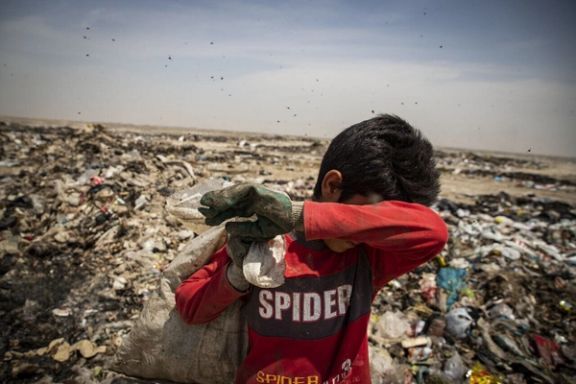
Deepening poverty in Iran is driving a rise in child labor, exposing children to sexual exploitation, violence and malnutrition, the head of Iran's Association of Social Workers warned on Sunday.
Deepening poverty in Iran is driving a rise in child labor, exposing children to sexual exploitation, violence and malnutrition, the head of Iran's Association of Social Workers warned on Sunday.
Hassan Mousavi Chalak told Khabar Online that worsening economic conditions were forcing more families to rely on their children's income to meet basic needs.
"We must accept that poverty in Iran has deepened," Mousavi said. "The more difficult economic conditions become, the more the use of children's labor capacity to cover family expenses increases."
Criticizing what he described as political efforts to downplay the issue, Mousavi said child labor extended far beyond children visible on city streets. He pointed to the use of children in slaughterhouses, livestock farms, underground workshops, orchards, farms and industrial settings, adding that many remained hidden from public view while facing dangerous and damaging working conditions.
There were no reliable statistics on the number of child laborers in Iran but that the phenomenon appeared more widespread in major cities and pilgrimage and tourist destinations, Mousavi said.
Physical and psychological toll
Children who work are deprived of the safety of school environments and normal socialization processes, Mousavi said, forcing them to adapt to harsh street conditions and sometimes engage in risky behavior to survive.
He warned that child laborers face serious health risks, including malnutrition, skin and infectious diseases, gastrointestinal problems and drug use, as well as different forms of violence and sexual exploitation.
"Social comparisons are also harmful," Mousavi said. "When a child compares themselves with others and sees peers enjoying ordinary and happy lives with their families, they experience psychological pressure and emotional suffering."
He cautioned that economic hardship increases the likelihood that children will be exploited, "sometimes even by those closest to them."
Economic strain fuels concerns
In recent weeks, multiple reports have highlighted the worsening economic situation in Iran, with citizens describing rising unemployment, sharp increases in the prices of essential goods and persistent economic stagnation.
Messages sent to Iran International have pointed to mounting pressure on household finances as living costs rise and employment opportunities decline, deepening concerns about livelihoods and the future of the labor market.
Research published in 2025 found that a combination of poverty, migration and marginalization, alongside ineffective support policies, was pushing both Iranian and Afghan migrant children into street work and workshops.
The study argued that child labor should be understood within the framework of profiteering from children in a dysfunctional economic structure, where shortcomings in the welfare system and ineffective social interventions have left the street to serve as a substitute for formal support mechanisms.
Mafia networks target some children
Addressing remarks about organized criminal involvement, Mousavi said the existence of mafia-like networks in the child labor sector could not be entirely dismissed, particularly when it came to homeless children.
However, he said field experience did not support the assumption that all working children were controlled by such groups.
Many children, he said, were sent by their families from poorer provinces to wealthier areas to help cover household expenses.
"Some children, especially those without guardians or effective caregivers, may fall under the control of such networks," Mousavi said. "In these circumstances, they may be forced into illegal or criminal activities."






The Parliamentary Research Center said in a report on summer electricity supply that the gap between supply and demand at peak consumption is projected to reach 13,640 megawatts under a realistic scenario.
The scale is large even by Iran’s recent blackout standards. The report projects maximum simultaneous supply at about 68,420 megawatts, while peak network demand is expected to exceed 81,000 megawatts. That means the shortfall would amount to nearly one-fifth of available supply at the moment of greatest pressure.
Iran’s electricity consumption has grown steadily for decades, reaching about 347 terawatt-hours in 2024. Its summer peak demand reached around 80,000 megawatts that year, according to official data presented by Iran’s grid management company, showing how close this year’s projected demand is to the country’s recent record levels.
The figures also show why headline power-plant capacity can be misleading. Iranian officials have said installed generation capacity has crossed 100,000 megawatts, but the parliamentary report’s estimate of usable simultaneous supply is far lower, reflecting fuel limits, plant outages, grid constraints and war-related damage.
War damage reshapes electricity balance
The report said the recent war changed both sides of Iran’s electricity balance. Self-supplied power plants taken offline by the conflict removed 4,800 megawatts from supply and disrupted production chains at major industries. At the same time, lower activity in petrochemical and steel sectors reduced part of industrial demand.
That temporary reduction may ease pressure during parts of the summer, but it also points to a fragile balance: if industrial activity recovers, demand for both electricity and gas could rise again.
The report warned that damage to energy infrastructure had reduced gas production capacity to around 600 million cubic meters per day, raising concerns beyond the summer and into the winter, when gas shortages often force power plants, factories and households to compete for supply.
Reduced demand from the petrochemical and steel sectors is expected to keep summer gas consumption between 590 million and 600 million cubic meters a day, easing immediate pressure on power plants.
But the report cautioned that any recovery in industrial output could again strain gas supplies available for electricity generation.
The assessment also warned of a growing evening problem. Solar generation is concentrated during daylight hours, while Iran’s demand often rises again at night as households use cooling systems.
Consumption control seen as key solution
Without stronger demand management, the report said, the country could face larger nighttime shortages than in previous years.
Iran has long faced recurring power cuts, especially in summer, when air conditioning, water demand and industrial consumption push the grid toward its limits.
Sanctions, aging infrastructure, heavy subsidies, underinvestment and management failures have left the system with little margin when temperatures rise.
The report argued that demand control may be more effective than relying only on new power plants.
It estimated that around 60% of summer hours would see electricity shortfalls below 6,000 megawatts, while about 82% of shortage hours would remain below 10,000 megawatts. That means much of the deficit could be reduced through better operation of existing facilities, higher utilization rates and targeted cuts in peak demand.
The center said eliminating most of the imbalance through new generation alone would require roughly 8,000 megawatts of additional capacity.
Instead, it recommended broader demand-side measures, including efficiency improvements, demand response programs, shifting consumption patterns and load-adjustment contracts.
The report, by Jay Solomon, said US officials and documents reviewed by The Free Press show Parsi has become a target of the State Department investigation as Secretary of State Marco Rubio seeks to counter Iranian influence inside the United States.
Parsi, 51, was born in Iran, raised in Sweden and has lived in the United States for more than 25 years. He is a green-card holder and co-founder of the Quincy Institute for Responsible Statecraft, a Washington think tank that argues for diplomacy, military restraint and a smaller US military role overseas.
The State Department declined to discuss Parsi’s immigration status, The Free Press said. Parsi and Quincy did not respond to the outlet’s requests for comment.
The investigation places one of the most prominent critics of the US-Israel war against Iran at the center of a broader fight over who shapes Washington’s Iran debate.
Since the war began, Parsi has appeared across left-wing, mainstream and even pro-MAGA platforms arguing that Trump faces a quagmire and that Washington should seek a deal with Tehran.
His critics say that position fits a much longer pattern: opposing sanctions and military pressure, amplifying Tehran’s warnings, and presenting policies favorable to the Islamic Republic as anti-war realism. Parsi has denied wrongdoing and has said such criticism is an effort to silence opponents of Trump’s Iran policy.
The Free Press cited a Trump administration official saying the State Department is reviewing people whose work is seen as helping US adversaries. “Anyone who seeks to undermine the US, we’re taking a hard look at,” the official said.
Parsi has long been a divisive figure among Iranian Americans. In 2002, he founded the National Iranian American Council, or NIAC, which described itself as a voice for Iranian Americans and later became one of the most visible organizations advocating engagement with Tehran.
In 2020, Republican senators Tom Cotton, Mike Braun and Ted Cruz asked the Justice Department to examine whether NIAC should register as a foreign agent, accusing it of amplifying Iranian government propaganda. No investigation or enforcement action was publicly announced.
The Free Press also revisited Parsi’s defamation lawsuit against Iranian American journalist Hassan Daioleslam, who had accused Parsi and NIAC of advancing Tehran’s interests. The lawsuit was dismissed. Emails disclosed in the case showed Parsi had corresponded with Iran’s then-UN ambassador, who later became foreign minister, about meetings with US lawmakers and policy conferences.
The latest report also points to Parsi’s family and professional ecosystem. His brother, Rouzbeh Parsi, helped create the Iran Experts Initiative, a network of Iranian scholars and analysts formed in 2014 as nuclear talks with world powers intensified.
The initiative was first exposed in 2023 by Iran International and Semafor, based on thousands of Iranian Foreign Ministry emails. The documents showed Iranian officials sought to cultivate overseas analysts and academics who could promote Tehran’s positions on the nuclear talks in Western media and policy circles.
The Free Press said Trita Parsi’s name did not appear in the Foreign Ministry emails as a member of the initiative. But it quoted critics who argued that the work of the two brothers should be viewed as part of a broader effort to weaken pressure on Tehran and normalize engagement with the Islamic Republic.
Rouzbeh Parsi has denied cooperating with Tehran. A later investigation by the Swedish Institute of International Affairs, his former employer, found no evidence that he was paid by Iran or controlled by it. But it concluded that he had been a principal creator of the initiative and had failed to disclose its work to the institute, Sweden’s foreign ministry or Lund University. The institute ended his employment in May 2025.
The Iran Experts Initiative revelations also drew attention in Washington because one of its founding members, Ariane Tabatabai, later held a senior Defense Department role under the Biden administration.
Republican lawmakers pressed the Pentagon and FBI to ensure members of the initiative were not in positions to influence US policy or access sensitive intelligence. Tabatabai’s current employer has defended her record and said she had passed security reviews under multiple administrations.
The controversy around Parsi has not been limited to Washington. In February, the German Institute for Global and Area Studies canceled a Berlin event featuring him after public backlash from Iranian activists and opponents of the Islamic Republic.
The institute cited security concerns, while critics said Western institutions should not offer unchallenged platforms to figures they accuse of echoing Tehran’s policy line.
The Free Press report said Quincy had prepared for a possible legal fight. In an April memo reviewed by the outlet, Quincy CEO Lora Lumpe said the think tank’s chairman had agreed to cover legal costs to prepare for, and if necessary fight, what she called a “deportation attack on Trita.”
The memo said Quincy was retaining an immigration lawyer and preparing a habeas corpus petition in case Parsi was suddenly detained by immigration authorities.
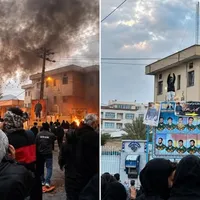
The report also said Parsi’s recent criticism of the Iran war has been noticed in Tehran. Photos circulated last month by Iranian activists showed banners bearing his face on a Tehran overpass and lamppost, alongside a quote attributed to him saying Trump’s “failed war” had destroyed Washington’s ability to make military threats.
For critics, those images captured the central question around Parsi’s career: why a Washington analyst’s arguments are repeatedly useful to Tehran at moments when US pressure on the Islamic Republic is at stake.
For his defenders, the case raises a different concern: whether the Trump administration is using immigration powers to punish lawful political speech and dissent over war policy.
That tension makes the Parsi investigation more than a dispute over one analyst’s status. It is now part of a wider battle over Iranian influence, free speech, immigration power and the long-running struggle to define US policy toward Tehran.
Soleimani Ardestani, a religious scholar, former Mofid University professor and member of a reformist association of Qom seminary teachers and researchers, is being held in Qom’s prison.
According to Mojtaba Lotfi, an official from the office of the late dissident cleric Hossein Ali Montazeri, the court convicted him on all eight charges brought against him.
Lotfi said Soleimani Ardestani does not plan to appeal unless the court agrees to hold a public hearing.
In a letter from prison, Soleimani Ardestani said the charges against him included disturbing public opinion, insulting sacred values, insulting the leadership in relation to Ali Khamenei and his son Mojtaba, taking part in a gathering over the house arrest of Mir-Hossein Mousavi, and assembly and collusion against domestic security.
Mousavi, a former prime minister, has been under house arrest since 2011 after rejecting the official result of Iran’s disputed 2009 presidential election and becoming one of the symbols of the Green Movement protests.
Soleimani Ardestani also listed accusations such as propaganda against the system, spreading falsehoods online, insulting senior religious authorities, damaging the dignity of the clergy and “mind control and psychological suggestion” – a striking charge even by the standards of Iran’s broad political indictments.
He has called the indictment weak and baseless, criticized his arrest and solitary confinement, and said he wrote his defense not to seek acquittal but to leave a record for history.
The case began with remarks in a debate with pro-government cleric Hamed Kashani. Soleimani Ardestani questioned long-promoted Shiite accounts about the death of Fatemeh Zahra, the daughter of the Prophet Muhammed and wife of Ali, the first Shiite Imam.
In Iran, the story of Fatemeh’s martyrdom is not only a religious narrative but part of a vast state-backed culture of mourning, ritual and political identity.
Soleimani Ardestani argued that if Ali had merely watched his wife being attacked and had not intervened, then the traditional account would raise questions about his justice. He later said he had not insulted Fatemeh and was challenging what he called the “stories told by religious singers or eulogists (maddahs).”
He also questioned mourning ceremonies for Muhammad Taqi, the ninth Shiite Imam, saying his death was linked to jealousy by his wife after he remarried and that mourning the event 1,300 years later was meaningless.
The backlash was immediate. Pro-government eulogists, who play an influential role in mobilizing religious crowds, attacked him with vulgar and sexist language. Reports also emerged of a group attack on his home.
Hardline figures called for prosecution and defrocking, while some religious voices went further, suggesting that denial of Fatemeh’s martyrdom could amount to leaving Shiite doctrine.
The controversy also split parts of the political middle ground. Reformist figures criticized Soleimani Ardestani’s tone and timing, while others warned that violent threats, home attacks and denunciations violated freedom of belief.
The sentence is significant because it shows how quickly the Islamic Republic can convert a dispute over religious history into a security case.
Soleimani Ardestani was not an outside critic of clerical rule. He was a cleric from inside the seminary world, which makes his challenge more sensitive.
By sentencing him to prison and stripping him of clerical status, the system is not only punishing one man. It is policing the boundaries of who is allowed to interpret religion, how far internal debate can go, and what happens when religious scholarship collides with the political theology of the state.