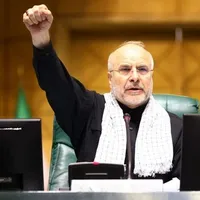
Netanyahu says Iran regime change ‘possible, not guaranteed’
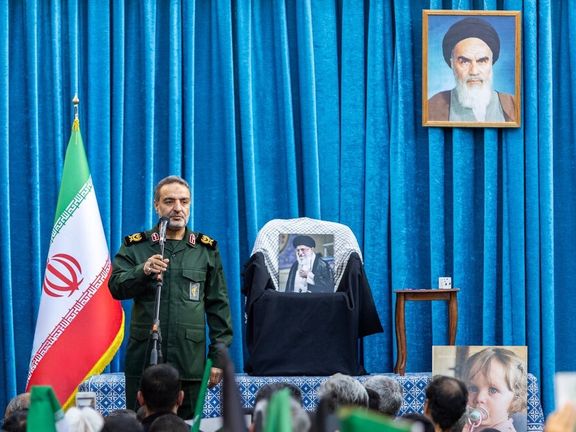
Israeli Prime Minister Benjamin Netanyahu said on Sunday it was possible Iran’s leadership could eventually be toppled, though he stopped short of predicting such an outcome

Israeli Prime Minister Benjamin Netanyahu said on Sunday it was possible Iran’s leadership could eventually be toppled, though he stopped short of predicting such an outcome
“Is it possible? Yes. Is it guaranteed? No,” Netanyahu said in an interview with CBS’s 60 Minutes aired Sunday.
His remarks came as US President Donald Trump dismissed Iran’s latest response to a US proposal as “totally unacceptable,” while Iranian state media said Tehran rejected what it described as Washington’s “excessive demands.”
The dispute appears to center on two of the war’s most contentious issues: Iran’s insistence on sovereignty over the Strait of Hormuz and Washington’s demands over Tehran’s nuclear program, particularly its stockpile of enriched uranium and enrichment infrastructure.
Netanyahu acknowledged that Israeli planners only fully grasped the scale of the risk posed by Iran’s ability to disrupt shipping through the Strait of Hormuz after the war began.
“It took a while for them to understand how big that risk is, which they understand now,” he said.
The war between Israel, the United States and Iran began on February 28 and formally paused under a ceasefire framework brokered through Pakistani mediation, though negotiations over a broader settlement remain unresolved.
Iran’s throttling of traffic through the strait, through which roughly a fifth of global oil supply normally passes, has driven oil prices and US gasoline prices higher in recent weeks, complicating the political backdrop for Trump.
Netanyahu also said the conflict was “not over” as long as Iran retained highly enriched uranium and active enrichment facilities.
“There’s still nuclear material, enriched uranium, that has to be taken out of Iran,” Netanyahu said. “There are still enrichment sites that have to be dismantled.”
Asked how the uranium should be removed, Netanyahu replied: “You go in, and you take it out.”
Trump says Iran cannot be allowed to obtain a nuclear weapon, while Tehran insists its nuclear program is entirely peaceful and intended for civilian purposes.
The International Atomic Energy Agency has meanwhile repeatedly warned that Iran’s enrichment of uranium to 60% purity—one step from weapons-grade—has “no credible civilian justification.”
Netanyahu said a collapse of the Islamic Republic would likely mean “the end of Hezbollah, the end of Hamas” and probably the Houthis, arguing that Iran’s regional network depends heavily on Tehran’s leadership.
He also said he hoped Israel could eventually reduce its dependence on US military aid, describing it as the right time to begin rethinking the financial component of the US-Israel relationship.
Israel currently receives about $3.8 billion annually in US military assistance under a 10-year agreement signed in 2016.


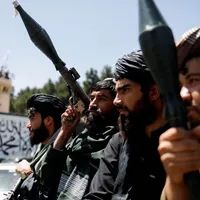

The shadow of a closed Strait of Hormuz no longer looms as a mere threat; it is a reality that has shattered the traditional foundations of the global energy market.
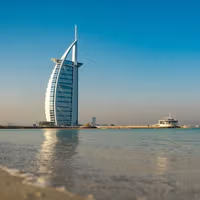
In the latest episode of the Eye for Iran podcast, host Mohamad Machine-Chian sat down with two experts to dissect the fallout: Bozorgmehr Sharafedin, Head of Digital News Services at Iran International and former Reuters Energy Correspondent, and Dr. Iman Nasseri, Managing Director for the Middle East Research at FGE Nexant consultancy, in Dubai.
Together, they painted a picture of a region at a point where a "broken" waterway might be forcing the world to permanently look elsewhere.
Tehran’s unexpected leverage
For decades, the Islamic Republic used the threat of closing the Strait as a rhetorical deterrent. However, according to Bozorgmehr Sharafedin, the actual closure in early 2026 was as much a surprise to Tehran as it was to the world. Having seen their primary deterrents – missile programs and regional proxies like Hezbollah – fail to prevent direct conflict with the US and Israel, the establishment stumbled upon a different kind of power.
"Iranians are also surprised," Sharafedin noted. "The deterrence they didn’t count on that much – the closure of the Strait of Hormuz – became their most valuable card. Now, they are tying the future security of Iran to the management of Hormuz. We had the deputy speaker of the parliament saying that the Strait of Hormuz is our nuclear weapon."
This shift in doctrine has led to a dangerous sense of triumphalism in Tehran. State-controlled media has floated the idea of imposing "transit fees" or "security taxes" on ships, much like the Suez Canal.
But Sharafedin warns that this strategy is fatally short-sighted. Unlike the Suez, which is governed by an international treaty and relative predictability, the Islamic Republic’s logic defies stability. "They will try to impose their political views and preferences on this transit route," he explained. "Many shipping lines simply won't risk it."
The 'broken vase' of global energy
The economic consequences of this closure are already being felt, even if they aren't always visible in the "Brent Crude" price tag seen on news tickers. Dr. Iman Nasseri pointed out that while the public looks at futures prices, the physical market has been in agony.
"The price of jet fuel was over $200 for a prolonged period," Nasseri revealed. "The market is furious and frustrated. We have 12 to 14 million barrels per day of unsupplied demand. In India, many people do not have gas for cooking. The demand destruction has already happened."
This disruption has permanently changed how global powers view the Persian Gulf. Sharafedin cited comments by International Energy Agency (IEA) chief Fatih Birol, saying: "The Strait of Hormuz is like a broken vase. It's broken. The damage is done. It's almost impossible to put it back together." The world is no longer waiting for the Strait to reopen; it is actively building a future without it.
The exodus to alternative routes
The most immediate reaction to the blockade has been a massive surge in investment toward alternative infrastructure. Pipelines that were once considered "economically unfeasible" are now receiving emergency funding. Sharafedin noted that since the start of the conflict in February, the volume of oil transferred via alternative routes has nearly doubled, jumping from 4.2 million to 7 million barrels per day.
"Iraq recently allocated $1.5 billion for a pipeline connecting Basra to Jordan, Syria, and Turkey," Sharafedin said. This diversification isn't limited to the Middle East. Buyers like Pakistan, which relied on Kuwaiti oil for 50 years, are now sourcing crude from Nigeria, Libya, and the United States. Even China, the region's biggest customer, is accelerating its trillion-dollar pivot toward nuclear and solar energy to escape its reliance on the Hormuz bottleneck.
Regional prosperity held hostage
While the global economy may eventually adjust by finding new suppliers, the outlook for the Middle East itself is much grimmer. For the last decade, countries like the UAE, Qatar, and Saudi Arabia have tied their future prosperity to a logic of stability and foreign investment. That dream is now under direct attack.
"The Islamic Republic is single-handedly holding the region down," Sharafedin argued. He pointed out that every time the region moves toward a better future – whether through the Arab Uprisings or attracting tech giants like Amazon AWS – Tehran intervenes to sabotage the stability required for such progress. By attacking infrastructure in Fujairah and targeting tankers in the Red Sea, the regime has signaled that no alternative route is safe.
"I don't think many of those countries can now justify the investment of huge data centers," Sharafedin lamented. "Both short-term and long-term, the regional countries will pay a heavy price."
Scenarios for 2027: A prolonged limbo
As the US shifts from "Operation Epic Fury" to "Project Freedom," a new diplomatic phase is emerging, but Dr. Nasseri remains skeptical of a quick fix. He outlined a base-case scenario where the market sees only a "gradual recovery" to about 60% of pre-war levels by late 2026, with the situation remaining largely flat well into 2027.
The fundamental issue, Nasseri argues, is the massive gap between Washington and Tehran’s expectations. "The same regime that has not agreed to terms over the last couple of years will not suddenly do so now," he said. While a potential Memorandum of Understanding (MOU) might provide temporary "happy headlines" to calm traders, the structural reality remains one of severe disruption.
The war has pushed relations between Iran and the United Arab Emirates close to rupture, disrupting one of the region’s most important commercial relationships and leaving ordinary Iranians who built lives and businesses caught in the fallout.
Hundreds of thousands of Iranians who built lives and businesses in the UAE now face visa cancellations, frozen finances and mounting uncertainty as relations between Tehran and Abu Dhabi deteriorate.
According to several affected residents, Iranian nationals who left the UAE during the recent conflict—whether for Iran or third countries—are no longer being allowed to return, even to collect their belongings. In some cases, families still inside the Emirates have reportedly been given only weeks to leave.
Many Iranian residents say they have also been instructed to transfer funds abroad and are increasingly unable to use UAE bank accounts.
While properties and businesses have not formally been confiscated, some owners can no longer manage them directly and must rely on proxies or powers of attorney to sell assets.
Foreign companies operating in the UAE are also becoming increasingly reluctant to deal with Iranian individuals or firms, particularly those connected to trade with Iran. Many export orders involving Iran have reportedly been canceled.
“No one knows what tomorrow will bring”
Reza, a 40-year-old Iranian who has lived in Dubai with his wife for more than eight years, said Iranians still inside the UAE have not yet been deported but remain under constant pressure.
“For now, our residency status in Dubai has not changed,” he said. “But my friends say Sharjah, Abu Dhabi and other emirates are cancelling visas even for Iranians who are still inside the country.”
Reza said he and his wife, a physician, have effectively lost their livelihoods despite retaining residency permits. His wife’s hospital declined to renew her contract, while his own import-export business has ground to a halt.
“My situation is very unclear,” he said. “No one knows what tomorrow will bring.”
He added that although his company’s licence has not officially been revoked, it can no longer function because trade involving Iran has effectively stopped.
“With work permits cancelled, people can no longer use their own assets,” he said. “A food wholesaler’s store has been shut down and, because he no longer has a business licence, he cannot even sell the goods sitting in his warehouse.”
According to Reza, the pressure is even greater on intermediaries accused of helping Iran circumvent sanctions by selling oil or moving funds abroad. He said many have already been expelled from the UAE and had their bank accounts frozen.
A critical trade relationship disrupted
For years, Dubai, particularly Jebel Ali port, served as one of Iran’s most important commercial gateways, handling a large share of Iranian imports and transit trade. The UAE was often Iran’s largest or second-largest trading partner after China.
That trade route now appears severely disrupted amid rising regional tensions and what Iranian media describe as a tightening maritime blockade.
The UAE said Friday it had intercepted new missile and drone attacks allegedly launched from Iran, adding that three residents were injured.
Earlier this week, Iran’s Khatam al-Anbiya Central Headquarters denied carrying out attacks on the UAE but warned that any operation launched from Emirati territory against Iranian islands, ports or coastlines would receive a “crushing and regret-inducing response.”
Iranian media have meanwhile intensified criticism of Abu Dhabi. Jam-e Jam newspaper described the alleged seizure of Iranian assets as “modern-day robbery and open hostility,” while Abolfazl Khaki of Iran’s Chamber of Commerce accused the UAE of showing “maximum hostility” toward Iranian traders during the recent conflict.
“The recent experience showed that the UAE is no longer a safe place for Iranian investors,” Khaki said.
Iranian officials are now openly discussing alternative trade hubs. Nadir Pourparcham of Iran’s Chamber of Commerce said trade ties with the UAE “will never return to the way they were” and pointed to Qatar’s Hamad Port as a possible replacement. Iranian media have also promoted Pakistan’s ports as alternative corridors for Iranian trade.
The conservative outlet Mashregh News argued that Iran no longer needed “unreliable intermediaries” such as the UAE and said closer ties with China and Pakistan could help Tehran withstand economic pressure.
“It is time for Dubai to understand that Iran’s geography is not for sale,” the outlet wrote.
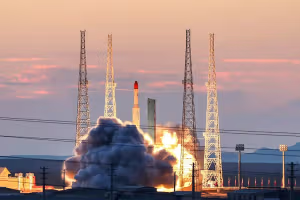
At least six Iranian nuclear sites were attacked in recent US and Israeli strikes, with most confirmed or suspected targets tied to work needed to build a nuclear weapon, a new satellite-imagery analysis by the Institute for Science and International Security shows.
The Washington-based Institute said three other attacked sites could also be nuclear-related, but there was not enough information to be certain. In total, it said six to nine recently attacked sites were nuclear-related.
The most consequential finding is that four to seven of those sites were directly, or possibly, connected to nuclear weaponization – the process of turning nuclear material into an actual bomb.
Iran’s nuclear program has two main parts. One is producing enriched uranium, the material that can be used as fuel for civilian reactors or, at much higher levels, in a nuclear weapon. The other is weaponization: designing, testing and producing the components needed to make a working bomb.
The Institute’s report suggests the latest strikes focused heavily on the second part.
It said the recent phase of the war appeared aimed less at Iran’s already damaged enrichment infrastructure and more at degrading its ability to make the weapon itself. Some of the sites hit in this phase had not previously been publicly identified, the report said, offering new insight into what it described as the extent of Iran’s nuclear weapons-related work.
Across both phases of the war – the 12-day conflict in June 2025 and the renewed fighting from February 28 until a ceasefire on April 7/8, 2026 – the Institute said nine to 12 sites involved in developing and building nuclear weapons were targeted.
The report said Iran’s major enrichment facilities remained severely damaged from the June 2025 war. It said there was no significant new damage to facilities directly associated with uranium enrichment because they had already been destroyed, and that no reconstruction or renewed enrichment had been detected.
But the Institute said the latest strikes added another layer of damage by targeting places linked to the practical work of making a bomb.
One of the most important sites was Min-Zadayi (also Minzadehei), a previously unknown complex east of Tehran.
Israel described it as a secret nuclear compound where scientists were working on a key component of a nuclear weapons system. The Institute said later reporting suggested the site may have been involved in metallurgy – likely work connected to producing the uranium metal core of a nuclear weapon.
In simple terms, that would be one of the most sensitive stages of bomb-making: taking nuclear material and preparing it in the physical form needed for a weapon.
Satellite imagery showed three large above-ground buildings destroyed at Min-Zadayi, as well as craters near hillside and possibly partially buried structures, the report said.
Another major target was Taleghan 2, inside the Parchin military complex. The site has long been associated with Iran’s past nuclear weapons work under the Amad Plan, a program believed to have been halted in its original form in 2003 but followed by later, more concealed work.
The Institute said Iran had rebuilt and heavily fortified Taleghan 2 before it was hit in March. Satellite imagery showed earth-penetrating weapons struck the facility directly. The report said the site may have contained high-explosive containment equipment.
That is significant because high explosives are central to the design of many nuclear weapons. They are used to compress nuclear material rapidly and evenly, a crucial step in producing a nuclear explosion.
The report also mentioned strikes near the Mojdeh site, also known as Lavisan 2, and at Malek Ashtar University. Both have been linked in the report to Iran’s nuclear weapons research network.
A newly built engineering-laboratory building near Mojdeh was destroyed, while a building at Malek Ashtar was described by Israel as a research and development site used to develop components for nuclear weapons production.
Other targets included the Shahid Chamran Group complex, which the Institute connected to nuclear-related research, and a building at Imam Hussein University that Israel labeled as a physics center used for Iran’s nuclear program.
The strikes also hit two sites tied to Iran’s broader nuclear fuel cycle. The Arak heavy water production plant was destroyed more thoroughly than during the June war, the Institute said. Heavy water can be used in certain types of reactors that can produce plutonium, another possible route to a nuclear weapon.
The Ardakan Yellowcake Production Plant was also rendered inoperable. Yellowcake is an early processed form of uranium. It is not bomb material, but it is a starting point for later nuclear work, including enrichment.
Enriched uranium stockpile
Despite the damage, the report does not suggest Iran’s nuclear challenge has been eliminated.
The most important unresolved issue is Iran’s enriched uranium stockpile. The Institute said tunnel complexes at Esfahan and near Natanz were not directly attacked in this phase and are believed to hold most of Iran’s enriched uranium, including about 440 kilograms of uranium enriched to 60 percent.
That level is below weapons-grade, but far above what is typically needed for civilian nuclear power and much closer to the level needed for a bomb.
The Institute said Iran had sealed some tunnel entrances before the latest war and that much of the enriched uranium appears “bottled up” in places where movement would be easier to detect. But without international inspection, the exact status of the material remains unclear.
The report also said additional nuclear scientists were killed, including senior figures linked to SPND, the military research organization associated with Iran’s nuclear weapons-related work. The Institute drew a distinction between knowledge, which cannot be destroyed, and practical know-how, which can be much harder to replace in a secret weapons program.
The overall picture is therefore one of severe damage, but not finality as Iran may still possess a large stockpile of enriched uranium, and underground sites remain a central uncertainty.
The Institute’s assessment is that the attacks have increased both the time Iran would need to build a nuclear weapon and the chance that an attempt could fail. Its argument is not simply that buildings were destroyed, but that Iran lost facilities, equipment and people connected to the difficult final steps of making a usable weapon.
The US-Israel war with Iran has delivered bumper profits for major oil, banking and defense companies, even as the conflict and Iran’s effective closure of the Strait of Hormuz drive up costs for households, governments and businesses worldwide, the BBC reported.
The largest gains have come in energy markets, where disruption to shipments through the Strait of Hormuz, a route for about a fifth of the world’s oil and gas, has sent prices swinging sharply.
European oil majors have benefited most because of their large trading arms, which profit from volatility.
BP’s first-quarter profits more than doubled to $3.2 billion after what it called an “exceptional” performance in trading, while Shell reported profits of $6.92 billion and TotalEnergies posted a nearly one-third rise to $5.4 billion.
US oil giants ExxonMobil and Chevron reported lower earnings than a year earlier because of supply disruptions from the Middle East, but both still beat analysts’ forecasts and expect stronger profits as oil prices remain well above prewar levels.
Major banks have also gained from market turbulence caused by the Iran war.
JP Morgan’s trading arm reported a record $11.6 billion in revenue in the first quarter, helping deliver the bank’s second-biggest quarterly profit. Across the six largest US banks, profits reached $47.7 billion in the first three months of 2026.
Defense companies have also benefited as the war pushes governments to restock weapons and expand investment in air defense, missile defense, counter-drone systems and other military hardware.
BAE Systems – a major British supplier of fighter jet components, naval systems and military technology – said it expects strong sales and profit growth this year, citing rising global security threats and increased defense spending. Lockheed Martin, Boeing and Northrop Grumman each reported record order backlogs at the end of the first quarter.
The war has also boosted parts of the renewable energy sector, as higher fuel prices and energy insecurity accelerate interest in alternatives.
NextEra Energy shares have risen 17% this year, while Vestas and Orsted reported stronger profits. In the UK, Octopus Energy said solar panel sales had risen 50% since the end of February.
The United States is close to an interim agreement with Iran to end the war and launch nuclear negotiations, with Tehran expected to respond on key points within 48 hours, Axios reported on Wednesday, citing two US officials and two other sources briefed on the issue.
The report said this was the closest the two sides had come to a deal since the war began, although nothing has been agreed.
Meanwhile, a Pakistani source involved in mediation efforts told Reuters that Tehran and Washington were close to agreeing on the one-page memorandum to end the war, confirming the Axios report.
“We will close this very soon. We are getting close,” the source said.
Iran leadership divided
The White House believes Iran’s leadership is divided, which could complicate efforts to reach consensus, while some US officials remain skeptical that even an initial deal will be achieved, according to Axios.
It added that US President Donald Trump’s decision to pause the planned Project Freedom operation in the Strait of Hormuz was based on progress in the talks.
Reopening the Strait of Hormuz
A proposed one-page, 14-point memorandum of understanding would declare an end to hostilities and start a 30-day period of talks on a detailed agreement, according to Axios.
Those negotiations would focus on reopening transit through the Strait of Hormuz, limiting Iran’s nuclear program and lifting US sanctions. Talks could take place in Islamabad or Geneva, two sources said.
Iran’s restrictions on shipping and the US naval blockade would also be eased during the 30-day period, a US official said, adding that Washington could quickly restore the blockade or resume military action if talks collapse.
The US imposed the blockade in April to pressure Iran after talks failed, while Tehran restricted transit through the strait in response.
Uranium enrichment
Under the draft, Iran would commit to a moratorium on uranium enrichment, while the United States would gradually lift sanctions and release billions of dollars in frozen Iranian funds, sources told Axios.
The duration of the enrichment freeze remains under negotiation, with sources saying it could last at least 12 years, possibly extending to 15, compared with Iran’s proposal of five years and a US demand for 20.
Two sources said Iran could also agree to remove its highly enriched uranium from the country, a key US demand that Tehran has previously rejected.
The draft would also include commitments by Iran not to pursue nuclear weapons, accept enhanced UN inspections including snap checks, and potentially halt operations at underground facilities, a US official said.