Iran runs dry as Islamic Republic funds ideology and foreign proxies


Iran’s water crisis is not only about scarcity or drought. It is also about where the Islamic Republic chooses to spend the country’s money, and what it leaves unfunded at home.
Iran’s water crisis is not only about scarcity or drought. It is also about where the Islamic Republic chooses to spend the country’s money, and what it leaves unfunded at home.
In a system where political and ideological objectives consistently outweigh environmental sustainability and public welfare, even severe and widely recognized crises fail to trigger meaningful correction.
In this sense, Iran’s water crisis is not a failure of resources, it is a consequence of deliberate choices. The impact of decades of misguided water engineering and policy decisions is already visible across Iran’s water systems.
Major lakes and wetlands such as Urmia Lake have shrunk. Groundwater has been depleted across more than half of the country’s plains, land subsidence is accelerating, and per capita water availability has fallen to near or below 1,000 cubic meters.
At the same time, access to reliable drinking water has become increasingly uncertain. Water quality is declining because of inadequate wastewater treatment and aging infrastructure, while policy still emphasizes large-scale agricultural self-sufficiency despite mounting environmental constraints.
It would be easy to assume that these failures could stem partially from financial limitations. But this is not a story of absolute constraint. Even under sanctions, Iran has continued to generate substantial revenues, particularly from oil exports, over the past decade.
The water crisis is not necessarily due to a lack of resources, but how those resources are allocated. Based on Iran’s FY1404 (2025-2026) public budget, significant funding is still directed toward religious and ideological institutions, amounting to roughly $750 to $860 million annually, depending on exchange rates.
At the same time, Iran’s regional activities, including support for groups such as Hezbollah, Hamas, Palestinian Islamic Jihad, the Houthis, and allied militias, are widely estimated, based on publicly reported figures, to cost an additional $1.1 to $1.5 billion each year.
These estimates reflect direct financial transfers and likely understate total support, which also includes substantial non-cash assistance such as weapons, equipment, and logistical backing.
In total, nearly $1.8 to $2.4 billion per year is allocated to priorities that do little to address Iran’s most urgent domestic challenges. Even redirecting a portion of these resources toward water management and infrastructure could support large-scale, practical solutions. Over a five-year period, such a shift would mobilize roughly $10 billion, enough to move beyond short-term fixes and begin addressing some of the structural drivers of Iran’s water crisis.
Based on order-of-magnitude cost benchmarks for standard water infrastructure projects, a reallocation of roughly $10 billion over five years could finance a coherent national water program. This would include a full-scale effort to reduce water losses in Tehran’s aging distribution network, where non-revenue water (NRW), water lost before it reaches consumers due to leaks, aging infrastructure, and inefficiencies is estimated at roughly 25 to 30 percent.
It could also support the deployment of potable reuse facilities across major urban centers such as Tehran, Mashhad, Isfahan, Shiraz, Yazd, and Ahvaz, helping relieve pressure on overstretched freshwater supplies.
In parallel, a targeted desalination and conveyance package could be implemented for Sistan and Baluchestan province, designed specifically to secure drinking water in a region facing chronic shortages, rather than to support inland agriculture.
Such an investment could also enable the construction of dozens of wastewater treatment plants nationwide, depending on facility size and treatment level, addressing both water quality degradation and reuse potential in regions struggling with untreated discharge.
Beyond urban infrastructure, even limited investments in agriculture could deliver measurable benefits. For example, modernizing irrigation in a single province such as Isfahan, where more efficient systems can reduce water use by roughly 30 to 60 percent, could significantly lower demand in one of Iran’s most water-stressed regions.
Even at the current economic development and growth, over a five-year period, roughly $10 billion directed toward ideological priorities could instead finance a nationwide water recovery program: upgrading Tehran’s water distribution system to reduce losses, building 10 potable reuse facilities for major cities, developing seven coastal desalination plants for southern Iran, and constructing a strategic water transfer system to Zahedan in Sistan and Baluchestan.
It could also fund eight large wastewater treatment plants, dozens of mid-size facilities across the country, and modernize irrigation in Isfahan. Instead, those resources are being directed elsewhere. Now imagine how the country’s water infrastructure can be overhauled if the regime is gone and Iran is back on the path to growth and prosperity, with access to the latest technologies the world has to offer, to tackle this issue.
These figures are illustrative, not precise. They highlight both Iran’s potential capacity to invest in water infrastructure and the scale of resources currently misallocated, without even accounting for additional spending on missile programs, and nuclear development, which further underscores the magnitude of available resources.
Ultimately, the constraint is neither technical nor financial: it is political. As long as the current regime remains in power, resources that could stabilize and modernize Iran’s water systems will continue to be diverted toward non-productive ideological ends.





Information received by Iran International points to growing financial pressure across sectors including agriculture, fishing, retail and manufacturing after weeks of disruption linked to conflict, internet shutdowns and trade uncertainty.
The price of potassium fertilizer for a 50-kilogram sack has increased tenfold compared to last year, reaching about 70 million rials (around $40), one farmer told Iran International.
Rice farmers typically require around six sacks of fertilizer per hectare, sharply increasing cultivation costs at a time when many already struggle with falling incomes.
The farmer added that urea fertilizer prices have also risen severalfold in recent months.
Mehdi Hosseinizadeh, head of Iran’s Association of Pesticide and Fertilizer Importers, linked the increase in fertilizer prices on Thursday to damage suffered by some petrochemical facilities during the war and shipping disruptions through the Strait of Hormuz.
Hosseinizadeh also cited rising import costs, shortages in global fertilizer markets, difficulties securing supplies from China and India, and problems related to currency allocation and import registration.
Another farmer had earlier told Iran International that the price of drip irrigation tape rose from 4 million rials ($2.25) to 30 million ($17), while fertilizer costs climbed from 8 million rials ($4.5) to more than 100 million ($57).
Drip irrigation tape is a thin polymer tube used in irrigation systems to deliver water gradually to plant roots and reduce water consumption in row crops.
Workers report layoffs and business closures
Citizens from several provinces described worsening conditions for workers and tradespeople during the ceasefire period following the conflict.
A fisherman from Qeshm island said he had been unemployed for several months and that falling prices for export fish had increased pressure on local fishermen.
Another resident from Sarbandar, Khuzestan province, described rising unemployment among port workers and shrinking household incomes.
“Everything I earn goes toward rent, transportation and a small amount of food,” the resident said.
Several citizens had previously told Iran International they were selling household goods, work tools and personal belongings to cover food and basic living expenses after losing jobs and income.
One former worker from Tehran said he had been unemployed for nearly three months after beginning work in the electrical equipment market.
“My financial situation has deteriorated sharply and daily life has become difficult to endure,” he said.
A florist from Arak said the prices of supplies including paper, glue, ribbons, boxes and floral foam had quadrupled over the past two months.
Residents in Kashan also described carpet factories shutting down and laying off workers.
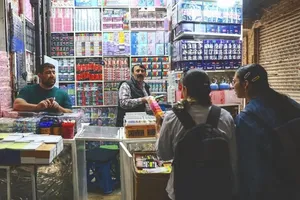
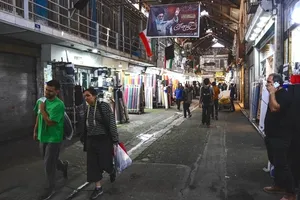
Shopkeepers in several parts of Tehran, also reported widespread business closures.
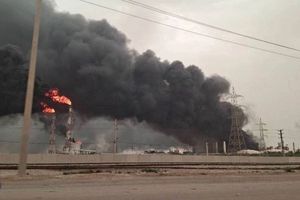
The facility, including a power substation and an alloy steel production line, was hit twice during Israeli-US attacks earlier this year, causing major disruptions to production and operations at the complex.
The report said only about 2,000 employees – mainly management and administrative staff – have returned to the site since the attacks during the war involving Iran, the US and Israel that began in late February.
Many workers have reported a sharp drop in income. Specialized technical staff who previously earned more than 100 million tomans a month – about 1 billion rials, or roughly $568 – are now receiving wages close to the legal minimum, around one-fifth of their previous pay, according to the report.
The pay cuts come as management seeks state support and unemployment insurance. Workers told Rouydad24 they fear these reduced wage calculations will permanently lower their future insurance benefits if formal mass layoffs are eventually finalized.
From steel production to the gig economy
With production lines largely inactive, a labor exodus is underway. Many former steelworkers in Isfahan have turned to driving for ride-hailing platforms to survive, while others have migrated to factories in Yazd and Khorasan provinces in search of steady work.
The uncertainty has triggered a surge in online job-seeking channels specifically for former Mobarakeh project workers. This shift highlights a deepening labor crisis in a sector that was already struggling with skilled worker emigration before the conflict began.
Mobarakeh Steel is one of Iran’s most strategic and profitable assets, and experts warn the fallout could destabilize the broader economy. Current estimates suggest it will take at least four years for the facility to return to its pre-war operating capacity.
While the head of the government’s information office insists that salaries for over 30,000 workers are being paid in full, the company’s own public relations office was more cautious, telling Rouydad24 that while they could not confirm specific allegations, "war conditions naturally change everything."
The report said small Chinese firms were openly marketing items including engines, batteries, fiber-optic cables and computer chips that can be used in military drones.
The newspaper highlighted Xiamen Victory Technology, a Chinese company that offered to sell German-designed Limbach L550 engines, which the US has barred from export to Iran and Russia. The engines have been linked to Iran’s Shahed-136 attack drones, which Russia has used in Ukraine, the report said.
The Shahed-136, Iran’s main attack drone, has a range of about 1,000 miles and costs an estimated $20,000 to $50,000 to produce, making it a cheaper alternative to cruise missiles.
According to the Journal, the company sent the marketing email in March during the Iran-Israel war that began in February and has since moved into a ceasefire.
“We are deeply shocked and outraged by the aggression against Iran, and our hearts are with you,” the email said, while promoting the sale of the engines.

Chinese firms adapt to sanctions
China’s Foreign Ministry told the Journal that Beijing enforces controls on dual-use exports in line with its laws and international obligations.
The report said US officials are increasingly concerned because many drone parts are now made in China by smaller firms that have limited exposure to the US financial system and are less vulnerable to sanctions.
The Journal also said Chinese exports of lithium-ion batteries and fiber-optic cables to Russia and Iran rose sharply as both countries expanded drone production and use.
US officials told the newspaper they are also trying to curb Iran’s oil revenue to limit funding for drone and missile programs.
The Wall Street Journal reported that some Chinese firms previously hid shipments through mislabeled cargo or Hong Kong shell companies, but analysts and former officials said some exporters are now acting more openly.

