Pahlavi urges intervention, details transition roadmap in Munich
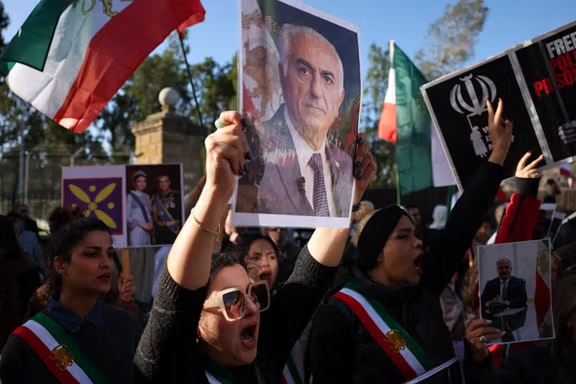
A protester hold Reza Pahlavi's picture during the Munich rally on Feb. 14, 2026
Iran’s exiled Prince Reza Pahlavi called for tighter sanctions, potential military action and rapid political transition to topple Iran’s ruling system, warning that negotiations and delay would cost more lives.
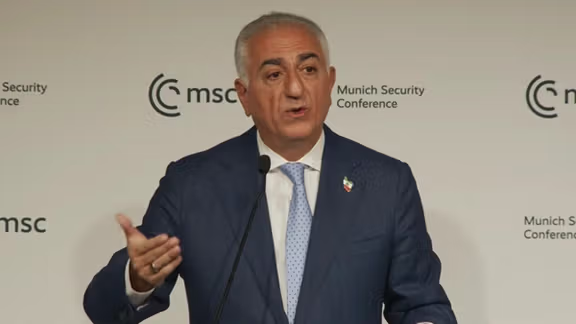
Addressing journalists on the sidelines of the Munich Security Conference on Saturday, Pahlavi argued that failure to confront the authorities decisively would embolden authoritarian actors beyond Iran.
Diplomatic pressure alone, he added, was insufficient. “It is time to end the Islamic Republic,” he said.
His remarks came at a time when Iran, nuclear negotiations, regional tensions and domestic crackdowns have been among the key issues discussed at the Munich Security Conference.
Protests persist despite crackdown
Resistance inside Iran, Pahlavi said, continues despite arrests and executions of the people.
“When they came to the streets, they were only met with this brutal genocidal level, industrial level massacre,” he said, adding that many were forced to retreat but “people are still out there chanting.”
He warned that delay could cost lives. “Every day that goes by, more people could die,” he said, arguing that negotiations would not yield meaningful results.
The 2026 Munich Security Conference has become one of the most outspoken platforms for presenting international perspectives on the future of the Islamic Republic, with Prince Reza Pahlavi, US Senator Lindsey Graham, European Parliament President Roberta Metsola, and Ukrainian President Volodymyr Zelensky each addressing the issue from different angles – including Iran’s protests, the role of the Revolutionary Guards, international pressure and possible future scenarios.
Sanctions and revenue pressure
Pahlavi urged stronger enforcement of sanctions to weaken the government’s ability to sustain its security forces.
“One way to weaken the regime even further is to impose more restrictions so that their source of revenue is cut off so they can no longer sustain their own elements,” he said.
“Any source of revenue to the regime will contribute to its ability to sustain itself a little bit longer, but at the end it will fall,” he added, describing financial pressure as a way to accelerate collapse.
Earlier, Pahlavi designated February 14 as a global day of action and called on Iranians abroad to rally in Munich, Los Angeles and Toronto, as well as in other cities worldwide, to demonstrate their support for the “Lion and Sun Revolution” and their compatriots inside the country.
Regional instability and Europe’s stakes
Instability across the Middle East is rooted in radical Islamist movements, including forces linked to Tehran, Pahlavi noted.
“This regime has only one purpose which is to export this ideology. It is a threat to its own people.”
He said political change would benefit neighboring countries and Europe alike.
“We have now a possibility of even more migration to Europe as a result of any continuation of the status quo.”
“A free Iran that would be able to supply Europe with its energy needs would certainly be an alternative to the only source that you have right now,” he added, referring to Europe’s reliance on Russia.
He described a post-Islamic Republic transition as a “win-win” outcome that would open trade and investment while strengthening stability.
Ready to lead transition
The exiled prince said calls for his leadership inside Iran carry both weight and responsibility.
“Millions of Iranians chanted my name and called for my return. That humbles me and gives me a lot of responsibility at the same time to answer their call and to be the leader of this transition as they have asked for,” he said.
He emphasized that participation in the movement is broad-based.
“Anybody who agrees with those four core principles, irrespective of their political affiliation or viewpoints, can be part of this national struggle for freedom,” he said.
First 100 days and institutional continuity
Stabilizing the country would be the priority immediately after a collapse, Pahlavi added.
The first phase would be to “stabilize the country, stabilize the economy” and ensure security, he said, arguing that encouraging “maximum defections” would prevent chaos similar to Iraq after Saddam Hussein.
Those “criminally responsible” with “the blood of people on their hands” would face courts, he added.
He also outlined a phased constitutional process culminating in elections.
“At the end of this process, once the constitution is approved and the nation votes in a referendum to adopt it, we will have the election of the first new parliament and the first new government of that future democracy.”
Monarchy, republic and inclusion
Asked about the future political system, Pahlavi said voters – not factions – should decide.
“Democracy is not about exclusion, it’s about inclusion, unless you are not in conformity with democratic principles,” he noted.
“My position is neutral towards the outcome,” he said, arguing that Iranians should decide “by the ballot box.”
He rejected criticism that he seeks power for himself.
“I’m not running for office. I’m not running for a job. I’m not seeking a power or a title,” he said.
“The day that happens, I consider that the end of my political mission in life.”
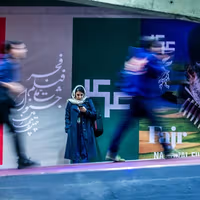
Iran’s Fajr Film Festival went ahead this year as planned. But it did so in a country still reeling from bloodshed, and the red carpets beneath its guests carried a symbolic weight that many in the film community found difficult to ignore.
Some chose not to attend. Others did, and the result was a festival that felt unusually detached from the public mood—less a national cultural event than a carefully managed display of continuity.
Now in its 44th year, the festival took place less than forty days after tens of thousands of protesters were killed during the government’s crackdown. Under those circumstances, the decision to proceed on schedule was bound to draw scrutiny.
The nature of the festival itself has evolved over time, with an increasing share of films produced by state institutions or affiliated organizations. This year, too, such bodies as municipal authorities and even the judiciary appeared among the producers.
This has contributed to a growing perception, particularly among independent filmmakers, that the festival increasingly reflects official priorities rather than the diversity of Iranian cinema.
That perception was reinforced by a number of high-profile absences. Some directors and actors announced they would not attend.
The actor Elnaz Shakerdoost, one of Iran’s most recognizable performers, publicly questioned the timing of the festival and announced she would step away from acting. “Which festival? Which celebration?” she wrote. “I will not attend any celebration, nor will I ever again play a role in this land that smells of blood.”
Other films were screened without their directors or cast present. In several cases, producers appeared alone at press conferences. The director Soroush Sehat and the cast of his widely discussed film declined to attend altogether, leading organizers to cancel its press session.
These absences altered the character of the festival’s public discussions. Press conferences often featured only those filmmakers who had chosen to participate, some of whom criticized colleagues who had stayed away.
Mohammad Hossein Mahdavian, a director known for films focusing on Iran’s security institutions, described actors who declined to attend as “cowards.”
Many film critics and journalists opted not to cover the event. Even Film Emrooz, a long-established cinema magazine known for its cautious editorial line, did not publish its customary festival issue.
Public turnout appeared subdued as well. Organizers sought to maintain the appearance of normal activity, but attendance remained visibly lower than in previous years.
The closing ceremony reflected similar tensions. Several winners did not appear to accept their Simorgh awards. President Massoud Pezeshkian attended and praised those who had participated, signaling the government’s continued investment in the festival’s symbolic importance.
One award recipient attempted to acknowledge the broader context, alluding to the recent violence while accepting his prize. His remarks, however cautiously phrased, underscored the gap between the official narrative of continuity and the unresolved trauma still shaping public life.
Iran’s film industry has long occupied a complex position—both an instrument of national identity and a space for independent artistic expression. This year’s festival highlighted how difficult it has become to sustain that balance.
Freelancers across Iran lost foreign contracts and saw income dry up during January’s internet shutdown, digital workers told Iran International, as weeks offline cut their access to projects and payments in an economy already hit by global isolation.
Iran’s internet, throttled for 20 days during January’s mass killing of protesters, has been restored since earlier this month, but remains unstable, with VPNs and other censorship-bypassing tools now far harder to access than before the shutdown.
“The internet is not stable enough for me to confidently take on projects, and transferring money has become so complicated that the losses outweigh the income,” one electrical engineer working as a freelancer told Iran International, speaking on condition of anonymity for security reasons.
Iranian entrepreneurs and freelancers are mostly shut out of global platforms and payment systems due to US sanctions, forcing them to depend on expensive workarounds that put their businesses at risk.
The engineer said that before the shutdown, earnings depended on the size and complexity of each contract.
“If the project was small or academic, the hourly rate was around $50. Larger and more complex projects would pay between $1,000 and $1,500 in total,” he said. “The number of projects per month varied, but overall I had a good level of income.”
That stability has eroded amid repeated disruptions and mounting financial barriers, he said.
“Inside Iran there is no industry where I can find work in my field. It’s complete confusion.”
An online translator who works with overseas agencies described similar disruption.
“When the connection cuts out, I cannot join interpretation sessions or upload translated files on time,” she told Iran International. “Clients do not want explanations. They just move to someone in another country.”
She said several long-term contracts were suspended after repeated outages, adding that rebuilding trust with foreign employers may take months.
Network shock ripples through digital labor
Freelancers described what they called a “freeze” in project flow, particularly from overseas clients who rely on constant connectivity and predictable delivery timelines.
The business daily Donya-e-Eqtesad, citing one of the country’s largest freelancing platforms, reported that project volume on a major platform dropped by up to 96 percent in the first days of the shutdown. The newspaper said activity has yet to fully recover.
Official data on the overall size and income of Iran’s freelance sector is not publicly available, making independent estimates difficult to verify.
“The recent internet shutdown is not just an effort to silence the people; it has also devastated over one million online businesses, with their sales dropping by up to 80 percent and small businesses suffering the most damage," the US State Department's Persian account on X posted in late January.
"As a result of the Islamic Republic regime’s reckless policies, nearly half of all jobs are now at risk."
Economic uncertainty compounds losses
The internet disruption coincided with wider infrastructure strain and economic volatility, intensifying pressure on digital workers.
“The most important factor here is the internet shutdown, which can broadly be categorized as an infrastructure disruption,” economic journalist Mahtab Gholizadeh told Iran International from Berlin.
“Alongside that, we have seen electricity and gas outages and other infrastructure shocks that limit access to the basic conditions industries and businesses need to grow,” she added.
Political uncertainty and foreign policy pressures are further weighing on the economy, Gholizadeh said.
Two women in Iran use a laptop and smartphone in a café to access social media.
“With this level of uncertainty in Iran’s diplomatic environment, conditions become unstable and high volatility prevents making decisions about future,” she said.
Foreign contracts unravel
Freelancers working with overseas employers were particularly exposed during the shutdown.
“In a country where the rial continuously loses value, many of these individuals could secure dollar income through freelancing that stabilizes their livelihoods and even acts as an economic buffer,” Canada-based science and technology journalist Mehdi Saremifar told Iran International.
“However, internet shutdowns and structural restrictions remove even this limited opportunity and effectively block access to the global market,” he added.
Saremifar cautioned that headline income figures often reflect exceptional cases rather than sustained averages.
“The main issue in Iran’s freelance market is not the income ceiling but severe instability and total dependence on internet access,” he said. “With every shutdown or disruption, the entire income stream stops.”
Even after partial reconnection, several freelancers said employers remain hesitant to assign projects inside Iran, citing concerns over delivery delays and payment obstacles.
Digital workers who spoke to Iran International expressed deep concern over losing their jobs and professional reputations, with many increasingly considering emigration. Beyond financial losses, they also described psychological strain caused by repeated uncertainty.
The shutdown appears to have seriously undermined one of the few lifelines available to young Iranians amid deepening isolation and the rial’s unprecedented collapse, compounding economic and psychological strain.
Iran’s rial, trading at nearly 1.6 million to the US dollar on Friday, has lost half its value in just six months and risks losing its role as both a store of value and a functioning currency.
Ali Heydari, a 20-year-old Iranian protester wounded and arrested during demonstrations in Mashhad on January 8, was shot in the head and killed in detention about a month later, a source close to his family told Iran International.
Heydari was injured by live ammunition in his leg during protests on January 8 and taken away alive by security forces. After 33 days of complete silence about his whereabouts, his body was handed to his family on February 9.
Authorities told his father by phone that his son had “died during the protests” and that his body had been kept in morgue for over a month.
Family members who saw the body dispute that account.
They told Iran International that signs of severe beating, a broken nose and, most critically, a bullet wound to the left side of his forehead indicate he was tortured during detention and later killed with a close-range shot to the head.
Two additional visible signs, they said, strongly suggested that only days – not weeks – had passed since his death.
Live fire and arrest
Heydari was born on March 27, 2005, in the village of Virani in Shandiz and lived in Mashhad. He worked in a woodworking shop. Had he not been killed in mid-February, he would have turned 21 within weeks.
On the evening of January 8, he joined thousands of others protesting on Haft-e Tir Boulevard in Mashhad. Witnesses said security forces began firing at crowds gathered near the local police station around 9 p.m.
A protester who survived the crackdown told Iran International that a live round struck Heydari in the leg early in the shooting.
“He lost balance and fell. There was heavy bleeding. We couldn’t pull him back,” the witness said. “Security forces reached him, lifted him and dragged him away.”
Heydari’s mobile phone fell from his pocket as he collapsed. The witness retrieved it before fleeing.
33 days of enforced disappearance
From the moment of his arrest until the early hours of February 9, his family received no official information about his location, medical condition or legal status.
After learning from the witness that Heydari had been wounded and detained, the family searched for him across hospitals, detention centers, courts and morgues. Authorities – including the Intelligence Ministry, the Revolutionary Guards’ intelligence unit and local police – denied knowledge of his case.
The systematic denial of information about a detainee seized in plain sight amounts to enforced disappearance under international law. In practice, it left the family in prolonged uncertainty, cut off from any legal recourse and unaware of whether he was alive or dead.
Such denial also removes scrutiny – a condition that rights groups say can facilitate torture and extrajudicial killing.
The call from the morgue
In the early hours of February 9, officers from the investigative unit in the Shandiz area phoned Heydari’s father and instructed him to go to the Behesht-e Reza cemetery in Mashhad to identify and collect his son’s body.
When the father asked what had happened, he was told his son had “died during the protests” and that his body had been in morgue for more than a month.
Family members who viewed the body said there were visible bruises and a fractured nose, consistent with severe beating. The gunshot wound to the forehead, they said, appeared to have been fired from close range, likely with a handgun.
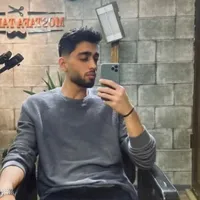
They also pointed to physical details suggesting that Heydari had been alive long after his January 8 arrest. He had visited a barber that Thursday and had only faint stubble at the time of his detention, they said, but facial hair had grown noticeably by the time his body was returned. They added that the body’s condition did not align with a death that had occurred a month earlier.
Together, they say, these signs contradict the official explanation and indicate he was killed days before his body was released.
Burial under watch
Heydari was buried in his hometown of Virani. The funeral drew large numbers of residents, alongside a significant presence of plainclothes security agents.
Agents attempted to detain several participants during the burial but were prevented by resistance from mourners, according to attendees. The following day, security forces warned the family against holding a memorial ceremony. The gathering ultimately proceeded after mediation by relatives.
Silence and risk
Shahram Sadidi, a Mashhad-born political activist based in the UK who first publicized Heydari’s disappearance, told Iran International that public unawareness may have made it easier for authorities to act without scrutiny.
“If news of his detention had spread earlier, public pressure might have prevented this outcome,” he said.
Field reports, Sadidi said, indicate that more than a thousand people – possibly several thousand – were detained in Mashhad during and after the January 8 protests, with little information released about most of them.
“Families are often threatened that speaking out will harm their loved ones,” he said. “Fear keeps many silent, and that silence creates space for abuse.”
Heydari’s case, marked by live-fire injury, disappearance and a fatal gunshot in custody, underscores the risks facing detainees held beyond public view – and the consequences of 33 days in which no authority acknowledged where he was.
About a month ago, US President Donald Trump urged Iranians to keep protesting and take over institutions, saying that “help is on the way.”
Since then, the US military presence around Iran has expanded steadily, and many Iranians openly call for American military action against the Islamic Republic.
Yet some of Trump’s advisers draw cautionary parallels between a potential strike on Iran and the US invasions of Afghanistan in 2001 and Iraq in 2003, warning against another protracted and costly war.
There is, however, another Middle Eastern precedent—one that both Iran and the United States would be wise to examine closely: the 1991 Shia and Kurdish uprising in Iraq. It was a revolt sparked in part by American encouragement but crushed after the United States did not intervene on behalf of the protesters.
US call for uprising
On Feb. 15, 1991, President George H.W. Bush called on “the Iraqi military and the Iraqi people to take matters into their own hands and force Saddam Hussein, the dictator, to step aside.”
His message was broadcast into Iraq via television and radio. Coalition aircraft dropped leaflets urging Iraqi soldiers and civilians to “fill the streets and alleys and bring down Saddam Hussein and his aides.”
The call came weeks after the US-led coalition had launched its campaign to expel Iraqi forces from Kuwait. Shia communities in southern Iraq and Kurdish groups in the north rose up against Saddam.
The uprisings were fueled by deep public anger over Saddam’s military adventurism — from the long war with Iran to the invasion of Kuwait — which had imposed immense human and economic costs on Iraqi society.
Protests began in Basra and quickly spread to Najaf, Karbala and Nasiriyah. Shia rebels and defecting soldiers attacked security forces and government buildings. Baath Party offices were seized, officials were killed, prisoners were freed.
Within roughly two weeks, 14 of Iraq’s 18 provinces were effectively outside the central government’s control.
It was a dramatic advance — but it did not last.
The collapse of the uprising
The rebellion ended in one of the bloodiest crackdowns in modern Iraqi history. Its failure stemmed from a combination of factors: American hesitation to intervene, Saddam’s extensive use of force and deep divisions among the opposition — a combination that could, in a different form, reappear in Iran.
Despite overwhelming military superiority in the Persian Gulf, the Bush administration chose not to enter a new confrontation with Saddam. There were fears of “another Vietnam,” with American troops drawn into a prolonged deadly conflict.
Bush publicly called for Saddam’s removal but remained wary of what might follow. One concern was the “Lebanonization” of Iraq — the prospect of the rise of Iranian-backed Shia forces in Baghdad.
Meanwhile, opposition groups inside Iraq — Shia factions, Kurds, nationalists and others — failed to unify under a coherent command structure. The opportunity to conquer Baghdad slipped away.
The Gulf War ceasefire allowed Saddam breathing room. A regime many believed was on the brink of collapse recovered quickly. Relying on the Republican Guard — which had remained in the war largely intact — Saddam launched a counteroffensive.
Although parts of Iraq were placed under no-fly zones, Saddam exploited a loophole: helicopters were not barred. He used them to attack rebels, and coalition forces did not intervene to stop those assaults.
The Republican Guard shelled residential neighborhoods indiscriminately, conducted house-to-house arrests and carried out mass executions. Chemical weapons were used against some rebel-held areas. Even those who sought refuge in religious shrines in Najaf and Karbala were not spared.
Estimates suggest that between 30,000 and 60,000 Shia in the south and around 20,000 Kurds in the north were killed. Roughly 2 million people were displaced.
Lessons for the US and Iran
The Iraqi uprising offers several lessons for policymakers in Washington, and for Iranians.
First, the international community often underestimates a regime’s capacity for internal violence. Military weakness abroad does not necessarily translate into fragility at home.
A government that perceives its survival to be at stake may show restraint toward foreign adversaries while unleashing far harsher tactics domestically. Even an army battered in external war can regroup internally, close ranks and act with renewed intensity.
Saddam’s regime had been defeated by an international coalition, yet it retained loyal security structures, a functioning chain of command and the willingness to use extreme force against its own citizens.
At such moments, any external concession or diplomatic maneuver can be repurposed as an instrument of internal consolidation.
A deal with Iran could give the ruling elite a chance to regroup and unleash a new wave of repression against its own people.
For opposition movements, strategic cohesion matters. Agreement on minimum political goals, unity of command and preparation for a potential power vacuum can be decisive.
Victory does not arrive simply because a regime appears weakened. In Iraq, rebels went so far as to appoint local governors in areas they controlled — but the new order collapsed swiftly. Divisions within the opposition ultimately strengthened the existing power structure at a decisive moment.
At the same time, global leaders should recognize that threats alone are insufficient. If a foreign power seeks to alter the balance of power, it must understand that displays of force without the intention to use it can carry profound and unintended consequences.
The night air on Jan. 8 in northeastern Tehran filled with chants rising in defiance. Among them stood Pooya Faragerdi, a violinist whose life was measured in music and a heart that beat for Iran. Then came the gunfire.
Faragerdi, 44, was shot by security forces near a police station in Pasdaran that night.
Videos verified by Iran International from Pasdaran on Jan. 8 showed wounded protesters lying bloodied on the street as others tried to help, with gunfire audible in the background.
“At first we thought he had been killed in Majidiyeh… but later I learned he went to Pasdaran and was shot there,” his brother Payam Fotouhiehpour told Iran International.
A bullet pierced the right side of his abdomen around 11 p.m., and he was taken to a hospital. He died the following day, Jan. 9, his brother said, but for days the family did not know where he was.
Nearly 12 days later, they learned his body was at Kahrizak — a forensic medical complex south of Tehran where many protest victims were taken.
Footage verified by Iran International from Kahrizak showed families searching among rows of black body bags as the complex filled with protest victims.
Searching through darkness
While Faragerdi joined protests in Tehran, his brother was in the United States, cut off by a nationwide internet blackout imposed on Jan. 8 as demonstrations intensified.
Connectivity dropped to near zero, with tens of millions cut off from global internet access and phone communication severely disrupted. Rights groups said the shutdown aimed to prevent information from leaving the country and obscure the scale of the crackdown.
“I was unaware of everything,” he said.
Only days later, when limited international calls were partially restored, he learned his brother was missing.
“I convinced myself he had gone somewhere with a friend… I told myself he would show up and I would scold him for ten or fifteen minutes.”
He never did.
“Every moment his image was in front of my eyes. I had to go into the storage room or my office to cry so my wife and daughter would not lose themselves.”
On Jan. 20, authorities informed the family that Faragerdi’s body was in Kahrizak. He was buried the following day at Tehran’s Behesht-e Zahra cemetery.
“These days, images of his childhood come to my mind more and more. Even his childhood voice is in my ears — ‘Dada Payam.’”
Defiance through music
Long before the protests, Faragerdi had resisted Iran’s cultural licensing system, which requires artists to obtain approval from the Ministry of Culture and Islamic Guidance before performing or releasing music.
Born on Sept. 7, 1981, he trained in violin from childhood, developing a foundation in classical performance. Though he held a degree in agricultural machinery engineering, music remained central to his life.
“He decided to play the violin professionally - and teach,” his brother said. “He taught my daughter Baran as well.”
Faragerdi played classical music—from Baroque to modern—and had a taste for all types, his brother said: jazz, blues, rock.
But the permit system pushed him away from formal stages.
“He hated that,” his brother said. “It was insulting to him that these creatures would decide what he could do.”
Faragerdi redirected his creativity into craftsmanship. Skilled with tools, he began carving wooden instruments by hand, including ocarinas he built and played himself.
A fellow musician who performed with him, speaking on condition of anonymity, said Faragerdi had once been part of an independent orchestra in Tehran.
“He was part of an independent orchestra—meaning no government body oversaw it. It was private,” the musician said.
Following the 2019 crackdown, during which at least 1,500 protesters were killed, many artists moved away from orchestras requiring ministry permits, the musician added.
'Your bow is still, but not our rage'
Tributes from fellow musicians and students have surfaced across social media.
“We shared a stage, a stand, a country. We played side by side for years, and we still hear your velvet voice in the pauses between movements,” two of his fellow musicians told Iran International.
“On January 8, you were shot for daring to breathe free… They might have silenced your body but not your echo. They killed a musician, not sound itself. Your bow is still, our rage is not.”
Faragerdi’s final Instagram post showed him burning an Iranian banknote bearing the image of Ruhollah Khomeini, founder of the Islamic Republic, holding it over a toilet before dropping the ashes into the bowl. The clip was captioned: “Let us count the life that has passed,” and set to “The Final Countdown” by Swedish band Europe.
In text messages, his brother shared memories with care.
Asked why Pooya joined the protests, his brother said he was not someone who would stay home while others took to the streets.
“I think on Jan. 8 he fell in love with his people again,” he said. “I wish he had lived to see freedom as well.”
The last sounds Pooya heard were not drawn from his violin, but from chants rising through the streets. Perhaps that was the music he had wanted to hear all along — a chorus of voices rising through the streets.