• العربية
  • فارسی
Brand
  • Iran Insight
  • Politics
  • Economy
  • Analysis
  • Special Report
  • Opinion
  • Podcast
  • Iran Insight
  • Politics
  • Economy
  • Analysis
  • Special Report
  • Opinion
  • Podcast
  • Theme
  • Language
    • العربية
    • فارسی
  • Iran Insight
  • Politics
  • Economy
  • Analysis
  • Special Report
  • Opinion
  • Podcast
All rights reserved for Volant Media UK Limited
volant media logo

Iran-backed Hezbollah rearms, defying cease-fire - WSJ

Oct 31, 2025, 08:50 GMT+0
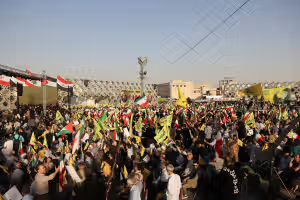
Hezbollah supporters gather in Beirut’s southern suburbs to honor fighters killed in clashes with Israel, November 3, 2023.

Iran-backed Hezbollah is rebuilding its weapons and ranks, defying a cease-fire deal and risking renewed conflict with Israel, the Wall Street Journal reported on Friday, citing people familiar with Israeli and Arab intelligence.

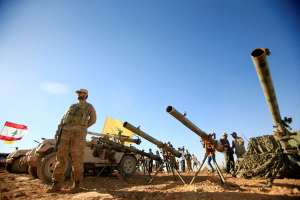
The intelligence shows Hezbollah is restocking rockets, antitank missiles and artillery through seaports and smuggling routes that still operate in parts of Syria, the people said. Some of the new weapons are made in Lebanon by Hezbollah itself, one of the people said.

The rearmament defies the terms of the cease-fire agreement that required Lebanon to begin disarming Hezbollah south of the Litani River. Instead, Hezbollah has resisted, saying its weapons are essential to defend Lebanon’s sovereignty.

Israel, which has provided intelligence to help Lebanese forces disarm Hezbollah and carried out more than 1,000 strikes against the group since last November, is growing impatient, the people said. One person familiar with the matter said the Israeli government was angered to learn the issue had shifted from disarmament to rearmament only months after the truce began.

US Ambassador to Turkey Tom Barrack said in October that Israel could act unilaterally if Beirut delays further, warning of grave consequences. Lebanese leaders have appealed for patience through American and Arab intermediaries and signaled willingness to expand coordination with Israel despite the two states remaining technically at war.

Hezbollah leader Naim Qassem said in a recent television interview that attempts to disarm the group should be resisted but that it seeks to avoid another war. He said Hezbollah has not retaliated to Israeli strikes since the truce began.

The cease-fire followed a two-month Israeli campaign last year, triggered when Hezbollah fired rockets into Israel after Hamas’s 2023 attack. Thousands of airstrikes crippled the group’s infrastructure and killed many of its commanders.

Hezbollah deepens ties in Latin America as Iran faces strain

While Hezbollah rebuilds its military power at home, the group is also reinforcing its global funding base.

US experts told senators last week that Hezbollah is expanding its financial and criminal networks in Latin America, particularly in Venezuela, as Iran struggles under economic pressure. Matthew Levitt, a terrorism analyst, said Hezbollah has long relied on diaspora and illicit trade networks to raise money when funding from Tehran slows.

Lawmakers warned that Venezuela has become a hub for Hezbollah’s drug and finance operations. Senator Sheldon Whitehouse said the group is “one of Iran’s tools to destabilize and terrorize,” urging stronger action to cut its financial lifelines. Others called on Latin American governments to follow Argentina, Colombia, and Paraguay in designating Hezbollah as a terrorist group.

Most Viewed

Iran negotiators ordered to return after internal rift over Islamabad talks
1
EXCLUSIVE

Iran negotiators ordered to return after internal rift over Islamabad talks

2
ANALYSIS

US blockade enters murky phase as tankers spoof signals and buyers hesitate

3
ANALYSIS

Why the $100 billion Hormuz toll revenue is a myth

4

US tightens financial squeeze on Iran, warns banks over oil money flows

5
ANALYSIS

US blockade targets Iran oil boom amid regional disruption

Banner
Banner

Spotlight

  • Hardliners push Hormuz ‘red line’ as US blockade tests Iran’s leverage
    INSIGHT

    Hardliners push Hormuz ‘red line’ as US blockade tests Iran’s leverage

  • Ideology may be fading in Iran, but not in Kashmir's ‘Mini Iran'
    INSIGHT

    Ideology may be fading in Iran, but not in Kashmir's ‘Mini Iran'

  • War damage amounts to $3,000 per Iranian, with blockade set to add to losses
    INSIGHT

    War damage amounts to $3,000 per Iranian, with blockade set to add to losses

  • Why the $100 billion Hormuz toll revenue is a myth
    ANALYSIS

    Why the $100 billion Hormuz toll revenue is a myth

  • US blockade targets Iran oil boom amid regional disruption
    ANALYSIS

    US blockade targets Iran oil boom amid regional disruption

  • Iran's digital economy battered by prolonged blackout
    INSIGHT

    Iran's digital economy battered by prolonged blackout

  • Iran helped Hezbollah rebuild command structure in Lebanon - Le Figaro

    Iran helped Hezbollah rebuild command structure in Lebanon - Le Figaro

  • Hezbollah warns disarmament push can lead to war, thanks Iran for support

    Hezbollah warns disarmament push can lead to war, thanks Iran for support

•
•
•

More Stories

UN investigators warn of 'serious deterioration' of human rights in Iran

Oct 30, 2025, 21:24 GMT+0

The Independent International Fact-Finding Mission on the Islamic Republic of Iran set up by the United Nations said on Thursday that human rights were increasingly under attack following a June war with Israel and the United States.

There was "a serious deterioration of the human rights situation in Iran following Israeli airstrikes in June, succeeded by a domestic crackdown that has further constricted civic space, undermined due process, and eroded respect for the right to life," the mission said in a report.

Its release was timed with the publication of similar findings by the UN Special Rapporteur on human rights in Iran, Mai Sato.

The investigators faulted Israel for a June 23 attack on a notorious Iranian prison which authorities say killed "80 people, including prisoners, their family members, staff and at least one child," the report said.

"The Mission’s preliminary investigations indicate that the airstrikes struck civilian buildings in the prison complex," it added, "which do not constitute legitimate military objectives, and that the strikes on these buildings were likely intentional."

Iran's actions following the strike were also criticized, with the report alleging prisoners were transferred to other facilities were beaten and moved at gunpoint, adding that one female detainee reportedly died.

It urged an Iranian investigation on "any violations that may have occurred prior to, during and following the strikes." It said Iran had responded to the mission's request for information on the attacks but Israel had not.

21,000 people detained by authorities in the wake of the conflict include "lawyers, journalists, human rights defenders, and people who expressed their views on the conflict on social media," the mission said.

The rise in executions this year in Iran to the highest levels since 2015, it added, "appear to contravene international human rights law, thereby violating the right to life" for which judges could be held to account for crimes against humanity

It rapped Iran for what it called extraterritorial violation of rights by surveilling and intimidating dissidents abroad.

"These patterns appear to form part of a recurring system of repression," it said, "underpinned by systemic impunity."

Iran bashes 'bully' Trump for nuclear testing restart

Oct 30, 2025, 20:04 GMT+0

Iran's foreign minister on Thursday torched a decision by US President Donald Trump to resume nuclear weapons tests after 33 years, saying the move exposes American bullying and hypocrisy after US attacks on Iranian nuclear sites in June.

"Having rebranded its “Department of Defense” as the “Department of War”, a nuclear-armed bully is resuming testing of atomic weapons," Abbas Araghchi said on X on Friday, citing a social media post by Trump earlier yesterday.

Trump cited the arsenals of Russia and China as well as nuclear tests by unspecified other countries for ordering instructing the "Department of War" he recently rebranded to "start testing our Nuclear Weapons on an equal basis."

Arch-foes since the 1979 Islamic Revolution and Tehran hostage crisis, Iran and the United States have been locked in a tense standoff in the energy-rich Mideast for decades but relations exploded into open conflict in June.

Two months after the start of US-Iran talks aimed at resolving an impasse over Tehran's disputed nuclear program, Israel launched a surprise military campaign on Iran capped by US strikes on three key Iranian nuclear sites.

Iran denies seeking nuclear weapons and relations have soured in recent weeks as a diplomatic solution appears elusive.

"The same bully has been demonizing Iran's peaceful nuclear program and threatening further strikes on our safeguarded nuclear facilities, all in blatant violation of international law," Araghchi added.

"Make no mistake: The U.S. is the World’s Most Dangerous Proliferation Risk The announcement of a resumption of nuclear tests is a regressive and irresponsible move and a serious threat to international peace and security."

Iran's economic woes and isolation have deepened since European-triggered UN sanctions resumed last month despite Chinese and Russian efforts to ban the maneuver codified by a mostly defunct 2015 nuclear deal Trump quit.

"The world must unite to hold the U.S. accountable for normalizing the proliferation of such heinous weapons," Araghchi said.

UN rapporteur on Iran rights raps Israeli attacks, post-war crackdown

Oct 30, 2025, 19:56 GMT+0

The UN Special Rapporteur on human rights in Iran said on Thursday that Israel likely violated international law in its military campaign in June while Tehran expanded repression after the conflict with hundreds of executions and new curbs on dissent.

The report by Mai Sato, dated August 26 and presented to the UN General Assembly on Thursday, covered developments from January to July 2025.

It described a “deeply troubling deterioration” in human rights, citing arbitrary detention, torture, discrimination and other forms of state violence.

Israeli attacks 'violated key principles' of international law

The report said Israeli and US attacks between June 13 and 24 on Iran’s military, nuclear and civilian infrastructure—including Evin Prison in Tehran—killed about 1,100 people, including 102 women and 45 children, and injured more than 5,600.

The report added that non-state sources estimated between 40% and 60% of those killed were civilians.

"Israel attacked over 210 commercial centers, 16 educational centers, 17 energy installations, nearly 10,000 residential units and 23 medical facilities, including hospitals in Kermanshah and Tehran," the report asserted.

"Core tenets of international humanitarian law appear to have been violated, namely, the need to distinguish between combatants and non-combatants, ensure the proportionality of military actions and minimize foreseeable harm to civilians and civilian infrastructure," Sato wrote.

Israeli assassinations of 14 nuclear scientists she described as "unlawful killing."

Attacks by Israel and the United States which both powers lauded as key setbacks for their Mideast adversary and a boon to international security she condemned.

"The Special Rapporteur underscores that armed attacks on nuclear facilities must never occur, as they could release radioactive material with catastrophic humanitarian and ecological impacts."

The attacks prompted Iran’s parliament to suspend cooperation with the International Atomic Energy Agency (IAEA) and introduce laws expanding espionage offences and limiting the work of journalists and civil groups.

'Alarming' rise in Iran executions

Sato said Iran’s use of the death penalty reached “alarming” levels, averaging three to four executions a day.

More than 700 people were executed during the reporting period, including at least 98 Baloch, 42 Kurds, and 8 Arabs, along with a rise in executions of Afghan nationals.

Half of the executions were for drug-related offences, followed by homicide and “security-related” charges, including espionage for Israel.

Sato said executions were carried out amid “procedural violations” and that the authorities had made public only 8% of the total cases, leaving most unacknowledged.

Torture, amputations and prison abuse

The report detailed accounts of torture, sexual violence and the denial of medical care in detention. It cited the amputation of four fingers each from three men convicted on theft charges — Hadi Rostami, Mehdi Sharafian and Mehdi Shahivand — at Urmia Central Prison in July as “state-sanctioned mutilation.”

Following Israeli strikes on Evin prison on June 23, which killed about 80 people, prisoners were transferred to overcrowded and unsanitary facilities, the report said, adding that the whereabouts of several detainees remained unknown.

Crackdown on media and activists

Sato said authorities had detained over 21,000 people during the June escalation, amid what she described as a “massive clampdown on civic space.”

The judiciary also sent text warnings threatening prosecution for citizens who engaged with what it called “Zionist regime pages” on social media.

The report said journalists working for Iran International and BBC Persian continued to face death threats and harassment of their families inside Iran.

Kurdish rights group Hengaw Organization for Human Rights, the report added, was repeatedly targeted with "smear campaigns, threats, false legal accusations, attempted abduction and death threats".

Minorities and deportations

The report highlighted systemic discrimination against the Baha’i, Kurdish, Baluch, and Arab ethnic minorities as well as Afghan refugees, including arbitrary arrests and the mass deportation of over 1.5 million Afghans during the first half of the year.

It said the revival of the mandatory hijab enforcement law and new surveillance powers further restricted freedoms, while lawyers, activists and women’s rights defenders faced imprisonment and unfair trials.

Lethal violence beyond war

Sato said Iran’s human rights violations go far beyond the June conflict, forming what she described as a years-old “broader pattern of lethal violence”.

She cited as evidence extrajudicial killings along Iran’s borders, deaths in custody, a culture of impunity for state violence and laws that permit gender-based abuse.

“Violations of the right to life are manifested in multiple forms,” the report said, adding that between 11 and 17 Kurdish border couriers, known as Kulbars, were killed and up to 22 injured during the reporting period.

At least 71 fuel porters or sukhtbars were also killed and 54 wounded in Sistan and Baluchestan Province in Iran's Southeast. Landmine explosions killed continued to take lives among both vulnerable border communities, it added.

'No relief'

Sato urged Iran to repeal laws criminalizing peaceful expression, end the use of torture and forced confessions, and investigate deaths in custody and border killings.

Foreign governments, she said, must protect Iranian exiles, human rights defenders and journalists from cross-border harassment and support civil society groups documenting abuses.

“Post-conflict periods present critical opportunities for national unity and healing,” Sato said. “Yet in the Islamic Republic of Iran, the end of fighting has not brought relief for the people.”


US warns citizens against Iran travel after Tehran repatriation drive

Oct 30, 2025, 19:18 GMT+0

The US State Department on Thursday told Iran International that now more than ever, citizens and dual nationals should avoid travel to Iran despite a new initiative by Tehran aiming to woo back émigrés.

Iran's foreign minister Abbas Araghchi on Wednesday said a new official website can allow Iranians abroad to return home risk-free by checking in advance whether they face any outstanding legal or security issues.

Concerns of official retribution give many Iranians outside the country pause about returning home.

Faced with deepening sanctions, Tehran is seeking to revitalize its isolated economy with investment and talent from its sizable diaspora.

Iranians can enter their details on a Foreign Ministry’s portal called Porseman to check whether they are “problem-free” to travel to Iran, Araghchi said. Those with a clean legal bill of health are given pre-approval in the form of a green tick.

Washington begged to differ, and in a response to an Iran International query on the new initiative by Tehran said its stern warning that Iran be avoided stands.

"The Department of State has long warned Americans not to travel to Iran and that is particularly true now. Anyone with a US connection, including dual US-Iranian nationals, is at significant risk of questioning, arrest, and detention in Iran."

Bitter foes since the 1979 Islamic Revolution and US embassy hostage crisis in Tehran, Iran and the United States have eyed each other with deep suspicion.

Ties hit a new low amid a 12-day US-Israeli military campaign against Iran in June.

In August, the state department said US citizens should steer clear of Iran to avoid being swept up in a post-war espionage dragnet there.

"The Iranian regime, following the 12-day war with Israel, is in the midst of unprecedented paranoia and a crackdown on spies and regime opponents," the State Department said in a post on its Persian X account USA Beh Farsi.

"Anyone considering travel to Iran should reconsider their decision. We repeat: US citizens should not travel to Iran!" it added.

While Iran says it welcomes the return of refugees, the country’s laws criminalize a wide range of behavior — including political dissent, activism, homosexuality and refusal to comply with compulsory hijab rules — issues which caused many Iranians to flee.

Khamenei backed 2009 vote-rigging and crackdown, reformist cleric says

Oct 30, 2025, 11:16 GMT+0

Iranian reformist cleric Mehdi Karroubi accused Supreme Leader Ali Khamenei of endorsing alleged rigging in the disputed 2009 presidential election and backing the deadly crackdown on the Green Movement protests which followed.

Karroubi made the remarks during a meeting with the family of Mir-Hossein Mousavi, the Green Movement leader who has been under house arrest since 2011. Both men were presidential candidates in the disputed 2009 election, which they contended was marred by fraud and irregularities.

“In the 2009 election, Mr. Khamenei not only did not tolerate the people’s vote, but he supported fraud and violent suppression and accused us of sedition, lack of insight and indecency,” Karroubi said.

The 2009 election, in which authorities swiftly declared Mahmoud Ahmadinejad the winner, triggered one of the biggest street unrests since the 1979 revolution, with mass demonstrations and a crackdown by security forces. Khamenei at the time urged Iranians to accept the result and later warned protesters to end rallies.

"Khamenei claimed insight, but destroyed the economy, culture, security and ethics, and what you see today is the product of that wrong approach,” Karroubi was quoted as saying by Iranian media.

Mir-Hossein Mousavi and his wife Zahra Rahnavard
100%
Mir-Hossein Mousavi and his wife Zahra Rahnavard

Karroubi, who is no longer under house arrest, said both he and Mousavi “saw deviation” in 2009 and intervened out of concern for the country, arguing that the growing role of the Revolutionary Guards, Basij militia and security agencies in politics and the economy had “ruined” governance and eroded oversight.

“Oversight bodies lost their effectiveness and unbridled corruption spread throughout the country.”

Karroubi, a former parliament speaker who ran in 2009, also called for the release of Mousavi and his wife, Zahra Rahnavard. “I hope that childish grudges and stubbornness will end, and that we will soon witness the freedom of Mr. Mousavi and his respected wife,” he said.

Mousavi, a former prime minister who also contested the 2009 vote, has remained under house arrest with Rahnavard since 2011, while Karroubi’s detention eased earlier this year.

Karroubi linked political decisions to Iran’s economic deterioration, citing the currency’s collapse since their detention. “The day we went into house arrest, one dollar was 900 tomans and today it is 108,000 tomans, and if this path is not corrected God knows how much it will be in the near future,” he said.

  • Green Movement leader Mousavi calls for referendum in Iran

    Green Movement leader Mousavi calls for referendum in Iran

  • Russia says no rift with Iran as row over Moscow role heats up in Tehran

    Russia says no rift with Iran as row over Moscow role heats up in Tehran

He also criticized what he called excessive alignment with Moscow by some officials and lawmakers. “The deviation from the revolution and the martyrs’ ideals is such that some military men in parliament tear their shirts for [Vladimir] Putin,” he said.

Mousavi, who in July called for a referendum to convene a constitutional assembly, has said Iran’s political structure “does not represent all Iranians.”

Iranian authorities say the 2009 election was fair and that security measures then and since have been necessary to preserve order.