• العربية
  • فارسی
Brand
  • Iran Insight
  • Politics
  • Economy
  • Analysis
  • Special Report
  • Opinion
  • Podcast
  • Iran Insight
  • Politics
  • Economy
  • Analysis
  • Special Report
  • Opinion
  • Podcast
  • Theme
  • Language
    • العربية
    • فارسی
  • Iran Insight
  • Politics
  • Economy
  • Analysis
  • Special Report
  • Opinion
  • Podcast
All rights reserved for Volant Media UK Limited
volant media logo

Iran more prepared for new conflict than before June war, Araghchi says

Oct 25, 2025, 17:24 GMT+1Updated: 00:06 GMT+0
Iranian army ground forces during a drill in western Iran in January 2025

Iran’s military and society are now more prepared than ever to deter a potential new conflict, Foreign Minister Abbas Araghchi said, four months after a US-brokered ceasefire ended a twelve-day war between Iran and its archfoe Israel.

Iran’s current level of preparedness surpasses that seen before the 12-day war, Araghchi said in an interview published on Friday with US-based journalist Dariush Sajjadi.

“Being ready does not mean expecting war,” he said. “If you are ready to fight, no one dares to attack. I am confident the previous experience will not be repeated, and any mistake will meet the same response.”

The United States held five rounds of talks with Tehran earlier this year over its disputed nuclear program, under a 60-day ultimatum set by President Donald Trump.

When no deal was reached by the 61st day, June 13, Israel launched a surprise military campaign, culminating in US strikes on June 22 targeting key nuclear sites in Esfahan, Natanz, and Fordow.

100%

While the 12-day war ended on June 24 following a US-brokered truce, global concerns over Tehran’s nuclear program grew even more complicated as 400 kilograms of Iran’s highly enriched uranium remains missing.

Tehran says the material was buried under rubble from US and Israeli airstrikes and is inaccessible but has yet to allow international inspectors access to the damaged facilities.

No nuclear weapon

Araghchi dismissed international concerns about Iran's possible pursuit of a nuclear weapon, saying the country's nuclear program is “completely peaceful and legally grounded,” citing a religious decree forbidding nuclear weapons.

“Our nuclear doctrine does not include nuclear arms,” he said. “We pursue enrichment because it is our right, not because we seek a bomb. Our atomic bomb is the power to say no.”

While Iran denies seeking a nuclear weapon, the UN's nuclear watchdog argues that enrichment to high levels of purity lacks any civilian justification.

In 2018, President Trump withdrew the United States from the 2015 nuclear deal with Iran (JCPOA), calling it flawed and too lenient. He then launched a maximum pressure campaign, reimposing harsh sanctions to cripple Iran’s economy and force broader concessions on its nuclear and regional activities. After his reelection, Trump intensified the same strategy.

Relations with the United States

On ties with Washington, Araghchi said the main obstacle lies in what he called America’s “hegemonic character.”

“As long as the United States behaves with domination and Iran refuses to submit, this problem will persist,” he said. “But it can be managed—we do not have to pay every price.”

He cited repeated failed negotiations as evidence of mistrust. “We negotiated, reached agreements, and fulfilled them, yet each time the US broke its word,” he said.

"In New York (during the UN General Assembly in September), there was an opportunity for talks, but they made completely unreasonable and illogical demands — for instance, that we hand over all our enriched material to them in exchange for a six-month extension of the snapback. What sane person would accept that? It has nothing to do with Iran at all."

Araghchi said "there is no basis for trust, though diplomacy is never abandoned. If the US is ready to talk, with honesty and mutual respect, Iran is prepared for a rational and balanced agreement.”

Iran will not yield its rights or tolerate coercion but remains open to any reasonable and fair solution that preserves national dignity, he concluded.

Most Viewed

Iran negotiators ordered to return after internal rift over Islamabad talks
1
EXCLUSIVE

Iran negotiators ordered to return after internal rift over Islamabad talks

2
ANALYSIS

US blockade enters murky phase as tankers spoof signals and buyers hesitate

3
ANALYSIS

Why the $100 billion Hormuz toll revenue is a myth

4

US tightens financial squeeze on Iran, warns banks over oil money flows

5
ANALYSIS

US blockade targets Iran oil boom amid regional disruption

Banner
Banner

Spotlight

  • Hardliners push Hormuz ‘red line’ as US blockade tests Iran’s leverage
    INSIGHT

    Hardliners push Hormuz ‘red line’ as US blockade tests Iran’s leverage

  • Ideology may be fading in Iran, but not in Kashmir's ‘Mini Iran'
    INSIGHT

    Ideology may be fading in Iran, but not in Kashmir's ‘Mini Iran'

  • War damage amounts to $3,000 per Iranian, with blockade set to add to losses
    INSIGHT

    War damage amounts to $3,000 per Iranian, with blockade set to add to losses

  • Why the $100 billion Hormuz toll revenue is a myth
    ANALYSIS

    Why the $100 billion Hormuz toll revenue is a myth

  • US blockade targets Iran oil boom amid regional disruption
    ANALYSIS

    US blockade targets Iran oil boom amid regional disruption

  • Iran's digital economy battered by prolonged blackout
    INSIGHT

    Iran's digital economy battered by prolonged blackout

•
•
•

More Stories

Iran lawmaker says nuclear work continues despite site damage

Oct 25, 2025, 10:59 GMT+1

Iran continues to advance its nuclear program despite damage to several atomic facilities, Fadahossein Maleki, a member of parliament’s national security and foreign policy committee, said on Saturday.

Maleki said that airstrikes had harmed parts of Iran’s nuclear infrastructure but that “work is ongoing” and would not be halted. “Nuclear science has become part of the daily life of our people,” he said.

His comments followed remarks by IAEA Director General Rafael Grossi, who said earlier this week that Iran’s technical expertise had survived the 12-day war in June, when US and Israeli airstrikes caused severe damage to key nuclear sites in Isfahan, Natanz and Fordow. Grossi told Le Temps newspaper that Iran now holds enough enriched uranium for ten nuclear weapons if it chose to enrich further, but added there was no evidence Tehran seeks to build one.

He also said Iran had not withdrawn from the Nuclear Non-Proliferation Treaty and that diplomacy should prevail to prevent renewed confrontation.

Maleki said Iran would continue its program “regardless of outside rhetoric” and that there was “no reason to abandon it.”

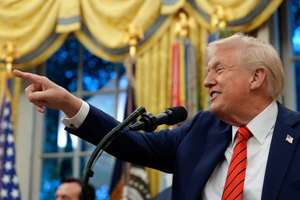
  • Trump says Iran no longer respected after US attacks

    Trump says Iran no longer respected after US attacks

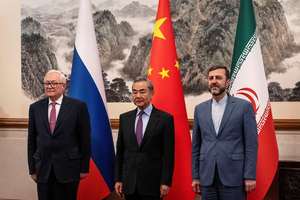
  • Iran, Russia, China question IAEA’s mandate after end of UN resolution

    Iran, Russia, China question IAEA’s mandate after end of UN resolution

Renewed friction over IAEA oversight

The lawmaker’s remarks came amid rising tension between Tehran and the International Atomic Energy Agency after Iran, Russia and China urged an end to the agency’s monitoring and reporting tied to the 2015 nuclear deal, following the expiry of the UN resolution that endorsed it.

In a joint letter sent on Friday, the three countries told Grossi that Resolution 2231, which endorsed the 2015 Joint Comprehensive Plan of Action (JCPOA), formally expired on October 18. They asserted that with its termination, the IAEA’s reporting mandate under the resolution “has come to an end.”

Western governments reject that position, insisting that the agency’s verification work remains vital as long as Iran stays bound by the NPT and its safeguards obligations.

Grossi has said the IAEA continues to monitor developments and that cooperation between Iran and the agency is essential to avoid escalation.

Iran, Russia, China question IAEA’s mandate after end of UN resolution

Oct 25, 2025, 07:51 GMT+1

Iran, Russia and China have told the International Atomic Energy Agency that its monitoring and reporting linked to the 2015 nuclear deal should end following the expiry of the UN resolution that endorsed it, Iranian media said on Friday.

Kazem Gharibabadi, Iran’s deputy foreign minister, said the three countries sent a joint letter to IAEA Director General Rafael Grossi arguing that Resolution 2231, which endorsed the 2015 Joint Comprehensive Plan of Action (JCPOA), formally expired on Oct. 18.

He said the letter followed a previous joint message the countries had sent to the UN secretary-general and the president of the Security Council, declaring the resolution terminated. “All provisions of Resolution 2231 have now lapsed, and attempts by European countries to reactivate sanctions through the so-called snapback mechanism are illegal and without effect,” Gharibabadi said, according to state media.

In their letter, the ambassadors of Iran, Russia and China wrote: “With this termination, the reporting mandate of the Director General of the IAEA concerning verification and monitoring under Security Council Resolution 2231 has come to an end.” The letter added that the IAEA Board of Governors’ decision of Dec. 15, 2015, which authorized verification and monitoring for up to 10 years or until the agency issued a broader conclusion on Iran’s nuclear program, whichever came first, “remains valid and constitutes the sole guidance which the IAEA Secretariat is obliged to follow.”

  • Iran no longer bound by 2015 nuclear deal restrictions, Araghchi tells UN

    Iran no longer bound by 2015 nuclear deal restrictions, Araghchi tells UN

  • Iran says UN Resolution 2231 has formally ended

    Iran says UN Resolution 2231 has formally ended

According to the three governments, “as of 18 October 2025, this matter will be automatically removed from the Board of Governors’ agenda, and no further action will be required in this context.”

Iran, Russia and China have maintained that the resolution’s expiry removes Iran’s nuclear file from the Security Council’s agenda and ends the IAEA’s mandate tied to it.

Grossi urges diplomacy, notes Iran stays in NPT

IAEA chief Rafael Grossi said earlier this week that diplomacy must prevail to avoid renewed conflict and noted that Iran had not withdrawn from the Nuclear Non-Proliferation Treaty despite tensions. He said continued cooperation between Iran and the agency was vital to prevent escalation.

Grossi told Le Temps newspaper on Wednesday that Iran holds enough uranium to build ten nuclear weapons if it enriched further, though there is no evidence it seeks to do so. He said Israeli and US airstrikes in June had caused “severe” damage to Iran’s nuclear facilities in Isfahan, Natanz and Fordow, but that the country’s technical know-how “has not vanished.”

Tehran and the IAEA have yet to agree on a framework to resume full inspections at the bombed sites. Grossi said Tehran was allowing inspectors access “in dribs and drabs” for security reasons, adding that efforts were continuing to rebuild trust and restore routine monitoring.

‘Nothing to lose': unbowed Iran may opt for war, ex-Israeli envoy says

Oct 25, 2025, 01:25 GMT+1
•
Negar Mojtahedi

Iran is isolated and under pressure but its robust counterattacks in a 12-day war with Israel may embolden it to fight another more deadly conflict, author and former Israeli ambassador to Washington Michael Oren told Eye for Iran.

“The Middle East is at an inflection point,” Oren said. “Iran feels cornered, and that’s when nations become most dangerous.”

Oren said Tehran does not believe it was defeated in the last conflict and may now see little to lose by reigniting hostilities.

“Toward the end of the war, the percentage of interceptions went down,” he recalled. “The Shahab rockets didn’t take down a room; they took down a neighborhood. I don’t know how many nights we could have gone on.”

He said Iran’s ability to adapt under fire—learning Israel’s missile defense systems in real time—was one reason Israel accepted a ceasefire sooner than expected.

“They were learning how to get through our umbrella,” Oren said. “They were causing us some very severe damage.”

Redefining the Middle East

The former envoy said the aftermath of the conflict has already begun reshaping the region. The Six-Day War of 1967 saw Israel capture vast territory and redraw the Middle East map. Oren, who has written extensively about that war, said the current transformation could be even more consequential.

“The Middle East has been transformed in ways more far-reaching than even the changes after the Six-Day War,” he said.

Oren pointed to Iran’s growing isolation and new alignments forming around Israel. He said some governments that publicly criticized Israel during the fighting are now quietly engaging with it, drawn by shared concerns about Tehran’s role in the region.

“Peace in the Middle East is made through strength,” he said. “Soft power alone has never worked.”

Iran's nuclear file and new fault lines

Oren’s comments come amid renewed tension over Iran’s nuclear program. Tehran, backed by Moscow and Beijing, has informed the International Atomic Energy Agency (IAEA) that European efforts to reimpose sanctions are illegitimate, arguing that UN Resolution 2231 has expired.

In Jerusalem earlier this week, US Vice President JD Vance said Washington will continue to pursue diplomacy to ensure Iran does not obtain a nuclear weapon.

“President Trump actually wants Iran to be prosperous,” Vance said, “but they cannot have a nuclear weapon.”

According to the IAEA, Iran holds about 400 kilograms of uranium enriched to 60 percent—enough for roughly ten bombs if refined further—but there is no evidence Tehran intends to build one. Agency chief Rafael Grossi has warned, however, that if diplomacy fails, “a renewed resort to force cannot be ruled out.”

Inside Iran, Friday sermons reflected a defiant tone. Senior clerics denounced Washington and praised what they called the country’s resilience. Ahmad Khatami vowed to “break the horn of this wild bull,” while Mohammad Saeedi in Qom thanked Supreme Leader Ali Khamenei for “crushing the arrogance of the US president.”

Despite speculation that Israel’s prime minister might pursue another strike, Oren said Israel understands the risks. He noted that the previous conflict could have been far more costly and that few in Israel want to test those limits again.

“Iran is isolated,” he said. “And it may feel that it has nothing to lose by triggering a second round.”

Still, Oren said he remains cautiously optimistic that the region could ultimately move toward a new equilibrium.

“If cards are played right,” he said, “the Middle East could look unrecognizable in two years.”

You can watch the full episode of Eye for Iran on YouTube or listen on any podcast platform of your choosing.


Following Khamenei's lead, Iran clerics blast US in Friday sermons

Oct 24, 2025, 12:25 GMT+1

Senior Iranian clerics denounced US President Donald Trump in Friday prayer sermons, accusing the United States of aggression and deceit as Tehran’s tone toward Washington hardens following a defiant speech by Supreme Leader Ali Khamenei.

Friday prayer leaders are state appointees in Iran's theocracy, and their political speeches reflect the official stance of the ruling clerical establishment.

Ahmad Khatami, the Friday prayer leader in Tehran, said Iran would never yield to what he called US coercion. “Trump says he wants to deal with Iran, but a deal made with force is surrender,” Khatami said during his sermon, according to state media.

He said Iran would “break the horn of this wild bull” through faith and endurance, using the phrase to describe what he called Washington’s policy of pressure.

Referring to the US withdrawal from a 2015 nuclear deal, he said Washington “tore up the agreement in front of the world” and “cannot be trusted for any negotiation.”

In Qom, Mohammad Saeedi praised Supreme Leader Ali Khamenei’s recent response to Trump’s remarks about Iran’s nuclear program, saying it “crushed the arrogance of the US president.” Saeedi said the reply showed that Iran would not let “foreigners decide its needs,” according to Mehr news agency.

Khamenei, speaking in Tehran on Monday, had dismissed Trump’s assertion that US air strikes destroyed Iran’s nuclear program.

“The US president proudly says they bombed and destroyed Iran’s nuclear industry. Very well, keep dreaming,” he said. Khamenei added that Washington had no authority over Iran’s nuclear work and accused the United States of backing Israel’s war in Gaza.

“Trump tries to look powerful, but his words only reveal weakness,” Saeedi said. “The world saw that our leader’s wisdom silenced his noise.”

In Ahvaz, Mohammadnabi Mousavi-Fard said the Persian Gulf would turn into “a hell for global arrogance” if the US or its allies threatened Iran. He said Iran’s strength came from its faith and self-reliance.

“Every dollar of non-oil exports builds our national power,” he said, urging officials to focus on production and technology to counter sanctions.

The clerics’ remarks followed comments by national security chief Ali Larijani, who on Thursday likened Trump to Adolf Hitler and mocked his behavior at a US-led Gaza ceasefire summit in Egypt.

Larijani said Trump “spoke only by himself,” showed “disrespect to other leaders,” and turned the event into a “Trump show.”

US Treasury identifies $9 billion in Iranian shadow banking through US accounts

Oct 24, 2025, 07:42 GMT+1

The US Treasury’s Financial Crimes Enforcement Network identified about $9 billion in potential Iranian shadow banking activity that flowed through US correspondent accounts in 2024, the department said on Thursday.

The Financial Trend Analysis (FTA) released by the Treasury’s Financial Crimes Enforcement Network (FinCEN) outlines how Iran used foreign companies and exchange houses to skirt sanctions and fund overseas operations, including oil sales and weapons procurement.

“Identifying Iran’s complex financial lifelines and shadow networks is an essential part of cutting off the funding for their military, weapons programs, and terrorist proxies,” FinCEN Director Andrea Gacki said. “By issuing this public analysis, we hope to draw attention to Iran’s shadow banking activity and encourage financial institutions to be vigilant,” she said.

The FTA forms part of US president Donald Trump’s maximum pressure campaign announced in February, aimed at denying Iran nuclear weapons and missile capabilities and curbing its regional influence.

FinCEN’s report is based on financial institution filings covering transactions made before the campaign’s launch, supplementing a June advisory on Iranian oil smuggling and procurement efforts. It highlights that shell companies outside the United States appear to play the largest role in the shadow banking network, accounting for roughly $5 billion of activity in 2024.

The report also found that Iran-linked oil companies, primarily based in the United Arab Emirates and Singapore, moved about $4 billion that year—likely tied to concealed oil sales. Meanwhile, entities suspected of technology procurement handled approximately $413 million in transactions linked to Iranian networks.

According to FinCEN, the network spans the UAE, Hong Kong, and Singapore, with Iranian front companies in sectors from shipping to investment. The findings stress how Tehran’s financial system relies on layers of intermediaries to maintain access to global markets despite sanctions.

The new analysis, the Treasury said, would assist US and foreign banks in tracing suspicious transfers and reinforcing compliance efforts.