• العربية
  • فارسی
Brand
  • Iran Insight
  • Politics
  • Economy
  • Analysis
  • Special Report
  • Opinion
  • Podcast
  • Iran Insight
  • Politics
  • Economy
  • Analysis
  • Special Report
  • Opinion
  • Podcast
  • Theme
  • Language
    • العربية
    • فارسی
  • Iran Insight
  • Politics
  • Economy
  • Analysis
  • Special Report
  • Opinion
  • Podcast
All rights reserved for Volant Media UK Limited
volant media logo

China uses secret network to pay Iran for oil - WSJ

Oct 6, 2025, 09:52 GMT+1Updated: 00:30 GMT+0
A supply vessel approaches the Nasr production platform, located 32 kilometers southwest of Siri Island in the Persian Gulf, where crude from the Alvand field is mixed with oil from the Sivan, Dena, and Nosrat fields before being piped to Siri Island for processing and storage.

China is secretly funneling billions of dollars to Iran through a covert payment system that bypasses US sanctions by swapping oil for infrastructure projects, The Wall Street Journal reported, saying the hidden conduit enabled Tehran to receive up to $8.4 billion last year.

Citing Western officials, the report said the mechanism -- linking state-owned firms, a government insurer, and an unregistered financial intermediary -- has provided a critical lifeline to Iran’s sanctions-hit economy, with state insurer Sinosure and a little-known financial vehicle called “Chuxin” channeling the money to Chinese contractors working in Iran.

Under the system, an Iranian-linked seller books crude sales to a Chinese buyer tied to state trader Zhuhai Zhenrong; the buyer then deposits funds with Chuxin, which pays Chinese firms working on insured projects inside Iran, according to the report.

The crude typically reaches China via ship-to-ship transfers that obscure origin, the officials said.

Beijing’s Foreign Ministry told the WSJ it was “unaware of the arrangement” and “opposes illegal unilateral sanctions.”

Sinosure and Zhuhai Zhenrong did not comment, the paper said, adding neither Sinosure nor Chuxin is under US sanctions.

“Iranian entities rely on shadow banking networks to evade sanctions and move millions,” said John K. Hurley, the US Treasury undersecretary for terrorism and financial intelligence, in a separate statement last month.

Brad Parks of AidData said Sinosure-backed deals typically require that “every creditor and every construction contractor has to come under this umbrella,” likening the Iran setup to documented structures in Iraq.

The conduit has helped sustain Iran’s sanctions-hit economy with US officials estimatingroughly 90% of Iran’s oil exports go to China.

Washington has warned Beijing over such purchases and has tightened measures on the “shadow fleet” moving Iranian crude, the Journal reported.

Most Viewed

Iran negotiators ordered to return after internal rift over Islamabad talks
1
EXCLUSIVE

Iran negotiators ordered to return after internal rift over Islamabad talks

2
ANALYSIS

US blockade enters murky phase as tankers spoof signals and buyers hesitate

3
ANALYSIS

Why the $100 billion Hormuz toll revenue is a myth

4

US tightens financial squeeze on Iran, warns banks over oil money flows

5
ANALYSIS

US blockade targets Iran oil boom amid regional disruption

Banner
Banner

Spotlight

  • Hardliners push Hormuz ‘red line’ as US blockade tests Iran’s leverage
    INSIGHT

    Hardliners push Hormuz ‘red line’ as US blockade tests Iran’s leverage

  • Ideology may be fading in Iran, but not in Kashmir's ‘Mini Iran'
    INSIGHT

    Ideology may be fading in Iran, but not in Kashmir's ‘Mini Iran'

  • War damage amounts to $3,000 per Iranian, with blockade set to add to losses
    INSIGHT

    War damage amounts to $3,000 per Iranian, with blockade set to add to losses

  • Why the $100 billion Hormuz toll revenue is a myth
    ANALYSIS

    Why the $100 billion Hormuz toll revenue is a myth

  • US blockade targets Iran oil boom amid regional disruption
    ANALYSIS

    US blockade targets Iran oil boom amid regional disruption

  • Iran's digital economy battered by prolonged blackout
    INSIGHT

    Iran's digital economy battered by prolonged blackout

•
•
•

More Stories

Iran adds 11 aircraft to civil aviation fleet - IRGC media

Oct 5, 2025, 14:06 GMT+1

Iran has added 11 new aircraft to its civilian fleet as part of an ongoing effort to expand domestic air transport capacity, IRGC media reported on Sunday, citing the head of the Civil Aviation Organization.

Hossein Pourfarzaneh, the organization’s chief, said during a ceremony in Tehran that the newly inducted aircraft-- along with one helicopter and five small passenger planes -- would add more than 2,500 seats to the country’s aviation network.

“These projects are aimed at improving service quality and expanding air connectivity across the country, including to the islands and remote provinces,” Pourfarzaneh was quoted as saying by the Tasnim news agency.

He said 13 transportation projects worth about $125 million had been launched to strengthen Iran’s air infrastructure.

According to Pourfarzaneh, Iran has added over 5,100 passenger seats since 2021.

  • Iran receives Russian MiG-29 jets, expects more advanced systems, lawmaker says

    Iran receives Russian MiG-29 jets, expects more advanced systems, lawmaker says

  • Iran Air receives two used Airbus A330s in oil-for-planes deal with China

    Iran Air receives two used Airbus A330s in oil-for-planes deal with China

Iran has struggled for decades to modernize its aging fleet due to international sanctions restricting aircraft sales and access to spare parts.

More than half of its estimated 330 commercial planes are grounded, forcing Tehran to rely on leased or secondhand aircraft.

Earlier this year, Iran took delivery of several used Airbus A330s from China under barter deals involving oil, according to domestic media reports.

Late in September, an Iranian lawmaker said Russian MiG-29 fighter jets have arrived in Iran and officials also discussed acquiring additional Russian-built jets, including Sukhoi Su-35s, as part of broader defense and transport cooperation with Moscow.

19 major dams near drying as Iran faces severe water shortage

Oct 5, 2025, 13:45 GMT+1

Nineteen of Iran’s major dams are on the verge of drying up and three have completely run out of water, state media reported, citing data from the Iran Water Resources Management Company.

After five consecutive years of drought, the country began the new water year with severely depleted reserves. Nationwide, reservoirs are only 35% full, and inflows to major dams have fallen by half compared with last year.

Dams in Tehran, Khorasan, Kerman, Hormozgan, and Zanjan provinces are among those at critical levels, while the Shamil, Niyan, Voshmgir, Golestan, and Roudbal dams have reached zero storage.

Officials warn that the persistent decline poses growing risks for drinking water, agriculture, and industry across much of the country.

Dozens of Caspian seals found dead on Iran’s northern coast

Oct 5, 2025, 13:12 GMT+1

The deaths of dozens of Caspian seals along Iran’s northern coast have renewed concern over the fragile state of the Caspian Sea ecosystem, state media reported.

At least 54 dead seals have been found on the shores of Mazandaran Province since March, according to environmental officials quoted by Tasnim News Agency.

The Caspian seal (Pusa caspica), the sea’s only native mammal, faces growing threats from pollution, overfishing, shrinking freshwater inflows and rising water salinity.

Environmental experts said entanglement in fishing gear, motorboat strikes and disease are also contributing to the deaths.

They warned that the decline of the species -- a key predator in the marine food chain -- could disrupt the ecological balance of the world’s largest enclosed body of water.

Conservation groups have called for tighter controls on fishing, pollution reduction and regional cooperation among Caspian littoral states to protect the endangered species.

Iran blames Western 'excessive demands’ for failed talks

Oct 5, 2025, 09:30 GMT+1

Western countries rejected renewed negotiations with Tehran because of what Iran’s Foreign Minister Abbas Araghchi described as excessive demands on Sunday.

The remarks came during a meeting with foreign ambassadors in Tehran, where he said the session was held to brief diplomats on developments in New York and the reactivation of UN sanctions.

“Iran had sought a fair and balanced solution, but Western states responded negatively out of greed,” Araghchi said.

Iranian Foreign Minister Abbas Araghchi during a meeting with foreign envoys in Tehran on October 5, 2025
100%
Iranian Foreign Minister Abbas Araghchi during a meeting with foreign envoys in Tehran on October 5, 2025

“Years of pressure had proven that there is no solution to Iran’s nuclear issue other than diplomacy...The snapback of sanctions, like military attacks, cannot work.”

All UN sanctions suspended under the 2015 deal with Iran snapped back into force on September 27, one month after European powers triggered the snapback mechanism.

The three European countries had weakened their own diplomatic role by resorting to pressure, he said

  • Iran signals ‘strategic patience’ after rejecting latest US proposal - IRNA

    Iran signals ‘strategic patience’ after rejecting latest US proposal - IRNA

  • Iran sanctions snapback heralds suffering, possible war

    Iran sanctions snapback heralds suffering, possible war

The Cairo agreement with the IAEA was no longer viable after the snapback, and Iran would redefine its framework for engagement under new conditions, according to the Iranian foreign minister.

Iran had demonstrated goodwill in its dealings with both Western powers and the IAEA, Araghchi said, adding that Tehran had “taken every step it could to reach a negotiated solution.”

“We showed goodwill through our cooperation with the Agency and our fair proposals. The West has no excuse to say Iran avoided talks, nor any justification for triggering the snapback mechanism… Iran’s position is now fully vindicated.”

The United Nations sanctions include restrictions on Iran’s nuclear and military activities, asset freezes on designated entities, and a duty to “exercise vigilance” when doing business with Iran.

France, Germany and the United Kingdom said in a joint statement the reimposition of sanctions was unavoidable after Iran’s breaches of the 2015 nuclear deal, citing enriched uranium stockpiles 48 times above agreed limits.

However, the foreign minister said Iran had proved it seeks only to secure its legitimate rights while remaining open to any fair diplomatic path.

“The last time there was an attack, more than 120 countries condemned it because Iran acted wisely,” Araghchi said. “Once again, Iran has shown it is a smart player that will not surrender its rights.”

Iran’s parliament approves plan to remove four zeros from national currency

Oct 5, 2025, 08:25 GMT+1

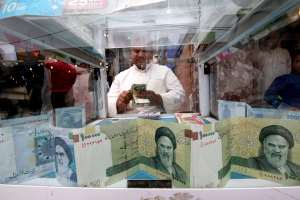
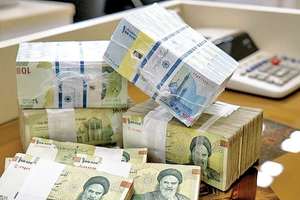
Iran’s parliament on Sunday approved a long-debated plan to remove four zeros from the national currency, the rial, in a bid to simplify financial transactions and improve the efficiency of banknotes.

Lawmakers passed the measure with 144 votes in favor, 108 against, and three abstentions out of 262 present. The reform amends the Monetary and Banking Law to redefine the rial as equal to 10,000 current rials and introduces a new subunit, the qiran or gheran, worth one hundredth of a rial.

Under the legislation, both old and new rials will circulate for up to three years during a transition period. The Central Bank of Iran (CBI) must establish operational procedures within two years of enactment and publicly announce the start of the change through official media.

According to the new law, after the transition period, all financial obligations denominated in the current rial will be settled using the new unit.

The CBI will also be responsible for managing the withdrawal of old banknotes and coins and for setting foreign exchange rates under the country’s current exchange regime.

The plan -- first proposed by the government in 2019 and discussed across three administrations and parliamentary terms -- has undergone multiple revisions. The latest version retains the rial as Iran’s official currency, dropping earlier proposals to rename it the toman.

Shamseddin Hosseini, head of parliament’s Economic Committee, said the measure’s main purpose was to “make banknotes more functional and facilitate financial transactions.”

He added that the abundance of zeros in the national currency had caused accounting and operational difficulties, adding that similar redenominations had been undertaken by countries such as Turkey in 2003 and 2005.

Hosseini acknowledged that cutting zeros would not directly reduce inflation or address Iran’s underlying economic challenges, but called it “an unavoidable adjustment” given years of high inflation and declining purchasing power.

  • Iran parliament advances plan to slash four zeros from rial

    Iran parliament advances plan to slash four zeros from rial

  • Iran to slash four zeros from currency in 2025, chief banker says

    Iran to slash four zeros from currency in 2025, chief banker says

Iran’s central bank governor Mohammad Reza Farzin said in May that the redenomination would take place this year as part of wider banking reforms.

The change, he added, would align official usage with common practice among Iranians, who already express prices in tomans -- equivalent to 10,000 rials.

The reform comes amid persistent inflation of about40%, a more than 90% loss in the rial’s value since US sanctions were reimposed in 2018, and widespread economic hardship.

Economists say that while the move could have short-term psychological benefits, it is unlikely to solve Iran’s deeper structural issues, including fiscal imbalances, monetary instability, and limited central bank independence.

“This policy is largely cosmetic,” economist Ahmad Alavi told Iran International in August. “Without tackling the roots of inflation -- from liquidity growth to systemic inefficiencies -- removing zeros will not restore the rial’s value.”

Iran has debated currency reform for decades, with earlier efforts raised under the administrations of Hashemi Rafsanjani, Mahmoud Ahmadinejad, and Hassan Rouhani. The current legislation, delayed several times by the Guardian Council, now returns to the body for final review before becoming law.