• العربية
  • فارسی
Brand
  • Iran Insight
  • Politics
  • Economy
  • Analysis
  • Special Report
  • Opinion
  • Podcast
  • Iran Insight
  • Politics
  • Economy
  • Analysis
  • Special Report
  • Opinion
  • Podcast
  • Theme
  • Language
    • العربية
    • فارسی
  • Iran Insight
  • Politics
  • Economy
  • Analysis
  • Special Report
  • Opinion
  • Podcast
All rights reserved for Volant Media UK Limited
volant media logo

Iranian filmmakers mount rare collective challenge to state control

Behrouz Turani
Behrouz Turani

Iran International

Oct 22, 2025, 21:52 GMT+1Updated: 00:08 GMT+0
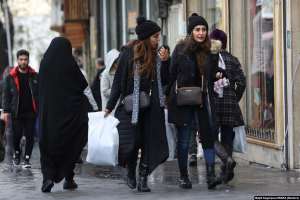
People walk past a movie theatre in central Tehran

Calls are growing across Iran’s film industry to end state censorship, with thirteen trade unions joining directors and screenwriters in demanding the abolition of film production permits and pre-production controls imposed by government bodies.

In a rare declaration Wednesday, the unions—representing cinematographers, actors, production designers, sound recordists, editors, photographers and makeup artists—backed a statement issued a day earlier by the Iranian Film Directors Association condemning state censors.

“There is no justification for the existence of the Film Production Permit Council in today’s Iranian society,” the directors said in their statement. “Filmmakers will no longer seek approval from a body that judges their way of thinking.”

According to the state-run ISNA news agency, they called on Deputy Culture Minister for Cinema Raed Faridzadeh to disband the council and said their representatives would no longer participate in its meetings.

They also proposed that all film industry unions be represented in the separate body that grants screening permits after a film’s completion.

The call was backed on Wednesday by representatives of all trades, who said reform was essential in a “system of censorship that begins before a film is even made.”

Underscoring the challenges, It Was Just an Accident by auteur director Jafar Panahi went from being filmed Iran in secret to avoid censorship to a 2025 Oscar contender nominated by France, whose cinema industry participated in production.

Since the 1979 Islamic Revolution, the Ministry of Culture and Islamic Guidance and affiliated institutions such as the Farabi Cinema Foundation have exercised tight control over filmmaking—from script development and casting to posters and promotion—dictating even which actors’ images may appear in advertising.

Writers join in

On Wednesday, the Screenwriters Association joined the protest with a statement even more direct than the directors’ declaration.

Calling screenwriters “the first victims of censorship in Iranian cinema,” the group called for replacing the current system with a registration process that would not scrutinize content, allowing films to reflect life in contemporary Iran.

The screenwriters also urged the creation of a joint committee between the state and trade unions to rewrite filmmaking regulations and replace restrictive mechanisms with supportive frameworks.

Despite international acclaim for Iranian cinema, many filmmakers have been forced to work abroad to escape ideological controls, and some have faced prison upon returning home.

In March 2026, four Iranian films are expected to compete for the Academy Award for Best International Feature. Only one—Cause of Death: Unknown by Ali Zarnegar—represents the Islamic Republic.

The other three—It Was Just an Accident, The Things You Kill by Alireza Khatami, and Black Rabbit, White Rabbit by Shahram Mokri—have been nominated by France, Canada, and Tajikistan.

Most Viewed

Iran negotiators ordered to return after internal rift over Islamabad talks
1
EXCLUSIVE

Iran negotiators ordered to return after internal rift over Islamabad talks

2
ANALYSIS

US blockade enters murky phase as tankers spoof signals and buyers hesitate

3
ANALYSIS

Why the $100 billion Hormuz toll revenue is a myth

4

US tightens financial squeeze on Iran, warns banks over oil money flows

5
ANALYSIS

US blockade targets Iran oil boom amid regional disruption

Banner
Banner

Spotlight

  • Hardliners push Hormuz ‘red line’ as US blockade tests Iran’s leverage
    INSIGHT

    Hardliners push Hormuz ‘red line’ as US blockade tests Iran’s leverage

  • Ideology may be fading in Iran, but not in Kashmir's ‘Mini Iran'
    INSIGHT

    Ideology may be fading in Iran, but not in Kashmir's ‘Mini Iran'

  • War damage amounts to $3,000 per Iranian, with blockade set to add to losses
    INSIGHT

    War damage amounts to $3,000 per Iranian, with blockade set to add to losses

  • Why the $100 billion Hormuz toll revenue is a myth
    ANALYSIS

    Why the $100 billion Hormuz toll revenue is a myth

  • US blockade targets Iran oil boom amid regional disruption
    ANALYSIS

    US blockade targets Iran oil boom amid regional disruption

  • Iran's digital economy battered by prolonged blackout
    INSIGHT

    Iran's digital economy battered by prolonged blackout

•
•
•

More Stories

Shamkhani urges unity after leaked wedding video draws backlash

Oct 22, 2025, 12:16 GMT+1

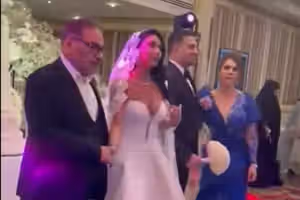
Ali Shamkhani, a senior advisor to Supreme Leader Ali Khamenei, warned on Wednesday that internal divisions could damage Iran’s stability, speaking as a leaked video of his daughter’s wedding stirred anger over Iran’s ruling establishment.

In an interview with ISNA, Shamkhani said national cohesion was vital in the face of external pressure and domestic challenges.

“We are all in the same boat shaped by the sacrifices of the martyrs of the Islamic Revolution, and it would be a shame if our differences created weaknesses,” he said.

He urged all political groups to “act together under the leadership of the Supreme Leader,” adding that adversaries were trying to exploit divisions to harm the country.

The comments came just days after footage surfaced online showing Shamkhani escorting his daughter at a wedding ceremony in a Tehran luxury hotel.

The video, shared widely on X since mid-October, appeared to show a large, Western-style celebration and drew sharp criticism from social media users accusing officials of hypocrisy amid the country’s deepening economic crisis and renewed enforcement of hijab rules.

The wedding reportedly took place in April 2024 at Tehran’s Espinas Palace Hotel. At the time, Iranian outlets estimated the cost at about 14 billion rials (over $21,000). The family did not comment on the reports, and Shamkhani has not publicly addressed the new controversy surrounding the footage.

Shamkhani, a former secretary of Iran’s Supreme National Security Council and now a member of the Expediency Council, has long been a prominent figure in Iran’s security establishment. He also serves as the Supreme Leader’s representative in the National Defense Council.

  • Naked hypocrisy: leaked wedding video sparks new scandal for Iran’s rulers

    Naked hypocrisy: leaked wedding video sparks new scandal for Iran’s rulers

  • Double standard: privacy defense over Shamkhani leak angers Iranians

    Double standard: privacy defense over Shamkhani leak angers Iranians

Leak fuels political blame game

The video has drawn reactions even from hardline circles. Some conservative commentators questioned how senior officials could call for patience under sanctions while appearing at opulent private events. Others defended Shamkhani, saying the ceremony was private and attended only by family members.

Former state broadcaster chief Ezzatollah Zarghami described the exposure as “a new method of assassination,” accusing Israel of waging psychological warfare through cyberattacks. IRGC-linked Mashregh News also said the leak aimed to “undermine an effective official,” blaming both “foreign enemies and certain domestic circles.”

The hardline daily Kayhan, which is funded by the Supreme Leader’s office, went further, accusing allies of former president Hassan Rouhani and ex-foreign minister Mohammad Javad Zarif of involvement. The paper called the release of the footage a “proxy character assassination,” saying that Shamkhani’s past criticism of Rouhani’s handling of nuclear policy had fueled political resentment.

Pro-hardline activists echoed that view online, arguing that the leak followed Shamkhani’s recent comments implicating the previous administration in the delayed acknowledgment of the 2020 downing of a Ukrainian airliner by the Revolutionary Guards.

Figures close to Rouhani have denied any connection to the leak. A source told the news outlet Khabar Online that the act was “unethical and contrary to Islamic norms.”

Israel, inside job? Tehran blame game flares over Shamkhani wedding leak

Oct 21, 2025, 22:38 GMT+1
•
Maryam Sinaiee

The political storm unleashed over a leaked video depicting the daughter of Iran's ex-security chief in a revealing wedding dress shows no sign of calming, with claims of Israeli cyberwarfare pitted against suspicions of skullduggery within the ruling elite.

The footage of Ali Shamkhani walking his daughter down the aisle—dressed in a strapless, décolleté gown—instantly went viral and drew cries of double standards from a nation bound by strict Islamic codes.

But beyond issues of morality, elite privilege or invasion of privacy, the leak itself has triggered a new wave of political blame games, exposing heightened factional tensions in the aftermath of Israel’s June attack on Iran.

Shamkhani’s only reaction to date has been a cryptic post on X quoting Steve McQueen prison-break drama Papillon: “You bastards, I’m still alive.” He had used the same phrase to deny rumors of his death during the 12-Day War.

Notably, the message was written in Persian and Hebrew, shifting attention from the video's content to the act of leaking itself and framing the exposure as possible foreign interference.

‘Character assassination’

Former state broadcaster chief Ezzatollah Zarghami put it bluntly.

“Hacking into people’s privacy is Israel’s new method of assassination,” he posted on X, calling the leak a new form of psychological warfare aimed at national morale.

On social media, the theory of Israeli involvement gained traction when users claimed that the clip first appeared on a Hebrew-language Telegram channel—though this claim remains unverified.

Mashregh News, affiliated with the IRGC Intelligence Organization, said the leak aimed to “discredit Shamkhani” because of his “effectiveness,” blaming “certain domestic circles” as well as Israel.

Hardline daily Kayhan, funded by the Supreme Leader’s office, went further and laid blame on former President Hassan Rouhani and his allies.

The paper called the leak a “proxy character assassination,” arguing that Rouhani and former foreign minister Mohammad Javad Zarif were “hostile” to Shamkhani because he promoted a 2020 law on “reciprocal nuclear measures” that increased Western pressure on Rouhani.

‘Culprits at home’

Ali Bitafaran, a pro-hardline activist, wrote: “The equation is very simple: Shamkhani exposed Rouhani, (close Rouhani aide) Hesamodin Ashena threatened (him), two days later the threat was carried out by the counterrevolutionaries when dirt on Shamkhani was released.”

He claimed the video revealed the link between “an evil domestic ring and the exiled overthrow-seekers.”

The accusation refers to a recent disclosure by Shamkhani that Rouhani had known “from the earliest minutes” that the IRGC had shot down a Ukrainian passenger plane in 2020, long before officials publicly admitted it.

Hardliners allege that the revelation provoked the anger of Rouhani, his foreign minister Javad Zarif, and their reformist allies.

Denials and counterclaims

Rouhani’s camp has firmly denied any link to the leak.

A source close to his office told Khabar Online that the act was “an ugly, unfair action contrary to Islamic norms.”

Hesamodin Ashena, Rouhani’s longtime adviser and a frequent target of hardliners, also pushed back, warning against “beating the empty drum of divisions.”

Ironically, Ashena’s earlier post—warning against compelling Rouhani and Zarif to reveal what they know—has been cited by hardliners as evidence of the duo’s involvement.

Whether the leak was a foreign intrusion or a domestic vendetta, it has laid bare the mutual suspicion and fragility within Iran’s political establishment.

Iranians abroad resigned to constant threats from Tehran, UN rapporteur says

Oct 21, 2025, 18:30 GMT+1

Many Iranian journalists and activists abroad have begun to treat state intimidation and harassment as part of daily life, UN Special Rapporteur on Iran Mai Sato said on Tuesday, criticizing the persistence of what she called Iran's transnational repression.

“What once felt dangerous has become routine. For many, normalizing these threats is no longer a choice" said Sato on a social media post written in Persian on X.

A group of United Nations human rights experts joined Sato in a statement in August saying threats and harassment of BBC Persian and Iran International journalists have surged since a 12-day war between Iran and Israel in June.

Journalists abroad and their families inside Iran have faced death threats, surveillance, and smear campaigns, while some relatives have been interrogated, detained, or had their passports confiscated.

They said women journalists face particularly violent gender-based harassment, both online and through intimidation of their relatives inside Iran.

Iran International filed an urgent appeal in August with the experts urging them to take action against Iran over serious risks to the lives and safety of their journalists worldwide and relatives inside Iran.

UN experts said several UK-based journalists have required police protection, with some forced to move into safe houses or relocate abroad.

  • MI5 chief says UK stepping up efforts to counter 'frantic' Iran plots

    MI5 chief says UK stepping up efforts to counter 'frantic' Iran plots

The experts said such actions violate fundamental rights including freedom of expression, privacy, and personal security, urging Tehran to halt all intimidation and investigate the attacks.

Sato added that Iranian journalists and activists told her they had “normalized” living under constant threat, redefining what it means to feel safe. That normalization, she warned, has led to self-censorship, withdrawal from public life and in some cases, abandoning their work entirely.

“Many journalists and human-rights defenders I spoke with have begun to normalize transnational repression — they see constant threats, phishing attempts, and cyberattacks as part of daily life," said Sato.

Her comments follow similar findings by the UK Parliament’s Intelligence and Security Committee, which reported at least 15 Iranian-linked kidnapping or assassination attempts in Britain since 2022.

Iran’s government has denied the allegations, calling them politically motivated.

In its response to the UN, Iran’s Permanent Mission to the United Nations in Geneva described BBC Persian and Iran International as “propaganda outlets” and said any actions taken against them were lawful measures to protect national security.

Iranian police open fire on family in car, killing child

Oct 21, 2025, 13:21 GMT+1

A six-year-old boy was killed in southwest Iran after police fired on a family car and abandoned the wounded at the scene, local sources told Iran International, suggesting that officers’ failure to take him to hospital and leaving his family by the roadside led to his death.

Rights groups had previously reported that the child, identified as Zolfaghar Sharafi, was killed by direct police fire. New information suggests that officers left the scene without assisting the wounded boy or his family.

The sources said police allegedly opened fire after stopping the vehicle for lacking a license plate, injuring Zolfaghar and his younger sister, Tahani.

They said the officers then departed, leaving the injured family by the roadside. The boy died at the scene from heavy bleeding after failing to receive medical treatment in time.

Tahani, who sustained gunshot wounds to her arms and pelvis, was later taken to Ahvaz Golestan Hospital, where the cause of injury was recorded as a “conflict with the state,” according to sources.

Her family was told to pay 150 million tomans (around $1,400) for surgery, which was delayed for three days due to financial hardship before being performed at another hospital.

The sources, citing statements by government officials, said that the officers involved in the shooting have been arrested, but no information has yet been released about their identities or current status.

  • Dreams cut short: the slain children Tehran never mentions

    Dreams cut short: the slain children Tehran never mentions

  • Number Of Minors Killed In Iran Protests On The Rise

    Number Of Minors Killed In Iran Protests On The Rise

Rights organizations have documented repeated incidents of security forces firing at civilian vehicles in recent years, often resulting in the deaths of passengers, including children.

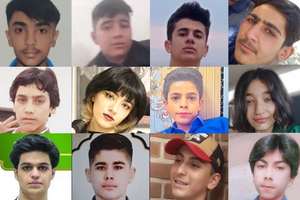
The killing of Zolfaghar Sharafi adds to a growing list of minors allegedly shot by security personnel in various provinces, incidents that have rarely led to public accountability.

Iran government says hijab cannot be restored by force

Oct 21, 2025, 10:53 GMT+1

Iran’s government spokesperson said on Tuesday that the administration does not believe coercion can restore compliance with Iran’s hijab laws, amid renewed debate over enforcement and the deployment of tens of thousands of volunteers in Tehran.

Speaking at her weekly press briefing, Fatemeh Mohajerani said, “Hijab cannot be restored to society by force... The president has repeatedly said that we certainly cannot bring hijab back to people through coercion.”

She added that the government respects all existing laws but emphasized that social norms should be upheld through cultural engagement rather than force.

Mohajerani added that the government seeks to prevent the hijab debate from deepening social divisions.

“We must ensure,” she said, “that defending social values does not come at the cost of dividing our people.”

“We are a Muslim society,” she pointed out. “We must take care not to create divisions. While we believe inappropriate public behavior should be addressed, it is something that requires the cooperation of all citizens.”

Her remarks came after Tehran’s Promotion of Virtue and Prevention of Vice headquarters said this month that 80,000 trained volunteers would be deployed across the capital as part of a new “hijab and chastity situation room.”

The initiative, announced by conservative officials, will rely on local monitoring and cooperation with cyber police and prosecutors.

No extra budget for hijab enforcement

Mohajerani also denied that any dedicated funding had been assigned for the recently announced mobilization, saying that “no special budget has been allocated for such programs.”

She added that Iran’s Supreme National Security Council (SNSC) -- headed by the president -- remained the ultimate authority on matters related to social order and security.

The new hijab enforcement drive has drawn concern among reformist politicians and clerics who warn that policing public behavior risks further division.

Cleric Abdolkarim Behjatpour, a senior member of Iran’s Institute for Islamic Culture and Thought, told ILNA news agency this week that if the campaign “turns into arrests and imprisonment, it will harm the system.”

He said moral guidance “must be delivered politely, with compassion and dignity, not through enforcement that creates social rifts.”

Another senior cleric and member of the Society of Seminary Teachers in Qom, Mohsen Faghihi, said on Tuesday that “inviting people to observe hijab should not involve confrontation, morality patrols, or imprisonment,” warning that such measures only create tension and division.

However, Abbas Ka'bi, a senior cleric and member of Iran’s Assembly of Experts, warned earlier this week against what he described as neglect over hijab enforcement, calling it a religious and legal duty of all state institutions.

He described hijab as an asset "protecting Iran’s Islamic identity from Western moral decline," and urged coordinated, well-planned action by cultural, security, and judicial bodies to prevent what he called the spread of immorality.

  • Iran says hijab laws remain in force amid debate over enforcement

    Iran says hijab laws remain in force amid debate over enforcement

  • Iran to mobilize 80,000 volunteers for hijab campaign, official says

    Iran to mobilize 80,000 volunteers for hijab campaign, official says

  • Iran business closures mark renewed crackdown on gender mixing, veil

    Iran business closures mark renewed crackdown on gender mixing, veil

  • Hardliners fault Iran government for lax hijab enforcement

    Hardliners fault Iran government for lax hijab enforcement

Since the 2022 death of Mahsa Amini in the custody of Iran’s morality police, enforcing compulsory hijab has become increasingly difficult, and the state’s ability to impose the rules has sharply eroded, particularly in major cities.

Since then, many women have continued to appear unveiled in public despite warnings, fines, and the return of hijab patrol vans, turning defiance into a daily act of resistance.

In recent months, however, authorities have revived enforcement drives through mobile patrol vans, increased fines, and business closures targeting cafés and shops accused of noncompliance.

Judiciary spokesman Ali-Asghar Jahangir said earlier this month that hijab laws remain in force, though enforcement methods have shifted toward targeting businesses rather than individuals.