• العربية
  • فارسی
Brand
  • Iran Insight
  • Politics
  • Economy
  • Analysis
  • Special Report
  • Opinion
  • Podcast
  • Iran Insight
  • Politics
  • Economy
  • Analysis
  • Special Report
  • Opinion
  • Podcast
  • Theme
  • Language
    • العربية
    • فارسی
  • Iran Insight
  • Politics
  • Economy
  • Analysis
  • Special Report
  • Opinion
  • Podcast
All rights reserved for Volant Media UK Limited
volant media logo

Trump says strikes on Iran, Soleimani paved way for Gaza peace deal

Oct 19, 2025, 17:46 GMT+1Updated: 00:09 GMT+0
US President Donald Trump

US President Donald Trump said the killing of Iranian commander Qassem Soleimani in 2020 and US strikes on Iran’s nuclear sites in June paved the way for the Gaza peace deal between Israel and Hamas.

“It started probably with Soleimani. He was a mastermind who did a lot of bad things,” Trump said in a Fox News interview, referring to the late Quds Force commander.

“He’s the father of the roadside bomb that would blow up and maim so many of our great soldiers,” he added.

Soleimani was killed in a US drone strike near Baghdad International Airport in January 2020 on Trump’s orders.

The US president said the turning point that paved the way for the Gaza peace earlier this month came in June when US B-2 bombers carried out what he called a “beautiful military operation” against Iran’s nuclear facilities.

“They flew for 37 hours, went into Iran’s airspace, and bombed the hell out of it,” he said. “When we destroyed their nuclear capability, they no longer became the bully of the Middle East.”

He said the US operation, along with Israeli strikes on Iran, made possible what he described as peace beyond Gaza.

“We wouldn’t have been able to make the deal we just made, which is basically peace in the Middle East beyond Gaza,” Trump said.

The ceasefire mediated in early October by the United States, Egypt, Turkey and Qatar put an end to over two years of Israeli attacks on Gaza, which started in response to Hamas's October 7 attack.

Most Viewed

Iran negotiators ordered to return after internal rift over Islamabad talks
1
EXCLUSIVE

Iran negotiators ordered to return after internal rift over Islamabad talks

2
ANALYSIS

US blockade enters murky phase as tankers spoof signals and buyers hesitate

3
ANALYSIS

Why the $100 billion Hormuz toll revenue is a myth

4

US tightens financial squeeze on Iran, warns banks over oil money flows

5
ANALYSIS

US blockade targets Iran oil boom amid regional disruption

Banner
Banner

Spotlight

  • Hardliners push Hormuz ‘red line’ as US blockade tests Iran’s leverage
    INSIGHT

    Hardliners push Hormuz ‘red line’ as US blockade tests Iran’s leverage

  • Ideology may be fading in Iran, but not in Kashmir's ‘Mini Iran'
    INSIGHT

    Ideology may be fading in Iran, but not in Kashmir's ‘Mini Iran'

  • War damage amounts to $3,000 per Iranian, with blockade set to add to losses
    INSIGHT

    War damage amounts to $3,000 per Iranian, with blockade set to add to losses

  • Why the $100 billion Hormuz toll revenue is a myth
    ANALYSIS

    Why the $100 billion Hormuz toll revenue is a myth

  • US blockade targets Iran oil boom amid regional disruption
    ANALYSIS

    US blockade targets Iran oil boom amid regional disruption

  • Iran's digital economy battered by prolonged blackout
    INSIGHT

    Iran's digital economy battered by prolonged blackout

•
•
•

More Stories

Sunni tribal leader shot dead in southeastern Iran

Oct 19, 2025, 14:23 GMT+1

A prominent Sunni tribal elder in Iran’s restive Sistan-Baluchestan province was shot dead on Sunday, the latest in a series of targeted killings that authorities blame on foreign-backed terrorist groups.

Mullah Kamal Salahi-zehi, a well-known community leader in the town of Sarbaz, was killed when unidentified gunmen opened fire on his vehicle in Iranshahr, according to Iranian state media. His son was wounded and taken to hospital.

Iran’s Revolutionary Guards condemned what it called a “cowardly terrorist act,” saying in a statement that “mercenary groups linked to the evil Zionist regime” were behind the attack.

It added in the statement that those killed in recent weeks included “the honorable martyrs Mullah Kamal, Reza Azarkish, Parviz Kadkhodaei, and Shams Askani,” and vowed that “the perpetrators and masterminds of these crimes will soon face punishment.”

The statement said such attacks aimed to “undermine the unity of Shia and Sunni communities” in the region but would “never shake the firm resolve of the Iranian nation.”

Tasnim News Agency, affiliated with the IRGC, described Mullah Kamal as one of the “defenders of the Islamic Republic” and wrote: “He always took firm and explicit positions against hostile movements and agents linked to Israel and global arrogance.”

However, the Baluch Activists Campaign offered a different account of Mullah Kamal’s positions, implicitly suggesting that the Islamic Republic was responsible for his killing.

The local outlet portrayed Mullah Kamal as a respected community leader, peace-seeking social activist, and a prominent figure “opposed to the Islamic Republic” in the 1980s and 1990s, who had repeatedly clashed with military forces. However, he stopped his struggle against the Islamic Republic after mediation by local elders.

According to the report, the Islamic Republic had made several attempts to assassinate Mullah Kamal both before and after granting him a guarantee of safety.

The killing follows several similar incidents in recent months.

In September, Reza Azarkish, a local Basij militia member, was shot dead in Iranshahr. Earlier in the month, Iraj Shams Askani, a member of the Revolutionary Guards, was gunned down in the border town of Rask, in an attack claimed by the Sunni militant group Jaish al-Adl.

Earlier this month, Parviz Kadkhodaei, a local Basij commander in Nikshahr, was killed in a separate assault.

The province, bordering Pakistan and Afghanistan, has long been the scene of attacks by Sunni insurgent groups that Tehran says are backed by foreign intelligence services.

Iran executes man accused of spying for Israel in Qom

Oct 19, 2025, 13:16 GMT+1

Iran executed a man on Saturday convicted of spying for Israel’s Mossad intelligence service, the judiciary said on Sunday, the second such execution reported in less than a month.

Kazem Mousavi, head of the judiciary in Qom province, said the unnamed man was executed on Saturday morning after the Supreme Court upheld his death sentence and rejected a clemency request.

“The spy’s sentence was carried out after being found guilty of moharebeh (enmity against God) and corruption on earth,” Mousavi told the judiciary’s news agency Mizan.

He said the man began cooperating with Israeli intelligence in October 2023 and was arrested four months later after sending classified information through online channels.

According to Mizan, the defendant confessed to meeting a Mossad officer, transmitting sensitive data, and receiving payment for his work.

  • Iran executes man accused of spying for Israel

    Iran executes man accused of spying for Israel

  • Iran executes political prisoner accused of spying for Israel

    Iran executes political prisoner accused of spying for Israel

The execution follows the late September hanging of Bahman Choubi-asl, a database specialist accused of providing information to Mossad in meetings abroad, including in India and Ireland.

Earlier in September, Iran also executed political prisoner Babak Shahbazi over similar charges.

Last month, the UN special rapporteur on human rights in Iran said the country had executed 11 individuals on espionage charges this year, with at least nine carried out after Israel's military strike on Iran on June 13. Saturday's execution brings the total to at least 12.

Iran urges Islamic parliaments to back boycott of Israel

Oct 19, 2025, 13:14 GMT+1

Iranian Vice Speaker of Parliament Hamidreza Hajibabaei called on Muslim countries’ parliaments to pass binding laws imposing a complete economic, trade, and political boycott of Israel during a speech at the Inter-Parliamentary Union (IPU) meeting in Geneva.

Hajibabaei said Iran “firmly supports the legitimate resistance of the Palestinian people” and the creation of an independent Palestinian state with Jerusalem as its capital.

He urged Muslim unity against what he described as Israel’s “decades-long impunity for war crimes.”

Speaking at the 151st IPU Assembly -- which focuses on humanitarian norms and inclusive democracy -- Hajibabaei warned that any temporary ceasefire should not mean “forgetting justice or accountability.”

He added that global action was needed to prosecute those responsible for crimes in Gaza and said Islamic solidarity was key to achieving “a just and lasting peace for Palestine.”

Iran accuses Israel lobby of orchestrating drone display at UK parliament

Oct 19, 2025, 11:59 GMT+1

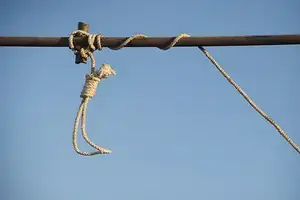
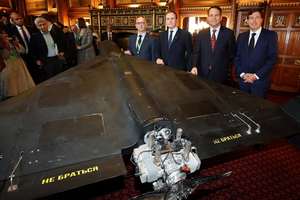
Iran’s Foreign Minister Abbas Araghchi has denounced the display of a drone in the British Parliament allegedly linked to Tehran, calling it “a pathetic show” staged by the Israeli lobby and its backers.

In a post written in Polish on X, Araghchi said, “The exhibition in the British Parliament of a drone falsely and maliciously attributed to Iran is a pathetic scene staged by the Israeli lobby and its sponsors.”

He added that “those hostile to friendly relations between Iran and Europe are creating fabricated narratives that do not reflect the historical ties -- including between Iran and Poland.”

Araghchi added that Tehran remained ready to engage in technical talks and exchange of documents to clarify the facts, dismissing what he called “an absurd performance.”

The remarks came days after Iran summoned Poland’s chargé d’affaires in Tehran to protest Polish Foreign Minister Radoslaw Sikorski’s participation in an event in London that featured a Shahed-136 drone allegedly used by Russia in its war in Ukraine.

  • Iran summons Polish diplomat over London drone display

    Iran summons Polish diplomat over London drone display

  • Iran denies involvement in UK-linked plots after MI5 warning

    Iran denies involvement in UK-linked plots after MI5 warning

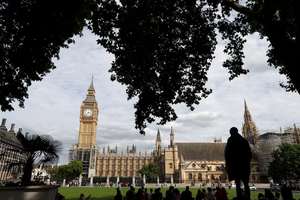
The display, organized by the US-based advocacy group United Against Nuclear Iran (UANI), was held at the Houses of Parliament and attended by Western and Ukrainian officials.

Tehran condemned the exhibition as a politically motivated act, accusing organizers of spreading “baseless and repetitive accusations” about Iran’s drone program.

Iran says it supplied drones to Russia before the war began, but denies providing weapons for use in Ukraine. Western governments and Kyiv say Iranian-designed Shahed drones, now produced in Russia under the name Geran, have played a key role in Moscow’s air strikes.

Araghchi’s statement also followed a sharp exchange between Tehran and London over British intelligence claims of Iranian-linked plots on UK soil. MI5 chief Ken McCallum said last week that more than 20 Iran-related operations had been disrupted over the past year, describing Tehran as one of the UK’s most active hostile state actors.

Iran helped Hezbollah rebuild command structure in Lebanon - Le Figaro

Oct 19, 2025, 10:20 GMT+1

Iran’s Quds Force has been directly involved in reorganizing Hezbollah’s military network in Lebanon following the killing of Hassan Nasrallah and the group’s heavy losses in its conflict with Israel, according to an investigation by the French newspaper Le Figaro.

According to the report published on Saturday, in the days after Nasrallah’s assassination in September 2024, Hezbollah’s leadership was thrown into chaos, leaving its forces without direction. “For ten days, no one answered calls. We were like a body in a coma,” one Hezbollah member told Le Figaro.

About two weeks later, Iranian operatives led by Esmail Ghaani, commander of the Islamic Revolutionary Guards Corps’ Quds Force, arrived in Lebanon to restore order. Within ten days, the report said, they rebuilt Hezbollah’s military structure, though its political leadership remained vacant.

Founded in 1982 by Iran’s Revolutionary Guards, Hezbollah has grown into Lebanon’s most powerful military and political organization, with capabilities surpassing the national army. The group has fought multiple wars with Israel and repeatedly rejected demands to dismantle its military wing.

In August, the Lebanese cabinet ordered the army to draw up plans to disarm Hezbollah as part of a broader effort to consolidate state control over weapons under a US-backed truce with Israel. Tehran condemned the move, accusing Western powers of seeking to weaken Lebanon’s defenses.

Covert rebuilding under Iranian direction

Iran guided the creation of a new, more secretive framework separating Hezbollah’s political and military wings and bringing in younger commanders, according to Le Figaro.

Hezbollah lawmaker Ali Fayyad said the organization now operates with a shorter chain of command in which “no one knows who is responsible for what.”

While Hezbollah agreed to disarm in southern Lebanon, the report said the group continues to store weapons in the Bekaa Valley and north of the Litani River, preserving its broader network with Iranian assistance.

Tehran’s strategy, the paper added, appears aimed at maintaining Hezbollah’s role as a deterrent force while avoiding a new direct confrontation with Israel.

A Western intelligence source quoted in the report described the group as “a snake crawling in the dark -- not gone, just waiting.”

Despite financial strain linked to Syria’s economic collapse, Le Figaro said Iran’s backing remains vital to Hezbollah’s recovery. The group, it wrote, is quietly rebuilding its command hierarchy under Iranian supervision while retaining its political influence in Lebanon and preparing for “the next phase.”