• العربية
  • فارسی
Brand
  • Iran Insight
  • Politics
  • Economy
  • Analysis
  • Special Report
  • Opinion
  • Podcast
  • Iran Insight
  • Politics
  • Economy
  • Analysis
  • Special Report
  • Opinion
  • Podcast
  • Theme
  • Language
    • العربية
    • فارسی
  • Iran Insight
  • Politics
  • Economy
  • Analysis
  • Special Report
  • Opinion
  • Podcast
All rights reserved for Volant Media UK Limited
volant media logo

Conservatives clash over hijab law as Tehran streets move on

Maryam Sinaiee
Maryam Sinaiee

Iran International

Oct 7, 2025, 07:24 GMT+1Updated: 00:30 GMT+0
People walk past a billboard depicting the late Hezbollah leaders Hassan Nasrallah and Hashem Safieddine, along with senior Iranian military commander General Qasem Soleimani, on a street in Tehran, September 27, 2025.

A senior conservative’s assertion that Iran’s Islamic system is “softly reforming” its stance on the hijab has triggered furious backlash from ultra-hardliners demanding full enforcement of the Hijab and Chastity Law suspended earlier this year.

The remarks by Expediency Council member Mohammad-Reza Bahonar come as Iran’s leadership struggles to contain public discontent while facing renewed UN sanctions.

The fierce subsequent backlash underscores deepening fractures within Iran’s conservative establishment over how far the state should go in policing morality and religious codes.

Speaking to reporters on October 3, Bahonar said the Hijab and Chastity Law—quietly shelved by Iran’s Supreme National Security Council (SNSC) in May—is “no longer legally enforceable.”

Mohammad-Reza Bahonar, member of Iran's Expediency Discernment Council
100%
Mohammad-Reza Bahonar, member of Iran's Expediency Discernment Council

It was likely shelved due to concerns it would inflame tensions after the 2022 death of a young woman, Mahsa Amini, in morality police custody sparked nationwide protests which were quashed with deadly force.

“The paradigms of the Islamic Republic are being gradually and softly reformed,” Bahonar said, adding there is currently no binding or enforceable law regarding hijab. “The system’s general decision is that there is no compulsory hijab law in force.”

The veteran conservative bashed ‘Hezbollahis’—hardline Islamist loyalists—for attempting to dictate their preferences to the 90 percent of Iran's citizenry who “want to live” as they choose.

‘Savage, naked' West

At Saturday’s heated parliament session, ultra-hardline lawmakers launched a coordinated attack.

“Which system’s interests are you defending in the Expediency Council—the Islamic Republic’s or that of the savage, naked Western system?” senior MP Ahmad Rastineh said, addressing an absent Bahonar.

“Those who promote and defend nudity and say there is no hijab law are no different from those who frighten the nation with the shadow of war. Both target the Islamic system,” he added.

Amirhossein Bankipour, one of the law’s architects, blamed Speaker Mohammad-Bagher Ghalibaf and President Masoud Pezeshkian for blocking its enforcement, saying on state TV that both men had “failed to communicate Parliament’s decision to executive bodies.”

In a recent Fox News interview, Pezeshkian reaffirmed his opposition to coercion, saying he “does not believe in forcing women to wear the hijab.”

Bankipour invoked Supreme Leader Ali Khamenei’s position, insisting: “The Leader has stated several times—publicly and unambiguously—that there will be no retreat on the issue of chastity and hijab.”

Hossein Shariatmadari, editor of the hardline daily Kayhan, denounced Bahonar’s terminology, saying the phrase “compulsory hijab” was “fabricated by the enemies of Islam and the Revolution.”

“Mr. Bahonar has not explained what he means by using the term ‘compulsory hijab,’” Shariatmadari wrote. “If the hijab is a legal requirement—and it is—why should it not be enforced?”

Quiet retreat

Khamenei last forcefully touched on the issue in an April 2023 when he declared that disregarding the hijab was both “religiously and politically haram (forbidden).”

Meanwhile, the reformist outlet Ensaf News reports that Iran’s urban landscape has already moved past the old debate.

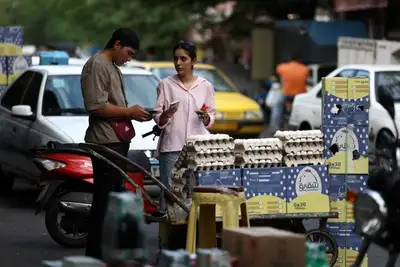
In Tehran and some other cities, the number of women wearing headscarves has markedly decreased, while many others wear loose scarves on their shoulders and the back of their hair.

The once-ubiquitous manteau coat has nearly vanished, replaced by long blouses and trousers. Crop tops and open shirts have become increasingly visible among young women—a quiet but unmistakable shift in daily life.

Most Viewed

Iran negotiators ordered to return after internal rift over Islamabad talks
1
EXCLUSIVE

Iran negotiators ordered to return after internal rift over Islamabad talks

2
ANALYSIS

US blockade enters murky phase as tankers spoof signals and buyers hesitate

3
ANALYSIS

Why the $100 billion Hormuz toll revenue is a myth

4

US tightens financial squeeze on Iran, warns banks over oil money flows

5
ANALYSIS

US blockade targets Iran oil boom amid regional disruption

Banner
Banner

Spotlight

  • Hardliners push Hormuz ‘red line’ as US blockade tests Iran’s leverage
    INSIGHT

    Hardliners push Hormuz ‘red line’ as US blockade tests Iran’s leverage

  • Ideology may be fading in Iran, but not in Kashmir's ‘Mini Iran'
    INSIGHT

    Ideology may be fading in Iran, but not in Kashmir's ‘Mini Iran'

  • War damage amounts to $3,000 per Iranian, with blockade set to add to losses
    INSIGHT

    War damage amounts to $3,000 per Iranian, with blockade set to add to losses

  • Why the $100 billion Hormuz toll revenue is a myth
    ANALYSIS

    Why the $100 billion Hormuz toll revenue is a myth

  • US blockade targets Iran oil boom amid regional disruption
    ANALYSIS

    US blockade targets Iran oil boom amid regional disruption

  • Iran's digital economy battered by prolonged blackout
    INSIGHT

    Iran's digital economy battered by prolonged blackout

•
•
•

More Stories

Two years after Oct. 7, an upended Mideast reels from Iran-Israel melee

Oct 7, 2025, 06:18 GMT+1
•
Ata Mohamed Tabriz

Two years after the October 7 attack, the Middle East drifts between competing promises and stubborn realities: Khamenei’s dream of regional “de-Americanization” lies in ruins while Netanyahu’s “new order” remains elusive.

Shortly after Hamas fighters stormed into Israel, Iran’s Supreme Leader declared that the region’s map was changing. Only days earlier, the Israeli prime minister had promised that the Jewish state would impose a new order on the region.

Yet two years on, neither vision has come to pass. Instead, the old balance has eroded, replaced by an emerging order that remains fluid and unsettled.

Fear and mistrust dominate—leaving Mideast states unwilling to make peace or all-out war.

Deterrence collapses

Much of the pre-October 7 order has unraveled in the two years since.

The deterrence between Iran and Israel, long a barrier to direct conflict, has collapsed. The 12-day war and a series of reciprocal strikes showed that both sides have abandoned old red lines without being able to impose a decisive outcome.

Iran’s regional network has also diminished. Syria has slipped from its grasp, Hezbollah is on the defensive, the Houthis in Yemen have taken serious blows and Iraq has distanced itself to preserve fragile stability.

For Israel, repeated strikes in Syria and even in Doha signal willingness to cross red lines, but rather than restoring security they have deepened regional anxiety.

The United States remains the main pillar of regional security for allies and partners as they seek to counter Iranian influence. But its authority and moral standing have been weakened as the death toll from attacks by Israel, armed and backed by Washington, have mounted.

President Trump appears more focused on managing the present rather than designing a new order, though his plan to head a transitional Board of Peace in Gaza and invitation to join the Abraham Accords normalization plan with Israel.

Reviving bases in Afghanistan and strengthening regional infrastructure reflect readiness, not intervention.

Washington avoids direct confrontation but seeks to keep control as an “active observer,” preventing collapse while doing little to rebuild order.

Tehran cornered

No country has felt the pressure more than Iran.

The punishing 12-day Israeli-US war showcased both its military reach and its vulnerabilities.

Israeli strikes on military and nuclear sites in Tehran marked the end of its long remove from combat, but frequent missile counterattacks gave its die-hards some fodder to extol Iranian arms.

Failed diplomacy with the West, the snapback of UN sanctions and lack of robust support from China and Russia have further constrained Tehran, whose economy remains tied largely to oil sales and cut off from trade corridors.

At home, growing public discontent has pushed the Islamic Republic into a contradictory path—easing some social restrictions while tightening political control through more executions, top-down discipline and frequent media gag orders.

Still a significant regional player, Tehran is increasingly isolated, with little plausible deterrence power beyond its diminished missile arsenal.

Caution abounds

Elsewhere, regional powers are focused on containment.

Qatar, after Israel’s botched attack strike on Hamas officials on Doha last month, secured fresh guarantees from Washington and treads carefully in its mediation role.

Turkey, while mending ties with the United States, worries about direct confrontation with Israel in Syria and is edging away from Moscow.

The Arab states astride Persian Gulf, meanwhile, are building defensive networks but avoiding escalation.

The Middle East has entered a period of “unfinished order”—born of war, off-balance and dominated by uncertainty.

Military power still matters but no longer suffices.

Governments are seeking stability on shifting ground: Turkey and Qatar lean toward Washington, Saudi Arabia pursues multilayered defenses with a new defense pact with Pakistan, and Israel chases a permanent but elusive peace through strength.

Gearing up

For Tehran, this unfinished order means enduring external pressure while suppressing discontent at home.

Iran’s military weight remains, but its political and economic base is eroded. The vision of the “axis of resistance” as a shield lies in tatters. Deeper isolation than ever appears to be the only discernible legacy of its decades-long support of armed allies.

Amid the tumult, one axiom holds: while others adapt to the region’s unfinished order, Tehran resists—bracing not for peace, but for the next confrontation.

Tehran hardliners adjust rhetoric after Hamas response to Trump plan

Oct 6, 2025, 01:21 GMT+1
•
Maryam Sinaiee

Hamas’s conditional acceptance of Donald Trump’s peace plan has left Tehran’s hardliners scrambling—pivoting from predictions of rejection to praise—while their detractors watch bemused at their being outmaneuvered by a Palestinian ally.

Hardline outlets such as Kayhan, Hamshahri, and Jam-e Jam had forecast Hamas would reject the proposal.

Once the group issued its nuanced response, they quickly fell into line.

Seday-e Iran, a site linked to the Supreme Leader’s office, set the tone by dismissing Trump’s initiative as “an attempt to escape a deadlock” but hailing Hamas’s answer as “intelligent.”

Nour News, tied to former security chief Ali Shamkhani, insisted Hamas had “smartly accepted only the parts of Trump’s plan related to the release of hostages and the cessation of war, while rejecting disarmament and the presence of foreign forces.”

Trump’s quick praise, it added, showed “his need for the hostages” and a political victory for the Nobel, not a real achievement. The line was clear: Hamas’s flexibility was acceptable only if it fit within Iran’s “resistance logic.”

On X, former Foreign Ministry spokesman Nasser Kanaani reinforced the script, calling Hamas’s move “responsible and intelligent” and proof that “the Resistance still holds the initiative on both the diplomatic and battlefield fronts.”

Jab at October 7 mastermind

Other hardliners played variations on the theme, not striking the same note but not diverging far.

Vatan-e Emrooz branded Trump’s proposal a “deceptive plan” that would “sideline Hamas and turn Gaza into a demilitarized zone under Israeli and American supervision, without guarantees for refugees or an end to the blockade.”

Even so, it conceded Hamas’s “yes, but…” response gave the group leverage and kept talks alive.

Ahmad Janjan, a political activist close to Speaker Mohammad-Bagher Ghalibaf, vented at late Hamas leader Yahya Sinwar: “Not only did Sinwar's solo act ruin the entire zero-day plan, but also Hamas accepted peace tonight, only after the destruction of the resistance axis!”

His anger echoed Quds Force commander Esmail Qaani, who admitted “neither Iran nor even Ismail Haniyeh was informed” of Hamas’s October 7 operation in advance—a rare admission that undercut Tehran’s claim of coordination.

‘Help clear Gaza rubble’

Outside hardline circles, the tone was markedly different: a mix of blame and ridicule.

“I wish hardliners themselves could show this kind of ‘wisdom’—or at least let the Pezeshkian administration respond as ‘wisely’ to some international initiatives!” reformist commentator Ahmad Zeidabadi wrote on his Telegram channel.

He argued that pro-government factions now face “a crisis in taking a stance” so severe they may soon ban discussion of the issue altogether.

Some opposition activists were harsher, framing Hamas’s shift as another loss for Tehran and its allies.

“Israel and the US have taken another step forward,” one activist posted on X. “It’s time to deal with the biggest destabilizer of the region: the Islamic Republic.”

Cutting deepest was journalist Hossein Yazdi: “Send those who were giving out sweets around Palestine Square on October 8 to Gaza to help clear the rubble,” he wrote, torching hardliners who celebrated the Hamas ambush two years ago to the day.

Iran’s parliament approves plan to remove four zeros from national currency

Oct 5, 2025, 08:25 GMT+1

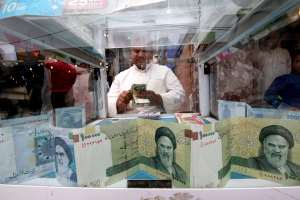
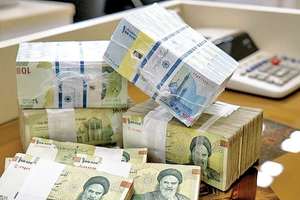
Iran’s parliament on Sunday approved a long-debated plan to remove four zeros from the national currency, the rial, in a bid to simplify financial transactions and improve the efficiency of banknotes.

Lawmakers passed the measure with 144 votes in favor, 108 against, and three abstentions out of 262 present. The reform amends the Monetary and Banking Law to redefine the rial as equal to 10,000 current rials and introduces a new subunit, the qiran or gheran, worth one hundredth of a rial.

Under the legislation, both old and new rials will circulate for up to three years during a transition period. The Central Bank of Iran (CBI) must establish operational procedures within two years of enactment and publicly announce the start of the change through official media.

According to the new law, after the transition period, all financial obligations denominated in the current rial will be settled using the new unit.

The CBI will also be responsible for managing the withdrawal of old banknotes and coins and for setting foreign exchange rates under the country’s current exchange regime.

The plan -- first proposed by the government in 2019 and discussed across three administrations and parliamentary terms -- has undergone multiple revisions. The latest version retains the rial as Iran’s official currency, dropping earlier proposals to rename it the toman.

Shamseddin Hosseini, head of parliament’s Economic Committee, said the measure’s main purpose was to “make banknotes more functional and facilitate financial transactions.”

He added that the abundance of zeros in the national currency had caused accounting and operational difficulties, adding that similar redenominations had been undertaken by countries such as Turkey in 2003 and 2005.

Hosseini acknowledged that cutting zeros would not directly reduce inflation or address Iran’s underlying economic challenges, but called it “an unavoidable adjustment” given years of high inflation and declining purchasing power.

  • Iran parliament advances plan to slash four zeros from rial

    Iran parliament advances plan to slash four zeros from rial

  • Iran to slash four zeros from currency in 2025, chief banker says

    Iran to slash four zeros from currency in 2025, chief banker says

Iran’s central bank governor Mohammad Reza Farzin said in May that the redenomination would take place this year as part of wider banking reforms.

The change, he added, would align official usage with common practice among Iranians, who already express prices in tomans -- equivalent to 10,000 rials.

The reform comes amid persistent inflation of about40%, a more than 90% loss in the rial’s value since US sanctions were reimposed in 2018, and widespread economic hardship.

Economists say that while the move could have short-term psychological benefits, it is unlikely to solve Iran’s deeper structural issues, including fiscal imbalances, monetary instability, and limited central bank independence.

“This policy is largely cosmetic,” economist Ahmad Alavi told Iran International in August. “Without tackling the roots of inflation -- from liquidity growth to systemic inefficiencies -- removing zeros will not restore the rial’s value.”

Iran has debated currency reform for decades, with earlier efforts raised under the administrations of Hashemi Rafsanjani, Mahmoud Ahmadinejad, and Hassan Rouhani. The current legislation, delayed several times by the Guardian Council, now returns to the body for final review before becoming law.

Tehran pins hopes on Russia and China to blunt sanctions impact

Oct 4, 2025, 16:25 GMT+1
•
Maryam Sinaiee

With Russia’s UN Security Council presidency and China’s economic leverage, Tehran is betting Moscow and Beijing can shield it from the impact of UN sanctions through legal maneuvers, committee vetoes, and strategic investments.

Both countries have condemned the Council’s decision, leading some in Iran to hope the rhetorical rejection will be followed by action.

“China and Russia currently intend either not to implement the resolutions under Resolution 2231 or to apply them selectively,” political analyst Mehdi Kharatian said in a post on X.

Former diplomat Kourosh Ahmadi put forward ways in which the duo could help Iran.

“China and Russia can play an effective role in reducing the impact of reinstated UN resolutions in three areas,” he wrote in the reformist daily Shargh, “preventing the implementation of the six reactivated resolutions, obstructing the work of the Sanctions Committee … and blocking any new measures.”

Obstruct sanctions

Ahmadi asserted that decisions in the Committee require consensus, enabling Beijing and Moscow to delay appointments, hinder panel functions, and limit enforcement—as they did on occasion in relation to North Korea.

Another former diplomat, Nosratollah Tajik, struck a more hopeful tone.

“China and Russia… can use existing legal mechanisms within the United Nations to obstruct the implementation of sanctions,” he told moderate outlet Jamaran.

In a joint letter to the UNSC president on September 28, China and Russia, together with Iran, argued that the snapback move by the E3 (Britain, France, and Germany) was “inherently flawed both legally and procedurally,” branding it “null and void.”

Russia’s UN Ambassador Vasily Nebenzia declared on October 1: “We’ll be living in two parallel realities, because for some snapback happened, for us it didn’t.”

Invest in Iran

Alongside legal avenues, some experts asserted, Russia and China could also try to neutralize the sanctions with hard cash.

Conservative politician Mansour Haghighatpour said Tehran and China could be looking at a new chapter in their economic cooperation if China takes “concrete steps to invest in and finance Iran’s infrastructure projects using the digital yuan.”

Such a move would prove that Beijing “will not allow imposed obstacles to block the implementation of ambitious initiatives such as the Belt and Road Initiative,” Haghighatpour argued in a piece for the moderate daily Etemad.

The optimism has been invariably met with doubt and even ridicule from ordinary Iranians on social media.

“Russia and China did not invest in Iran when we only had the US sanctions—so now they don’t recognize UN sanctions?” one user commented on X.

Another posted: “China buys only a small amount of oil from Iran … and it forces Iran to barter with Chinese goods! Humiliation higher than this?!”

‘They didn’t even abstain’

Bloomberg reported this week that Qingdao Port, a major Chinese oil terminal, plans measures targeting vessels transporting sanctioned Iranian oil, highlighting the limits of Beijing’s support.

Iran has signed strategic partnership treaties with Russia, a 20-year pact that took effect on October 2, and with China, a 25-year deal agreed in 2021 but still only partly implemented.

Some in Tehran are betting on these agreements.

“We are witnessing the emergence of a trilateral strategic partnership among Iran, Russia, and China, which could have significant implications for the balance of power,” academic Jalal Dehghani told the state-run Iran newspaper.

Another anonymous user on X reminded him of ominous precedents: “Russia and China voted in favor of all the sanctions resolutions between 2006 and 2011 … They didn’t even abstain!”

Iran’s ‘anti-infiltration’ bill targets society not spies

Oct 4, 2025, 06:59 GMT+1
•
Behrouz Turani

A measure now before Iran’s parliament promoted as curbing infiltration by foreign intelligence services in practice expands state control over journalists, students, academics and artists.

The initiative was first floated two days after Israel’s June airstrikes exposed glaring flaws in Iran’s intelligence apparatus.

Tehran has yet to explain how Israeli operatives were able to track senior commanders and nuclear scientists inside the country.

Instead of grappling with these failures, lawmakers have introduced a 19-point bill that broadens state control across society.

The draft bill criminalizes cooperation with foreign media and requires prior approval from intelligence agencies before analysts, commentators or academics can give interviews to outlets abroad.

It follows other measures widely criticized at home as naïve and ineffective, from the mass deportation of Afghans to arbitrary arrests and social media bans.

‘Don’t share photos’

Under the proposed law, anyone accused of undermining Iran’s territorial integrity could face prison terms of up to 30 years, asset confiscation and media bans.

Even transmitting photos or videos to Persian or English-language outlets outside Iran would be punishable by prison.

The bill also targets cultural production, declaring films financed by foreign entities—including cultural foundations in Europe and other Persian Gulf countries—illegal.

Many of Iran’s most acclaimed directors have relied on such funding or on cash prizes from international festivals to finance future projects. Authorities frequently dismiss these awards as Western attempts to malign the country, and the bill would formalize that suspicion into law.

Even cooperation with UNESCO’s 2030 Agenda for education and sustainable development could become grounds for imprisonment.

‘Don’t get scholarship’

The legislation further clamps down on academia and civil society.

Scholarships for Iranian students abroad must already be on a list approved by the Ministry of Higher Education, but recipients would now need additional clearance from the Intelligence Ministry.

Employment or commercial activity with foreign entities without prior approval would likewise be criminalized. Offenders could face up to 15 years in prison and be forced to repay double the amount received if the funds originated from foreign embassies or institutions.

The breadth of the proposals highlight the gulf between the declared goal of preventing espionage and the actual measures under debate.

Problem, what problem?

Only one article directly addresses illegal activity: the disclosure of confidential information that could intensify sanctions or obstruct Iran’s circumvention efforts.

Even this is framed less around espionage than around protecting the state’s sanctions-busting networks.

Critics argue the legislation tightens political and cultural control while sidestepping how foreign intelligence continues to penetrate Iran’s security system—offering a solution that does little to address the problem it claims to confront.