• العربية
  • فارسی
Brand
  • Iran Insight
  • Politics
  • Economy
  • Analysis
  • Special Report
  • Opinion
  • Podcast
  • Iran Insight
  • Politics
  • Economy
  • Analysis
  • Special Report
  • Opinion
  • Podcast
  • Theme
  • Language
    • العربية
    • فارسی
  • Iran Insight
  • Politics
  • Economy
  • Analysis
  • Special Report
  • Opinion
  • Podcast
All rights reserved for Volant Media UK Limited
volant media logo

France drops case against Iran after Macron-Pezeshkian UN talks

Sep 25, 2025, 19:29 GMT+1Updated: 00:35 GMT+0
Supporters, relatives, Mayor of Paris Anne Hidalgo and officials hold a banner in support of Cecile Kohler and Jacques Paris, two French citizens held in Iran, during a rally to mark their three-year detention and to demand their release, Paris, France, May 7, 2025

France withdrew its case against Iran at the International Court of Justice (ICJ) over the detention of two French citizens arrested in May 2022 on espionage charges, the court announced on Thursday without elaborating.

The decision, announced by the court on Thursday, came a day after French President Emmanuel Macron met Iranian President Masoud Pezeshkian on the sidelines of the UN General Assembly in New York.

It was not clear why the case was withdrawn or whether it augured progress toward a deal.

The ICJ case, filed in May, accused Iran of violating consular rights of Cécile Kohler and Jacques Paris under the Vienna Convention and subjecting the detainees to torture-like conditions in Tehran’s Evin prison.

France labeled the arrests as "hostage diplomacy," with Kohler and Paris, a teacher and her partner, accused of spying for Israel’s Mossad.

They were detained in May 2022, and Iranian state TV aired a confession from the pair in October of that year.

Human rights groups have accused Iran for systematically extracting confession by force. Tehran denies political motives behind the detentions.

Iran seeks the release of Iranian national Mahdieh Esfandiari, who has been held in Fresnes prison near Paris since March on charges of glorifying terrorism.

During their meeting on Wednesday, Macron said he pressed Pezeshkian for the release of Kohler, Paris and a third French national Lennart Monterlos, as well as compliance with Western demands for greater transparency on its nuclear program.

Pezeshkian, posting on X, expressed optimism about resolving tensions.

The last prisoner swap between Iran and a European country came when Italy freed an Iranian national wanted by the United States for allegedly supplying Tehran with drone technology in exchange for an accredited Italian journalist arrested in Iran.

Most Viewed

Iran negotiators ordered to return after internal rift over Islamabad talks
1
EXCLUSIVE

Iran negotiators ordered to return after internal rift over Islamabad talks

2
ANALYSIS

US blockade enters murky phase as tankers spoof signals and buyers hesitate

3
ANALYSIS

Why the $100 billion Hormuz toll revenue is a myth

4

US tightens financial squeeze on Iran, warns banks over oil money flows

5
ANALYSIS

US blockade targets Iran oil boom amid regional disruption

Banner
Banner

Spotlight

  • Hardliners push Hormuz ‘red line’ as US blockade tests Iran’s leverage
    INSIGHT

    Hardliners push Hormuz ‘red line’ as US blockade tests Iran’s leverage

  • Ideology may be fading in Iran, but not in Kashmir's ‘Mini Iran'
    INSIGHT

    Ideology may be fading in Iran, but not in Kashmir's ‘Mini Iran'

  • War damage amounts to $3,000 per Iranian, with blockade set to add to losses
    INSIGHT

    War damage amounts to $3,000 per Iranian, with blockade set to add to losses

  • Why the $100 billion Hormuz toll revenue is a myth
    ANALYSIS

    Why the $100 billion Hormuz toll revenue is a myth

  • US blockade targets Iran oil boom amid regional disruption
    ANALYSIS

    US blockade targets Iran oil boom amid regional disruption

  • Iran's digital economy battered by prolonged blackout
    INSIGHT

    Iran's digital economy battered by prolonged blackout

•
•
•

More Stories

India tells US it needs Iran, Venezuela crude to offset Russian cuts

Sep 25, 2025, 14:07 GMT+1

Indian officials have told the Trump administration that any significant reduction in Russian oil imports would require Washington to allow purchases from sanctioned suppliers Iran and Venezuela, Bloomberg reported.

A delegation in Washington this week voiced New Delhi’s position in meetings with US officials, stressing that simultaneously cutting Russian, Iranian and Venezuelan flows would risk driving up global prices, the reported cited people familiar with the talks as saying.

India, the world’s third-biggest crude importer, meets nearly 90% of its oil needs from abroad. Its refiners have relied on discounted Russian barrels to ease costs after sanctions curbed Moscow’s wider trade, while Iranian and Venezuelan oil could offer similar discounts.

Commerce Minister Piyush Goyal said this week India wanted to increase US oil and gas purchases, but added that “our energy security goals will have a very high element of US involvement.”

India halted Iranian oil imports in 2019 and stopped buying Venezuelan crude this year as US sanctions tightened.

Replacing those supplies with Middle Eastern barrels would be more expensive, officials said.

China’s Indonesian oil imports raise suspicions of Iranian trade - Bloomberg

Sep 25, 2025, 10:17 GMT+1

China has sharply increased crude imports declared from Indonesia in recent months, an unusual surge that points to possible new workarounds for Iranian oil exports, Bloomberg reported on Wednesday.

Customs data show 2.7 million tons of Indonesian crude -- around 630,000 barrels per day -- arrived in August, far exceeding Indonesia’s average output of 580,000 bpd in 2024, most of which was consumed domestically. The flows followed a sharp jump in July.

China, the biggest buyer of Iranian oil, officially reported no imports from Tehran since mid-2022. In the meantime, it buys more oil from Malaysia than the country produces. In the past two months, shipments from Malaysia -- often used for ship-to-ship transfers and rebranded cargoes -- have dropped more than 30%.

Analysts say operators are now shifting tactics.

“This is just part of a continuing evolution of the operators’ tactics, hiding what they’re doing,” said Charlie Brown, a senior adviser at United Against Nuclear Iran. “They’re still doing ship-to-ship transfers in the same area off Malaysia; the basic trade pattern remains the same.”

Vessel-tracking data show tankers including the Aquaris, Yuhan, Pola and Pix signaled calls at Indonesia’s Kabil port near Singapore -- a hub not connected to crude exports but close to established transfer zones off Malaysia. These tankers later discharged cargoes in Chinese ports such as Qingdao, Rizhao and Dalian.

  • Sanctions snapback to boost China’s access to cut-price Iranian oil - Reuters

    Sanctions snapback to boost China’s access to cut-price Iranian oil - Reuters

  • Sanctions and graft decimated Iran oil revenues, ex-Treasury official says

    Sanctions and graft decimated Iran oil revenues, ex-Treasury official says

Bloomberg cited the Aquaris as receiving Iranian crude from the sanctioned Sorion tanker before unloading in Qingdao in June. The Yuhan and Pola followed similar patterns, according to data from Vortexa and Kpler.

Queries to Indonesia’s energy ministry, Pertamina, Kabil port, and China’s foreign ministry went unanswered, Bloomberg reported.

China’s reliance on Iranian oil has provided Tehran with a crucial economic lifeline as US sanctions continue to target the trade.

The looming return of UN sanctions on Iran is unlikely to curb its oil exports but could boost China’s refiners, who already take nearly 80% of Tehran’s 1.6 million barrels per day at steep discounts, Reuters reported on Wednesday.

Iran’s Persian carpet exports collapse 95% under sanctions

Sep 25, 2025, 08:53 GMT+1

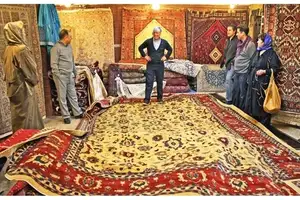
Iran’s centuries-old carpet industry, once a symbol of cultural prestige and a $2 billion export powerhouse, is unraveling under US sanctions, shifting consumer tastes and rising competition, industry officials and traders say.

Exports of handmade rugs, which stood at more than $400 million in 2017, fell to just $41.7 million in the year to March 2025, according to customs data -- a drop of over 95% from their peak in the early 1990s, AFPreported.

The collapse followed Washington’s 2018 reimposition of sanctions, cutting off the US market that once bought more than 70% of Iranian carpets.

“During the unkind and cruel US sanctions, we lost our biggest buyer,” said Zahra Kamani, head of Iran’s National Carpet Center.

Germany, the UAE, Japan and China are now Iran’s top destinations, but volumes remain a fraction of past levels.

Rivals including India, China, Nepal, Turkey and Pakistan have captured global market share, with some rugs even imported back into Iran, traders said.

  • Iran's Handwoven Carpet Exports Plummet Amid Sanctions

    Iran's Handwoven Carpet Exports Plummet Amid Sanctions

  • Iran’s carpet exports unravel with 90% plunge

    Iran’s carpet exports unravel with 90% plunge

  • Iran's Persian Carpet Exports Drop Drastically

    Iran's Persian Carpet Exports Drop Drastically

At least two million Iranians, many of them rural women, depend on carpet-weaving but earn only a few dollars a day. “We are losing even part of our domestic market due to imports,” Tehran trader Hamed Nabizadeh told AFP.

With tourism also in decline, fewer foreign visitors buy rugs, and even those who do are deterred by price tags of $30,000 or more for silk carpets.

Officials insist revival is possible. Trade Minister Mohammad Atabak said in June that new trade and currency policies could help resuscitate exports.

Analysts argue adapting designs to modern décor trends, using social media for sales and branding carpets more effectively may be key.

But with Iran’s currency plunging, many families at home are turning to cheaper factory-made rugs, and a centuries-old craft risks fading into a relic of the past.

No breakthrough in New York: Tehran split sharpens as UN sanctions near

Sep 25, 2025, 01:30 GMT+1
•
Behrouz Turani

A clash over Iran’s nuclear path has intensified in Tehran, with hardliners demanding weaponization while others warn such moves invite disaster just three days before the automatic return of UN sanctions.

The debate was sharpened by near-simultaneous interventions from Donald Trump, Ali Khamenei and President Masoud Pezeshkian all within 24 hours.

In his Tehran speech, delivered as Pezeshkian landed in New York, Khamenei ruled out any rapprochement with the United States “for at least another 30 years” and dismissed the idea of building nuclear weapons, declaring them forbidden “for the time being and in the future.”

Khamenei’s words were an apparent blow to more than 70 hardline lawmakers who had called for Tehran to start producing bombs.

Moderates seized on his stance to attack the MPs.

Political activist Ghorban Ali Salavatian posted their photos on X: “They got a swift response to their call for bombs. I hope they understand they were wrong—though it’s unlikely they do.”

Reformist Mohammad Sohafi listed all 71 names, warning: “Let us keep in mind, in case of a new attack by Israel on Iran, that these MPs have invited the attack.”

Critics stressed that hardliners seem oblivious to how talk of leaving the Non-Proliferation Treaty or pursuing nuclear weapons effectively invites military strikes. Many still recall the cleric who, near the end of Hassan Rouhani’s presidency, confused the NPT with “MP3.”

But if moderates thought the hardliners’ embarrassment gave them an opening, they were soon reminded that Khamenei had no intention of granting their wish for US diplomacy.

Pezeshkian’s UNGA address ultimately disappointed both camps, reflecting the passivity and indecision that have come to define his administration. No one expected a breakthrough. The leader had already set the tone.

On social media, many mocked moderates for their naïve optimism about Pezeshkian meeting Trump.

“You cannot just shout to the US president that Pezeshkian is in town and wants to talk,” one user wrote. “Such a meeting takes months of preparation.”

Critics also reminded both Khamenei and Pezeshkian—who slammed Israel and the United States for attacking Iran while negotiations were ongoing—that Iran had offered no concrete proposals then, and still has none today.

Officials often dismiss Western calls for talks as “political,” while outlets like the Khamenei-linked Kayhan insist the West and the IAEA seek only concessions.

What they ignore is that negotiations are about trading concessions to reach compromise—a word treated in the Islamic Republic’s rhetoric as worse than a curse.

Just before Pezeshkian’s trip to New York Moderates, a group of centrist politicians gathered at the home of former Tehran mayor Gholamhossein Karbaschi, discussing the possibility of the president getting leader’s approval to meet his American counterpart.

Nearly all backed the idea, according to media reports, except Ali Akbar Nateq Nouri, a former parliament speaker and once Inspector General of the office of the supreme leader.

“Change is absolutely impossible,” Nateq was reported as saying.

GOP senator urges European allies to press forward with Iran sanctions

Sep 24, 2025, 21:18 GMT+1
•
Marzia Hussaini

Republican Senator John Cornyn called on European allies to support and intensify sanctions against Iran, calling it a leading state sponsor of terrorism and an aggressor.

The United Kingdom, France and Germany last month triggered the so-called "snapback" of international sanctions on Tehran which are set to take effect on September 28.

"We need our European allies to step up and agree that these sanctions are critical," Cornyn told Iran International.

"Iran is the number one state sponsor of terrorism. Thank goodness President Trump disrupted their nuclear weapons program. But their attitude and conduct remain unchanged, and these sanctions are entirely justified," the Texas senator said.

Cornyn’s push follows a letter led by Senator Jim Risch and signed by 50 Senate Republicans last week. The letter praised the UK, France, and Germany for re-activating the UN sanctions on Iran and urged sustained pressure until Tehran’s nuclear program is fully dismantled.

The move reflects growing United States concerns over Iran’s nuclear progress and its support for proxy groups across the region.

At the UN General Assembly on Wednesday, Iranian President Masoud Pezeshkian accused the US of betraying trust, particularly after its 2018 withdrawal from the JCPOA nuclear deal, and stressed Iran’s willingness to pursue diplomacy to resolve the crisis.

Pezeshkian denied that Iran has ever sought nuclear weapons, despite the US and Israeli assertions in June that Tehran was racing toward a bomb.

"I hereby declare once more that Iran has never sought and will never seek to build a nuclear bomb," Pezeshkian said.

Addressing European powers, Pezeshkian accused Germany, Britain, and France of acting in bad faith by reinstating UN sanctions.

"The three European states, having failed through a decade of bad faith and by supporting military aggression to subdue the proud people of Iran, at the behest of the United States, sought to reinstate terminated UN Security Council resolutions through pressure, coercion, and blatant abuse," the Iranian president said.

French President Emmanuel Macron also met with Pezeshkian on the sidelines of the UN meeting, warning that time was running out. "An agreement remains possible — only hours left; it is up to Iran," Macron posted on X.