• العربية
  • فارسی
Brand
  • Iran Insight
  • Politics
  • Economy
  • Analysis
  • Special Report
  • Opinion
  • Podcast
  • Iran Insight
  • Politics
  • Economy
  • Analysis
  • Special Report
  • Opinion
  • Podcast
  • Theme
  • Language
    • العربية
    • فارسی
  • Iran Insight
  • Politics
  • Economy
  • Analysis
  • Special Report
  • Opinion
  • Podcast
All rights reserved for Volant Media UK Limited
volant media logo

Europe unmoved by Iranian proposal to avoid sanctions - WSJ reporter

Sep 18, 2025, 15:56 GMT+1Updated: 00:39 GMT+0
Video cameras are set up for the start of a news conference at the United Nations headquarters building (Vienna International Center) in Vienna May 14, 2014

European states at the center of a sanctions drama with Tehran due for a finale next month deemed an Iranian proposal to gain a reprieve insufficient and overly demanding, a Wall Street Journal reporter said on Thursday.

The E3 - France, Germany and the United Kingdom - last month triggered a mechanism in a 2015 international nuclear deal with Iran to "snapback" international sanctions within 30 days if Tehran does not convince them of its compliance.

“Iran made a new offer to E3 yesterday to avoid snapback, I understand. One which frankly is barely a bit credible. I am not alone in thinking that,” Norman posted on X, going on to cite a source familiar with the matter.

"The E3 regard Iran's latest proposal as insufficient in substance as it demands far-reaching actions like extension of the SnapBack or even complete termination (of 2231) in exchange for Iranian declarations of intent, but without any concrete actions on the Iranian side," he quoted the source as saying.

Norman was referring to the United Nations Security Council resolution number promulgating the nuclear deal which, in the Western view, authorizes the snapback move.

Iran denies seeking a bomb, criticized the US withdrawal from the agreement during President Donald Trump's first term in 2018 and say the European powers lack authority to trigger snapback sanctions because they violated their own commitments to the deal.

Any agreement to extend or avert the restored sanctions must be reached before a October 18 deadline.

The E3 "remain dedicated to diplomacy and ready to engage with Iran at any time, including" at the UN General Assembly meeting in New York next week, Norman quoted the source as saying.

The 80th session of the UN General Assembly opened on September 9, with world leaders beginning to arrive in New York on September 22.

Norman, a veteran watcher of international nuclear diplomacy, paraphrased Iran’s position as “Give us everything we want, and we might give you some of what you want.”

The Joint Comprehensive Plan of Action (JCPOA), signed in 2015 by Iran and the P5+1, the United States, Britain , France, Germany, Russia and China plus the European Union, aimed to curb Iran’s nuclear program in return for sanctions relief.

Most Viewed

Iran negotiators ordered to return after internal rift over Islamabad talks
1
EXCLUSIVE

Iran negotiators ordered to return after internal rift over Islamabad talks

2
ANALYSIS

US blockade enters murky phase as tankers spoof signals and buyers hesitate

3
ANALYSIS

Why the $100 billion Hormuz toll revenue is a myth

4

US tightens financial squeeze on Iran, warns banks over oil money flows

5
ANALYSIS

US blockade targets Iran oil boom amid regional disruption

Banner
Banner

Spotlight

  • Hardliners push Hormuz ‘red line’ as US blockade tests Iran’s leverage
    INSIGHT

    Hardliners push Hormuz ‘red line’ as US blockade tests Iran’s leverage

  • Ideology may be fading in Iran, but not in Kashmir's ‘Mini Iran'
    INSIGHT

    Ideology may be fading in Iran, but not in Kashmir's ‘Mini Iran'

  • War damage amounts to $3,000 per Iranian, with blockade set to add to losses
    INSIGHT

    War damage amounts to $3,000 per Iranian, with blockade set to add to losses

  • Why the $100 billion Hormuz toll revenue is a myth
    ANALYSIS

    Why the $100 billion Hormuz toll revenue is a myth

  • US blockade targets Iran oil boom amid regional disruption
    ANALYSIS

    US blockade targets Iran oil boom amid regional disruption

  • Iran's digital economy battered by prolonged blackout
    INSIGHT

    Iran's digital economy battered by prolonged blackout

•
•
•

More Stories

Iran says facing 'hybrid war' despite end of 12-day conflict

Sep 18, 2025, 14:02 GMT+1

A senior commander in Iran’s Islamic Revolutionary Guard Corps said on Thursday the country remained under attack in a “hybrid war” waged by the United States and Israel, even after the end of their 12-day military confrontation in June.

Yadollah Javani, the Guards’ deputy political chief, said the conflict was “years old” and had only taken on a military dimension earlier this summer. He told a gathering in Kerman that while fighting had ceased, the campaign continued across media, cyber and political domains.

Javani said Iran’s response would be a “hybrid jihad,” mobilizing military, cultural and public resources to counter what he described as the enemy’s focus on narrative battles and online influence.

Israel retains capabilities inside Tehran, Mossad chief says

Sep 18, 2025, 13:42 GMT+1

The head of Israel's Mossad intelligence agency, David Barnea, says there are still capabilities buried within Tehran, ready to be activated while Iran continues to hunt down suspects.

Speaking at the Prime Minister's Award Ceremony, Barnea said: “We have won, and we will continue to win. Though we proved that Iran is penetrable, we are not letting up.

“The Mossad has very strong operational capabilities, even more imaginative and powerful than before — especially inside Iran and even in the heart of Tehran.”

At the ceremony, Mossad received this year’s honor in recognition of its recent operations. Among them was the so-called “beeper operation” in Lebanon, in which pager devices used by Iran-aligned Hezbollah members exploded simultaneously.

Another operation cited involved the establishment of a covert drone base inside Iran, which Israel said was used to destroy missile launchers prepared to fire following Israel’s June 13 strikes.

“We will continue to build and strengthen our capabilities in Iran, to keep our eyes open from within Iran on what is happening behind closed doors, and we will not allow ideas that could endanger our security to grow,” he said.

  • Iran executes political prisoner accused of spying for Israel

    Iran executes political prisoner accused of spying for Israel

Since the June war, over 700 Iranians have been arrested on charges of spying for Israel with at least nine given the death sentence already.

Inside Israel, dozens of Israelis have been arrested on allegations of spying for Iran since the beginning of the Gaza war in 2023, some of whom involved in plots to kill top military and political leaders in the country.

Iran armed forces chief hails Russia’s stance during 12-day war

Sep 18, 2025, 12:36 GMT+1

Russia took firm positions during the 12-day war with Israel, Chief of Staff of Iran’s Armed Forces Abdolrahim Mousavi said in a meeting with Russian Energy Minister Sergei Tsivilev in Tehran on Wednesday.

“The enemy used negotiations as a cover for deception and betrayed diplomacy by starting the war,” Mousavi said.

He said Iran has never initiated war and sees diplomacy as the best way to resolve disputes, but argued that the armed forces had given a strong response to the United States and Israel.

Moscow supports stronger cooperation in both economic and defense fields, the Russian minister said in return.

Pezeshkian stresses partnership

Iran is prepared to expand cooperation with Moscow, President Masoud Pezeshkian said in a separate meeting with Tsivilev.

Iran's President Masoud Pezeshkian (right) meeting Russian Energy Minsiter Sergei Tsivilev (left) in Tehran on September 18, 2025.
100%
Iran's President Masoud Pezeshkian (right) meeting Russian Energy Minsiter Sergei Tsivilev (left) in Tehran on September 18, 2025.

“No barrier stands in the way of Iran-Russia cooperation, and the model of successful cooperation between independent countries like ours will prove that the era of unilateral powers has ended,” Pezeshkian said.

He called joint projects proof that sanctions have not obstructed Tehran. “Growth can be achieved without reliance on unilateral powers,” Pezeshkian added, saying that agreements in transport, energy, and power generation will move forward if ministers and expert teams accelerate implementation.

Iran’s parliament in May approved a 20-year strategic partnership with Russia. The agreement, initially signed by Russian President Vladimir Putin and Pezeshkian on January 17, was ratified by Russia’s State Duma in April.

While the pact does not include a mutual defense clause, it commits both nations to military-technical cooperation, joint exercises, and coordination against what they define as shared threats.

Officials from both governments remain in regular contact to ensure agreements are carried out, Tsivilev said. “No pressure or sanctions can disrupt this process.”

Iranian and Russian officials have repeatedly announced projects on trade, transport, and energy. Many have been delayed or left incomplete because of financial limits and logistical difficulties.

France picks Jafar Panahi’s ‘It Was Just An Accident’ as Oscar entry

Sep 18, 2025, 11:45 GMT+1

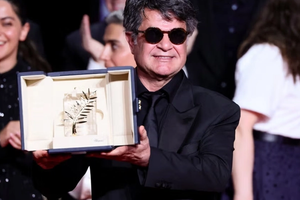
France has selected Iranian director Jafar Panahi’s It Was Just An Accident, winner of this year’s Cannes Palme d’Or, as its submission for the Academy Awards in the international feature category, giving the exiled filmmaker a path to Hollywood that Tehran was unlikely to offer.

The revenge drama, produced largely in France and shot in Iran without government approval, follows a group of former political prisoners confronting a man they believe tortured them decades earlier.

The decision, announced on Wednesday, was made by an 11-member committee convened by France’s culture ministry after reviewing five finalists, including Richard Linklater’s Nouvelle Vague and Rebecca Zlotowski’s A Private Life.

Panahi, long banned from working or traveling in Iran, has spent much of the past 15 years under house arrest or in prison. He was released from jail in 2023 after a hunger strike, and edited the new film in France.

  • France-Iran rift spills into cinema after dissident director wins in Cannes

    France-Iran rift spills into cinema after dissident director wins in Cannes

  • Jafar Panahi’s Cannes victory sparks praise and political reaction

    Jafar Panahi’s Cannes victory sparks praise and political reaction

  • Mahsa Amini’s death sparked irreversible change in Iran, Jafar Panahi says

    Mahsa Amini’s death sparked irreversible change in Iran, Jafar Panahi says

US distributor Neon has acquired the film and is planning an awards campaign, while Mubi has taken international rights.

“This Iranian drama, directed by the great Jafar Panahi and produced with the decisive support of France … is proof that our country, 130 years after inventing cinema, remains the beating heart of international co-productions,” Gaëtan Bruel, head of the CNC film body, said in a statement.

The move also highlights stark contrasts with Iran’s own Oscar choice. A day earlier, Tehran selected Ali Zarnegar’s Cause of Death: Unknown, a moral drama that won praise abroad but was pulled from Iran’s state-run Fajr Festival in 2022. Independent filmmakers in Iran continue to face censorship, surveillance and travel bans.

The 98th Academy Awards will take place in Los Angeles on March 15, 2026.

US fired $500mn in THAAD missiles defending Israel, Pentagon papers show

Sep 18, 2025, 11:34 GMT+1

Pentagon budget documents seeking urgent new funding show that the US has fired around $500 million worth of its Terminal High Altitude Area Defense (THAAD) interceptor missiles to defend Israel, primarily during its June war with Iran.

"This reprogramming action provides funding for the replacement of defense articles from the stocks of the Department of Defense expended in support of Israel or identified and notified to Congress for provision to Israel," the document said.

The budget document dated August 1, is titled Israel Security Replacement Transfer Fund Tranche 9, and requested $498.265 million in funding for THAAD systems alone.

“Funds are required for the procurement of replacement THAAD Interceptors expended in support of Israel. This is a congressional special interest item. This is an emergency budget requirement,” the document said.

The War Zone reported that the US fired more than 150 THAAD missiles during the Iran war alone.

The publication also said details of US bombings of Iranian nuclear facilities, known as Operation Midnight Hammer, are only just coming to light now, though the full cost is still unknown.

  • US depleted quarter of THAAD interceptors in Israel-Iran war - CNN

    US depleted quarter of THAAD interceptors in Israel-Iran war - CNN

The US announced it had deployed THAAD defences in Israel in October, more than a year after the Gaza war broke out, seeing Iran's allies in the region firing on the Jewish state from Lebanon, Yemen, Iraq and Syria.

It also came after Iran's second direct attack on Israel when hundreds of missiles and drones were fired in a massive aerial barrage.

"This reprogramming action addresses funds for the replacement of defense articles expended in support of Israel through US combat operations executed at the request of and in coordination with Israel and for the defense of Israeli territory, personnel, or assets during attacks by Iran, and subsequent or anticipated attacks by Iran and its proxies," the document said.

The documents show the extent of the cost of the US military's defense of Israel and also the cost of weapons that American forces used during their extensive bombing of Iran’s three main nuclear facilities in June, Natanz, Fordow and Isfahan.

Among the funds requested were those to "replace GBU-39s expended during Operation Midnight Hammer in support of Israel", the document detailed. "This is a congressional special interest item. This is an emergency budget requirement."

Made by US defense contractor, Lockheed Martin, THADD intercepts short, medium and intermediate-range ballistic missiles, engaging targets directly at ranges of 93 to 124 miles both inside and outside the atmosphere.

Each THAAD battery system requires around 100 soldiers, and has been used to help defend Israel from ballistic missiles from both Iran and its military ally, the Houthis, in Yemen.

  • Houthis, short of Iranian missiles, ramp up drone strikes on Israel

    Houthis, short of Iranian missiles, ramp up drone strikes on Israel

  • Trump u-turn on Houthis driven by billions of dollars in financial losses - NYT

    Trump u-turn on Houthis driven by billions of dollars in financial losses - NYT

US Missile Defense Agency documents say that each THAAD interceptor costs roughly $12.7 million, and now there are concerns about insufficient American stockpiles.

In addition to Iranian attacks, Israel says dozens of drones and ballistic missiles have been fired from Yemen to Israel since the outbreak of the Gaza war. The Iran-backed Houthis say their actions are in allegiance with Iran’s ally Hamas in Gaza.

During the 12-day war in June, Iran fired over 500 ballistic missiles in response to Israel’s surprise attacks on June 13, in which dozens of military and nuclear figures were killed.