• العربية
  • فارسی
Brand
  • Iran Insight
  • Politics
  • Economy
  • Analysis
  • Special Report
  • Opinion
  • Podcast
  • Iran Insight
  • Politics
  • Economy
  • Analysis
  • Special Report
  • Opinion
  • Podcast
  • Theme
  • Language
    • العربية
    • فارسی
  • Iran Insight
  • Politics
  • Economy
  • Analysis
  • Special Report
  • Opinion
  • Podcast
All rights reserved for Volant Media UK Limited
volant media logo

Thousands at risk as Iran executions surge to 'horrific scale' - Amnesty

Sep 10, 2025, 13:54 GMT+1Updated: 01:14 GMT+0

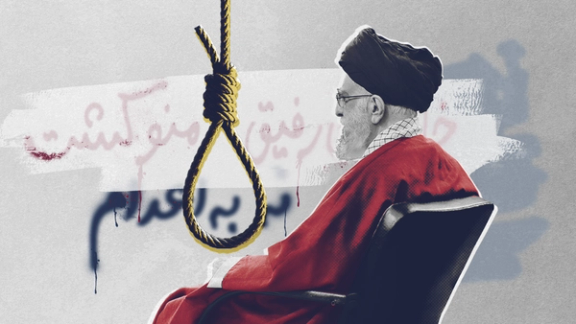
Thousands of people in Iran face the risk of execution amid what Amnesty International on Wednesday called a deepening execution crisis, with death sentences handed down after unfair trials and on vaguely worded charges such as enmity against God and corruption on earth.

The rights group said more than 800 people had been executed in 2025 so far, nearly double the pace of last year, and warned that thousands more remain under investigation or prosecution on capital charges, including drug-related offences and accusations of espionage.

Since the 2022 Woman, Life, Freedom uprising, Amnesty said, Iranian authorities have “weaponized the death penalty as a tool of oppression”.

In June, following Israel’s airstrikes and a 12-day war with Iran, officials intensified calls for swift trials and executions for those accused of collaborating with Israel. Parliament has also advanced legislation to expand the use of capital punishment, pending approval by the Guardian Council.

“The authorities are carrying out executions on a horrific scale,” Amnesty said, urging Tehran to halt all planned executions, quash existing sentences, and declare an official moratorium with a view to abolition.

According to the UN Office for Human Rights, at least 841 executions were carried out between January and late August, compared with 429 during the same period in 2024.

Rights monitors say executions are disproportionately affecting minorities, including Afghans, Baluchis and Kurds.

The warning comes days after Iran executed protester Mehran Bahramian in Isfahan despite allegations of torture and international appeals to halt his sentence. He was the latest detainee from the 2022 unrest to be put to death on charges of “enmity against God.”

Iran’s judiciary has defended its use of capital punishment as enforcement of Islamic law and a deterrent against serious crime, particularly drug trafficking.

But rights groups argue Revolutionary Courts lack independence and routinely deny defendants fair trial rights, including access to lawyers and protection from torture.

Amnesty said rhetoric from senior officials, including Judiciary Chief Gholamhossein Mohseni Ejei, calling for “1988-style executions” against perceived collaborators, has fueled fears of mass killings reminiscent of past prison massacres.

“Iran accounted for nearly two-thirds of all known executions worldwide in 2024,” Amnesty said. “The current trajectory shows an even darker year ahead unless immediate action is taken.”

Most Viewed

Iran negotiators ordered to return after internal rift over Islamabad talks
1
EXCLUSIVE

Iran negotiators ordered to return after internal rift over Islamabad talks

2
ANALYSIS

US blockade enters murky phase as tankers spoof signals and buyers hesitate

3
ANALYSIS

Why the $100 billion Hormuz toll revenue is a myth

4

US tightens financial squeeze on Iran, warns banks over oil money flows

5
ANALYSIS

US blockade targets Iran oil boom amid regional disruption

Banner
Banner

Spotlight

  • Hardliners push Hormuz ‘red line’ as US blockade tests Iran’s leverage
    INSIGHT

    Hardliners push Hormuz ‘red line’ as US blockade tests Iran’s leverage

  • Ideology may be fading in Iran, but not in Kashmir's ‘Mini Iran'
    INSIGHT

    Ideology may be fading in Iran, but not in Kashmir's ‘Mini Iran'

  • War damage amounts to $3,000 per Iranian, with blockade set to add to losses
    INSIGHT

    War damage amounts to $3,000 per Iranian, with blockade set to add to losses

  • Why the $100 billion Hormuz toll revenue is a myth
    ANALYSIS

    Why the $100 billion Hormuz toll revenue is a myth

  • US blockade targets Iran oil boom amid regional disruption
    ANALYSIS

    US blockade targets Iran oil boom amid regional disruption

  • Iran's digital economy battered by prolonged blackout
    INSIGHT

    Iran's digital economy battered by prolonged blackout

  • Iran court sentences six Baha'i women to combined 39-year prison term

    Iran court sentences six Baha'i women to combined 39-year prison term

  • Iran executes man convicted in connection with 2022 protests

    Iran executes man convicted in connection with 2022 protests

  • Rights advocates warn of 1988-style mass executions in post-war Iran

    Rights advocates warn of 1988-style mass executions in post-war Iran

  • IRGC media calls for 1980s-style mass executions of Israel ‘collaborators’

    IRGC media calls for 1980s-style mass executions of Israel ‘collaborators’

•
•
•

More Stories

Iran debates women’s motorcycle licenses amid legal ambiguity and hijab concerns

Sep 10, 2025, 11:36 GMT+1

A former senior Iranian traffic police official said there is no legal ban on issuing motorcycle licenses to women, but a regulatory gap has left them unable to ride legally, pointing to debate in parliament where some lawmakers have raised concerns over hijab compliance.

Colonel Einollah Jahani, the former deputy head of Iran’s traffic police, told ISNA news agency on Wednesday that Article 20 of the country’s traffic law currently tasks the police with issuing motorcycle licenses for men but is silent on women.

“From a legal perspective, this article only clarifies the police’s duty toward men and does not prohibit issuing licenses to women,” he said. “The silence of the law has created a gap that must be resolved by parliament.”

Iranian women, Bahareh, Saqar and Farah ride motorcycles without a license, while female motorcycling is still not officially legal, in Tehran, Iran, September 7, 2025.
100%
Iranian women, Bahareh, Saqar and Farah ride motorcycles without a license, while female motorcycling is still not officially legal, in Tehran, Iran, September 7, 2025.

The government has submitted a bill to parliament to address the issue, state media has reported, but Jahani said that some lawmakers remain uneasy over how women would observe Islamic dress codes while riding.

He argued the concern was misplaced: “Both men and women must wear helmets, and helmets provide the necessary coverage to meet hijab requirements. This is a safety obligation that also addresses religious concerns.”

  • Women’s motorcycle licenses need legal change, Iran police say

    Women’s motorcycle licenses need legal change, Iran police say

  • Tehran cafe shut down over women bikers’ event

    Tehran cafe shut down over women bikers’ event

Iran’s traffic police chief, Brigadier General Teymour Hosseini, said earlier this week that any licensing of women would require formal changes to bylaws and law, and that the force was “awaiting an official notification on women’s motorcycling so we can proceed.”

Women have been legally allowed to own and register motorcycles in their name, but licensing has been withheld, leaving many to ride without permits in a legal gray zone.

Jahani said this inconsistency should be corrected: “There is no prohibition for women to own motorcycles under the constitution. They can hold official registration papers in their own name, so logically they should also be able to obtain licenses.”

He added that women have increasingly demanded the right to ride motorcycles, citing economic pressures, traffic congestion and the need for affordable transportation.

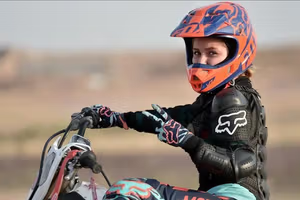
Iranian woman, Bahareh, sits on her motorcycle, while female motorcycling is still not officially legal, in Tehran, Iran, September 7, 2025.
100%

“In the past there was no demand, but today motorcycling has become a social demand,” he said, noting that research shows women generally drive more cautiously than men.

The debate comes against the backdrop of wider calls for women’s rights in Iran since the 2022 death of Mahsa Amini in morality police custody, which ignited nationwide protests.

Conservative clerics have resisted moves to permit public motorcycling by women, arguing it could breach social norms, but reformist officials say formal training courses can provide a workable compromise.

Israel strike in Qatar signals drive for regional dominance, Iran security chief warns

Sep 10, 2025, 09:44 GMT+1

Ali Larijani, Iran’s top security official, reacted to Israel’s strike on Qatar with a pointed message in Arabic on social media, casting the attack as a signal of Israel’s future ambitions for regional dominance.

Larijani, secretary of Iran’s Supreme National Security Council, wrote, “The message of the Zionist entity’s recent crime in Qatar is clear: O countries of the region! Prepare yourselves for my coming domination.”

His comments came a day after Israeli warplanes bombed a Hamas office in Doha, in what Israel called an operation against the group’s senior leadership. Qatar condemned the attack as “criminal and cowardly,” while Iran labeled it an “extremely dangerous” violation of sovereignty and international law.

President Masoud Pezeshkian also condemned the strike as an “illegal, inhumane and anti-peace action,” telling Qatar’s Emir Sheikh Tamim bin Hamad Al Thani by phone that Tehran stood in solidarity with its Persian Gulf neighbor. “Attacking an independent country is a clear violation of national sovereignty and the UN Charter,” he said.

  • Iran condemns 'extremely dangerous' Israeli strike on Hamas in Qatar

    Iran condemns 'extremely dangerous' Israeli strike on Hamas in Qatar

The strike in Doha, coordinated with Washington according to Israeli media, killed members of Hamas’s political bureau, though both Qatar and Hamas gave no details on casualties. Israeli Prime Minister Benjamin Netanyahu later insisted the raid was “a wholly independent Israeli operation.”

Hamas, which has based its political leadership in Qatar for years, said its ceasefire delegation had survived the attack and accused the United States of enabling Israel’s actions while presenting itself as mediator.

The incident comes as Iran recalibrates its foreign policy after a June war with Israel and the United States devastated its military and nuclear infrastructure.

  • Calls for Larijani to lead nuclear talks may signal push for rethink

    Calls for Larijani to lead nuclear talks may signal push for rethink

Supreme Leader Ali Khamenei has in recent weeks sought Qatari mediation with the West, and Larijani is seen as a potential lead negotiator in renewed nuclear talks as UN sanctions loom.

Iranian media and analysts have floated his possible return to leading nuclear negotiations, amid suggestions the Supreme National Security Council could regain control of the dossier as Tehran faces looming UN sanctions under the European-triggered “snapback” mechanism.

The strike on Qatar marks a dangerous new front in a region still unsettled by June’s 12-day war, when Israeli and US forces targeted Iran’s nuclear facilities and military infrastructure.

China, Russia urge Europe to halt UN snapback after Iran-IAEA deal

Sep 10, 2025, 07:13 GMT+1

China and Russia welcomed Iran’s deal with the UN nuclear watchdog to resume inspections, with Beijing calling it a positive step to ease tensions over Tehran’s nuclear program and Moscow urging European powers to halt their move to reimpose UN sanctions.

China’s foreign ministry said on Wednesday the resumption of supervision by the International Atomic Energy Agency (IAEA) was “a positive step in promoting the easing of the Iran nuclear issue.”

“Congratulations! It is a good moment for the E3 to stop and cancel the SnapBack procedure in order to keep the positive trend,” Moscow’s envoy to international organizations in Vienna, Mikhail Ulyanov, wrote on X shortly after IAEA chief Rafael Grossi unveiled the deal in Cairo.

Grossi said he and Iranian Foreign Minister Abbas Araghchi had agreed on “practical modalities” for inspections during talks in the Egyptian capital, describing the step as “a door we are opening” toward restoring verification activities that were cut off after Israeli and US airstrikes on Iranian nuclear facilities earlier this year.

Araghchi told reporters the understanding was designed to reflect “Iran’s exceptional security conditions and the Agency’s technical requirements,” while warning that Tehran would void the deal if “hostile actions” such as the reinstatement of Security Council resolutions were pursued.

The European powers triggered the snapback mechanism under UN Security Council resolution 2231 in late August, a process that will restore international sanctions unless the Council adopts a new resolution by the end of September to extend relief. The mechanism was activated after the three accused Tehran of failing to comply with nuclear obligations.

The resumption of inspections is seen as a critical step in assessing Iran’s stockpiles of enriched uranium and its compliance with the Non-Proliferation Treaty. Western diplomats say any suspension of the snapback move would depend on Iran’s willingness to implement the deal in full.

Parents lament hidden school fees in Iran

Sep 10, 2025, 01:00 GMT+1

Families in Iran are voicing growing concerns over government policies that impose mandatory tuition fees even for public schools, making it increasingly difficult for parents to afford education for their children.

In response to an Iran International request for submissions at the start of the new school year, Iranians submitted audio, text and video messages describing their concerns.

A recurring theme was the so-called “voluntary support” or enrollment fees in public schools—charges that schools make a condition for school attendance.

“My son has straight A’s and was accepted into a NODET school with flying colors, but I can't afford 2 billion rials for his tuition,” one message said. “The Iranian government is stripping away our children’s right to education.”

Gifted students who pass the National Organization for Development of Exceptional Talents (NODET) exams can technically apply for tuition waivers if they cannot cover the costs.

Since 2023, the government has also promised tuition-free education for disadvantaged students, covering registration and other expenses. But parents say the reality is far different.

Another parent reported that public schools refused to enroll their child unless tuition was fully paid. “Due to joblessness and financial pressure, I still haven’t been able to enroll my child,” they said.

Some families even shared their children’s transcripts, noting that despite top grades, schools demanded steep enrollment fees. “My child tops every grade, yet the school demands 140 million rials ($137),” one parent said. “This clearly predicts a brain drain for our gifted students.”

A family in Ahvaz described wide variations in preschool and high school fees. “For high school, they demanded 150 million rials ($148), and one school asked for 350 million rials ($346). For preschool, they required an initial 16 million rial form fee, then 80 million rials ($79) for enrollment, plus 23 million rials ($22) for stationery.”

Some parents highlighted new obstacles, including compulsory preschool attendance. “Preschool isn’t mandatory, but when registering my son for first grade, they said he must attend preschool for a month with payment. The principal said it’s enough to pay, even if he attends just one session,” one parent wrote.

Others reported coercive practices. “My son goes to a public school. In June, before receiving his report card, they demanded 25 million rials per student for the new year. Without payment, next year’s registration wouldn’t proceed, and they withheld the report card,” a parent said.

Islamic dress code for girls

Families with daughters also face higher costs due to mandatory uniforms that comply with Islamic dress codes.

“The uniform for girls costs about 10 million rials ($9), and we paid 130 million rials ($128) for school transportation. Additional fees are charged throughout the year,” another parent said.

University tuition has followed a similar trajectory, rising sharply in recent semesters. “In previous semesters, I paid 32 million rials ($31) for 19 units, but now they want 70 million rials ($69) for 20 units. In this economic situation, it’s nearly impossible,” one student said.

A student in Mashhad reported that tuition at Azad University had increased by at least 70% compared to the previous semester. “The academic year at Azad University began with a major shock.

Students faced heavy costs for course registration. In humanities and arts, tuition has risen three to five times,” said Samira Rahi, a journalist in Turkey. “Many students have had to take a leave of absence or drop out due to these costs.”

Globally, countries allocate about 5% of GDP to education. Iran spends just 2.93% (2023), compared with the global average of 4.4%, according to The Global Economy, an online data resource.
Israeli academic released from militia custody in Iraq, Trump says

Sep 9, 2025, 21:37 GMT+1

An Israeli-Russian academic abducted and held hostage by an Iran-backed militia in Iraq has been released, US President Donald Trump said in a social media post on Tuesday.

"I am pleased to report that Elizabeth Tsurkov, a Princeton Student, whose sister is an American Citizen, was just released by Kata’ib Hezbollah (MILITANT Hezbollah), and is now safely in the American Embassy in Iraq after being tortured for many months," Trump wrote on Truth Social, without elaborating.

"I will always fight for JUSTICE, and never give up. HAMAS, RELEASE THE HOSTAGES, NOW!"

Tsurkov, a PhD student at Princeton University in New Jersey and fellow at the New Lines Institute, disappeared in March 2023 while conducting research in Iraq.

Her sister Emma confirmed Tsurkov's release after 903 days in captivity and thanked the Trump administration.

No group among Iraq's kaleidoscope of armed militias had claimed responsibility for her disappearance. Israeli officials believed she was being held by Kata’ib Hezbollah, an Iran-backed Shi’ite militia.

While the group has denied involvement, an Iraqi official had told Israel’s Channel 11 that she was first detained by Iraq’s intelligence service—or by individuals impersonating officers—before being transferred to the militia.

Kata’ib Hezbollah is one of several Iran-backed and funded armed groups which took part in Iraq's conflict against Islamic State militants but amassed power and influence by maintaining their arms after the fighting largely winded down.

While no official comment was made on the case by Tehran, an Iraqi security source told Iran International that among those considered for the exchange was Mohammadreza Nouri, a member of Iran’s Islamic Revolutionary Guard Corps (IRGC) Quds Force.

Nouri was sentenced to life imprisonment in Iraq in September 2023 for orchestrating the murder of American citizen Stephen Troell in Baghdad in November 2022. It was not clear if he was ultimately released.

Mohammadreza Nouri and slain IRGC Quds Force commander Qassem Soleimani
100%
Mohammadreza Nouri and slain IRGC Quds Force commander Qassem Soleimani