• العربية
  • فارسی
Brand
  • Iran Insight
  • Politics
  • Economy
  • Analysis
  • Special Report
  • Opinion
  • Podcast
  • Iran Insight
  • Politics
  • Economy
  • Analysis
  • Special Report
  • Opinion
  • Podcast
  • Theme
  • Language
    • العربية
    • فارسی
  • Iran Insight
  • Politics
  • Economy
  • Analysis
  • Special Report
  • Opinion
  • Podcast
All rights reserved for Volant Media UK Limited
volant media logo

Iran says no IAEA access yet, warns pact hinges on avoiding snapback

Sep 10, 2025, 12:25 GMT+1Updated: 01:14 GMT+0
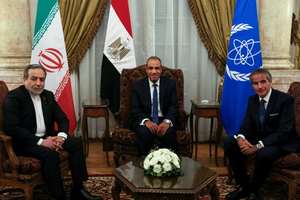
Iran's Foreign Minister Abbas Araghchi reacts during a meeting with Egyptian Foreign Minister Badr Abdelatty, (not seen) in Cairo, Egypt, September 9, 2025.

Iran said on Wednesday its new agreement with the UN nuclear watchdog does not currently allow inspectors into nuclear sites and will only move to define any access in later talks, adding the accord’s survival depends on Western powers refraining from restoring UN sanctions.

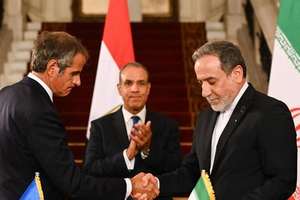
Foreign Minister Abbas Araghchi told state TV that the Cairo agreement with International Atomic Energy Agency (IAEA) chief Rafael Grossi “recognizes Iran’s legitimate security concerns,” aligns cooperation with a new domestic legal framework, and does not by itself reopen facilities to inspectors.

“Based on this agreement, no access is being granted to IAEA inspectors at the moment,” he said. “The nature and scope of inspectors’ access will be discussed in due course after Iran submits its reports, and any access will be negotiated at the appropriate time.”

Araghchi said one exception continues under an earlier decision. “No access is granted now except at the Bushehr power plant due to a fuel change. This access was approved by the Supreme National Security Council and is ongoing,” he said.

He stressed that the document reflects Tehran’s post-June war posture. “A new situation was created after the attacks on our nuclear facilities. Cooperation cannot be the same as before and must take a new form,” he said.

“The agreement has accepted Iran’s security concerns as legitimate, recognized Iran’s rights, and defines a new shape of cooperation with the Agency. This was exactly what we sought.”

Cairo pact cleared by top authorities

Araghchi said the government’s approach has been cleared at the highest level. “The negotiations and the provisions needed to meet our concerns were raised and approved at the Supreme National Security Council,” he said, adding that under Iran’s law “everything must be approved by the SNSC, and that pathway is recognized in this document.”

He also tied the accord’s implementation to the broader diplomatic track with Europe, which has triggered the UN “snapback” mechanism to restore sanctions unless monitoring advances.

“I must emphasize that the validity and continuation of this agreement depend on there being no hostile action against the Islamic Republic, including activation of snapback,” Araghchi said, echoing similar remarks by Grossi earlier in the day.

'Deal is void if sanctions return'

“I said clearly in the negotiations, to our Egyptian hosts and at the press conference, that if any hostile action is taken, including the reinstatement of cancelled UN Security Council resolutions, Iran will consider these practical steps null and void.”

Araghchi called the Cairo talks “a step in the right direction to remove pretexts” used by critics. “It disarms those who sought to exploit the situation for their own purposes,” he said, while thanking Egypt’s president and foreign minister for facilitating the discussions.

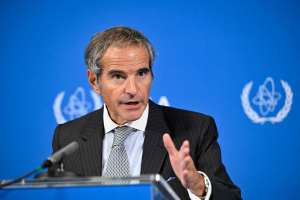
Grossi, briefing IAEA member states in Vienna earlier in the day, described the technical document as setting out procedures for inspections, notifications and reporting and said it is intended to restore safeguards activity across Iran’s declared program.

“This includes all facilities and installations in Iran, and it also contemplates the required reporting on all the attacked facilities, including the nuclear material present at those,” he said.

He added that safeguards approaches for each site would be reviewed at a technical level “in line with the rights and obligations of Iran and the Agency under the NPT Safeguards Agreement, which are not modified or amended as a result of these practical steps.”

Grossi said resuming work after the June strikes that forced inspectors to withdraw would not be “an automatic or simple bureaucratic process,” but welcomed what he called Iran’s stated decision to remain within the Nuclear Non-Proliferation Treaty framework.

“Iran and the Agency will now resume cooperation in a respectful and comprehensive way,” he said, while cautioning there could be “difficulties and issues to be resolved” during implementation.

Britain, France and Germany began the snapback process in late August, saying they would pause it only if Iran restored inspections, accounted for its highly enriched uranium stockpile and engaged in nuclear talks with the United States.

Diplomats say whether the new steps will be sufficient to head off sanctions will hinge on how quickly inspectors can resume work on the ground and whether Tehran provides a full accounting.

Araghchi emphasized that the new arrangement is calibrated to Iran’s internal law while keeping a door open to technical engagement. “The new framework moves exactly along the path set by the parliament’s law,” he said. “It pays attention to Iran’s security concerns, recognizes Iran’s rights, and defines a new shape of cooperation with the Agency. We hope this will advance a diplomatic solution—provided the other side is serious about one.”


Most Viewed

Iran negotiators ordered to return after internal rift over Islamabad talks
1
EXCLUSIVE

Iran negotiators ordered to return after internal rift over Islamabad talks

2
ANALYSIS

US blockade enters murky phase as tankers spoof signals and buyers hesitate

3
ANALYSIS

Why the $100 billion Hormuz toll revenue is a myth

4

US tightens financial squeeze on Iran, warns banks over oil money flows

5
ANALYSIS

US blockade targets Iran oil boom amid regional disruption

Banner
Banner

Spotlight

  • Hardliners push Hormuz ‘red line’ as US blockade tests Iran’s leverage
    INSIGHT

    Hardliners push Hormuz ‘red line’ as US blockade tests Iran’s leverage

  • Ideology may be fading in Iran, but not in Kashmir's ‘Mini Iran'
    INSIGHT

    Ideology may be fading in Iran, but not in Kashmir's ‘Mini Iran'

  • War damage amounts to $3,000 per Iranian, with blockade set to add to losses
    INSIGHT

    War damage amounts to $3,000 per Iranian, with blockade set to add to losses

  • Why the $100 billion Hormuz toll revenue is a myth
    ANALYSIS

    Why the $100 billion Hormuz toll revenue is a myth

  • US blockade targets Iran oil boom amid regional disruption
    ANALYSIS

    US blockade targets Iran oil boom amid regional disruption

  • Iran's digital economy battered by prolonged blackout
    INSIGHT

    Iran's digital economy battered by prolonged blackout

  • China, Russia urge Europe to halt UN snapback after Iran-IAEA deal

    China, Russia urge Europe to halt UN snapback after Iran-IAEA deal

  • IAEA chief says new Iran deal to cover all facilities, including bombed sites

    IAEA chief says new Iran deal to cover all facilities, including bombed sites

•
•
•

More Stories

IAEA chief says new Iran deal to cover all facilities, including bombed sites

Sep 10, 2025, 10:51 GMT+1

The head of the UN nuclear watchdog said on Wednesday that its new deal with Iran covers inspections at all of the country’s declared nuclear sites, including those hit by Israeli and US strikes in June, in what he called a step in the right direction toward restoring safeguards.

International Atomic Energy Agency (IAEA) Director General Rafael Grossi told member states in Vienna that the technical document signed in Cairo on Tuesday with Iranian Foreign Minister Abbas Araghchi sets out procedures for inspections, notifications, and reporting obligations.

“This includes all facilities and installations in Iran, and it also contemplates the required reporting on all the attacked facilities, including the nuclear material present at those,” Grossi said.

Grossi acknowledged the challenges posed by the aftermath of June’s Israeli and US airstrikes on Iranian nuclear facilities, which forced the withdrawal of inspectors for safety reasons.

“Safeguards approaches to each facility will be reviewed at technical level, always in line with the rights and obligations of Iran and the agency under the NPT safeguards agreement, which are not modified or amended as a result of these practical steps,” he said.

“Resuming this indispensable work would not be an automatic or simple bureaucratic process,” he said, adding that Iran’s parliament had since adopted a law suspending cooperation, creating the risk of non-compliance with safeguards obligations.

But he pointed to what he called “Iran’s declared willingness not to leave the NPT and to continue working inside the international nonproliferation regime” as a positive signal.

Grossi said the new arrangement reflected both Iran’s concerns and the agency’s technical requirements. “Iran and the agency will now resume cooperation in a respectful and comprehensive way,” he told diplomats.

  • Iran, UN nuclear watchdog reach agreement on resuming inspections

    Iran, UN nuclear watchdog reach agreement on resuming inspections

  • China, Russia urge Europe to halt UN snapback after Iran-IAEA deal

    China, Russia urge Europe to halt UN snapback after Iran-IAEA deal

He said the talks were aimed at finding ways to reconcile Iran’s new legislation with its binding treaty obligations, adding: “This required dialogue and a thorough understanding of the situation and Iran’s specific views.”

"Iran expressed concerns, and it is our duty as an international organization to listen to those and find ways and means to address them in a form which would reconcile these important parameters, Iran's new law and the existing legal obligations emanating from the NPT safeguards agreement”

While he cautioned that “there may be difficulties and issues to be resolved,” he underlined the broader importance of the agreement.

“It is my sincere hope that the resumption of our inspection activity in Iran may serve as a good sign, as a reference, an indication that agreements and understandings are possible,” Grossi said.

Iran suspended all cooperation with the IAEA following the June attacks, and last month Britain, France and Germany triggered a UN “snapback” process to restore sanctions unless inspections resumed and Iran provided clarity on its enriched uranium stockpile.

Araghchi, speaking in Cairo on Tuesday, said the agreement created “a practical mechanism for cooperation” but warned that Iran would void it if hostile measures, including renewed UN sanctions, were imposed.

Diplomats say whether the new steps will be sufficient to head off European sanctions will depend on how quickly inspectors can resume work and whether Tehran provides full accounting of its highly enriched uranium.

China, Russia urge Europe to halt UN snapback after Iran-IAEA deal

Sep 10, 2025, 07:13 GMT+1

China and Russia welcomed Iran’s deal with the UN nuclear watchdog to resume inspections, with Beijing calling it a positive step to ease tensions over Tehran’s nuclear program and Moscow urging European powers to halt their move to reimpose UN sanctions.

China’s foreign ministry said on Wednesday the resumption of supervision by the International Atomic Energy Agency (IAEA) was “a positive step in promoting the easing of the Iran nuclear issue.”

“Congratulations! It is a good moment for the E3 to stop and cancel the SnapBack procedure in order to keep the positive trend,” Moscow’s envoy to international organizations in Vienna, Mikhail Ulyanov, wrote on X shortly after IAEA chief Rafael Grossi unveiled the deal in Cairo.

Grossi said he and Iranian Foreign Minister Abbas Araghchi had agreed on “practical modalities” for inspections during talks in the Egyptian capital, describing the step as “a door we are opening” toward restoring verification activities that were cut off after Israeli and US airstrikes on Iranian nuclear facilities earlier this year.

Araghchi told reporters the understanding was designed to reflect “Iran’s exceptional security conditions and the Agency’s technical requirements,” while warning that Tehran would void the deal if “hostile actions” such as the reinstatement of Security Council resolutions were pursued.

The European powers triggered the snapback mechanism under UN Security Council resolution 2231 in late August, a process that will restore international sanctions unless the Council adopts a new resolution by the end of September to extend relief. The mechanism was activated after the three accused Tehran of failing to comply with nuclear obligations.

The resumption of inspections is seen as a critical step in assessing Iran’s stockpiles of enriched uranium and its compliance with the Non-Proliferation Treaty. Western diplomats say any suspension of the snapback move would depend on Iran’s willingness to implement the deal in full.

Iran, UN nuclear watchdog reach agreement on resuming inspections

Sep 9, 2025, 18:30 GMT+1

The UN nuclear watchdog says it has reached an agreement with Iran on the practical modalities to resume inspection activities in Iran, which were halted following the Israeli and US airstrikes on Iranian atomic facilities in June.

The deal was reached following negotiations between Iran's top diplomat Abbas Araghchi and the UN nuclear watchdog's chief Rafael Grossi in Cairo.

"In Cairo today, agreed with Iran's foreign minister Araghchi on practical modalities to resume inspection activities in Iran," Grossi said in a post on X.

"This is an important step in the right direction. Grateful to Egypt's Foreign Minister Badr Abdelatty for his commitment and engagement," he added.

In a press conference in Cairo, Araghchi said the two sides reached "an understanding on how to implement Iran’s Safeguards commitments in light of developments stemming from the unlawful attacks against Iran’s nuclear facilities."

"This agreement establishes a practical mechanism for cooperation that reflects both Iran’s exceptional security conditions and the Agency’s technical requirements. It also ensures that cooperation continues in a manner that respects Iran’s national sovereignty and fulfills the Agency’s verification requirements," Araghchi added.

However, he warned that "should any hostile action be taken against Iran — including the reinstatement of revoked UN Security Council resolutions — Iran will consider these agreed practical steps null and void."

Addressing the same press conference, Grossi described the agreement with Iran on resuming inspections as a "step in the right direction."

“This is a door we are opening and of course, there are many things that still need to happen, we have to implement it in good faith. Others around the world can help us and I am sure that they will do right that," he told reporters without giving further details.

Iran suspended all cooperation with the agency including international inspections after Israel and the United States attacked its nuclear facilities in June.

The resumption of IAEA inspections is seen as critical for verifying Iran’s compliance with the Non-Proliferation Treaty (NPT) and preventing further escalation.

France, Germany, and the United Kingdom, before moving to trigger the UN snapback sanctions mechanism on August 28, urged Iran to fully cooperate with the agency and engage in dialogue with the United States.

The Security Council must vote by late September on whether to make sanctions relief permanent. For the resolution to pass, it would need at least nine votes in favor and no vetoes from the five permanent members: the United States, Britain, France, Russia, and China.

Tehran’s stalled eastern pivot stirs doubt

Sep 9, 2025, 17:26 GMT+1
•
Maryam Sinaiee

The so-called “Look East” strategy has become the latest point of contention in Tehran's fractious politics, with conservatives presenting it as a shield against Western isolation and reformists warning it risks overreliance on unreliable partners.

The debate sharpened last week when President Masoud Pezeshkian took part in the Shanghai Cooperation Organization (SCO) summit in Tianjin, China.

While his usual detractors in the hardline camp hailed the trip as proof of Iran’s integration into a multipolar world order, some moderate backers warned the bloc’s loose structure and rival interests limits its usefulness in times of need.

Proponents of the Look East approach portray SCO membership as a political win.

“Strengthening Iran’s presence in the SCO and BRICS disrupts the US and West’s project of isolating Iran,” hardline daily Kayhan wrote in a Sunday editorial. “The clear message is that the more pressure increases, the deeper Iran’s ties with major non-Western powers will become.”

Nour News, linked to Iran’s security establishment, stressed that the trip coincided with Europe’s activation of the snapback sanctions mechanism and argued that membership helps Tehran build a “political consensus” against Western pressure.

The summit’s final communiqué denounced sanctions on Iran as unjust and condemned Israel’s military strike on Iranian soil.

But reformist voices highlight the bloc’s limitations. Sazandegi noted the SCO is neither NATO nor the EU, offers no security guarantees and has in the past refused Iran’s entry over UN sanctions

“The example of Russia, which after Western sanctions received little practical support from the SCO, reinforces this view,” the editorial argued.

Economic expectations

Economically, Look East advocates frame the policy as an antidote to sanctions and a gateway to new markets.

Pezeshkian used the summit to call for greater use of national currencies, shared digital financial systems, and a multilateral settlement fund.

Javan, the Revolutionary Guards-linked daily, argued that such mechanisms could reduce reliance on the Western financial system.

“The SCO provides a platform to reduce dependency on the Western financial system,” the paper wrote on Sunday.

The multilateral currency fund… can accelerate Iran’s digital economy growth, while linking Chabahar port to the North–South corridor will turn Iran into a trade crossroads between China, Russia and India.”

Critics counter that these ambitions face hard limits. Key SCO members including India and Central Asian states maintain close economic ties with the West and may hesitate to risk secondary sanctions.

Security expectations

While the SCO is not a military alliance, conservatives view its security framework and symbolism as central to Look East.

Javan said Pezeshkian’s presence alongside Chinese, Russian, and Indian leaders sent a deterrent message.

“The response (to any US-Israeli attack) will not only come from Tehran but also, by other means, from the Eastern bloc,” the daily asserted.

The same outlet pointed to prospects for cyber cooperation, artificial intelligence and advanced telecoms, arguing that Russian and Chinese technologies could help Iran close its sanctions-induced tech gap and support “the smart modernization of defense and the economy.”

The government's Iran newspaper acknowledged that expectations for Eastern alliances had been overblown in some circles.

"Some inside Iran had expected the (SCO) bloc to act as a genuine security shield for its members, not merely issue a formal statement of condemnation.

"Yet such expectations rest less on institutional realities than on romanticized notions and political myth-making," it added. "Over the past two decades, labels such as the 'Eastern NATO,' an 'anti-Western hegemonic alliance,' or even a 'new Warsaw Pact' have fueled these inflated perceptions within Iran’s political discourse."

Why Iran's rulers fear change more than war

Sep 9, 2025, 15:58 GMT+1
•
Ata Mohamed Tabriz

Facing a grinding crisis and mounting calls at home to change course before disaster strikes, Iran’s rulers still speak in a language that suggests they prefer the risks of war to the uncertainties of reform.

Supreme Leader Ali Khamenei on Sunday warned of an enemy plot to impose a harmful “no war, no peace” stalemate on Iran.

He alluded to the widespread fears of renewed conflict but stopped short of addressing them directly.

The “dangerous” limbo—as he called it—will be broken either by peace or by war. Yet peace would require a dramatic shift he has rejected in both word and deed, leaving only one option, even if not stated openly.

Why war seems manageable

For Tehran, war offers a chance to present itself as a power “standing firm against the enemy.”

That narrative rests on two premises: exaggerating the damage inflicted on Israel while recasting Iran’s own losses as “sacrifice” and “resilience.” This ability to redefine reality makes war appear containable, even when the battlefield balance tilts against Iran.

Conflict also strengthens institutions like the Revolutionary Guards and Basij, which dominate not only security but much of Iran’s economy and politics.

External crises bring them bigger budgets, wider powers, and a firmer grip on the state. Sustained tension, even without outright war, keeps them central to decision-making.

Bureaucratically, war simplifies governance.

An external threat sidelines factional disputes, concentrates power in one command center, and allows sensitive decisions to be postponed. In such conditions, obedience to central authority becomes the overriding principle.

Why change is riskier

Unlike war, which has a clear adversary and defined parameters, internal change is unpredictable.

The leadership knows genuine reform could set off a chain of fresh demands that quickly spiral out of control—especially when combined with external pressure. For a system built on concentrated power and tight social control, this is far riskier than conflict it believes it can at least spin through propaganda.

History reinforces this fear.

The Soviet collapse is interpreted in Tehran as the direct result of political liberalization. At home, the reform movement of the 1990s triggered demands that Khamenei deemed intolerable, ending in repression.

These experiences mean even cautious proposals—from economists or technocrats—are viewed as existential threats.

The IRGC and other power centers oppose change not only for security reasons but because their vast economic interests are at stake. Reform would mean redistribution of both power and wealth, making them natural adversaries of any shift.

A managed crisis—or a trap?

From Tehran’s perspective, war is “manageable”: it mobilizes security and propaganda, strengthens key institutions, and produces a narrative of defiance. Change, by contrast, has no clear enemy, no obvious tools of control, and no reliable endpoint.

Yet relying on crisis as a survival strategy carries its own risks.

Each confrontation further depletes Iran’s economic and social capacity. Emigration, a shrinking middle class, and crumbling infrastructure all show that the politics of permanent crisis may deliver short-term cohesion but erodes long-term survival.

The essential question is how long a state can balance on the edge of crisis before that very crisis slips out of control.

The answer is uncertain. What is clear is that the Islamic Republic still believes change, not war, is the greater danger to its survival.