• العربية
  • فارسی
Brand
  • Iran Insight
  • Politics
  • Economy
  • Analysis
  • Special Report
  • Opinion
  • Podcast
  • Iran Insight
  • Politics
  • Economy
  • Analysis
  • Special Report
  • Opinion
  • Podcast
  • Theme
  • Language
    • العربية
    • فارسی
  • Iran Insight
  • Politics
  • Economy
  • Analysis
  • Special Report
  • Opinion
  • Podcast
All rights reserved for Volant Media UK Limited
volant media logo

Iranian man faces imminent execution over Israel spying, rights group warns

Aug 11, 2025, 08:22 GMT+1Updated: 14:29 GMT+1
Babak Shahbazi
Babak Shahbazi

Iranian political prisoner Babak Shahbazi faces an imminent risk of execution following a Supreme Court decision to uphold his death sentence, the Norway-based human rights organization Hengaw said on Monday.

Hengaw said Shahbazi, a father of two, was convicted of “spying for Israel” and “corruption on earth” in proceedings it described as “grossly unfair and based on forced confessions extracted under severe torture.” Iranian authorities have not commented on the allegations.

According to Hengaw, parts of the evidence cited in court included casual conversations Shahbazi had with friends, some of whom were also allegedly tortured into implicating him. It said the trial was marked by “contradictions” and a “lack of credible evidence.”

Shahbazi, 44, worked as a cooling and heating systems technician at data centers, including Iran’s telecommunications company, before his arrest in December 2023, Hengaw said. He was initially held in Evin prison.

The group added that additional charges against him — including involvement in smuggling operations, a bombing, and sending a message to Ukrainian President Volodymyr Zelenskyy — were unsupported by documentary evidence and rested solely on coerced testimony.

Hengaw also alleged that one of the charges in the case targeted Shahbazi’s teenage daughter for “leading protests in 2009,” despite her being only three years old at the time.

Earlier in August, Iran’s judiciary announced that Rouzbeh Vadi, a nuclear scientist and member of the Nuclear Science and Technology Research Institute under the Atomic Energy Organization of Iran, had been executed for allegedly spying for Israel.

Vadi, who held a doctorate in reactor engineering, had co‑authored a 2011 research paper with senior Iranian nuclear experts later killed during the June conflict with Israel, according to his Google Scholar profile.

Iran’s Judiciary chief Gholamhossein Mohseni Ejei recently said that more than 2,000 people had been arrested during and after the 12-day war, some of whom face the death penalty on charges of “organizational collaboration with the enemy.”

Iran Human Rights reported that 21 people were executed during the June conflict period, including six men charged with spying for Israel.

Among earlier executions was Mohammad-Amin Mahdavi-Shayesteh, accused of leading a Mossad-linked cyber group.

Most Viewed

Iran negotiators ordered to return after internal rift over Islamabad talks
1
EXCLUSIVE

Iran negotiators ordered to return after internal rift over Islamabad talks

2
ANALYSIS

US blockade enters murky phase as tankers spoof signals and buyers hesitate

3
ANALYSIS

Why the $100 billion Hormuz toll revenue is a myth

4

US tightens financial squeeze on Iran, warns banks over oil money flows

5
ANALYSIS

US blockade targets Iran oil boom amid regional disruption

Banner
Banner

Spotlight

  • Hardliners push Hormuz ‘red line’ as US blockade tests Iran’s leverage
    INSIGHT

    Hardliners push Hormuz ‘red line’ as US blockade tests Iran’s leverage

  • Ideology may be fading in Iran, but not in Kashmir's ‘Mini Iran'
    INSIGHT

    Ideology may be fading in Iran, but not in Kashmir's ‘Mini Iran'

  • War damage amounts to $3,000 per Iranian, with blockade set to add to losses
    INSIGHT

    War damage amounts to $3,000 per Iranian, with blockade set to add to losses

  • Why the $100 billion Hormuz toll revenue is a myth
    ANALYSIS

    Why the $100 billion Hormuz toll revenue is a myth

  • US blockade targets Iran oil boom amid regional disruption
    ANALYSIS

    US blockade targets Iran oil boom amid regional disruption

  • Iran's digital economy battered by prolonged blackout
    INSIGHT

    Iran's digital economy battered by prolonged blackout

•
•
•

More Stories

Political prisoners say Iran used brute violence in postwar inmate transfer

Aug 10, 2025, 22:00 GMT+1

Iranian authorities resorted to violence against political prisoners who refused physical restraints during their transfer back to Evin Prison 45 days after the Israeli attack, 14 inmates said on Sunday, accusing the judiciary of attempting a cover-up.

The prisoners had been moved to Greater Tehran Central Penitentiary as part of a broader reshuffling of inmates following Israeli strikes in June that damaged parts of Evin prison.

“On the night of August 6, 2025, we were told that at 4 a.m. we would be transferred back to Evin prison, to pack our belongings and be ready,” the statement read. “We had already announced that we would not wear handcuffs or leg shackles. The last time we complied was during the bombing of Evin prison. This time, conditions are normal, and we will not repeat it.”

They said officials initially agreed to no restraints, but police later tried to force handcuffs on them.

“Mehdi Mahmoudian, Matlab Ahmadian, Mohammad-Bagher Bakhtiar, Khashayar Safidi, Hossein Shanbehzadeh, Morteza Parvin, Saeed Ahmadi, and Ehsan Ravazjian were beaten,” the letter said, adding that Abolfazl Ghadiani, 80, injured his hand and Mostafa Tajzadeh was thrown onto the asphalt and handcuffed.

Other prisoners protested by chanting slogans. The statement also accused officials of insulting and assaulting inmates on death row before taking them to an undisclosed location.

An earlier statement by the Judiciary said that the transfer was “calm and uneventful.” However, the prisoners rejected the statement and asked why violence was used only to be denied later.

They said about 40 inmates were kept in the bus for six hours without access to water or food for a trip of at most two hours, with sick prisoners left without medication or proper facilities.

Green Movement leader denounces treatment of inmates

Earlier in the day, Zahra Rahnavard, a leader of Iran’s Green Movement who has been under house arrest since 2011, condemned the incident and what she described as the authorities’ escalating repression of political prisoners following the war with Israel.

“The ugly face of despotism and violence still dominates this system, and it is the first and last word,” Rahnavard wrote in a statement published Sunday on Kalameh website.

Rahnavard, an Iranian academic and politician, has been under house arrest along with her husband, former prime minister Mir-Hossein Mousavi, since February 2011, more than a year after the 2009 Green Movement protests.

She said that after the 12-day war with Israel, the nation had hoped the government would respond with introspection and meaningful reforms—releasing political prisoners and lifting censorship—but instead, repression has escalated, marked by executions, beatings, and the harsh transfer of detainees.

“Alas, the rulers added to the violence...dragging political prisoners in shackles, beating them, moving these proud free people from one prison to another, splattering blood on their noble faces and wounding their hands and feet," she wrote.

Rahnavard called on the authorities to apologize, release all political prisoners, and choose solidarity over stubbornness with the Iranian people.
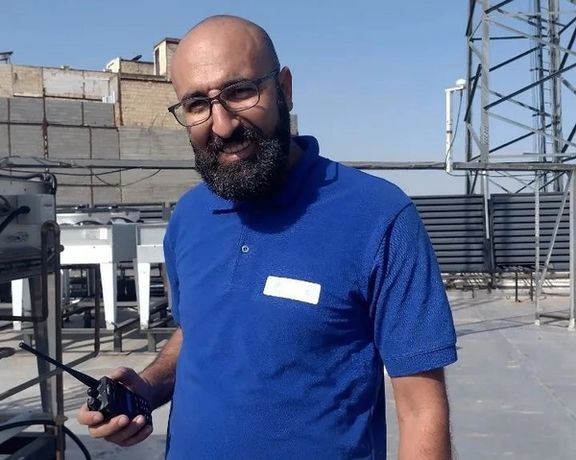
Iran International journalists face escalating threats from Tehran - Forbes

Aug 10, 2025, 08:06 GMT+1

Iranian authorities have threatened dozens of journalists at London-based broadcaster Iran International, along with hundreds of their relatives, in a bid to force them to resign, Forbes reported.

The lawyers representing the reporters from UK-based Doughty Street Chambers and Howard Kennedy said 45 journalists and 315 family members had been targeted in the past six weeks in what they described as a campaign of intimidation.

The journalists were told they would be killed unless they resigned by specific deadlines, all of which have now passed, the lawyers said.

Iran International, which reports on events in Iran and the wider region, said its staff had faced sustained harassment since the channel was founded in 2017, including threats of assassination and kidnapping, physical assaults, online abuse, and hacking.

British lawmakers have warned that Iran is among several foreign governments engaged in transnational repression on UK soil.

A July report from parliament’s Joint Committee on Human Rights said Tehran’s tactics include “assassination plots, physical attacks, intimidation of family members, asset freezing, judicial proceedings, smear campaigns, online abuse, surveillance and digital attacks such as hacking, doxing and impersonation."

Iran International filed an urgent appeal with United Nations experts last week, urging them to take action against Tehran over serious risks to the lives and safety of their journalists worldwide and relatives inside Iran.

On Thursday, US-based advocacy group United Against Nuclear Iran (UANI) called on Washington and its European allies to confront Iran’s transnational repression by issuing a credible military threat, a week after they accused Tehran of plotting to kill individuals in Europe and the US.

Since its formation in 2017, Iran International journalists have been targeted by the Iranian authorities for their reporting. However, since the start of a 12-day war between Iran and Israel in mid-June, the situation has deteriorated rapidly and there is now a real risk to the lives of multiple Iran International staff and to their family members.

Canada warns Iran may escalate threats against critics this year

Aug 9, 2025, 22:24 GMT+1

The Islamic Republic's threats to critics in Canada could grow in 2025, with Iran using organized crime networks to intimidate and harm them, Canada’s intelligence agency warned on Saturday.

“Iranian threat-related activities directed at Canada and its allies are likely to continue in 2025 and may increase depending on developments in the Middle East and the Iranian regime’s own threat perceptions,” the Canadian Security Intelligence Service said in a statement.

The CSIS told The Globe and Mail on Saturday it is actively investigating death threats in Canada linked to the Islamic Republic.

“Given the need to protect our sources, tradecraft and methods, however, we cannot confirm or deny specific investigative details,” said CSIS spokesperson Magali Hébert.

The agency’s warning follows an announcement by Iran International that two of its Canada-based journalists were targeted by the Islamic Republic in recent weeks.

"It's very, very intense and very threatening," Adam Baillie, spokesman for Iran International, told The Canadian Press.

"People get all sorts of messages of, 'We know where you live, remember we watch you, remember we know all about you, we know where your family lives.' It's that kind of thing," Baillie said.

UN appeal over threats to journalists

On Tuesday, Iran International filed an urgent appeal with United Nations experts urging them to take action against Iran over serious risks to the lives and safety of their journalists worldwide and relatives inside Iran.

Over the past six weeks, the Iranian authorities have intimidated and threatened 45 journalists and 315 of their family members with death unless they stop working for Iran International by specific deadlines, Iran International said in a statement.

Carlos Nagore Diaz, spokesperson for UN special rapporteur on freedom of expression Irene Khan, said “several UN Special Rapporteurs are considering taking urgent action on the renewed credible threats to life,” but confirmed that “any communications with the Iranian regime are currently confidential.”

In its reply to the UN, Iran’s permanent mission rejected “allegations made about the threats or kidnapping plans” and described Iran International as “an anti-Iranian network” whose operatives “will be dealt with according to the relevant laws.”

100%

UN rapporteurs wrote in May 2024 that intimidation of the channel’s staff “may amount to violations of the sovereignty” of the countries in which they operate.

In March 2023, Iran International presenter Pouria Zeraati was stabbed in London. Two Romanian nationals were later charged.

In late June, IRGC forces in Tehran detained the family of another Iran International presenter to pressure them into ending their cooperation with the network.

CSIS’s warning also comes after an alleged Iranian plot to assassinate former Canadian justice minister Irwin Cotler, which the Royal Canadian Mounted Police says it foiled last year. Cotler remains under 24-hour police protection.

Last week, Canada joined Britain, the US, France, Germany, the Netherlands, and Denmark in condemning what they called “a growing number of threats from Iranian intelligence services on their soil,” including collaboration with organized crime networks to target dissidents.

450,000 Afghans sent back from Tehran, governor says

Aug 9, 2025, 12:30 GMT+1

More than one million migrants were returned from Iran to Afghanistan over the past 100 days, including 450,000 from Tehran province, Tehran’s governor said on Saturday.

“Those without legal documents were identified and transferred to border crossings shared with Afghanistan and returned to their own country,” Mohammad Sadegh Motamedian told reporters on Saturday.

“Managing foreign nationals was one of the priorities of the government,” he said, adding that half of all foreign nationals in the country reside in Tehran province, prompting a province-wide identification effort.

Last year, more than 6,000 classrooms in the province were used by over 220,000 foreign national students, according to the governor.

“This year, families can register their children in those schools, which means existing educational capacity without building new schools will be available to our own students.”

In late July, Amnesty International called on Iran’s interior minister to take urgent action to halt the expulsions of Afghans.

The group said more than one million Afghans, including Iran-born individuals and long-term residents, had been forcibly returned to Afghanistan in recent months. Amnesty linked the mass returns to the escalation of hostilities between Israel and Iran, saying over half a million Afghans had been expelled since June 1, including thousands of unaccompanied children.

The organization said millions more remain at risk, particularly women and girls, who “must be treated as prima facie refugees and not returned to Afghanistan, where the Taliban are committing the crime against humanity of gender persecution against them.”

In previous remarks, Iranian officials have framed deportations as part of efforts to regulate residency and ease pressure on public services in areas with high concentrations of foreign nationals.

Rights group blasts Iran journalist threats as 'emotional hostage-taking'

Aug 8, 2025, 21:36 GMT+1

The Committee to Protect Journalists (CPJ) on Friday condemned threats by the Islamic Republic against the families of journalists working for Iran International, BBC Persian and Radio Farda, calling the tactic “emotional hostage-taking”

“Families of journalists working for outlets like BBC Persian, Iran International & Radio Farda are harassed, summoned, and threatened simply because their loved ones report from abroad,” CPJ posted on X, urging Iran to “end these transnational tactics of intimidation.”

Iran International filed an urgent appeal with United Nations experts on August 4, urging them to take action against Iran over serious risks to the lives and safety of their journalists worldwide and relatives inside Iran.

“Over the past weeks, the Iranian authorities have intimidated and threatened 45 journalists and 315 of their family members with death unless they stop working for Iran International by specific deadlines,” Iran International said in a statement.

All of those deadlines given by Iran's Ministry of Intelligence and Security have now passed, it added.

Since its formation in 2017, Iran International journalists have been targeted by the Iranian authorities for their reporting. This has included threats of assassination, assault and abduction against staff based in Britain, the United States and Europe.

Iran continues to be ranked among the world’s worst countries for press freedom.

According to Reporters Without Borders, “Iran has reinforced its position as one of the most repressive countries in terms of press freedom, with journalists and independent media constantly persecuted through arbitrary arrests and harsh sentences handed down after unfair trials before revolutionary courts.”