• العربية
  • فارسی
Brand
  • Iran Insight
  • Politics
  • Economy
  • Analysis
  • Special Report
  • Opinion
  • Podcast
  • Iran Insight
  • Politics
  • Economy
  • Analysis
  • Special Report
  • Opinion
  • Podcast
  • Theme
  • Language
    • العربية
    • فارسی
  • Iran Insight
  • Politics
  • Economy
  • Analysis
  • Special Report
  • Opinion
  • Podcast
All rights reserved for Volant Media UK Limited
volant media logo

Political prisoners say Iran used brute violence in postwar inmate transfer

Aug 10, 2025, 22:00 GMT+1Updated: 04:31 GMT+0
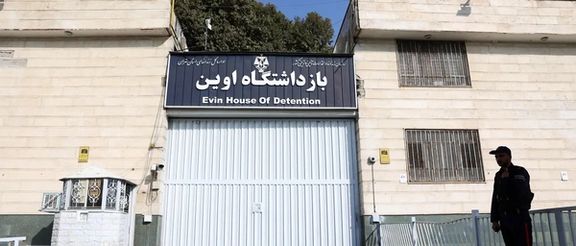
A view of the entrance of Evin prison in Tehran, Iran October 17, 2022.

Iranian authorities resorted to violence against political prisoners who refused physical restraints during their transfer back to Evin Prison 45 days after the Israeli attack, 14 inmates said on Sunday, accusing the judiciary of attempting a cover-up.

The prisoners had been moved to Greater Tehran Central Penitentiary as part of a broader reshuffling of inmates following Israeli strikes in June that damaged parts of Evin prison.

“On the night of August 6, 2025, we were told that at 4 a.m. we would be transferred back to Evin prison, to pack our belongings and be ready,” the statement read. “We had already announced that we would not wear handcuffs or leg shackles. The last time we complied was during the bombing of Evin prison. This time, conditions are normal, and we will not repeat it.”

They said officials initially agreed to no restraints, but police later tried to force handcuffs on them.

“Mehdi Mahmoudian, Matlab Ahmadian, Mohammad-Bagher Bakhtiar, Khashayar Safidi, Hossein Shanbehzadeh, Morteza Parvin, Saeed Ahmadi, and Ehsan Ravazjian were beaten,” the letter said, adding that Abolfazl Ghadiani, 80, injured his hand and Mostafa Tajzadeh was thrown onto the asphalt and handcuffed.

Other prisoners protested by chanting slogans. The statement also accused officials of insulting and assaulting inmates on death row before taking them to an undisclosed location.

An earlier statement by the Judiciary said that the transfer was “calm and uneventful.” However, the prisoners rejected the statement and asked why violence was used only to be denied later.

They said about 40 inmates were kept in the bus for six hours without access to water or food for a trip of at most two hours, with sick prisoners left without medication or proper facilities.

Green Movement leader denounces treatment of inmates

Earlier in the day, Zahra Rahnavard, a leader of Iran’s Green Movement who has been under house arrest since 2011, condemned the incident and what she described as the authorities’ escalating repression of political prisoners following the war with Israel.

“The ugly face of despotism and violence still dominates this system, and it is the first and last word,” Rahnavard wrote in a statement published Sunday on Kalameh website.

Rahnavard, an Iranian academic and politician, has been under house arrest along with her husband, former prime minister Mir-Hossein Mousavi, since February 2011, more than a year after the 2009 Green Movement protests.

She said that after the 12-day war with Israel, the nation had hoped the government would respond with introspection and meaningful reforms—releasing political prisoners and lifting censorship—but instead, repression has escalated, marked by executions, beatings, and the harsh transfer of detainees.

“Alas, the rulers added to the violence...dragging political prisoners in shackles, beating them, moving these proud free people from one prison to another, splattering blood on their noble faces and wounding their hands and feet," she wrote.

Rahnavard called on the authorities to apologize, release all political prisoners, and choose solidarity over stubbornness with the Iranian people.
Most Viewed

Iran negotiators ordered to return after internal rift over Islamabad talks
1
EXCLUSIVE

Iran negotiators ordered to return after internal rift over Islamabad talks

2
ANALYSIS

US blockade enters murky phase as tankers spoof signals and buyers hesitate

3
ANALYSIS

Why the $100 billion Hormuz toll revenue is a myth

4

US tightens financial squeeze on Iran, warns banks over oil money flows

5
ANALYSIS

US blockade targets Iran oil boom amid regional disruption

Banner
Banner

Spotlight

  • Hardliners push Hormuz ‘red line’ as US blockade tests Iran’s leverage
    INSIGHT

    Hardliners push Hormuz ‘red line’ as US blockade tests Iran’s leverage

  • Ideology may be fading in Iran, but not in Kashmir's ‘Mini Iran'
    INSIGHT

    Ideology may be fading in Iran, but not in Kashmir's ‘Mini Iran'

  • War damage amounts to $3,000 per Iranian, with blockade set to add to losses
    INSIGHT

    War damage amounts to $3,000 per Iranian, with blockade set to add to losses

  • Why the $100 billion Hormuz toll revenue is a myth
    ANALYSIS

    Why the $100 billion Hormuz toll revenue is a myth

  • US blockade targets Iran oil boom amid regional disruption
    ANALYSIS

    US blockade targets Iran oil boom amid regional disruption

  • Iran's digital economy battered by prolonged blackout
    INSIGHT

    Iran's digital economy battered by prolonged blackout

•
•
•

More Stories

Iran's Lake Urmia may completely dry up next month, official warns

Aug 10, 2025, 20:05 GMT+1

Lake Urmia in northwestern Iran, once the Middle East’s largest, will completely dry up by the end of summer if current conditions persist, a senior Iranian environment official warned on Sunday.

“The lake's water level on August 1, 2025, was 1,269.74 meters, its area had shrunk to 581 square kilometers, and its volume was down to about half a billion cubic meters,” said Ahmadreza Lahijanzadeh, deputy for marine and wetland affairs at Iran’s Department of Environment.

This indicates "a sharp and unprecedented decline from last year," he said in an interview with the IRGC-affiliated Tasnim News.

The official said the lack of water inflow means the situation will not improve in autumn and that while the lake could be revived, it would not return to its ideal conditions of 1995, when it held 32 billion cubic meters of water.

Despite repeated government pledges over two decades, the lake’s revival plans have faltered due to chronic underfunding, bureaucratic turf wars, and weak enforcement.

Lahijanzadeh said drought was one of the important factors behind the lake's current crisis, alongside drinking water shortages in some cities.

Last week, head of the Water Institute at the University of Tehran warned the lake may have reached a “point of no return” and could never be preserved in its current form, blaming the expansion of farmland beyond the watershed’s capacity.

Last September, the lake dried up completely for the second time after briefly refilling in the spring.

Over 90 percent of the country is experiencing some level of drought, with rainfall plummeting and water reserves dwindling.

The drying of major water bodies like Lake Urmia and the Zayandeh Rud River has intensified Iran’s overlapping economic and ecological crises, as decades of mismanagement catches up with the theocratic establishment.

Holocaust survivor dies from Iran attacks, raising Israel death toll to 32

Aug 10, 2025, 16:05 GMT+1

A 91-year-old Holocaust survivor who was seriously injured during Iran’s missile attacks on Israel in June died at her home in the central Israeli city of Rehovot on Saturday, raising death toll from Tehran's attacks to 32, Hebrew media reported.

Olga Weissberg collapsed in her home late Saturday and was pronounced dead at the scene by Magen David Adom medics.

She had been wounded on June 15 in an Iranian missile strike during the 12-day war, but was later discharged from hospital. Israeli media reports said her health had deteriorated in recent days.

Weissberg is the second Holocaust survivor whose death has been linked to the June attacks. Ivette Shmilovitz, 95, was killed in a missile strike on Petah Tikva, a city east of Tel Aviv, on June 17.

Iran and Israel fought a 12-day conflict in June that included US strikes on Iranian nuclear facilities at Isfahan, Natanz and Fordow, and Israeli strikes that destroyed critical infrastructure, killing several senior military and scientific figures as well as hundreds of civilians.

Iran responded with missile strikes that killed 31 civilians and one off-duty soldier, according to official figures published by the Israeli government.

The Islamic Republic says 1,062 people were also killed by Israel during the 12-day conflict, including 786 military personnel and 276 civilians.

Israel-Iran cyber hostilities continue beyond ceasefire – FT

Aug 10, 2025, 12:23 GMT+1

Cyber operations between Israel and Iran have intensified since June’s brief war despite a ceasefire, the Financial Times reported, citing Israeli officials and cybersecurity experts.

“It heated up after the start of the war, and it’s still going on,” one Israeli official told the FT.

Since the June 24 ceasefire, Iranian-aligned groups have attempted to exploit a recently identified Microsoft server software vulnerability to attack Israeli companies, according to chief executive of Israeli cyber threat intelligence company ClearSky, Boaz Dolev.

While the missiles stopped following the ceasefire that ended the 12-day war which saw massive destruction both sides, Iran's cyber war has continued at full pace, as reported by Iran International last month.

“Although there is a ceasefire in the physical world, in the cyber arena, [the attacks] did not stop,” Dolev added.

Spear-phishing messages purporting to be from diplomats and the prime minister’s office have also surged, cyber security company Check Point told the FT.

During the June conflict, Israel-linked hackers carried out some of the most disruptive strikes of the campaign. Gonjeshke Darande, a group widely regarded as aligned with Israel, claimed responsibility for destroying $90mn from Iran’s Nobitex cryptocurrency exchange and crippling services at Bank Sepah and Bank Pasargad by disabling their main and backup data centers.

While Iran’s capabilities were not to be underestimated, none of the wartime attacks on Israel had dramatic impact, Moty Cristal, a crisis negotiator and lieutenant colonel in the Israeli military reserves, told the FT.

Dolev said Iranian-linked groups had retaliated with hack-and-leak operations against about 50 Israeli companies, alongside attempts to plant malware aimed at destroying computer systems.

While they appeared unable to penetrate the defenses of Israel’s military or largest firms, he said, the attackers targeted smaller, more vulnerable businesses in their supply chains.

These included logistics and fuel providers as well as human resources firms, with hackers later releasing the CVs of thousands of Israelis with defense and security backgrounds.

IRGC warns of severe consequences over US-controlled Zangezur corridor

Aug 10, 2025, 11:19 GMT+1

The political deputy of Iran’s Revolutionary Guard criticized the recent US-brokered Armenia-Azerbaijan agreement on the Zangezur corridor, warning the deal risks destabilizing the strategically vital South Caucasus region.

Yadollah Javani condemned Armenian Prime Minister Nikol Pashinyan and Azerbaijani President Ilham Aliyev for “falling for the gambler Trump’s trap” by involving the US, Britain, and NATO in the region, ignoring the interests of key neighbors.

In a statement titled “Aliyev and Pashinyan on Zelensky’s Road to Misery,” Javani compared their actions to Ukrainian President Volodymyr Zelensky’s decision to invite NATO into Russia’s traditional security zone, which precipitated Russia’s invasion.

“The strategic error by Zelensky has so far imposed heavy and irreversible costs on Ukraine’s sovereignty and territorial integrity,” Javani wrote, “and now Aliyev and Pashinyan risk similar consequences by leasing the Zangezur corridor exclusively to the United States for 99 years, provoking Iran, Russia, China, and India.”

The corridor, designed to link Azerbaijan to its Nakhchivan exclave through southern Armenia, was renamed the “Trump Route for International Peace and Prosperity” (TRIPP) following the deal signed at the White House on Friday.

Although it remains under Armenian jurisdiction, the land will be leased to a private American company responsible for construction and logistics.

Iran, which shares a border near the corridor, has expressed fierce opposition.

Ali Akbar Velayati, senior adviser to Supreme Leader Ayatollah Ali Khamenei, told state media that Tehran would block the corridor’s establishment even without Russia’s help.

He accused Washington of attempting to reshape the South Caucasus and said, “This passage will not become a gateway for Trump’s mercenaries; it will become their graveyard.”

Ali Bagheri Kani, the secretary of Iran's Strategic Council on Foreign Relations, told state broadcaster IRIB on Saturday “the Islamic Republic will not easily overlook the issue of Zangezur.”

Iran International journalists face escalating threats from Tehran - Forbes

Aug 10, 2025, 08:06 GMT+1

Iranian authorities have threatened dozens of journalists at London-based broadcaster Iran International, along with hundreds of their relatives, in a bid to force them to resign, Forbes reported.

The lawyers representing the reporters from UK-based Doughty Street Chambers and Howard Kennedy said 45 journalists and 315 family members had been targeted in the past six weeks in what they described as a campaign of intimidation.

The journalists were told they would be killed unless they resigned by specific deadlines, all of which have now passed, the lawyers said.

Iran International, which reports on events in Iran and the wider region, said its staff had faced sustained harassment since the channel was founded in 2017, including threats of assassination and kidnapping, physical assaults, online abuse, and hacking.

British lawmakers have warned that Iran is among several foreign governments engaged in transnational repression on UK soil.

A July report from parliament’s Joint Committee on Human Rights said Tehran’s tactics include “assassination plots, physical attacks, intimidation of family members, asset freezing, judicial proceedings, smear campaigns, online abuse, surveillance and digital attacks such as hacking, doxing and impersonation."

Iran International filed an urgent appeal with United Nations experts last week, urging them to take action against Tehran over serious risks to the lives and safety of their journalists worldwide and relatives inside Iran.

On Thursday, US-based advocacy group United Against Nuclear Iran (UANI) called on Washington and its European allies to confront Iran’s transnational repression by issuing a credible military threat, a week after they accused Tehran of plotting to kill individuals in Europe and the US.

Since its formation in 2017, Iran International journalists have been targeted by the Iranian authorities for their reporting. However, since the start of a 12-day war between Iran and Israel in mid-June, the situation has deteriorated rapidly and there is now a real risk to the lives of multiple Iran International staff and to their family members.