• العربية
  • فارسی
Brand
  • Iran Insight
  • Politics
  • Economy
  • Analysis
  • Special Report
  • Opinion
  • Podcast
  • Iran Insight
  • Politics
  • Economy
  • Analysis
  • Special Report
  • Opinion
  • Podcast
  • Theme
  • Language
    • العربية
    • فارسی
  • Iran Insight
  • Politics
  • Economy
  • Analysis
  • Special Report
  • Opinion
  • Podcast
All rights reserved for Volant Media UK Limited
volant media logo

US strikes destroyed only one of three Iranian nuclear sites - NBC
Jul 17, 2025, 12:33 GMT+1Updated: 07:07 GMT+0
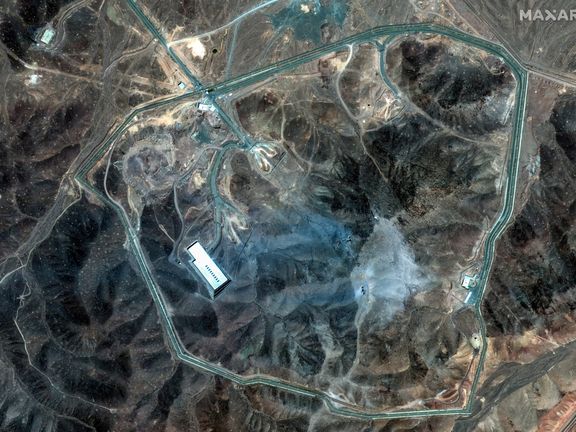
A satellite view shows an overview of Fordow underground complex, after the US struck the underground nuclear facility, near Qom, Iran June 22, 2025.

Just one of the three nuclear facilities struck by the US in Iran last month has been destroyed, according to a report by NBC News citing current and former US officials.

The latest assessment, which showed that Fordow was set back as long as two years, was briefed to US lawmakers, Defense Department officials and allied countries in recent days.

NBC also reported that an initial plan presented to US President Donald Trump involved three more sites, but the operation would have taken weeks, leading him to scale back the scope due to the risk of casualties on both sides and the fact that it was at odds with his foreign policy to extract the US from conflicts abroad.

“We were willing to go all the way in our options, but the president did not want to,” one of the sources with knowledge of the plan said.

The US strikes targeted three enrichment sites in Iran, Fordow, Natanz and Isfahan.

Trump was quick to call the strikes “a spectacular military success” and said, “Iran’s key enrichment facilities have been completely and totally obliterated."

A graphic showing Iran's Fordow Fuel Enrichment Plant is seen in this photograph released by the Pentagon in Washington, June 26, 2025.
100%
A graphic showing Iran's Fordow Fuel Enrichment Plant is seen in this photograph released by the Pentagon in Washington, June 26, 2025.

Israel has not ruled out further attacks on the two less damaged sites. Israeli Prime Minister Benjamin Netanyahu told Fox News last week that “it’s not over”.

Iran is the only non-nuclear weapon state enriching uranium to 60% U-235, a level that causes "serious concern," according to International Atomic Energy Agency (IAEA) Director General Rafael Mariano Grossi.

The IAEA has consistently maintained that there is no credible civilian use for uranium enriched to this level, which is a short technical step from weapons-grade 90% fissile material.

Iran has always said its nuclear program is purely for peaceful, civilian purposes.

Iranian Foreign Minister Abbas Araqchi said the strikes on the Fordow nuclear site caused severe damage.

A former top UN nuclear official told Eye for Iran podcast that a nuclear Iran is still possible despite US and Israeli strikes on key nuclear sites as the whereabouts of Tehran's near-weapons grade uranium remains unknown.

Around 400 kilograms—more than 900 pounds—of uranium enriched to 60% purity is unaccounted for and now with the International Atomic Energy Agency (IAEA) barred from the country, it is unsure if the location can ever be known.

Former Deputy Director General of the IAEA, Olli Heinonen, warned: “One should not relax because this material as such is enough for 10 nuclear weapons if it is enriched further to 90%. So in a big picture, yes, Mr Trump was correct, but it should have had this caveat that it's not yet over.”


Most Viewed

Iran negotiators ordered to return after internal rift over Islamabad talks
1
EXCLUSIVE

Iran negotiators ordered to return after internal rift over Islamabad talks

2
ANALYSIS

US blockade enters murky phase as tankers spoof signals and buyers hesitate

3
ANALYSIS

Why the $100 billion Hormuz toll revenue is a myth

4

US tightens financial squeeze on Iran, warns banks over oil money flows

5
ANALYSIS

US blockade targets Iran oil boom amid regional disruption

Banner
Banner

Spotlight

  • Hardliners push Hormuz ‘red line’ as US blockade tests Iran’s leverage
    INSIGHT

    Hardliners push Hormuz ‘red line’ as US blockade tests Iran’s leverage

  • Ideology may be fading in Iran, but not in Kashmir's ‘Mini Iran'
    INSIGHT

    Ideology may be fading in Iran, but not in Kashmir's ‘Mini Iran'

  • War damage amounts to $3,000 per Iranian, with blockade set to add to losses
    INSIGHT

    War damage amounts to $3,000 per Iranian, with blockade set to add to losses

  • Why the $100 billion Hormuz toll revenue is a myth
    ANALYSIS

    Why the $100 billion Hormuz toll revenue is a myth

  • US blockade targets Iran oil boom amid regional disruption
    ANALYSIS

    US blockade targets Iran oil boom amid regional disruption

  • Iran's digital economy battered by prolonged blackout
    INSIGHT

    Iran's digital economy battered by prolonged blackout

•
•
•

More Stories

US professor suspended after advocating Iran attack on American military facility

Jul 17, 2025, 10:54 GMT+1

A US professor has been suspended following comments publicly calling for Iran to carry out a "symbolic strike" on a US military base in response to recent attacks on the country’s main nuclear facilities.

"I’m not an expert, but I assume Iran could still get a bomb easily. I hope Iran does some symbolic strike on a base, then everyone stops,” Dr. Jonathan Brown, the chair of Islamic Civilization at the School of Foreign Service at Georgetown University, posted on X in June after the US struck Iran's three main nuclear sites.

The university’s Interim President Robert M. Groves testified to the House Education and Workforce Committee that Brown had been removed as chair of the department and placed on leave following the tweet while the university is now reviewing the case.

"Within minutes of our learning of that tweet, the Dean contacted Professor Brown, we issued a statement condemning the tweet. Professor Brown is no longer chair of his department, he’s on leave, and we’re beginning the process of reviewing the case," Groves testified.

It was part of a hearing titled "Antisemitism in Higher Education: Examining the Role of Faculty, Funding, and Ideology”. Other testimonies were made heard from top experts including CUNY Chancellor Dr. Félix V. Matos Rodríguez and Berkeley Chancellor Dr. Rich Lyons.

It comes in the wake of anti-Israel protests at US campuses since the outbreak of the Gaza war.

Last year in May, Iran's Supreme Leader Ali Khamenei wrote an open letter to US university students, saying they “now formed a branch of the Resistance Front,” referring to the Iran-backed militias around the Middle East seeking to destroy Israel and kill American troops.

Brown was criticized by fellow academics online. Jewish People Policy Institute fellow Dr. Sara Yael Hirschhorn went to school with him. In an angry post on X, she said: "I'm appalled to see him calling for Iran to attack US troops and his awe at attacks on Israeli civilians. Georgetown- enough!”

In the wake of the outrage following his post on X, he told Fox News Digital: "I was calling for de-escalation as I am very opposed to American involvement in foreign wars.”

Trump expects Iran to resume talks, State Department says

Jul 17, 2025, 09:54 GMT+1

US President Donald Trump expects Iran to return to nuclear negotiations, saying that diplomacy is in Tehran's best interest, according to the State Department Spokeswoman Tammy Bruce.

“I know that he expects them to begin to negotiate because that's in their best interest,” Bruce said in an interview with Fox News. “He has believed and continues to believe that diplomacy will work here."

Bruce said the US negotiating position has remained consistent throughout, adding, “To negotiate…has been our posture from the start as indicated and led by President Trump.”

The Iranians know what our posture is, she said adding that Trump has shown patience and generosity even in the wake of recent hostilities.

“The fact of the matter is they should be very grateful that President Trump is as generous of a man as he is because of the nature of what's going on in the Middle East,” Bruce said.

Bruce’s comments came the same day independent journalist Laura Rozen reported on X that a senior US official told a source there was “no prospect for the resumption of US-Iran negotiations anytime soon.”

Iranian officials dig in

On Wednesday, Iran’s parliament said negotiations should not resume until preconditions are met, according to a statement carried by state media.

“When the US use negotiations as a tool to deceive Iran and cover up a sudden military attack by the Zionist regime (Israel), talks cannot be conducted as before. Preconditions must be set and no new negotiations can take place until they are fully met,” it said.

Iranian Foreign Minister Abbas Araghchi has previously demanded guarantees against further military attacks.

Last month, Israeli and US forces struck multiple nuclear facilities in Iran, citing concerns over a weapons program.

Iran maintains that its nuclear work is civilian in nature.

Tehran and Washington had conducted five rounds of indirect negotiations through Omani mediation prior to the June strikes, which brought talks to a halt. US demands that Iran cease uranium enrichment but the Iranian officials have repeatedly rejected it.

European pressure builds

Despite Trump’s insistence he is “in no rush” for a deal, the US and three European governments have agreed to push for an agreement by the end of August. If no progress is made, French Foreign Minister Jean-Noel Barrot said Paris, London and Berlin will trigger the UN sanctions snapback mechanism.

The snapback mechanism is part of UN Security Council Resolution 2231, which endorsed the 2015 Joint Comprehensive Plan of Action, or JCPOA. It allows any participant in the nuclear agreement to reimpose sanctions if Iran is deemed non-compliant. If no resolution to maintain sanctions relief is passed within 30 days, all previous UN measures return automatically.

Tehran anxiety grows as Europe moots sanctions snapback

Jul 16, 2025, 21:59 GMT+1
•
Behrouz Turani

Tehran’s commentariat is sounding the alarm over the economic toll of renewed United Nations sanctions that European powers say they could trigger against Iran by the end of August.

The sanctions were lifted as part of a nuclear deal in 2015, which effectively unraveled in 2018 when the United States, under President Donald Trump, withdrew from it.

French Foreign Minister Jean-Noël Barrot announced on Tuesday that the E3 (France, Britain, and Germany) would trigger the so-called snapback mechanism built into that deal unless tangible progress is made on a new nuclear agreement.

“If the snapback mechanism is activated and the suspended resolutions reimposed, all UN member states—including China and Russia—will be obligated to cooperate in enforcing sanctions against Iran, and cannot opt out of compliance,” Jahan-e Sanat, Iran’s leading economic daily, warned in an editorial quoting international relations expert Ali Bigdeli.

Escalation and uncertainty

Such warnings are dismissed as signs of weakness by more hardline voices in Iran—who are instead ramping up combative rhetoric.

IRGC-affiliated Tasnim News on Tuesday warned that Iran could raise uranium enrichment from 60% to 90%, and may use its enriched uranium stockpile for what it called “non-prohibited military purposes.”

The report, widely circulated across Iranian media, was quietly removed within hours.

Foreign Ministry spokesman Esmaeil Baqaei had said a day earlier that Tehran’s response to a potential snapback would be “proportionate,” leaving the audience to guess the specifics.

Former lawmaker Heshmatollah Falahatpisheh accused Iranian diplomats of lacking expertise and slammed hardliners for propagating what he called false narratives.

“President Pezeshkian must end his passiveness in foreign policy and rescue national interests from the grip of radicals,” he wrote in the moderate daily Arman Melli, harshly criticizing the original 2015 nuclear agreement and those who signed it.

The big “if”

Prominent reformist daily Sharq quoted analyst Mohammad Irani warning of a “political earthquake” and the effective closing of the door on diplomacy.

As Europe seeks to redefine its role—after a period of watching from the sidelines—a snapback of UN sanctions would foreclose the possibility of a Tehran-Washington agreement, Irani warned.

As commentary deepens, some voices are drawing attention to the fragile assumptions behind Iran’s current posture—and the risks of miscalculation.

“The snapback poses one of Iran’s most serious challenges—politically and economically," analyst Mehdi Pazouki wrote in Arman Melli, adding that the troubled waters could be navigated if Tehran turns to “realistic and proactive diplomacy."

That “if” looms large, Pazouki warned, given the growing absence of realism in Tehran’s foreign policy.

Democratic lawmakers demand accounting of Iran attack costs, toll

Jul 16, 2025, 21:25 GMT+1

Democratic lawmakers have demanded a formal reckoning of the costs and results of a surprise US attack on Iranian nuclear sites last month with mixed success, as misgivings with the strikes persists in some quarters of Congress.

As Congress works through the National Defense Authorization Act (NDAA), two prominent Democrats have pushed for legally binding disclosures related to the June 22 strikes on three Iranian nuclear sites.

Representative Ro Khanna (D-CA), who frequently crosses partisan lines to vote with Republicans, introduced an amendment requiring the Department of Defense to disclose all costs associated with the strikes. It passed on Wednesday.

“The American people deserve to know how much we spent, and how much our increased troop and force deployment to the Middle East will cost taxpayers,” Khanna wrote on X.

Another Democrat and more strident critic of President Donald Trump, Representative Jerry Nadler (D-NY), proposed an amendment calling for a full battle damage assessment (BDA) of the strikes.

His proposal would have required the Chairman of the Joint Chiefs of Staff and the Secretary of Defense to deliver the assessment within 90 days. It did not pass amid Republican opposition.

“The Republican majority is refusing to consider my amendment to the Defense funding bill on Trump’s failed strike on Iran and the disastrous consequences of his withdrawal from the Iran Deal. What are they trying to hide?” Nadler wrote on X, referring to a 2015 international deal from which Trump withdrew in his first term.

Lawmakers reacted swiftly to the President’s surprise announcement of the strikes last month. Republican hawks largely celebrated the move, while many Democrats voiced strong criticism.

An initial Pentagon assessment suggested the attacks had only set Iran's nuclear program back by months, but subsequent analysis released by the Central Intelligence Agency said it would take Tehran years to recover.

Iran's GPS scrambling wreaks chaos on daily life

Jul 16, 2025, 19:54 GMT+1
•
Maryam Sinaiee

Iranian jamming of GPS devices aims to baffle Israeli drones and missiles after a punishing wave of assassinations in a war last month, but now mostly thwarts daily commutes and food deliveries for ordinary citizens.

“If you look at the map, you sometimes find yourself tens or even hundreds of kilometers from your real location—sometimes in another country or even in the middle of the Caspian Sea!” said Amir-Ali, a company accountant in Tehran.

Another Tehran resident said friends were nearly stranded after a navigation app misled them. “They ended up in a remote valley far from the usual trail. Luckily, they made it back before dark.”

Lost drivers, cold meals

“Even ordering food has become a pain,” said Taraneh, a language instructor. “Drivers can’t find you or show up at the wrong place. By the time it gets to you—if it does—it’s cold or your lunch break is over.”

Elham, also in Tehran, said she spent over 30 minutes guiding a delivery driver who kept circling the neighborhood. “I was directing him down dead ends and one-way streets. It was maddening.”

Public transportation hasn’t been spared.

A commuter told the Sharq newspaper that both he and his bus appeared in the wrong location on the app, causing delays. A bus driver said his GPS took him off route while covering for a colleague.

“I only realized something was wrong when passengers started complaining,” he said.

Even religious routines have been affected, with worshippers across Iran reporting botched timing for calls to prayer.

“Automated call-to-prayer systems rely on GPS to determine location,” said network expert Ali Rad. “If they receive incorrect signals, they may miscalculate the time and broadcast too early or too late.”

Spoofing comes home

GPS jamming involves blocking signals while spoofing sends false ones. Both are military tools used to confuse enemy drones, hide troop movements or disrupt missiles. Iran has long deployed both but seldom so broadly.

In 2011, Tehran said it diverted a US drone using spoofing. It was also suspected of GPS interference during a period of heightened tensions in the Persian Gulf in 2019-2020.

Israel has used similar methods. In late 2023, the Israeli military acknowledged GPS restrictions in combat zones to disrupt enemy targeting.

The interference sometimes spilled over into civilian devices, triggering widespread signal errors.

During peak hostilities in June, flight-tracking platforms like Flightradar24 recorded major GPS disruptions over Iran and neighboring airspace.

Pilots reported signal loss and instrument malfunctions, prompting airlines to reroute flights.

At sea—especially in the Strait of Hormuz—spoofed signals caused ships to veer off course or appear to sail over land. Over 1,600 vessels per day were affected, according to The Guardian.

Shipping companies paused nighttime operations. The economic fallout was swift: supply chain disruptions, delays and rising insurance costs dogged the industry.

What began as a military tactic is now reshaping daily life in Iran, compounding already grave economic and security worries among ordinary Iranians.