• العربية
  • فارسی
Brand
  • Iran Insight
  • Politics
  • Economy
  • Analysis
  • Special Report
  • Opinion
  • Podcast
  • Iran Insight
  • Politics
  • Economy
  • Analysis
  • Special Report
  • Opinion
  • Podcast
  • Theme
  • Language
    • العربية
    • فارسی
  • Iran Insight
  • Politics
  • Economy
  • Analysis
  • Special Report
  • Opinion
  • Podcast
All rights reserved for Volant Media UK Limited
volant media logo

Leaked materials came from previously reported cyberattacks, Iran International confirms

Jul 8, 2025, 11:59 GMT+1Updated: 07:53 GMT+0
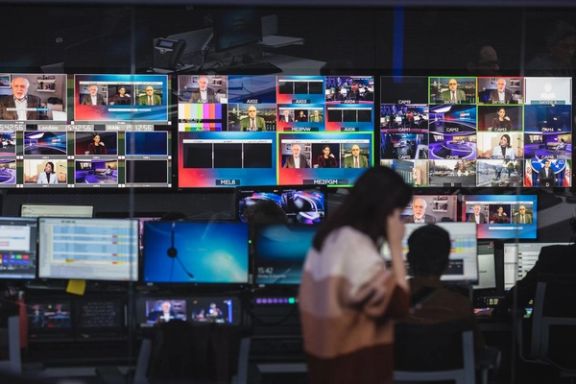
File photo of Iran International newsroom

Iran International confirmed on Tuesday that recently published materials from the hacked Telegram accounts of its journalists are linked to two separate cyberattacks carried out in the summer of 2024 and January 2025.

“The hackers may have accessed the computers of affected colleagues by installing malware via their compromised Telegram accounts. These incidents have been addressed as part of our continuing work with the relevant security authorities,” read a statement by the channel.

Earlier on Tuesday, Iranian state outlets published screenshots from internal Telegram chats linked to Iran International.

The attacks were carried out by the cyber group known as Banished Kitten (also referred to as Storm-0842 and Dune). The group operates under the Cyber Threat Countermeasures Unit of the Domestic Security Directorate of Iran’s Ministry of Intelligence, under the supervision of Yahya Hosseini Panjaki, whose
identity was first exposed by Iran International.

"These cyberattacks are part of a broader campaign of threats targeting Iran International, including physical threats against our staff," the statement added.

"As a news organization committed to independent journalism, we implemented the necessary measures following these incidents to protect our staff and audiences," it said.

"We remain resolute in our mission to deliver accurate, uncensored news to our audience, and we will not allow these threats—online or offline—to disrupt our work. These attempts to intimidate us will not succeed," the channel added.

Iran International is a Persian-language TV news network that broadcasts 24/7 and has a strong following in Iran, despite government efforts to restrict access to the internet and satellite signals. Tehan has labelled it a terrorist organisation.

Iran International has previously been the subject of threats and attacks. In 2023, a man was convicted under terrorism laws after filming outside its premises, and in 2024, Pouria Zeraati, the television host of the "Last Word" program on Iran International was stabbed in London.

Most Viewed

Iran negotiators ordered to return after internal rift over Islamabad talks
1
EXCLUSIVE

Iran negotiators ordered to return after internal rift over Islamabad talks

2
ANALYSIS

US blockade enters murky phase as tankers spoof signals and buyers hesitate

3
ANALYSIS

Why the $100 billion Hormuz toll revenue is a myth

4

US tightens financial squeeze on Iran, warns banks over oil money flows

5
INSIGHT

Ideology may be fading in Iran, but not in Kashmir's ‘Mini Iran'

Banner
Banner

Spotlight

  • Hardliners push Hormuz ‘red line’ as US blockade tests Iran’s leverage
    INSIGHT

    Hardliners push Hormuz ‘red line’ as US blockade tests Iran’s leverage

  • Ideology may be fading in Iran, but not in Kashmir's ‘Mini Iran'
    INSIGHT

    Ideology may be fading in Iran, but not in Kashmir's ‘Mini Iran'

  • War damage amounts to $3,000 per Iranian, with blockade set to add to losses
    INSIGHT

    War damage amounts to $3,000 per Iranian, with blockade set to add to losses

  • Why the $100 billion Hormuz toll revenue is a myth
    ANALYSIS

    Why the $100 billion Hormuz toll revenue is a myth

  • US blockade targets Iran oil boom amid regional disruption
    ANALYSIS

    US blockade targets Iran oil boom amid regional disruption

  • Iran's digital economy battered by prolonged blackout
    INSIGHT

    Iran's digital economy battered by prolonged blackout

•
•
•

More Stories

IRGC media calls for 1980s-style mass executions of Israel ‘collaborators’

Jul 8, 2025, 11:13 GMT+1

A media outlet affiliated with Iran’s Revolutionary Guards (IRGC) has openly called for the mass execution of perceived enemies of the state, invoking the precedent of mass killings carried out in 1988 following a decree by then-Supreme Leader Ruhollah Khomeini.

In an article published this week, the semi-official Fars News Agency described current detainees accused of collaborating with Israel and Western intelligence agencies as “deserving of execution in the style of 1988.”

“In the current conditions, when some mercenary elements—Iranians and foreign nationals—have enabled the killing of hundreds of Iranian citizens, including women, children and civilians, by transferring intelligence to the Zionist enemy and smuggling weapons into the country, they deserve to be executed in the manner of 1988," the article said.

The publication argued that the 1988 executions were a “brilliant chapter” in the Islamic Republic’s fight against terrorism and said that “society today recognizes the need for such proper measures against domestic terrorist networks.”

Between July and September 1988, thousands of political prisoners were summarily executed across Iran after a fatwa by Ayatollah Khomeini.

Amnesty International estimates the death toll at a minimum of 5,000. Victims, many of whom had already been serving sentences for political dissent, were subjected to secret trials and then executed. Their bodies were buried in unmarked graves, and families were never officially notified.

“The anguish caused to families by this ongoing crime constitutes torture,” Amnesty said in a 2023 report, adding that “the extrajudicial executions and the ongoing enforced disappearances amount to crimes against humanity.”

The Iranian authorities have never acknowledged the full scope of the killings. Families of the victims have been subjected to intimidation, denial of burial rights, and the destruction of mass grave sites. Amnesty International and other human rights groups continue to call for accountability.

In 2016, an audio recording surfaced in which Grand Ayatollah Hossein Ali Montazeri, once heir apparent to Khomeini, condemned the executions in a meeting with judiciary officials involved in the process. “I believe the greatest crime in the history of the Islamic Republic, for which history will condemn us, has been committed by you,” he said. “Your names will go down in history as criminals.”

Montazeri was subsequently dismissed from power and placed under house arrest until his death in 2009.

Calls for renewed repression

In its editorial, Fars revisited the history of the 1980s and described dissident organizations such as the Mojahedin-e Khalq (MEK) as armed insurgents who “attempted to hijack the revolution from within.”

The article said the MEK collaborated with Iraq during the Iran-Iraq war and “committed atrocities against civilians,” framing the 1988 executions as both justifiable and necessary for national security.

“Unlike the false portrayal by opposition media that the 1988 executions were against human rights, today the public sees the necessity of repeating such decisive actions,” Fars wrote, also defending the role of late President Ebrahim Raisi, who was one of the judiciary officials implicated in the process.

Iran is intensifying a nationwide crackdown in the wake of its 12-day war with Israel, targeting ethnic and religious minority groups as well as foreign nationals.

Late in June, Fars reported that Iranian intelligence forces arrested more than 700 Iranians accused of acting as agents for Israel.

No Iranian official has yet responded to or repudiated Fars’ latest statements. Iranian authorities typically avoid direct acknowledgment of the 1988 killings in public discourse, though some judiciary and government figures have repeatedly defended them as lawful.

Iran’s parliament passed an emergency bill late last month to increase penalties for espionage and collaboration with “hostile states,” allowing suspects to be tried under wartime conditions.

Judiciary chief Gholamhossein Mohseni-Ejei said those arrested in the context of Israel’s recent attacks would be prosecuted under “wartime legal provisions.”

Judiciary spokesperson Asghar Jahangir said on state TV that current espionage laws are “too general” and inadequate for addressing recent cases, adding that legal reforms are needed to handle detainees linked to the conflict with Israel.

Iran's hand in global terrorism remains a threat, Israeli think-tank says

Jul 8, 2025, 10:01 GMT+1

In the last five years, Iran has stepped up its involvement in global terrorism, according to new research by the Institute for National Security Studies (INSS), an Israeli think-tank.

“Over the past five years, Iran’s activity in the arena of international terrorism has significantly intensified, spreading across vast geographic regions and incorporating criminal organizations in the execution of terrorist operations,” read the paper led by counter-terrorism expert Yoram Schweitzer.

“Although most Iranian terrorism attempts have been thwarted, there is no guarantee that this success will persist in the future.”

It comes as the UK parliament's Intelligence and Security Committee has just produced a report saying that Iran remains one of the country’s biggest foreign threats on domestic soil, as reported by The Telegraph, highlighting the targeting of Iranian dissidents in the UK and cyber attacks aimed at UK companies.

Last year, the head of Britain’s MI5 intelligence service also said Iran remains one of the country’s biggest foreign threats.

Arrests of people accused of involvement in alleged Iran-backed attacks have happened in countries around the world from Azerbaijan to Greece, and have stepped up since the Gaza war.

Last year, the European Parliament said: "The Iranian regime’s use of criminal networks as terrorist proxies in Europe poses a grave threat to our internal security."

Plots targeting Israelis abroad have also been exposed in countries such as Cyprus, Turkey and Georgia.

“An analysis of Iran’s terrorism policy reveals a troubling trend, illustrating that Iran remains committed to employing international terrorism and is even amplifying its efforts in this regard, demonstrating a willingness to risk friction with numerous states in order to pursue its policy,” the INSS report said.

The researchers said Iran has become more confident “in violating international norms” with most operations abroad carried out under the responsibility of the Islamic Revolutionary Guard Corps (IRGC), specifically the foreign branch known as the Quds Force, and the IRGC Intelligence Organization. Other attacks have fallen under the Iranian Ministry of Intelligence.

Last year, the European Parliament once again called to add the IRGC to the list of terrorist organizations, following the likes of the US and Canada.

"Iran’s hostile activities abroad are not a new phenomenon. The European Parliament has repeatedly called for the EU to take action against the Iranian regime, including by adding the Islamic Revolutionary Guard Corps to the EU terrorist list," a statement in October said.

The INSS paper also pointed out Iran's use of its military allies such as Hezbollah in Lebanon, and criminal organizations.

I’d love to give Iran a chance, Trump says at dinner with Israeli PM

Jul 8, 2025, 08:31 GMT+1

US President Donald Trump said on Monday that Iran has requested negotiations with Washington and expressed his willingness to lift sanctions “at the right time.”

“I would love to be able to take those sanctions off and give them a chance,” Trump said during a White House dinner with Israeli Prime Minister Benjamin Netanyahu. “They want to meet and make peace. We have scheduled Iran talks. They want to talk.”

US Special Envoy to the Middle East Steve Witkoff told reporters that nuclear negotiations between the two countries are expected to take place “in the next week or so,” in what would mark the first official diplomatic engagement between Washington and Tehran since the 12-day conflict between Iran and Israel.

Iranian Foreign Ministry spokesperson Esmail Baghaei on Tuesday denied that Iran had requested a meeting with the American side."No meeting request has been made to the American side from our end."

Trump, speaking to reporters before the dinner, said Iran had “taken a big drubbing” from joint US-Israeli strikes but now appeared ready for dialogue. “I hope the war with Iran is over,” he added.

When asked for a specific date for the talks, Trump declined to provide details. “I’d rather not say, but you’ll be reading about it tomorrow or seeing it tomorrow,” he said.

Iranian President Masoud Pezeshkian said this week that he believes Iran can resolve its differences with the United States through dialogue, but trust would be an issue after US and Israeli attacks on Iran.

"I am of the belief that we could very much easily resolve our differences and conflicts with the United States through dialogue and talks," Pezeshkian told conservative US podcaster Tucker Carlson in an interview released on Monday.

US President Donald Trump holds a bilateral dinner with Israeli Prime Minister Benjamin Netanyahu, at the White House in Washington, July 7, 2025.
100%
US President Donald Trump holds a bilateral dinner with Israeli Prime Minister Benjamin Netanyahu, at the White House in Washington, July 7, 2025.

The US president also spoke warmly about the Iranian potential. “They have the oil power. They have great people, smart people, energetic people—amazing,” he said.

“I would like to see Iran build itself in a peaceful manner. They were the bully of the Middle East and now they are not any more.”

During the dinner, Netanyahu said that Iran’s influence in Syria had waned and described the Islamic Republic as "out of the picture" there, suggesting that this shift could open the door for a new peace process between Israel and Syria. He also told Trump he intended to nominate him for the Nobel Peace Prize.

Trump said that Netanyahu had asked for US sanctions on Syria to be lifted—a request that Trump said was granted. “We took the sanctions off because we want to give them a chance,” he said, adding that similar relief could be considered for Iran if progress is made.

Mehrzad Boroujerdi, a US-based Iran analyst, said that the dinner remarks exposed a gap between American and Israeli positions on Iran.

“Netanyahu has never accepted any form of negotiation with Iran and has consistently advocated for the destruction of its nuclear program,” Boroujerdi told Iran International. “His comparison of Iran’s nuclear and missile ambitions to ‘cancerous tumors’ shows he seeks perpetual control over Iran’s military activities.”

However, he said that Trump’s remarks reflect a more pragmatic view from the White House. “Trump is entering these talks from a position of strength,” he said. “This isn’t about appeasement—it’s about leverage.”

The dinner was Netanyahu’s first in-person meeting with Trump since the strikes on Iran.

Iran internet blackouts hobble economy, erode public trust

Jul 7, 2025, 21:31 GMT+1
•
Mehdi Jedinia

A nationwide internet outage likely imposed by the Tehran beginning just after midnight on July 6 has deepened concerns among a weary public over the already parlous state of the economy and access to information.

Confirmed by global observatory NetBlocks, the blackout caused a near-total loss of connectivity. Though partial access later returned, traffic remains just 20% of pre-conflict levels.

The latest shutdown follows a string of disruptions that began during the 12-day June conflict with Israel, when authorities restricted access under the guise of national security.

Iran’s Telecommunications Infrastructure Company has acknowledged the incident but offered no explanation. Meanwhile, accounts linked to officials remained active, fueling claims of selective, politically-driven censorship.

Economic shock, mass disruption

Prolonged outages are dealing vast damage to Iran’s digital economy.

The Iran Internet Businesses Guild Association estimated over $1.5 million in hourly losses and warned more than 400,000 small and mid-sized businesses are at risk.

The Tehran Union of Internet-Based Shops cited the vulnerability of small digital vendors and service providers.

“Every hour of blackout brings almost a $1.5 million loss to small businesses,” it said.

Sweden-based economist Ahmad Alavi called shutdowns “one of the most economically damaging decisions a government can make,” especially in a low-productivity economy where many rely on digital services.

“These blackouts drive both human and financial capital out of the country,” Alavi warned. “Freelancers, programmers, and entrepreneurs facing unstable access will increasingly emigrate or transfer assets abroad.”

“This is more than a technical glitch,” said Alavi. “It’s a full-blown economic shock affecting production, finance, investment, and public services.”

Mahtab Gholizadeh, a Berlin-based economic journalist, notes that with over 60% of the population under 30, Iran’s youngest and most connected generation, is being cut off from opportunity and global networks.

Resistance, risk and digital Control

Amid growing restrictions, some entrepreneurs have turned to Starlink satellite internet to stay connected—despite legal bans and the threat of imprisonment.

Mohammad, a small business owner, is one of them. “I know the risks,” he said, declining to use his full name due to likely official reprisals.

“But I’d rather face them than die in poverty.”

Many others, particularly in handicrafts and beauty, are redirecting efforts to regional export markets in the Persian Gulf.

Meanwhile, the government continues to promote domestic messaging platforms like Rubika, Baleh and Eitaa, but public uptake remains low. Users and businesses cite privacy concerns, limited features and poor engagement.

Shohreh, an entrepreneur in the beauty industry, tried moving some of her work to the Iranian app Soroush after international platforms were blocked but noted little customer traction.

“Many of our products are considered illegal on these networks,” she said. “Let alone finding proper channels to market or sell them.”

Unequal access, declining trust

The internet crisis has revived a controversial push for tiered access, giving preferential connectivity to state agencies and approved professionals while limiting the general public.

The idea has resurfaced through recent proposals from IT trade groups, but critics say it would formalize digital inequality. Tech outlet Zoomit called the idea “digital apartheid.”

Iran remains one of the world’s most censored internet environments. Around 84% of users rely on VPNs to get online, and over 90% engage with blocked global platforms.

Analysts warn that repeated shutdowns are fueling brain drain, startup collapse, and a crisis of investor confidence.

In an open letter, the Iran Internet Businesses Guild Association urged authorities to stop DNS tampering and bandwidth throttling, warning of systemic collapse.

“The normalization of blackouts,” said Alavi, “is isolating Iran from the global digital economy and destroying what little trust remains in its future.”
UK, Swiss embassies in Tehran reopen after closures during Iran-Israel war

Jul 7, 2025, 17:00 GMT+1

The United Kingdom and Switzerland say they have resumed their embassy operations in Tehran following temporary closures during the 12-day war between Iran and Israel.

UK foreign office minister Hamish Falconer told parliament on Monday that the British embassy has reopened and a chargé d'affaires is now in place.

“We will continue to play our full role to ensure the safety of British nationals in Iran,” he said.

The Swiss Embassy, which represents US interests in Iran, also reopened on Sunday after nearly two weeks of closure. Services remain limited to consular visits, with visa-related services still suspended, the embassy announced.

Swiss intelligence warns of growing Iranian espionage threat

The reopening comes as Swiss authorities raise security concerns over Iranian espionage. On Wednesday, Switzerland’s Federal Intelligence Service (FIS) warned that Iran poses a growing intelligence threat to Swiss diplomats.

In its annual "Security Switzerland 2025" assessment, the agency said Switzerland’s role as Washington’s protecting power in Tehran increases the visibility of Swiss personnel to hostile intelligence services.

The warning followed a joint SRF and RTS investigation aired Tuesday, in which a former IRGC officer said Swiss diplomat Sylvie Brunner was pushed from her Tehran balcony in May 2021 after a failed surveillance operation. Iran ruled it a suicide but has not shared full case files with Swiss authorities.

Brunner’s brother believes she was murdered. A Swiss forensic report found key organs missing, making toxicology tests incomplete. It said suicide was plausible but could not rule out foul play.

Her death was the first of four suspicious cases involving Swiss nationals in Iran. Others include the 2023 death of a defense attaché, the stabbing of a local embassy employee, and the 2025 death of a Swiss tourist in prison.

Swiss officials say they are pressing for full transparency in each case but have no jurisdiction to conduct investigations on Iranian soil. Without access to evidence or cooperation from Iranian authorities, their ability to determine what happened remains limited.