• العربية
  • فارسی
Brand
  • Iran Insight
  • Politics
  • Economy
  • Analysis
  • Special Report
  • Opinion
  • Podcast
  • Iran Insight
  • Politics
  • Economy
  • Analysis
  • Special Report
  • Opinion
  • Podcast
  • Theme
  • Language
    • العربية
    • فارسی
  • Iran Insight
  • Politics
  • Economy
  • Analysis
  • Special Report
  • Opinion
  • Podcast
All rights reserved for Volant Media UK Limited
volant media logo

Brain behind Iran’s nuclear detonation technology killed in Israeli strike

Jun 15, 2025, 08:39 GMT+1Updated: 08:03 GMT+0
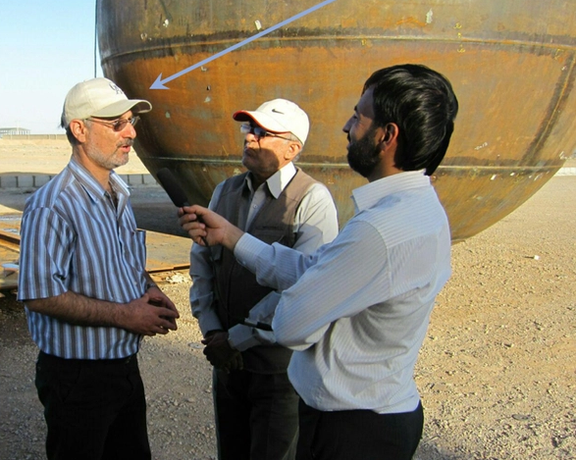
File photo of Saeed Borji, a senior Iranian nuclear scientist

Saeed Borji, a senior Iranian explosives expert and key figure in Iran’s nuclear-related defense programs, was killed in Israeli airstrikes, having long played a central role in developing detonation systems used in nuclear weapons design.

Borji, a mechanical engineering PhD graduate from Iran’s Malek Ashtar University, was considered a pivotal expert in the development of explosive detonators essential for nuclear weapons.

He headed the Center for Explosion and Impact Technology Research (known by its Persian acronym Metfaz), a subsidiary of the Organization of Defensive Innovation and Research (SPND).

The center is believed to have played a critical role in developing advanced technologies such as multi-point initiation (MPI) and exploding bridgewire (EBW) detonators—components identified by the International Atomic Energy Agency (IAEA) as integral to implosion-type nuclear devices.

Borji’s involvement in Iran’s nuclear program dates back to the 1980s during the Iran–Iraq War, and he later became a central figure in the covert "Amad" project, a suspected nuclear weapons development effort that Iran says was ended in 2003.

Western intelligence and leaked documents, however, suggest Borji continued working on sensitive defense-related research under different organizational structures, including SPND.

He collaborated with foreign experts, including Vyacheslav Danilenko, a Ukrainian scientist formerly linked to the Soviet nuclear program. Together, they were involved in the design of explosive test chambers at Iran’s Parchin site, believed to be used to simulate nuclear detonations.

100%

Additionally, Borji is said to have overseen experimental activities at facilities such as the Abadeh site in Fars Province, which the IAEA confirmed contained traces of undeclared uranium.

In 2019, then-Israeli Prime Minister Benjamin Netanyahu publicly identified the Abadeh site as part of Iran’s covert nuclear work.

The US Treasury Department later sanctioned Borji for his role in Iran’s nuclear weapons-related efforts, describing him as an explosives and metals expert linked to the Shahid Karimi Group, part of SPND.

In recent years, Borji was also involved in managing front companies, including Azar Afrooz Saeed and Arvin Kimia Abzar, which officially operated in the oil and petrochemical sectors. Intelligence reports obtained by Iran International suggest these firms acted as covers for ongoing military research, particularly in the development of nuclear detonators.

Leaked documents from Iran’s nuclear archive show Borji was also responsible for transferring explosive testing operations to protected sites such as Sanjarian, near Tehran, and for working within the classified Unit 6 of the Parchin military complex.

Analysts talking to Iran International described him as a crucial link between Iran's original Amad nuclear team and its current defense research network. Technology developed under his direction is believed to have helped Iran achieve operational capability in producing synchronized nuclear detonators domestically.

Most Viewed

Iran negotiators ordered to return after internal rift over Islamabad talks
1
EXCLUSIVE

Iran negotiators ordered to return after internal rift over Islamabad talks

2
ANALYSIS

US blockade enters murky phase as tankers spoof signals and buyers hesitate

3
ANALYSIS

Why the $100 billion Hormuz toll revenue is a myth

4

US tightens financial squeeze on Iran, warns banks over oil money flows

5
ANALYSIS

US blockade targets Iran oil boom amid regional disruption

Banner
Banner

Spotlight

  • Hardliners push Hormuz ‘red line’ as US blockade tests Iran’s leverage
    INSIGHT

    Hardliners push Hormuz ‘red line’ as US blockade tests Iran’s leverage

  • Ideology may be fading in Iran, but not in Kashmir's ‘Mini Iran'
    INSIGHT

    Ideology may be fading in Iran, but not in Kashmir's ‘Mini Iran'

  • War damage amounts to $3,000 per Iranian, with blockade set to add to losses
    INSIGHT

    War damage amounts to $3,000 per Iranian, with blockade set to add to losses

  • Why the $100 billion Hormuz toll revenue is a myth
    ANALYSIS

    Why the $100 billion Hormuz toll revenue is a myth

  • US blockade targets Iran oil boom amid regional disruption
    ANALYSIS

    US blockade targets Iran oil boom amid regional disruption

  • Iran's digital economy battered by prolonged blackout
    INSIGHT

    Iran's digital economy battered by prolonged blackout

•
•
•

More Stories

Iran says Israeli strike on Assaluyeh brings conflict to Persian Gulf

Jun 15, 2025, 08:09 GMT+1

Iranian Foreign Minister Abbas Araghchi warned on Sunday that an Israeli airstrike on the energy facilities in Assaluyeh, southern Iran, marked a dangerous escalation, potentially drawing the Persian Gulf region and the wider world into war.

Speaking to foreign ambassadors in Tehran, Araghchi said the strike marked a dangerous new breach of international law and accused Israel of a strategic miscalculation by targeting civilian infrastructure.

Iranian officials say parts of Phases 14 and 4 of the South Pars gas field, along with the Fajr Jam gas refinery in Bushehr province, were hit by drones on Saturday. The attacks caused fires, which were later brought under control, according to the Oil Ministry.

“This is the first time such an attack has reached our nuclear facilities,” Araghchi said. “The silence of the UN Security Council is unacceptable.”

About nuclear negotiations with the United States, he said,“We were engaged in diplomacy. But we were attacked,” he said. “Now, our right to defend ourselves is undeniable.”

Araghchi said that during the first night of Iran’s military response, Tehran limited its strikes to Israeli military sites. “But since last night, we’ve expanded to economic targets and refineries,” he said, calling Israel’s attack on Assaluyeh “a strategic mistake.”

He also warned that continued aggression could lead to broader instability: “Dragging the conflict into the Persian Gulf can pull the entire world into war.”

The minister directly accused the United States of complicity, saying that Washington’s support for Israel enabled the attack. "We have detailed evidence of American backing through regional forces and military bases."

Despite the sharp rhetoric, Araghchi said Iran does not seek to expand the conflict beyond its borders “unless war is imposed upon us.”

“If the aggression stops, our response will stop too,” he added.

The Iran-Israel conflict: what we know so far

Jun 15, 2025, 00:20 GMT+1

Israel continued its expansive military campaign against Iran on Saturday, striking energy and military infrastructure across the country, while Iran launched another salvo of missiles into Israeli territory.

The latest exchanges have raised fears of further escalation and devastation, as both sides harden their rhetoric and show no signs of backing down.

Here's a brief summary of the main developments so far.

Israel escalates with oil strikes as death toll surpasses 200

  • Israel struck Tehran refinery at Rey, Shahran oil depot, and a facility in Tabriz, intensifying its campaign.
  • Strikes also targeted Tehran’s defense ministry and a military base in Kermanshah.
  • Rights group HRANA reported 215 killed and nearly 700 injured, most of them civilians.
  • The Israeli military said it has hit 150 targets across Iran since Friday.

Iran hits Haifa, Tel Aviv in fresh missile salvo

  • Iran has launched over 200 missiles since Friday, with a new wave early Sunday targeting Haifa and Tel Aviv among others.
  • Twelve people were killed and at least 385 injured in Israel by Iranian strikes early Sunday local time - with around 35 reported missing.
  • Tehran warned the US, UK, and France that any military support for Israel could trigger retaliatory strikes on regional bases and naval assets.

Civilian toll mounts

  • HRANA reports 215 deaths in Iran, with over 50 military personnel among them.
  • Nearly 700 Iranians have been injured, most civilians.
  • About 385 israelis have been injured, most civilians.

Global leaders pleas for calm

  • The UK, France, and Pope Leo XIV urged restraint and de-escalation.
  • EU officials warned of a “spiral of violence” and emphasized preventing Iran from acquiring nuclear weapons.
  • IAEA chief Rafael Grossi said the Natanz site’s enrichment areas were among those destroyed.
  • US Defense Secretary Pete Hegseth said President Trump still hopes for “a path to peace.”

Israel claims hits on nuclear and military sites

  • The IAEA confirmed extensive above-ground damage at Natanz but said Fordow and Khondab were unharmed.
  • Israel said it destroyed missile launch systems at Tehran’s Mehrabad airport and hit radar and command centers.
  • Targets included underground storage sites and active airbases.

Iran signals withdrawal from US talks

  • Iran's foreign minister Abbas Araghchi told EU chief Kaja Kallas that US-Iran nuclear talks are now “unjustifiable.”
  • Foreign Ministry spokesman Baghaei said a final decision on participation in the next round of talks would be made by Sunday.

Israel kill several top Iranian generals

  • Israel’s opening strikes killed top Iranian commanders: IRGC chief Hossein Salami, Armed Forces head Mohammad Bagheri, and Aerospace Force commander Amir Ali Hajizadeh.
  • Several nuclear scientists and intelligence officials were also killed.

Markets, global transport feel the shock

  • Oil prices surged up to $77 per barrel.
  • Wall Street dropped sharply on Friday; volatility is expected to continue.
  • More than 1,800 flights were affected due to airspace closures over Iran, Iraq, Jordan, and Israel.
  • The UK and Greece issued maritime advisories for the Red Sea and Strait of Hormuz.
  • The exchange rate for the US dollar in Iran exceeded 960,000 rials on Sunday morning.

Diplomatic efforts intensify but falter

  • Netanyahu has spoken with Trump, Putin, Starmer, Macron, Merz, and Modi.
  • Iran summoned the Swiss ambassador to warn the US against helping Israel’s defenses.
  • Iranian lawmakers publicly urged Khamenei to authorize nuclear weapons development.

Strategic outlook: containment or collapse?

  • US intelligence sources told CNN Israel may be using the operation to pursue regime change, though not openly stated.
  • Iran has reshuffled its top command rapidly to maintain continuity.
  • With diplomacy faltering and military exchanges intensifying, both sides appear to be preparing for prolonged confrontation.

Israel and Iran ramp up fire as at least 200 Iranians, 12 Israelis killed

Jun 14, 2025, 23:46 GMT+1

Israel bombed Iranian oil infrastructure nationwide on Saturday in an escalation of a campaign it started two days ago which in total has killed over 200 Iranians and 12 Israelis overnight as Tehran kept up missile attacks.

The Iran-focused human rights group HRANA reported that Israeli attacks on Iran since Friday killed 215 people and wounded nearly 700, mostly civilians. Over 50 were confirmed to be military personnel, it added, saying figures were preliminary.

Both sides appeared far from ending their volleys of fire which started when Israel launched a surprise attack on Thursday which killed some of Iran's top military leadership and attacked bases and nuclear sites.

Iranian missiles killed at least 10 people in Israel and injured 200 overnight, the country's paramedics service reported. 35 people were unaccounted for in an attack on Bat Yam south of Tel Aviv, the Times of Israel reported.

Throughout Saturday Israeli attacks hit Iran's defense ministry, Tehran's Shahran oil depot, buildings in in the capital and the Fajr Jam oil refinery - the country's largest.

Crucially, Israel hit part of Iran's South Pars gas field, according to Iranian media, halting 12 million cubic meters of gas production. Also struck was Iran’s Organization of Defensive Innovation and Research, known by its Persian acronym SPND, a key hub of Iran's nuclear program.

The Israeli military announced it had hit 150 targets across Iran.

The United Kingdom and France called for calm, while US Defense Secretary Pete Hegseth told Fox News President Donald Trump still hoped for a reconciliation: "President Trump continues to say to Iran: hey! You have an option for peace."

Israel's initial salvo killed the head of Iran's Revolutionary guards, armed forces chief, air force commander, a top intelligence figure and several nuclear scientists.

Air strikes late on Friday targeted an oil refinery in Tabriz, Tehran's Mehrabad airport and a military base in Kermanshah.

Israel's military spokesperson said the target of the airport attack were ready-to-launch missiles had been stored in underground facilities.

The UN nuclear watchdog said Saturday that no damage was observed at Iran’s Fordow Fuel Enrichment Plant or the Khondab heavy water reactor, a day after it said an attack on the Natanz nuclear facility caused extensive damage above ground.

Brigadier General Abolfazl Shekarchi, spokesman for Iran’s Armed Forces General Staff, said the missile strikes on Israel were intended to hit military targets but blamed Israeli electronic countermeasures for pushing them off course into civilian areas.

“If some of our missiles hit residential areas, it was because Israel created interference to prevent the missiles from striking military targets,” Shekarchi was quoted as saying by Iranian state media.

Iran signals canceling US talks

Iran said on Saturday it may withdraw from upcoming negotiations with the United States, citing Israel’s ongoing military strikes and accusing Washington of complicity in the escalation.

Foreign Minister Abbas Araghchi told EU foreign policy chief Kaya Kallas that continuing talks with Washington was “unjustifiable” while Israeli attacks were underway, according to Iranian state media.

Earlier in the day, Foreign Ministry spokesperson Esmail Baghaei signaled Iran was not immediately scuppering its nuclear negotiations but accused Washington of colluding with Israel in its campaign.

“It is still unclear what decision we will make by Sunday regarding the upcoming talks,” Baghaei said in remarks carried by state media.

Baghaei accused Israel of acting with at least a green light from Washington, saying, “It is inconceivable that Israel could commit such adventurism and warmongering in the region without coordination or conscious approval from the United States.”

Warnings, calls for calm

Iran formally notified the United States, United Kingdom and France that it plans to launch extensive attacks against Israel and warned that any country assisting in repelling these strikes will face retaliation.

According to Iranian state media, Tehran said that all regional bases of what it called "collaborating governments," including military installations in Persian Gulf countries and naval vessels in the Persian Gulf and Red Sea, would be targeted by Iranian forces if those countries intervene.

After a muted reaction following Israel's initial attacks on Friday local time, Western leaders began sounding notes of caution on Saturday.

British Foreign Secretary David Lammy held separate phone calls with Israeli Prime Minister Benjamin Netanyahu and Iranian Foreign Minister Abbas Araghchi on Saturday, urging both sides to exercise restraint as the combat persisted.

Pope Leo XIV called for a safer world free from nuclear threats, urging "responsibility and reason."

International Atomic Energy Agency chief Rafael Grossi told the United Nations on Friday that an Israeli attack on Iran's Natanz nuclear facility destroyed an area where highly enriched uranium was produced.
US says ready for nuclear talks, Iran rejects diplomacy under Israeli fire

Jun 14, 2025, 20:39 GMT+1

Donald Trump told his Russian counterpart the United States remains open to renewed nuclear negotiations with Iran, but Iranian President Masoud Pezeshkian said Tehran will not return to talks until Israeli attacks stop.

Donald Trump and Vladimir Putin held a 50-minute call on Saturday focused on the escalating conflict between Israel and Iran, after Oman's foreign minister announced the sixth round of Tehran-Washington talks will not take place.

“Putin condemned Israel's military operation against Iran and expressed serious concern about a possible escalation of the conflict, which would have unpredictable consequences for the entire situation in the Middle East,” Kremlin aide Yuri Ushakov said Saturday.

Trump said that his special envoy Steve Witkoff was ready to resume nuclear talks with Iran's foreign minister, according to the Russian president's foreign policy adviser.

“While there will be no meeting Sunday, we remain committed to talks and hope the Iranians will come to the table soon,” Axios quoted a US official as saying.

However, Pezeshkian told French President Emmanuel Macron in a phone call, “The Islamic Republic will not sit at the negotiating table under pressure, irrational demands, double standards—or during continued Israeli aggression."

Iranian Foreign Minister Abbas Araghchi told EU foreign policy chief Kaja Kallas on Saturday that continued Israeli attacks—and US support for them—made talks “unjustifiable.”

Foreign ministry spokesman Esmaeil Baghaei also said Israel's strikes had “rendered diplomacy meaningless.”

Yet behind the scenes, there may still be movement. Despite Iran’s hard public line, two Western diplomats told Axios that Araghchi privately indicated Tehran could return to talks once it concludes its military response to Israel’s strikes.

‘Rising Lion’ operation took years to prepare, says Israeli minister

Jun 14, 2025, 03:15 GMT+1
•
Negar Mojtahedi

Israel’s ongoing military strikes on Iran—code-named “Rising Lion”—were the result of years of preparation and mark just the beginning of what’s to come, Israeli Minister of Diaspora Affairs Amichai Chikli said in an interview with Eye for Iran.

“This operation took years to prepare,” Chikli told Eye for Iran. “It's the very hard walk of the IDF intelligence, the Mossad... thousands of people are involved in this.”

“This is just the beginning,” he said, without disclosing operational details or how the mission might continue.

Iran launched over 200 missiles at Israel injuring at least 14 people after Israeli attacks killed its top military leadership and pounded armed forces and nuclear sites leaving scores of Iranians dead.

While Israel’s initial strikes hit key nuclear sites like Natanz and Fordow, Iran’s nuclear infrastructure spans dozens of locations. According to Israeli assessments, further strikes will likely be needed to eliminate what is seen as an existential threat.

Chikli said the objective was not regime change, but to stop Iran from acquiring nuclear capabilities. While many Iranians have called on Israel to help bring down the Islamic Republic, he said meaningful change must come from within.

“This is the time to seize the moment and to try and take back your country from the Revolutionary Guards," said Chikli, "Will Iranians use this moment to change the course of history, or not?”

Diplomacy may follow destruction

Major Andrew Fox, a former British Army officer, also said the Israeli strikes were deliberately calibrated to avoid full-scale regime decapitation—signaling intent, not total war.

“If they'd been serious about regime change, then Khamenei and the president would have been fully in scope for targeting.”

Fox emphasized that while regime change might remain a long-term objective, Israel’s more immediate priority is clear: "The short-term aim has to be focusing on making sure Iran doesn't gain a nuclear weapon capability."

He suggested that President Donald Trump may be using the Israeli operation as strategic leverage to push Tehran back to the negotiating table—after exhausting political and economic pressure.

“Trump is talking about giving Iran another opportunity to make a deal... That's the horse trade that Israel made with Washington.”

Fox’s analysis points to a pattern: when sanctions and diplomacy fail to alter Tehran’s behavior, military action becomes a final tool—not necessarily to start a war, but to reset the terms for diplomacy.

Iran’s weakest moment

Dr. Eric Mandel, a Middle East analyst and advisor to US and Israeli defense officials, told Eye for Iran that this moment marks the Islamic Republic’s deepest vulnerability since its founding in 1979—one of the most consequential events in modern Iranian and Middle Eastern history.

“Iran is at its weakest in 46 years,” said Mandel, who directs the Middle East Political and Information Network (MEPIN).

He says Trump now faces a defining choice—retreat into isolationism or use Israeli military action as leverage for long-term strategic change.

“The big question is, what will President Trump do? Not what the Israelis will do. What will the president do with what Israel has handed to them?”

Mandel suggests that one option remains on the table: a US strike on Iran’s deeply fortified enrichment site.

“America could retaliate and would the president make a phone call to Diego Garcia where our B-2 bombers with the massive ordinances are and attack the one place that hasn't been attacked as we know which is the deeply buried enrichment facility in Fordow”

The Lion Rises
Israeli Minister Chikli said the operation’s name, Rising Lion, came from both Iran’s original flag and a verse from the Book of Numbers: ‘A nation that rises like a lion.’

"We believe this is a moment not just for security—but for shared history and future peace.”

You can watch the full episode of Eye for Iran on YouTube or listen on any major podcast platform like Spotify, Apple, Amazon Music and Castbox.