MP Credits Sanctions Evasion For Iran’s Rising Oil Production

While Iranians suffer from the highest inflation rate in decades, with a record devaluation of rial, a lawmaker claims oil exports reached over 1.5 million barrels per day.
While Iranians suffer from the highest inflation rate in decades, with a record devaluation of rial, a lawmaker claims oil exports reached over 1.5 million barrels per day.
Behrouz Mohebbi Najmabadi, a member of parliament’s budget committee, said that when the current administration took office, the country's daily oil sales were 400,000 barrels. “However, by utilizing the capacities of neighboring and special allied countries, such as the Shanghai Cooperation Organization, BRICS, and regional agreements, today Iran's crude oil sales have exceeded 1.5 million barrels per day."
According to Najmabadi, the previous administration sought to raise the country’s crude exports through lifting the sanctions, but President Ebrahim Raisi's government devised a sanctions-neutralization plan in addition to diplomatic pursuit of removing the sanctions.
He claimed that global developments, particularly Europe’s sanctions on Russia over its invasion of Ukraine, was one of the factors contributing to the rise in Iran’s oil sales.
“Today, Iran is experiencing better economic conditions, and economic growth is a result of these developments,” a claim in stark contrast to the realities of life for Iranians who do not see any progress in solving their economic woes.
Earlier in the week, the CEO of the National Iranian Oil Company announced a 60% growth in the country's oil production over the past two years despite global sanctions. Iran’s oil minister Javad Owji claimed last month that the country is producing 3.4 million barrels per day (mb/d) of crude oil.
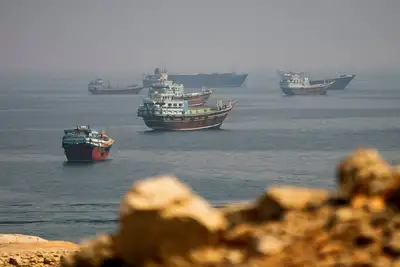
Despite full US sanctions on Iranian oil exports imposed in May 2019, China remains the primary buyer. Initially, Iran's shipments dropped significantly to around 300,000 barrels per day. However, following the Biden administration's indirect talks with Tehran to revive the JCPOA nuclear deal, Chinese purchases increased. Some observers suggest that the United States has exercised restraint in cracking down, possibly to avoid jeopardizing the prospects of a nuclear deal.