• العربية
  • فارسی
Brand
  • Iran Insight
  • Politics
  • Economy
  • Analysis
  • Special Report
  • Opinion
  • Podcast
  • Iran Insight
  • Politics
  • Economy
  • Analysis
  • Special Report
  • Opinion
  • Podcast
  • Theme
  • Language
    • العربية
    • فارسی
  • Iran Insight
  • Politics
  • Economy
  • Analysis
  • Special Report
  • Opinion
  • Podcast
All rights reserved for Volant Media UK Limited
volant media logo

Iran Bases New Budget On Huge Tax Increase, Improbable Oil Income

Mardo Soghom
Mardo Soghom

Iran International

Jan 17, 2023, 11:45 GMT+0Updated: 17:46 GMT+1
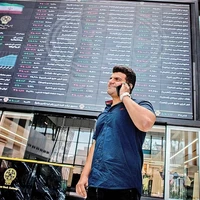
Tehran's Grand Bazaar in December 2021

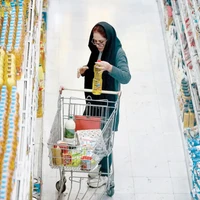
Iran’s new budget will raise taxes by 59 percent in the new Iranian year starting March, a staggering burden on its people amid high inflation and growing poverty.
The total tax revenues planned in the draft budget will surpass $20 billion based on the current rate of exchange. In Iranian currency, however, this is a staggering 8.3 quadrillion rials – that is with 15 zeros.

Local media and experts point out that most of the tax will be collected from ordinary citizens and private businesses, as the gigantic government and semi-public sector enjoys a variety of tax exemptions.

Despite the huge tax bill for the people, the government budget will still have 50-percent deficit, due to a chaotic downturn in the economy mainly triggered by US sanctions on its oil exports and international banking.

The 59-percent jump in planned tax collection means that taxpayers have to pay at least 10 percent more than the estimated 50-percent annual inflation rate.

While the hardliner government wants to collect more taxes, it has increased appropriations for inefficient state-sector companies by 40 percent, and for military and police forces, prisons, as well as propaganda outfits.

In the current Iranian calendar year, the government also increased taxes but has not been able to meet its tax revenue goals. Partial estimates put the amount of actual taxes collected in the early months of the year at about 60 percent of budget projections.

There also other unrealistic revenue projections in the draft bill. The new budget is based on 1.4 million barrels of oil exports per day, while currently Iran exports less than one million barrels a day. With US sanctions in place, it is not clear how Tehran plans to increase exports by almost 50 percent.

The discrepancy between reality and budget estimates gets even more interesting as the government expects to sell each barrel of oil for $85. This would mean more than $43 billion in oil revenues from March 2023 to March 2024.

However, Iran sells its oil clandestinely mostly to China with hefty discounts, estimated at less than $40 per barrel. Current average crude prices are around $80 and with a mild recession expected in 2023, prices would likely not increase substantially.

Agreement with the United States over its nuclear program can lift the sanctions and only in that case Iran can sell around 1.5 million barrels a day, but a deal seems much more unlikely now than a year ago when talks were still taking place in Vienna to revive an earlier nuclear accord known as the JCPOA.

Formal negotiations ended in March 2022 after the Russian invasion of Ukraine and the last attempts by the European Union to broker a deal fell apart in September.

Iranian commentators and experts regard the current budget as unrealistic and the high taxes as cruel for a population whose purchasing power has declined dramatically since 2018 when Washington abandoned the JCPOA and imposed sanctions.

The Iranian currency rial has lost its value by more than tenfold in five years, making imports of food and other essential necessities equally expensive for consumers.

Amir Hossein Mahmoudi, an investment expert in Tehran told Aftab News website on Monday that “The new budget is at least 40-percent higher than the current one and the deficit stands at around 50 percent.” He added that this sort of a budget “will not send positive pulses to the capital market and

Most Viewed

Iran negotiators ordered to return after internal rift over Islamabad talks
1
EXCLUSIVE

Iran negotiators ordered to return after internal rift over Islamabad talks

2
ANALYSIS

US blockade enters murky phase as tankers spoof signals and buyers hesitate

3
ANALYSIS

Why the $100 billion Hormuz toll revenue is a myth

4

US tightens financial squeeze on Iran, warns banks over oil money flows

5
ANALYSIS

US blockade targets Iran oil boom amid regional disruption

Banner
Banner

Spotlight

  • Hardliners push Hormuz ‘red line’ as US blockade tests Iran’s leverage
    INSIGHT

    Hardliners push Hormuz ‘red line’ as US blockade tests Iran’s leverage

  • Ideology may be fading in Iran, but not in Kashmir's ‘Mini Iran'
    INSIGHT

    Ideology may be fading in Iran, but not in Kashmir's ‘Mini Iran'

  • War damage amounts to $3,000 per Iranian, with blockade set to add to losses
    INSIGHT

    War damage amounts to $3,000 per Iranian, with blockade set to add to losses

  • Why the $100 billion Hormuz toll revenue is a myth
    ANALYSIS

    Why the $100 billion Hormuz toll revenue is a myth

  • US blockade targets Iran oil boom amid regional disruption
    ANALYSIS

    US blockade targets Iran oil boom amid regional disruption

  • Iran's digital economy battered by prolonged blackout
    INSIGHT

    Iran's digital economy battered by prolonged blackout

•
•
•

More Stories

Political, Economic Instability Prevent Planning In Iran, Says Economist

Jan 17, 2023, 09:05 GMT+0

A top Iranian economist has slammed Iran’s so-called five-year developmental plan as meaningless amid overall instability, calling it a bureaucratic exercise.

Well-known economist and academic Mohsen Renani rejected an invitation by the Iranian Parliament's Research Center to work on a new 5-year plan. He said: "I have seen the outlook plan prepared by the Speaker of the Parliament. It is full of wishful thinking without considering the country's ongoing crisis and its potentials. That guarantees the plan's failure."

The economist pointed out that "The government is doing whatever it likes and at the same time writing its own development plan. In my opinion a development plan is meant to promote the economy from a stable lower level stable higher-level. So, a development plan will be meaningful only when a country has stable economic, social and political situation with a promising and reassuring outlook. When we do not have this situation, drawing a development plan would be meaningless."

Renani pointed out that what Iran needs currently is a way out of the ongoing crisis and a solution to bring about stability. "How can we think of a development plan when the rate of exchange for US dollar is likely to reach 500 thousand rials by late March? The situation of government revenues is not clear, the shadow of the war in Ukraine is getting closer to us every day, the talks on JCPOA are terminated, the government is losing its public credibility which is at its lowest level in four decades and capital flight from Iran is gaining momentum." he asked.

Iranian economist Mohsen Renani shunned an invitation to advise on Iran new economic development plan. Undated
100%
Iranian economist Mohsen Renani shunned an invitation to advise on Iran new economic development plan

Meanwhile, Prominent Iranian cleric Ayatollah Abdollah Javadi Amoli has said in a critical comment about the Iranian government's behavior: "As long as officials are inefficient and astronomical embezzlements take place, we will most certainly fail."

He added: "We should stay away from wrongdoing, and we should advise others who listen to us not to do anything wrong."

In another controversial comment that mentioned killing of students in schools, people in the streets and the execution of young protesters , Javadi Amoli said "killing children will not help the government," moderate Aftab News reported.

He added: "The economy is a main pillar of the state. A poor nation is like a man without a spine. We need to have money in our pockets if we want to live a decent life."

Meanwhile, a report by the Parliament's Research Center published on Monday said that its researchers believe based on the proposed annual budget bill, that the inflation rate is likely to remain well above 40 percent.

On Wednesday, Ali Khomeini, a great grandchild of the founder of the Islamic Republic warned Iranian officials about the social and economic divides between them and the people as a result of religious pressure on citizens by the hardliners who regard themselves more Muslim than others.

In another development, Ahmad Alireza Beigi, a lawmaker from Tabriz said that a majority of Iranians have no representative in the parliament. In an interview with ILNA, he regretted that in many cases what the Parliament says and wants is miles apart from what the people demand.

He said, "the people are sulking with the government as we are facing a representation crisis in Iran." Meanwhile, referring to demands for changes in the government's economic team as a way of improving the economy, he added that the "Iranian economy is like a broken vehicle, changing the driver will not make any difference."

Lawmakers In Iran Not Representing People In Parliament: MP

Jan 16, 2023, 20:39 GMT+0

An Iranian lawmaker says majority of the people do not have their real representatives in parliament, and the Islamic Republic is facing a crisis in this regard.

In an interview with ILNA news agency on Monday, Alireza Beigi said, “When the parliament speaks apart from the will, demand and interests of people and resists the transparency of votes, it cannot be transformative and change the course [of politics].”

According to official statistics, in the last parliamentary elections in Iran, majority of those eligible to participate boycotted the vote.

Beigi who represents Tabriz in parliament also talked about the disqualifications in the presidential and parliamentary elections, saying "In the elections, some assume people cannot decide, and we have to make decisions for them... We don't want to accept people are aware."

The Islamic Republic’s Guardian Council, a conservative constitutional body decides who can run for national office and usually disqualified most of the candidates.

Alireza Beigi emphasized that neither in economy nor in politics, "any role has been delegated to people".

During the nationwide protests following the death of Mahsa Amini in police custody in mid-September, parliament members issued a statement calling for the execution of the protesters. The statement was met with many negative reactions, including Mowlavi Abdolhamid, the outspoken Sunni religious leader in Zahedan, southeast of Iran.

Recently, a video on social media showed a young man in Ilam province west of Iran, telling a lawmaker that people do not want the Islamic Republic and the MPs should raise this issue in the parliament.

Angry People Hold Gathering In Northeastern Iran To Protest Gas Shortage

Jan 16, 2023, 15:59 GMT+0

Iranians in the northeastern Torbat-e Jaam city held a protest rally in front of the governor’s office to protest government inefficiency amid natural gas shortage.

Videos received by Iran International show that people chant anti-regime slogans, saying “We don’t want incompetent authorities!”

Reports say amid the natural gas crisis, the price of non-gas heating devices like oil heaters have increased sharply in the city in the Khorasan region where the town is located.

A citizen has told local media that due to the crisis he has to warm his children at home using a hair dryer.

Meanwhile, videos on social media show a long queue in Torbat-e Jam to buy kerosene.

Earlier, Oil Minister Javad Owji announced that the city's natural gas is still cut off.

On Monday, people in Torbat-e Jam also rushed to the Red Crescent building to get oil heaters. Videos show some agents prevented people from breaking into the facility.

Some other videos on social media show long queues in Sabzevar in the same province to fill liquid gas and picnic capsules.

Gas shortage, especially in three provinces of Razavi Khorasan, South Khorasan and North Khorasan, has caused many problems for people.

In order to resolve the gas crisis in Tehran and other cities, the Islamic Republic has shut down schools and offices.

Iran Hit By Arctic Winter, Gas Shortage And Shambolic Management

Jan 16, 2023, 11:26 GMT+0
•
Iran International Newsroom

Damning evidence of shambolic management by the government has surfaced in Iranian media as freezing arctic weather and energy shortages have hit the country.

According to Rouydad24 website, during the past days the government has been so overwhelmingly surprised by the impact of a mixture of cold weather and a natural gas shortage that different officials announced several conflicting plans ranging from a total closure of private and public businesses and schools to shutting down factories and poultry breeding farms causing massive financial loss.

"Not only they do not know how to supply gas to homes, schools and businesses, they also don’t know how to handle the scandal," Rouydad 24 quoted a citizen in Tehran.

The government spent all Friday evening and Saturday morning correcting or cancelling previous announcements. In the meantime, parts of the country including the Khorasan region spent days in darkness and freezing cold. In Torbat-e Jaam, the local governor said no one in the government can do anything for the problem.

Social media users and other media outlets in Iran sarcastically noted that while Iranian officials including nuclear negotiating team member Mohammad Marandi and Oil Minister Javad Owji had predicted a difficult winter for Europe, no European country is facing a winter harder than what Iranians are currently experiencing.

But hardliner media such as Kayhan newspaper as well as hardliners on social media repeated fabricated stories about Europe's inability to cope with the winter cold. Kayhan said people in the UK are burning cat pooh to keep their homes warm!

People have lined up in Torbat-e Jaam, northeast Iran to refill gas capsules. January 14, 20233
100%
People have lined up in Torbat-e Jaam, northeast Iran to refill gas capsules. January 14, 20233

Visiting a gas supply center Sunday morning, President Ebrahim Raisi promised to solve the problem by no later than 2026! At the same time, people in many parts of Iran rushed to dangerous makeshift gas supply centers where profiteers filled their small capsules with liquid gas out of pressurized larger cylinders. Iran International TV showed citizens in Babol in northern Iran going from one gas station to another only to find out that neither gasoline nor natural gas (LNG) was available.

During the past two days all that the government could think of as a solution was closing down offices and businesses and suggesting that people should put on warm clothing. Even pro-government media such as the ultraconservative Farhikhtegan newspaper criticized the government.

Rouydad24 recalled a statement by Majles Speaker Mohammad Bagher Ghalibaf who had said to Fars news agency: "The government has no plan or objective about what it needs to do. And where it has a plan, it lacks a will to carry it out." This comes while the government understands it cannot produce enough gas to keep everyone warm during winters and to keep industry going.

Meanwhile, Khabar Online website attributed the problems to the government's wrong analysis and its failure to see that the winter was going to hit Iran harder than Europe. The website charged that Raisi is lost among his ill-informed advisers such as Mohammad Marandi.

Khabar Online recalled that Oil Minister Javad Owji had said last year that "Iran is capable of supplying gas to its neighbors and even to Europe." Later, like Marandi, the oil minister also predicted on live TV that "Europe will be facing a difficult winter." According to Khabar Online, Iranian "experts" working with the Raisi administration are still not quite sure whether Iranian are burning more gas at home or at their outdated industries. The website said that what the "experts" tell the government is based on "wrong data."

Iran has massive oil and gas resources, but it desperately needs investment and Western technology to utilize those resources. But this is not likely to materialize before Tehran can resolve its foreign policy impasse with the West.

Iran’s Steel Production To Be Cut Dramatically Amid Gas Shortage

Jan 15, 2023, 22:28 GMT+0

An Iranian industrialist says the gas and electricity shortage will probably lead to a two-million-ton decrease in the country’s steel production.

In an interview with ILNA on Sunday, Reza Shahrestani said there is a severe gas shortage in steel companies, adding that the steel industry needs 40 million cubic meters of gas daily, but at present their consumption has reached 15 million cubic meters per day.

He further added that almost 50% of the electricity supply for industries has been cut off too.

“Gas shortage has also led to electricity shortage because the current amount of natural gas does not meet the needs of power plants to produce electricity,” he underlined.

“It seems that the gas and electricity shortage will be more severe next year and if it continues like this. It will have a tangible impact on the production rate of all industries,” said the member of board of directors of the Steel Manufacturers Association.

“In my opinion, the people, who are in office at the oil ministry, are not up to the task, so we are witnessing inefficiency in all fields,” reiterated Shahrestani.

While the Islamic Republic officials predicted a bad winter in Europe, offices and schools in Iran have been closed for days due to a serious natural gas shortage.

Iran has failed to invest in its gas production sector, although it has the world’s second largest reserves. The distribution network also needs upgrades as more than 25 percent of the gas is lost during transfer.