• العربية
  • فارسی
Brand
  • Iran Insight
  • Politics
  • Economy
  • Analysis
  • Special Report
  • Opinion
  • Podcast
  • Iran Insight
  • Politics
  • Economy
  • Analysis
  • Special Report
  • Opinion
  • Podcast
  • Theme
  • Language
    • العربية
    • فارسی
  • Iran Insight
  • Politics
  • Economy
  • Analysis
  • Special Report
  • Opinion
  • Podcast
All rights reserved for Volant Media UK Limited
volant media logo

Raisi Submits Budget With More For Propaganda, Repression

Iran International Newsroom
Jan 13, 2023, 10:36 GMT+0Updated: 18:14 GMT+1
Iranian President Raisi submitting the state budget to the parliament

After weeks of delay, Iran's government has finally submitted the details of its budget bill to parliament for the next calendar year starting on March 21. 

The substantially enlarged draft state budget, which is heavily dependent on tax revenues, will kickstart a month-long review of the bill before parliament holds a vote to approve it and turn it into a law. The total budget, including state enterprises, would be worth some 52,616 trillion rials, or nearly $130 billion (free market rate $1=400,000 rials), indicating an increase of nearly 40% in rial terms compared to that of the current fiscal year. The deadline to submit a budget passed on December 6.

The government’s operational budget covering its departments and organizations is set at about 21,640 trillion rials (slightly over $53 billion at the free market rate). Last year’s budget was around $40 billion, with a huge deficit and it is unclear how this larger budget can find revenue sources to become reasonably balanced.

"We aim for economic growth ... creation of more jobs ... and reducing inflation," Raisi told parliament on Wednesday, noting that the administration tried its best so that the budget is "completely compatible" with the "declared policies" of Supreme Leader Ali Khamenei.

According to some reports by media affiliated with the Revolutionary Guard, the draft budget is based on 1.4 million barrels of oil exports per day, despite US sanctions, an increase from the current reported figure of 800 thousand barrels. This would mean $40 billion of oil revenues from March 2023-March 2024. However, the official website of the government, IRNA, emphasized that the exact figure of crude exports is confidential and would not be announced due to the sanctions. 

The projected oil exports in the budget is the clearest sign of unrealistic revenue estimates that will not materialize unless Iran resolves its differences with the United States over its nuclear program.

According to lawmaker Malek Shariati-Niasar, the budget could be based on an oil price of $80 a barrel. The figure is also very optimistic because the Islamic Republic is selling its crude well below global prices and is also competing with Russia to give more discounts to the buyers, especially Chinese small refineries. 

The government being aware of that its oil revenues estimates are not realistic, it has substantially increased tax collection projections. In July, the Supreme Accounting Office released a report covering the period March 21- May 20 showing that except tax revenues, all other major sources of income grossly underperformed. The government’s revenues from taxes, oil exports, customs duties, etc. totaled 880 trillion rials or about $3.5 billion (average free market exchange rate at the time) in the 60-day period. This was just 37 percent of the projected budget revenues. It is important to note that only 15 percent of the projected oil income was collected.

Meanwhile, the new budget bill has an operational deficit of 4,760 trillion rials – or about $11 billion, which 58% higher than this year.

President Ebrahim Raisi speaking at the parliament (January 11, 2023)
100%
President Ebrahim Raisi speaking at the parliament

More Money for Suppression and Propaganda

Amid the ongoing antigovernment protests, the regime has substantially increased the budget of security and propaganda institutions. 

The official IRGC budget has grown by 28% to reach about 1,200 trillion rials or about $3 billion in today’s exchange rates. But the secretive organization’s real budget is much higher, through illicit oil sales, its vast domestic business activities and other sources. Estimates in the past mentioned figures close to $17 billion annually.

The budget of the traditional army has also increased by 36% to 490 trillion rials (over $1.22 billion), and the budget of the police forces will be up 44% to reach 620 trillion rials (about $1.55 billion). 

Moreover, the budget of the Intelligence Ministry increased by 52% to 200 trillion – or about $500 million and the budget of the country’s Prisons Organization increased by 55.5% to over 92 trillion rials – or $230 million. The budget of the state broadcaster (IRIB) has increased by 49% to reach 79 trillion rials or nearly $200 million, in addition to its advertising revenues.

The organizations that are tasked with promoting the clerical regime’s propaganda such as the state broadcaster and the seminaries are also set to receive handsome increases. The Islamic Development Organization’s budget will increase by 53% and the budget for seminaries is set to grow by 130%. The Qom Seminary Service Center will receive about 60 trillion rials ($150 million), the Supreme Council of Qom Seminaries will receive about 30 trillion rials ($75 million), and the Ministry of Culture and Islamic Guidance will receive about 54 trillion rials ($135 million). The budget for Headquarters For Enjoining Right And Forbidding Evil, tasked with promoting the clerical regime's interpretation of Islamic laws, will also increase 33%.

These figures well surpass the budget of most provinces in the country, including the education ministry.

On the other hand, the significant increases do not apply to the budget allocated for air pollution reduction plans, which is one of the country's fundamental problems. The budget is only 810 billion rials (about $2 million), which has declined by 10 percent from last year.

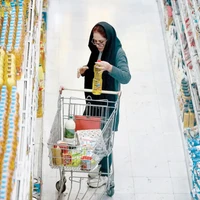
Amid galloping inflation and rising joblessness, Raisi claimed that his government is not far behind its promise of creating one million jobs annually, saying that “the unemployment rate has decreased.”

Inflation in the country has soared to over 50%, the highest level in decades. Youth unemployment remains high with over 50% of Iranians being pushed below the poverty line, according to reports by Iran's Statistics Center. 
Most Viewed

Iran negotiators ordered to return after internal rift over Islamabad talks
1
EXCLUSIVE

Iran negotiators ordered to return after internal rift over Islamabad talks

2
ANALYSIS

US blockade enters murky phase as tankers spoof signals and buyers hesitate

3
ANALYSIS

Why the $100 billion Hormuz toll revenue is a myth

4

US tightens financial squeeze on Iran, warns banks over oil money flows

5
ANALYSIS

US blockade targets Iran oil boom amid regional disruption

Banner
Banner

Spotlight

  • Hardliners push Hormuz ‘red line’ as US blockade tests Iran’s leverage
    INSIGHT

    Hardliners push Hormuz ‘red line’ as US blockade tests Iran’s leverage

  • Ideology may be fading in Iran, but not in Kashmir's ‘Mini Iran'
    INSIGHT

    Ideology may be fading in Iran, but not in Kashmir's ‘Mini Iran'

  • War damage amounts to $3,000 per Iranian, with blockade set to add to losses
    INSIGHT

    War damage amounts to $3,000 per Iranian, with blockade set to add to losses

  • Why the $100 billion Hormuz toll revenue is a myth
    ANALYSIS

    Why the $100 billion Hormuz toll revenue is a myth

  • US blockade targets Iran oil boom amid regional disruption
    ANALYSIS

    US blockade targets Iran oil boom amid regional disruption

  • Iran's digital economy battered by prolonged blackout
    INSIGHT

    Iran's digital economy battered by prolonged blackout

•
•
•

More Stories

What’s Going On In Iran's Presidential Sci-Tech Office?

Jan 12, 2023, 17:00 GMT+0
•
Iran International Newsroom

Iran's government has established an office to boost science and technology companies, while it has been disrupting access to the Internet, harming the sector.

An article published by Aftab News in Tehran on December 10 shed some light on some of the activities of the center, which received a handsome budget by Iranian standards after Supreme Leader Ali Khamenei last year called on officials to promote science-based companies.

Usually, Khamenei hears something from his advisors and issues some general and vague instructions to the country’s authorities to strengthen an industry or a certain sector of the economy. Such remarks are then interpreted as unquestionable orders and officials or factions start competing for a piece of the budget. Promoting knowledge-based firms and start-ups is among these contentious issues.

While the achievements of traditional government departments are more measurable, knowledge-based outfits have no touchstone to be measured against because such activities are new for the bureaucracy and authorities do not clearly know what to expect from them.

The actions of the Presidential Office of Science and Technology with a budget of nearly 30,000 billion rials (about $7.5 million in today’s exchange rates - much more last year) and numerous credit lines, is not out in the open and subject to scrutiny for the public, unlike for instance the ministries of energy, health or education. Therefore, few people are aware of how such an astronomical budget in rials is spent.

Since Khamenei included the adjective “knowledge-based” in the motto of the current Iranian year (which started March 21), the most important thing that occurred is that many companies redesigned or reintroduced themselves as such to take advantage of loans and incentives available from the government.

According to a UNESCO report, by 2020, 49 innovation accelerators had been established in Iran with private equity and 113 innovation centers had been set up in partnership with science parks and major universities.

According to Aftab News, Vice President for Science and Technology Rouhollah Dehghani Firouzabadi has recently toured Sharif Science and Technology Park, where it is supposed to be housing nearly 600 companies, 19 accelerators, 15 investment funds, and 10 innovation centers. But the situation is not like the start-up atmosphere at all. Instead, there are a lot of empty halls with many computers and no operators. The hub, which was boastfully presented as the beating heart of Tehran in the field of technology and innovation ecosystem, looks like an abandoned and bankrupt business center.

Vice President for Science and Technology Rouhollah Dehghani Firouzabadi (file photo)
100%
Vice President for Science and Technology Rouhollah Dehghani Firouzabadi

Firouzabadi, appointed in September, said the country’s problems will be resolved if decision-makers are chosen from among the scientific elite, adding that “I believe I need to delegate powers to managers because a specialized manager will be more knowledgeable about his field than I am.”

Currently, more than 7,900 knowledge-based companies are registered but, according to people in the sector, most of them are not active or are doing something different from what they were supposed to do.

The presidential outfit, which has recently rebranded itself with a longer title to include science-based economy, has even outsourced its most important job to companies from the private sector. Its most important task used to be identifying whether a company is science-based or not, and now this task is carried out by contractors.

Companies that seek to apply to be registered as knowledge-based – to be able to use its advantages -- should be evaluated in terms of product and corporate frameworks. Now, there are a large number of evaluators and brokers from the private sector. It is not clear how such contractors are selected or if they are connected to government insiders. Such a system is prone to nepotism and corruption and there is no supervision over it.

One of the noteworthy activities of the center is organizing the so-called science and technology tours to countries like Turkey and France. While many start-ups and tech companies as well as people active in such fields are emigrating in the last 18 months due to inflationary stagnation and widespread poverty in Iran, such luxurious tours aimed at “connecting the researchers of the Islamic world" seem suspicious, says Aftab News.

Another way that the center is spending its extravagant budget is holding online workshops and seminars, which are usually held with only a handful of participants because the instructors are chosen based on their close connections to the authorities and not based on their expertise.

There is also an inherent contradiction in promoting new technologies, while at the same time restricting internet access to the public to control the flow of information about the current wave of antigovernment protests.

On Monday, Mojtaba Tavangar, the chairman of the Digital Economy Committee of the parliament, wrote to Raisi asking him to restore access to the Internet and to establish a fund to compensate for the damage caused to businesses. New figures show that due to extensive internet and social network restrictions, 20 percent of people in Iran have lost their online jobs in the past four months.

Mojtaba Tavangar, the chairman of the Digital Economy Committee of the parliament (file photo)
100%
Mojtaba Tavangar, the chairman of the Digital Economy Committee of the parliament

Critics Lash Out At Iran's Ideological Foreign Policy

Jan 12, 2023, 12:27 GMT+0
•
Iran International Newsroom

An ultraconservative supporter of Iran's President Ebrahim Raisi has criticized his foreign policy for lack of agility, as the country faces more isolation.

Former lawmaker Hossein Naghavi-Hosseini added in an interview with Nameh News website in Tehran that Iran's foreign policy is passive and lacks dynamism. He stressed that the foreign ministry is absent in the Persian Gulf area. “There are many potentials for cooperation in this region, but the Iranian foreign ministry lacks the agility and dynamism to get positively involved in the region."

There are key reasons why Tehran suffers from a sense of isolation. Long negotiations with the West to revive the 2015 nuclear deal known as the JCPOA were suspended in September as Iran presented demands, which Washington rejected. This was followed by Tehran’s brutal suppression of protests and evidence that it was supplying kamikaze drones to Russia used against Ukraine. The West, and especially Europe, have reacted with disdain and adopted new sanctions against Tehran.

At the same time, Iran’s financial situation has deteriorated after years of US sanctions and its currency has dropped to unprecedented lows. All these have led to a mood of pessimism among regime insiders, and no prospect of a quick remedy.

Naghavi-Hosseini said in the interview that the ongoing protests in Iran have adversely affected the West's willingness to continue nuclear negotiations with Iran as social media activists portrayed Iran's situation in a way that the Islamic Republic is on the verge of collapse and the West should wait for the establishment of a new regime before resuming the talks.

Nevertheless, he claimed that "although Westerners are currently not keen to continue the talks, in fact, they need the JCPOA, and they have to come to terms with Iran in the long run."

Iranian conservative politician, Hossein Naghavi-Hosseini
100%
Iranian conservative politician, Hossein Naghavi-Hosseini

According to Nameh News, Raisi who came to power with promises of reviving the JCPOA, advancing the economy despite sanctions, implementing closer ties with China and Russia, and improving Iran's relations with its neighbors, has accomplished none of these in 18 months.

The Western parties in the JCPOA, the United States, United Kingdom, France and Germany say reviving the nuclear deal is not their focus now, meaning that US sanctions will continue.

China's President Xi Jinping signed a statement during a recent visit to Saudi Arabia, supporting Arab claims to three islands in the Persian Gulf, putting in doubt Tehran's 25-year cooperation contract with Beijing, and most recently Iraqi officials have been using the term Arabian Gulf rather than Persian Gulf to undermine Iran's long-standing characterization of the waterway.

In another development, international relations expert Mehdi Motaharnia told Rouydad24 website that the Iranian government is duty-bound to continue its "revolutionary" rhetoric and cannot make an agreement with America."

He said although Iranian and US officials use the same words such as "mutual respect, obligations, and commitments," when talking about the JCPOA, what they mean by these words are different. At the same time, both of them accuse each other of "government-sponsored terrorism."

"While the United States' rhetoric is based on liberal democracy and capitalism, the Islamic Republic of Iran's rhetoric is based on the ideology of Shiite Islam," Motaharnia said. At times both of them talk about returning to the JCPOA, but what they mean are two different things. This difference existed since 2015 when the nuclear deal was made.

"In other words, the United States is aware that the Islamic Republic will never give up the ideological aspect of its foreign policy," Motaharnia added.

Naghavi-Hosseini added that at the same "Iran is seriously following an approach to strengthen its ties with China and Russia, despite some hiccups.

World Bank Predicts Slower Growth For Iran’s Economy

Jan 11, 2023, 21:14 GMT+0
•
Iran International Newsroom

The World Bank has predicted that the Islamic Republic’s GDP growth will fall below two percent in 2024, teetering on the brink of recession as rial is falling and inflation raging. 

In its latest Global Economic Prospects report released on Tuesday, the World Bank also said that global growth is slowing sharply in the face of elevated inflation, higher interest rates, reduced investment, and disruptions caused by Russia’s invasion of Ukraine. 

It said it expected global GDP growth of 1.7% in 2023, one of the slowest paces since 1993 except for the 2009 and 2020 recessions. In its previous Global Economic Prospects report in June 2022, the bank had forecast 2023 global growth at 3.0%. The global economy is projected to grow by 2.7% in 2024.

The outlook for Iran’s GDP is reported as 2.9% in 2022, but it will decrease to 2.2% in 2023, and 1.9% in 2024. The figures pertaining to Iran seem too optimistic given the current 50-percent annual inflation rate and a currency that has dropped by 30 percent just since September.

For example, unlike Iran, most of the countries in the category of Emerging Market and Developing Economies, including Brazil, Mexico, Argentina, Saudi Arabia, India, Pakistan and South Africa, reported negative GDPs in 2020, posing a question about the validity of the figures about Iran, whose currency has fallen more than 10-fold since 2018 and tens of million of middle-class citizens are now considered poor.

An Iranian woman at a bazaar  (file photo)
100%

The outlook for 2024 for Saudi Arabia, whose consumer prices rose by 2.9 percent on a year-on year basis in November, is projected to be 2.3 percent, while Iran with 40-50-percent inflation in the past 24 months and food inflation recorded at above 70 percent in 12 provinces, is projected to have a 1.9-percent GDP growth. The answer most likely lies in lack of transparency and probably data fabrication by the regime’s authorities. 

In recent years, the Islamic Republic has officially stopped providing raw data to the public. Every now and then, officials announce some figures that often do not add up with the available facts or contradict each other. Moreover, the country is so isolated in the international community that the World Bank has to primarily rely on government data for its estimates.

Iran’s government having lost most of its vital oil income due to US sanctions has resorted to printing money, with liquidity and the money supply increasing exponentially, which in turn pushes inflation higher and the national currency’s exchange rate lower. Even pro-government Iranian politicians and lawmakers say that the economic situation is dire and no growth is expected.

According to the World Bank, the bleak outlook will be especially hard on emerging markets and developing economies as they struggle with heavy debt burdens, weak currencies and income growth, and slowing business investment that is now forecast at a 3.5% annual growth rate over the next two years -- less than half the pace of the past two decades.

World Bank Group President David Malpass said, “The crisis facing development is intensifying as the global growth outlook deteriorates,” adding “Emerging and developing countries are facing a multi-year period of slow growth driven by heavy debt burdens and weak investment as global capital is absorbed by advanced economies faced with extremely high government debt levels and rising interest rates.”

"Given fragile economic conditions, any new adverse development -- such as higher-than-expected inflation, abrupt rises in interest rates to contain it, a resurgence of the COVID-19 pandemic or escalating geopolitical tensions -- could push the global economy into recession," the bank said in a statement accompanying the report.

Iran Facing Gas Shortage As It Predicted ‘Harsh Winter’ For Europe

Jan 11, 2023, 14:16 GMT+0

Despite Iranian officials predicting a "harsh winter" for Europe, most countries have managed their energy needs, but a serious natural gas shortage has gripped Iran.

Reports from Iran say many state organizations and industrial towns in different provinces have been forced to reduce working hours because of the energy shortage.

Shortage of natural gas in dozens of Iranian cities amid a cold snap has closed state offices and schools until Friday.

At the same time, regime’s Oil Minister Javad Oji has threatened people that their gas will be cut off if they consume more than the pre-defined pattern.

In the past few days, the shortage of natural gas has stopped the activities of schools and offices in several provinces of Iran, including Alborz, Khorasan Razavi, Golestan, Zanjan, Ardabil, Lorestan, Markazi, and others.

Iran has the world’s second largest gas reserves but has not been able to make the necessary investments to keep up production due to Western sanctions.

Some Iranian officials including Mohammad Marandi, who was a member of the Iranian nuclear negotiating team, have been sayingsince last summer that "a hard winter in Europe" will force European powers to come back to the negotiating table. Marandi had predicted: "The winter is coming, and the EU will have to face a paralyzing energy crisis."

Hard-line officials were making these claims while Europe needed natural gas due to the war in Ukraine, but Iran does not produce enough to export and has no way of shipping it to Europe.

Regime Insiders Attack Raisi For Indecision, Inefficiency

Jan 11, 2023, 10:46 GMT+0
•
Iran International Newsroom

Reports from Tehran indicate that regime insiders including conservatives in the government are fed up with the President Ebrahim Raisi’s government amid crises.

Reformist newspaper Shargh wrote in a January 10 article that Expediency Council members have also become critical of the Raisi administration's inability to prepare the country's annual budget bill and the related 5-year development plan, as well as rising inflation and the devaluation of Iran's national currency.

Shargh further asked whether the conservatives are going to lose their patience in the face of the government's indecision and inaction while the country's worst economic crisis continues with an ever-increasing momentum.

At the same time, “poverty has been spreading” to large parts of the Iranian society while the government has not introduced any plan to support the low-income strata and prevent further shrinking of Iran's middle class, the daily wrote.

Conservative economist and a member of the Expediency Council Ahmad Tavakoli has recently warned the Raisi administration and Iran's conservative-dominated parliament: You may not be too far from the day when the poor pour into the streets and put an end to the current situation." He further warned: "Please do not do something that might lead to a revolt by the poor."

Conservative politician and economist Ahmad Tavakoli
100%
Conservative politician and economist Ahmad Tavakoli

Tavakoli also criticized members of Iran's parliament for approving or rejecting economic issues including the bill about capital gains tax without having read at least two pages about the matter.

Meanwhile, another member of the Expediency Council, Gholamreza Mesbahi Moghaddam, who is also a member of the right-wing Militant Clerics Association, said in an interview with Khabar Online: "The structural problem of Iran's economy is that we do not produce wealth. We simply distribute the resources. People see the situation in other countries…about better living standards."

Mesbahi added: "Iranians need to spend more money than they earn and the Iranian government's expenses are more than its revenues. As a result, both Iranian families and the Iranian government have to constantly borrow money to make ends meet."

Member of the Expediency Council, cleric Gholamreza Mesbahi Moghaddam
100%
Member of the Expediency Council, cleric Gholamreza Mesbahi Moghaddam

He said, "Unfortunately the Iranian government lacks a strategic vision and does not have the right people to pursue a strategy. Raisi used to say during the 2021 presidential election that he has a 7000-page economic plan on his desk. I asked him to show me the plan, but he did not have anything. I offered him some suggestions, but he insisted on his opposition to the FATF saying that it will give the United States more pretext for sanctioning Iran."

The Financial Action Task Force, an inter-state watchdog has blacklisted Iran’s banking for lack of adherence to anti-terror financing rules and money laundering.

Mesbahi also criticized the government for not having a long-term plan and thus furthering its business on a day-to-day basis.

In yet another development, hardliner Students of Amir Kabir University in Tehran harshly criticized Raisi's justification for rising prices in Iran. They told him they expect him to have an effective hand to do things rather than a tongue to justify everything by words.

Hardliner cleric Naser Makarem Shirazi also criticized Raisi's economic policies. He said: "It is regrettable that the officials not only do not solve economic problems such as rial’s steep fall, but they tend to totally ignore the problem."

Meanwhile, conservative commentator Naser Imani has said recently: "Government officials have still not realized the country's situation and therefore, they cannot offer any solution for the problems. Their best defense often is to say that there is nothing wrong with their performance and it is the enemy who creates all the problems." However, Imani shied away from saying that two of those who always attribute Iran's problems to foreigners' conspiracies are Supreme Leader Ali Khamenei and President Ebrahim Raisi.