• العربية
  • فارسی
Brand
  • Iran Insight
  • Politics
  • Economy
  • Analysis
  • Special Report
  • Opinion
  • Podcast
  • Iran Insight
  • Politics
  • Economy
  • Analysis
  • Special Report
  • Opinion
  • Podcast
  • Theme
  • Language
    • العربية
    • فارسی
  • Iran Insight
  • Politics
  • Economy
  • Analysis
  • Special Report
  • Opinion
  • Podcast
All rights reserved for Volant Media UK Limited
volant media logo

Tehran Seeks To Hang Ex-Official On Forced Confessions Of Spying For UK

Jan 13, 2023, 23:20 GMT+0
Former Iranian defense ministry official Alireza Akbari

A former Iranian defense ministry official who faces execution on espionage charges says his confessions were made under torture, an audio file has revealed. 

Alireza Akbari, who holds dual Iranian-British citizenship and is sentenced to death on charges of spying for the UK, says in the audio file his forced confessions are a result of 3,500 hours of torture. 

According to the audio file obtained by Iran International, Akbari says he only confessed because the authorities had promised to release him. 

"After more than 3,500 hours of torture, psychedelic drugs, and physiological and psychological pressure, they took away my will. They drove me to the brink of madness. They instilled in me what they wanted and forced me to make false confessions at gunpoint and threats of death," he said. 

The regime’s state media reported January 11 that Akbari will be executed for allegedly spying for MI6. In a statement published by Iran's Intelligence Ministry, Akbari was described as "one of the most important infiltrators of the country's sensitive and strategic centers". There are unconfirmed reports that Akbari, who was kept in the notorious Evin prison in Tehran since 2019, has already been executed. Iran’s state media denied the rumors on Friday. 

The agents promised him freedom in exchange for forced confessions and said that if he resists, they will send him to the dungeons of Evin, where he would be whipped, Akbari claimed. 

He added that the intelligence ministry imposed its desired verdict on the judge, noting that "The prosecutor's office ordered my release with the minimum amount of bail, but the Intelligence Ministry prevented it. The Supreme Court overturned the (execution) sentence, but the Intelligence Ministry threatened the judge and reinstated the verdict."

"I was under temporary detention for more than three years with an illegal sentence, and the judge in the case who intended to annul the sentence suddenly died," he said. 

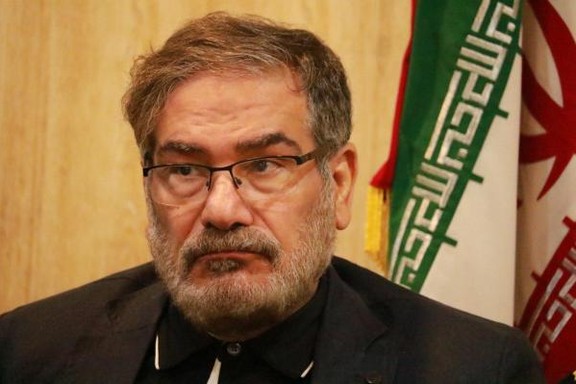
Ali Shamkhani, the secretary of the Supreme National Security Council (file photo)
100%
Ali Shamkhani, the secretary of the Supreme National Security Council

He alleged in this audio file that there is no evidence against him while the Ministry of Intelligence claims he took information from Ali Shamkhani, the secretary of the Supreme National Security Council, and passed it on to Britain. "The Ministry of Intelligence claims that I met Shamkhani in 2018 or 2019 and I gave him a bottle of perfume and a shirt and Mr. Shamkhani gave me secret information about the country, and I passed it to foreigners.”

Akbari says that he told the judge if this allegation is true, why doesn't he summon Shamkhani and former president Hassan Rouhani, to which he replied, "I don't have the power to summon them, but I will destroy you."
Akbari had been deputy defense minister under the reformist President Mohammad Khatami, from 1997 to 2005. He was an advocate of the Iran nuclear deal known as the JCPOA that was eventually signed in 2015 with world powers. 

He was also close to Ali Shamkhani, the secretary of the Supreme National Security Council of Iran, who is now rumored to be replaced because his former aide received the death penalty as a “British spy”. A source close to the Islamic Revolutionary Guard Corps has provided documents to Iran International showing that the death sentence for Akbari is aimed at weakening Shamkhani’s position in the clerical regime. It seems that President Ebrahim Raisi, Intelligence Minister Esmail Khatib and Interior Minister Ahmed Vahidi are exerting pressure to remove Shamkhani from the post.

UK foreign secretary James Cleverly Thursday called on Tehran not to execute Akbari. In a tweet, James Cleverly said the Islamic Republic “must halt the execution of British-Iranian national Alireza Akbari and immediately release him.” He further called the move a “politically motivated act by a barbaric regime that has total disregard for human life.” 

On Friday, he again tweeted about Akbari, saying that “The Iranian regime should be in no doubt. We are watching the case of Alireza Akbari closely. Iran must not follow through with their brutal threat of execution.” 

"Our priority is securing his immediate release and we have reiterated our request for urgent consular access," a UK Foreign Office spokesperson said.
Most Viewed

Iran negotiators ordered to return after internal rift over Islamabad talks
1
EXCLUSIVE

Iran negotiators ordered to return after internal rift over Islamabad talks

2
ANALYSIS

US blockade enters murky phase as tankers spoof signals and buyers hesitate

3
ANALYSIS

Why the $100 billion Hormuz toll revenue is a myth

4

US tightens financial squeeze on Iran, warns banks over oil money flows

5
ANALYSIS

US blockade targets Iran oil boom amid regional disruption

Banner
Banner

Spotlight

  • Hardliners push Hormuz ‘red line’ as US blockade tests Iran’s leverage
    INSIGHT

    Hardliners push Hormuz ‘red line’ as US blockade tests Iran’s leverage

  • Ideology may be fading in Iran, but not in Kashmir's ‘Mini Iran'
    INSIGHT

    Ideology may be fading in Iran, but not in Kashmir's ‘Mini Iran'

  • War damage amounts to $3,000 per Iranian, with blockade set to add to losses
    INSIGHT

    War damage amounts to $3,000 per Iranian, with blockade set to add to losses

  • Why the $100 billion Hormuz toll revenue is a myth
    ANALYSIS

    Why the $100 billion Hormuz toll revenue is a myth

  • US blockade targets Iran oil boom amid regional disruption
    ANALYSIS

    US blockade targets Iran oil boom amid regional disruption

  • Iran's digital economy battered by prolonged blackout
    INSIGHT

    Iran's digital economy battered by prolonged blackout

•
•
•

More Stories

Iranian Chess Referee Accuses Governing Body Of Succumbing To Politics

Jan 13, 2023, 13:12 GMT+0

Iranian chess referee Shohreh Bayat says the game's global body has kicked her off a commission because of a gesture of solidarity with protests in Iran. 

The feud with the International Chess Federation (FIDE) occurred after Bayat wore a T-shirt bearing the main motto of the current wave of antigovernment protesters "Women, Life, Freedom" at a tournament in Iceland in October, soon after rallies began following the death in custody of 22-year-old Mahsa Amini. 

The 35-year-old international referee, who is among a string of sports figures to clash with authorities over the mandatory hijab policy and express solidarity with anti-government demonstrators, told Reuters that "I don't think it's normal to stay quiet about this,"

She noted that the FIDE had removed her from its arbiters' commission after she angered its President Arkady Dvorkovich, a former Russian deputy prime minister from 2012 to 2018.

Bayat, who was also accused by Iran of violating hijab practice at a tournament in 2020, said Dvorkovich asked her to change her attire in Iceland. She reappeared at the tournament in a yellow suit and blue blouse: the colors of the Ukrainian flag. FIDE confirmed Dvorkovich had requested she not wear the shirt about women's rights. 

Bayat accused Dvorkovich of succumbing to geopolitics, saying, "Iran and Russia are very united in the war against Ukraine. When I was told by Dvorkovich to take off my T-shirt, that was the reason probably. My T-shirt was not political at all ... It's one of the most beautiful women's rights messages in the world."

Raisi Submits Budget With More For Propaganda, Repression

Jan 13, 2023, 10:36 GMT+0
•
Iran International Newsroom

After weeks of delay, Iran's government has finally submitted the details of its budget bill to parliament for the next calendar year starting on March 21. 

The substantially enlarged draft state budget, which is heavily dependent on tax revenues, will kickstart a month-long review of the bill before parliament holds a vote to approve it and turn it into a law. The total budget, including state enterprises, would be worth some 52,616 trillion rials, or nearly $130 billion (free market rate $1=400,000 rials), indicating an increase of nearly 40% in rial terms compared to that of the current fiscal year. The deadline to submit a budget passed on December 6.

The government’s operational budget covering its departments and organizations is set at about 21,640 trillion rials (slightly over $53 billion at the free market rate). Last year’s budget was around $40 billion, with a huge deficit and it is unclear how this larger budget can find revenue sources to become reasonably balanced.

"We aim for economic growth ... creation of more jobs ... and reducing inflation," Raisi told parliament on Wednesday, noting that the administration tried its best so that the budget is "completely compatible" with the "declared policies" of Supreme Leader Ali Khamenei.

According to some reports by media affiliated with the Revolutionary Guard, the draft budget is based on 1.4 million barrels of oil exports per day, despite US sanctions, an increase from the current reported figure of 800 thousand barrels. This would mean $40 billion of oil revenues from March 2023-March 2024. However, the official website of the government, IRNA, emphasized that the exact figure of crude exports is confidential and would not be announced due to the sanctions. 

The projected oil exports in the budget is the clearest sign of unrealistic revenue estimates that will not materialize unless Iran resolves its differences with the United States over its nuclear program.

According to lawmaker Malek Shariati-Niasar, the budget could be based on an oil price of $80 a barrel. The figure is also very optimistic because the Islamic Republic is selling its crude well below global prices and is also competing with Russia to give more discounts to the buyers, especially Chinese small refineries. 

The government being aware of that its oil revenues estimates are not realistic, it has substantially increased tax collection projections. In July, the Supreme Accounting Office released a report covering the period March 21- May 20 showing that except tax revenues, all other major sources of income grossly underperformed. The government’s revenues from taxes, oil exports, customs duties, etc. totaled 880 trillion rials or about $3.5 billion (average free market exchange rate at the time) in the 60-day period. This was just 37 percent of the projected budget revenues. It is important to note that only 15 percent of the projected oil income was collected.

Meanwhile, the new budget bill has an operational deficit of 4,760 trillion rials – or about $11 billion, which 58% higher than this year.

President Ebrahim Raisi speaking at the parliament (January 11, 2023)
100%
President Ebrahim Raisi speaking at the parliament

More Money for Suppression and Propaganda

Amid the ongoing antigovernment protests, the regime has substantially increased the budget of security and propaganda institutions. 

The official IRGC budget has grown by 28% to reach about 1,200 trillion rials or about $3 billion in today’s exchange rates. But the secretive organization’s real budget is much higher, through illicit oil sales, its vast domestic business activities and other sources. Estimates in the past mentioned figures close to $17 billion annually.

The budget of the traditional army has also increased by 36% to 490 trillion rials (over $1.22 billion), and the budget of the police forces will be up 44% to reach 620 trillion rials (about $1.55 billion). 

Moreover, the budget of the Intelligence Ministry increased by 52% to 200 trillion – or about $500 million and the budget of the country’s Prisons Organization increased by 55.5% to over 92 trillion rials – or $230 million. The budget of the state broadcaster (IRIB) has increased by 49% to reach 79 trillion rials or nearly $200 million, in addition to its advertising revenues.

The organizations that are tasked with promoting the clerical regime’s propaganda such as the state broadcaster and the seminaries are also set to receive handsome increases. The Islamic Development Organization’s budget will increase by 53% and the budget for seminaries is set to grow by 130%. The Qom Seminary Service Center will receive about 60 trillion rials ($150 million), the Supreme Council of Qom Seminaries will receive about 30 trillion rials ($75 million), and the Ministry of Culture and Islamic Guidance will receive about 54 trillion rials ($135 million). The budget for Headquarters For Enjoining Right And Forbidding Evil, tasked with promoting the clerical regime's interpretation of Islamic laws, will also increase 33%.

These figures well surpass the budget of most provinces in the country, including the education ministry.

On the other hand, the significant increases do not apply to the budget allocated for air pollution reduction plans, which is one of the country's fundamental problems. The budget is only 810 billion rials (about $2 million), which has declined by 10 percent from last year.

Amid galloping inflation and rising joblessness, Raisi claimed that his government is not far behind its promise of creating one million jobs annually, saying that “the unemployment rate has decreased.”

Inflation in the country has soared to over 50%, the highest level in decades. Youth unemployment remains high with over 50% of Iranians being pushed below the poverty line, according to reports by Iran's Statistics Center. 

Letter From Prison: Iranian Activist Describes Forced Confessions

Jan 12, 2023, 23:20 GMT+0
•
Maryam Sinaiee

An educational facility at Tehran’s Evin Prison is being used as a place of interrogation of detained protesters and extraction of forced confessions.

In a letter smuggled out of the prison to Iran International from, political prisoner Sepideh Qolian has recounted what she personally witnessed at the “Education Building”, which used to serve prisoners studying when she was taken to the facility by a guard to take an exam.

“The young boy swore that he had not beaten anyone (security forces) but they wanted a confession from him. Don’t say anything. For God’s sake, don’t say anything [that is not true], I told him … The female guard shut my mouth and dragged me away,” she wrote in the letter.

Qolian and Esmail Bakhshi, labor activists, were tortured into so-called confessions after being arrested in November 2018 during labor protests in southwestern Khuzestan province. In January 2019, the state television’s infamous 8:30 program aired their “confessions”.

The pair were tortured into saying they belonged to a diaspora Marxist group. Both later denied what they had said on camera. Qolian also had to “confess” that she had shot videos and photos during the protests of January 2018 and sent them to the media outside Iran which the authorities always refer to as “enemy” or “hostile” media.

“It felt as if I had completely lost my volition and consciousness after three consecutive days or even more of being kept awake, being interrogated, and being locked up in a toilette. I took the text that had been prepared [by the interrogators] and read from the paper in a half-conscious state. Reading every line felt like the sound of another lash hitting my body and soul,” she wrote in the letter that was received by Iran International.

In 2019, Qolian who was held at Qarchak Prison at the time saw the video of her own confessions on television and realized that the presenter, Ameneh Sadat Zabihpour, was the same female interrogator who her other interrogators called Ms Askari.

Interrogator Ameneh Sadat Zabihpour  (file photo)
100%
Interrogator Ameneh Sadat Zabihpour

Subsequently, in a series of tweets Qolian spoke about her ordeal and said the texts that she and others were made to read in front of the camera were prepared by Zabihpour.

Qolian who has been in and out of prison several times took legal action against Zabihpour but says the case was dropped by the authorities within hours from the registration of her complaint. Instead, she was sentenced to eight months in prison herself, in addition to her previous sentences, for daring to make such a complaint against Zabihpour.

Zabihpour who has come to be known as ‘journalist-interrogator’ in the media has been presenting the IRIB’s 8:30 program together with Ali Rezvani, for several years. The program is infamous for its smear campaigns against both domestic and foreign-based opposition and airing of forced confessions.

The United States and the European union have both sanctioned the IRIB for its role in human rights violations. In November 2022 the US Treasury’s Office of Foreign Assets Control (OFAC) also designated Ameneh Sadat Zabihpour and Ali Rezvani for cooperating with the intelligence ministry and the IRGC’s intelligence organization (SAS).

The IRIB has in the past four decades aired the so-called ‘confessions’ of numerous people from every walk of life, from top politicians to activists, from social media influencers to ordinary criminals, from individuals charged with economic corruption to the family members of those accused of a crime or those whose statements could corroborate the claims by authorities in any regard. 

Iranian Artists Slam Sham Trial For Famous Actress

Jan 12, 2023, 17:44 GMT+0

Iranian Independent Filmmakers Association says the regime has held a sham trial for actress Katayoun Riahi, arrested in November, to obtain a forced confession.

Riahi’s trial session, a popular Iranian actress who had earlier removed her mandatory hijab to express solidarity with the anti-regime demonstrations, was held on Wednesday.

During the trial and being filmed she was pressured to confess to political crimes and apologize. Riahi, unable to bear the relentless psychological torment, passed out and was taken to hospital by ambulance.

The court session, which was held abruptly with a change of date and in front of several cameras, met with widespread criticism.

Adeleh Cheraghi, the spokesperson of the association, said that Katayoun Riahi was asked to apologize and express regret to the authorities of the Islamic Republic for removing the mandatory hijab, in the presence of the state media reporters, possibly to broadcast later. According to Cheraghi, she refused to do so.

Movie star, Hamid Farrokhnejad also slammed the move to obtain coerced confessions from the actress.

"You imagine a video of someone, who apologized to you under threats, is a proof of your righteousness! How miserable you are!” he wrote on his Instagram addressing the government.

"People have decided that you must go, and you will. This way you just make yourself more pathetic," he added.

Security agents also confiscated a large part of her belongings, including her laptop in October when she was not home.

Iran Uses Lethal Force To Crack Down On Protests: HRW

Jan 12, 2023, 13:34 GMT+0

Human Rights Watch says Iran’s regime has used excessive and lethal force in the clampdown on nationwide protests that broke out in September 2022.

In its World Report 2023 published Thursday, Human Rights Watch said Iranian authorities have detained hundreds of activists on “dubious charges” and issued death sentences in “grossly unfair trials”.

The acting executive director of Human Rights Watch (HRW) Tirana Hassan announced in the report that the protests against the mandatory use of the hijab are just the most visible symbol of repression.

"The demand for equality triggered by women and schoolgirls has morphed into a nationwide movement by the Iranian people against a government that has systematically denied them their rights, mismanaged the economy, and driven people into poverty," she underlined.

The 712-page report looks at the state of human rights in about 100 countries where the organization works.

The death of Mahsa Amini in the custody of the morality police in mid-September sparked nationwide demonstrations, including in schools and universities.

Human Rights Watch says security forces have used shotguns, assault rifles, and handguns against protesters.

“With mass repression, unfree elections, and apparent corruption and mismanagement, Iran’s autocracy rules with all that remains: brute force,” said Tara Sepehri Far, senior Iran researcher at Human Rights Watch.

“Other countries, including from the Global South, should increase pressure on these brutal authorities and ensure there is accountability for their crimes,” she added.

Over 500 people have been killed by the regime forces since the beginning of protests.