• العربية
  • فارسی
BrandBrand
  • Iran Insight
  • Politics
  • Economy
  • Analysis
  • Special Report
  • Opinion
  • Podcast
  • Live TV
  • Iran Insight
  • Politics
  • Economy
  • Analysis
  • Special Report
  • Opinion
  • Podcast
  • Live TV
  • Theme
  • Language
    • العربية
    • فارسی
  • Iran Insight
  • Politics
  • Economy
  • Analysis
  • Special Report
  • Opinion
  • Podcast
  • Live TV
All rights reserved for Volant Media UK Limited
volant media logo

Iranian parents arrested over killing of pregnant daughter, rights groups say

Nov 24, 2026, 12:19 GMT+0Updated: 14:25 GMT+0
Helia Fattahi
Helia Fattahi

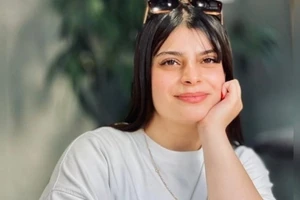
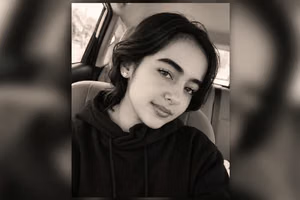
Police in the western Iranian city of Sanandaj have arrested the parents of Helia Fattahi on charges of killing their daughter, who rights groups said was strangled after telling her family she was two months pregnant.

Police in the western Iranian city of Sanandaj have arrested the parents of Helia Fattahi on charges of killing their daughter, who rights groups said was strangled after telling her family she was two months pregnant.

Both parents confessed during questioning, Shahram Abdi, head of the criminal police in Kordestan province, said on Tuesday. Detectives went to the house after a report of a young woman’s death, he said, and concluded she had been killed. The police, citing the parents, said the motive was “family disputes.”

Fattahi was killed on Saturday night at her family’s home in Sanandaj’s Naysar neighborhood, the rights group Hengaw reported. She had told her family she was pregnant the week before, Hengaw said, citing sources, and her parents beat her and then strangled her. Hengaw and another rights group, Hana, both described the killing as a so-called honor killing.

The police and Hengaw gave her age as 19. Hana said she was 16. The police did not comment on the pregnancy or on how she was killed.

Hana also said the Iranian news site Rokna had republished a photo of Fattahi first released by Hana, without credit, after digitally adding a hijab to it. Hana called it a distortion of the image and a breach of journalistic ethics.

Three killings in a week

Fattahi’s death is the third killing of a young woman or girl in Iran in a little over a week to draw national attention.

On November 18, Sadaf Haghbin, 23, was shot dead at her birthday party in Gilan province, in the north. Local media said a former boyfriend was the gunman, and the Khabaronline news site said the likely motive was her refusal to marry him.

Days earlier, Sogand Sayadi, a 16-year-old schoolgirl in Kermanshah, died after falling from the fifth floor of a building. A national network of teachers’ unions said she had warned school staff that her father would kill her if they sent her home with him. The coroner said she died of injuries from the fall, and Kermanshah’s prosecutor said the circumstances were under investigation.

‘No transparent data’

At least 84 women and girls were killed in Iran between March 21 and October 13, and in 75 cases the killer was someone they knew, according to a count of cases reported in the media. Twelve of the victims were under 18, and eight of those girls were killed by fathers, brothers or other blood relatives. The count covers only cases that reached the media.

Hana said on Monday, ahead of Wednesday’s International Day for the Elimination of Violence against Women, that it was alarmed by the rise in recorded killings of women in Iran. The lack of transparent data and the many cases of domestic violence that are never reported made it impossible to know the scale of the problem, its legal office said, calling for women at risk to have access to safe shelters and legal protection.

A bill to protect women from violence has been passed back and forth between the government, parliament and other state bodies for more than 15 years and has still not become law.

Under Article 301 of Iran’s Islamic Penal Code, a father or paternal grandfather who kills his child is exempt from qisas, or retribution in kind, the punishment for most murders. The exemption does not cover mothers. After Sayadi’s death, lawyers and women’s rights activists called for the law to be changed and for protective laws to be passed.

  • My mom knows, my dad doesn’t: The secret lives of young Iranian women

    My mom knows, my dad doesn’t: The secret lives of young Iranian women

  • Ex-boyfriend shoots woman dead at her birthday party in Iran

    Ex-boyfriend shoots woman dead at her birthday party in Iran

  • Iranian student who condemned girl's killing dies by suicide

    Iranian student who condemned girl's killing dies by suicide

  • Family source recounts Iranian girl's alleged killing by father

    Family source recounts Iranian girl's alleged killing by father

  • Killing of Iranian schoolgirl sparks calls for legal reform

    Killing of Iranian schoolgirl sparks calls for legal reform

Most Viewed

Tehran's subsidence zone expands 20% in two years
1

Tehran's subsidence zone expands 20% in two years

2

Flogging of Iranian singer Parastoo Ahmadi sparks outrage on social media

3
VOICES FROM IRAN

Deadly poisonings fuel anger over Iran's alcohol ban

4

Trump threatens Iran strikes in new year, says blockade runners will be sunk

5

Iran threatens European bases with missiles it says can reach 4,500 km

Banner
Banner
Banner
Banner
Banner
Banner
Banner

Spotlight

  • Iranian media walk back tanker convoy claims after days of blockade-breaking hype

    Iranian media walk back tanker convoy claims after days of blockade-breaking hype

  • Iraqi forces enter Iran-backed militia stronghold, but who holds power?
    ANALYSIS

    Iraqi forces enter Iran-backed militia stronghold, but who holds power?

  • Tehran claims its missiles can reach Europe. What has it shown?
    ANALYSIS

    Tehran claims its missiles can reach Europe. What has it shown?

  • New video reveals where Iran clerics chose Mojtaba Khamenei as supreme leader
    INSIGHT

    New video reveals where Iran clerics chose Mojtaba Khamenei as supreme leader

  • Iran's housing crisis keeps divorced couples under one roof

    Iran's housing crisis keeps divorced couples under one roof

  • 'Happy Ending' pushes the limits of Iran's underground cinema

    'Happy Ending' pushes the limits of Iran's underground cinema

  • Power cuts return across Iran, threatening over one million jobs
    VOICES FROM IRAN

    Power cuts return across Iran, threatening over one million jobs

  • Inside Iran's online gun market, where a few messages can start a deal

    Inside Iran's online gun market, where a few messages can start a deal

  • ‘The city smelled of blood’: Witness recalls Iran protest crackdown

    ‘The city smelled of blood’: Witness recalls Iran protest crackdown

•
•
•

More Stories

Bootleg alcohol kills 20, poisons 356 across Iran, health ministry says

Nov 24, 2026, 10:38 GMT+0
100%

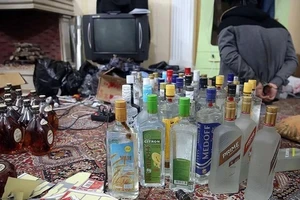
Bootleg alcohol has killed 20 people and poisoned 356, including a 12-year-old, across Iran since early November, the Health Ministry said on Tuesday, as cases spread from Neyshabur in the northeast to cities from Shiraz to Zabol.

Of those poisoned between November 1 and Tuesday morning, 187 were in hospital, 33 of them in intensive care, the ministry’s deputy for treatment said. Eighty were on dialysis or receiving it, 16 had blurred vision and 142 had been discharged. The average age was about 30, and several were under 18.

Neyshabur, in Razavi Khorasan province, has been hardest hit, with 211 cases. The ministry also recorded 66 in Shiraz, 37 in Hormozgan province, 19 in Alborz province, west of Tehran, eight in Khoy in West Azarbaijan, seven in Mashhad, three each in Zanjan and in Khalkhal in Ardabil province, and two in Zabol in Sistan and Baluchestan.

Most patients in Hormozgan had kidney damage and some had blurred vision, a provincial health spokeswoman said, symptoms that fit methanol poisoning.

Deaths and arrests

  • Deadly poisonings fuel anger over Iran's alcohol ban

    Deadly poisonings fuel anger over Iran's alcohol ban

  • Bootleg alcohol poisons 120 in northeastern Iran, four dead

    Bootleg alcohol poisons 120 in northeastern Iran, four dead

In Hormozgan, on the Persian Gulf, four people died in Bandar Abbas and one on Qeshm Island, the province’s university of medical sciences said.

In Neyshabur, four people had died and four had been declared brain dead by Monday evening, health officials said, and 34 patients had been sent to Mashhad and Sabzevar for treatment.

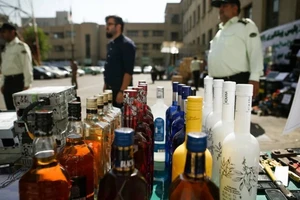
Neyshabur’s prosecutor said three people had been arrested in the case. Police had earlier said 12 suspects were detained.

In Fars province, one person has died in Shiraz and nearby Marvdasht, the provincial police chief said.

The Shiraz prosecutor said one patient in intensive care had been declared brain dead, seven people had been arrested for distributing counterfeit drinks and three production sites had been sealed.

‘Legal sales and health checks’

  • Bootleg alcohol identified as top cause of deaths from poisoning in Iran

    Bootleg alcohol identified as top cause of deaths from poisoning in Iran

  • Who is behind the sale of lethal bootleg alcohol in Iran?

    Who is behind the sale of lethal bootleg alcohol in Iran?

Some Iranians who wrote to Iran International said the ban on alcohol had fed a market where nobody checks what is in the bottle. Rather than blaming those who were poisoned, they called for legal sales and health inspections.

Alcohol is banned in Iran for Muslims, who face flogging if caught drinking, and only recognized religious minorities may make it for private use.

Homemade and counterfeit drinks, often made with cheap industrial alcohol, kill people in Iran several times a year. Methanol, a common cause, damages the kidneys and eyes.

In November 2025, eight people died after drinking bootleg alcohol in Iranshahr and Bampur, in the southeast, and one lost their sight. In early 2020, hundreds died after drinking methanol in the false belief that it protected against COVID-19.

Alcohol accounted for about 5 percent of deaths from poisoning in Iran in the five months to August 2025, according to the Legal Medicine Organization.

Flogging of Iranian singer Parastoo Ahmadi sparks outrage on social media

Nov 24, 2026, 03:47 GMT+0
100%
Iranian singer Parastoo Ahmadi performs alongside her band at the historic Deir-e Gachin Caravanserai near Qom, Iran, in December 2024.

The flogging of Iranian singer Parastoo Ahmadi and four members of her concert team on Monday sparked outrage on social media, with artists, activists and other users condemning the punishment and denouncing restrictions on women’s artistic expression in Iran.

Ahmadi, concert organizer Mohsen Lashkari and musicians Soheil Faghih-Nasiri, Amin Taheri and Amirali Pirnia each received 74 lashes at the prosecutor’s office in Qom, their lawyer Mostafa Nili said.

Women have been banned from singing solo in public in Iran since the 1979 Islamic Revolution.

Singer Mehdi Yarrahi, who himself received 74 lashes in March 2025 over a protest song challenging compulsory hijab, shared footage of Ahmadi’s performance on Instagram, expressing solidarity with her and her concert team.

Musician Hana Kamkar also condemned the punishment in an Instagram video, asking Islamic Republic officials what the artists had offered other than humanity, joy and beauty.

Ahmadi’s December 2024 concert was filmed at the historic Deir-e Gachin Caravanserai near Qom, a Shiite holy city and a center of religious conservatism in Iran.

Wearing a long, sleeveless black dress with her hair uncovered, Ahmadi sang alongside male musicians in a performance staged without a live audience. The virtual concert, which defied both mandatory hijab rules and restrictions on women singing publicly, has drawn more than 3.2 million views on YouTube.

Activist Zeinab Zaman highlighted the contrast between the virtual performance and the physical punishment inflicted on the singer.

“Her concert was virtual, but the lash on her body was real,” Zaman wrote on X. “We are recording act after act of courage and shame upon shame in this history. Bodies are eyewitnesses.”

The flogging also reignited accusations of double standards in the Islamic Republic’s treatment of female singers.

In April, as Iran was at war with the United States and Israel, footage of Lebanese singer Julia Boutros was screened at nighttime gatherings of government supporters in Tehran’s Ferdows Garden. Boutros is known for her songs in support of the Lebanese resistance.

Translator Emily Amraee recalled the gatherings in a post on X, noting that the authorities had “enthusiastically” broadcast the Lebanese singer’s performances over several consecutive nights, only to flog an Iranian woman for singing months later.

Others questioned the government’s priorities amid a conflict it has portrayed as a threat to its very existence.

“If possible, in the midst of what you yourselves call an ‘existential’ war, refrain from flogging the daughters of this country. Is that so difficult for you?” Mojtaba Najafi wrote on X.

Mahmood Amiry-Moghaddam, director of Norway-based Iran Human Rights, pointed to the government’s failure to address the country’s economic and infrastructure crises while continuing to punish women for defying its restrictions.

“She sang; the Islamic Republic responded with the lash,” he wrote on X.

“A government that is incapable of resolving the crises of livelihoods, water and electricity, yet does not hesitate to flog a woman for her voice, has reached the end of its life.”

The communications office of Iran’s exiled Crown Prince Reza Pahlavi condemned the flogging in a statement on X, describing it as an attempt to humiliate and suppress the artists and accusing the Islamic Republic of fearing women’s voices.

“The virtual concert staged by Parastoo Ahmadi, a young artist, two years ago and livestreamed on social media remains a lasting symbol of the voices of Iranian women who cannot be silenced,” the statement said.

“Before 1979, Iran was a cradle of art and music and women were pioneers in these fields. Today, however, the regime flogs courage and beauty,” it added.

The statement said the Islamic Republic would soon fall and that women would once again play a prominent role in Iran’s artistic, social, economic and political life.

Ahmadi and the four members of her concert team were convicted of offending public decency by producing and publishing what the court deemed vulgar and immoral content online.

An appeals court upheld their sentences in September, including two-year bans on artistic and musical activities and foreign travel.

Amnesty International had previously called on Iranian authorities to halt the flogging sentences, describing flogging as torture and urging an end to compulsory hijab and corporal punishment.

Deadly poisonings fuel anger over Iran's alcohol ban

Nov 23, 2026, 12:30 GMT+0
100%
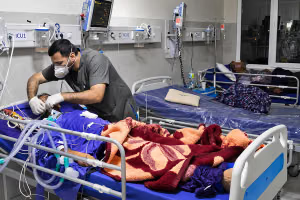
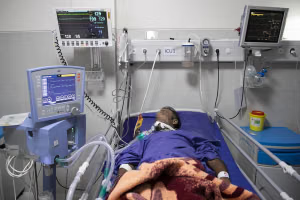
A healthcare worker tends to a patient receiving respiratory support in an intensive care unit at a hospital in Iran.

The poisoning of around 150 people and deaths of at least five from adulterated drinks have sparked widespread criticism of Iran's alcohol ban, with citizens blaming the policy for unsafe products and some accusing state institutions of distributing them.

At least five people have died after consuming counterfeit alcoholic drinks in Neyshabur, Shiraz and Marvdasht in recent days, according to official figures.

The number of people poisoned in Neyshabur reached 120, with four deaths, Milad Taqdisi Heydarian, acting deputy for treatment at Neyshabur University of Medical Sciences, said on November 22.

One patient was declared brain-dead and 11 others required intubation, according to the official figures.

Health officials in Shiraz also reported around 30 methanol poisoning cases in Shiraz and Marvdasht, leaving one person dead and four in intensive care.

Citizens blame prohibition for unsafe drinks

The poisonings prompted widespread reactions from Iran International's audience, with many arguing that the Islamic Republic's ban on alcohol production, sales and consumption has fueled an unregulated market.

  • Bootleg alcohol identified as top cause of deaths from poisoning in Iran

    Bootleg alcohol identified as top cause of deaths from poisoning in Iran

"Look at the result of prohibition. This is how they end up giving people poison," one citizen wrote.

Another criticized those who blamed the victims for drinking alcohol, questioning why Iran does not permit the sale of alcoholic drinks that meet international safety standards.

Several respondents argued that prohibition had failed to stop consumption while removing safeguards against dangerous products.

"People in our country drink alcohol. At least legalize it and regulate it. That would be better than the current situation," one citizen wrote.

"I don't drink, but its import and sale should be legalized," another said.

Fatal alcohol poisonings have repeatedly occurred in Iran. In December 2025, eight people died and one lost their sight after consuming contaminated drinks in separate cases in Iranshahr and Bampur.

Alcohol poisoning accounted for around five percent of 4,232 poisoning-related deaths during the first five months of the Iranian calendar year, according to a forensic medicine report published in October 2025.

Homemade and counterfeit alcoholic drinks were identified as major causes.

Revolutionary Guards accused of involvement

Some respondents accused institutions linked to the Islamic Republic, including the Revolutionary Guards, of distributing contaminated drinks.

"The Revolutionary Guards themselves distribute these counterfeit products," one citizen wrote.

Another described those supplying adulterated drinks as "system-affiliated sellers."

One respondent said methanol was advertised on Instagram as "90 percent corn alcohol" for 3000,000 rials per liter and accused the Revolutionary Guards of supplying it.

The actual number of alcohol poisoning cases could be [up to 10 times higher than emergency admission figures https, Deputy Health Minister Alireza Raisi said in October 2025, explaining that some victims avoid treatment because of fear or other reasons.

  • Who is behind the sale of lethal bootleg alcohol in Iran?

    Who is behind the sale of lethal bootleg alcohol in Iran?

Methanol poisoning can cause blindness, severe organ damage and death. Health officials in Neyshabur have yet to identify the substance responsible for the latest poisonings.

The deaths have renewed criticism of restrictions that citizens say leave consumers dependent on an unregulated market, with some demanding legalization and quality controls to prevent further fatalities.

Iran's housing crisis keeps divorced couples under one roof

Nov 22, 2026, 19:06 GMT+0
•
Sharareh Azizi
100%
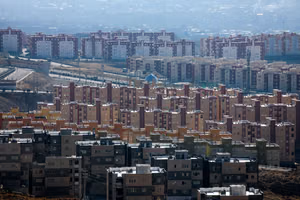
File photo of a sunset in Tehran

After 12 years of marriage and one child, they agree to divorce, and on a summer afternoon it is registered. Then they leave the registry office and go back to the same home, where they had split the rooms between them long before the divorce.

The father has moved into their 10-year-old son's room. The mother stays in the room she once shared with her husband.

For some couples in Iran, the marriage is over, but the housing crisis will not let them leave it behind.

The divorce has been granted, and neither sees the other as a spouse anymore. Yet every night they come home to the same apartment: not to reconcile, not to rebuild, but because neither can afford a place of their own.

In Tehran, the cost of housing can turn even a divorce into a half-finished decision.

A home out of reach

The latest data from Tehran's housing market show asking prices still rising. An analysis of 43,307 apartment listings in the city between November 13 and 20 put the average asking price at about 3 billion rials (about $1,100) per square meter, up 12.5 percent from a month earlier. At that price, a single square meter costs about 18 months of the minimum wage.

  • Tehran rents hit three times many workers’ monthly pay

    Tehran rents hit three times many workers’ monthly pay

  • Shared housing spreads in Iran’s deepening rent crisis

    Shared housing spreads in Iran’s deepening rent crisis

  • Skyrocketing rents push Iranians back to parents’ homes, shared housing

    Skyrocketing rents push Iranians back to parents’ homes, shared housing

Prices are rising even though households have little purchasing power left and sales have stalled.

Renters are under pressure too. Rents in the month to October 22 were 33.4 percent higher than a year earlier, the Statistical Center of Iran said, rising 3.5 percent in that month alone. That is slower than overall inflation, but it does not make renting cheaper. Tenants still pay more each time they renew a lease or look for a new home, which puts independent living further out of reach for low-income families.

For some divorced couples, paying for two homes is simply impossible, so they stay under one roof after their marriage has ended.

'Like two housemates'

Soudabeh, a bank employee who asked that her real name not be used, told Iran International that rising rents and living costs were the main reason she and her former husband still live together.

She had thought about divorce for years, she said, but hesitated because she worried about how she would cover her living costs, especially rent for a home of her own. Renting two separate places was practically impossible, she said. Now that the divorce is official, they live in the same home like two housemates.

  • ‘Living in despair’: uncertainty, economic turmoil erode hope in Iran

    ‘Living in despair’: uncertainty, economic turmoil erode hope in Iran

  • Food, medicine, hope: what Iran's economic crisis is costing its people

    Food, medicine, hope: what Iran's economic crisis is costing its people

The arrangement has cut their costs, she said, and spared them the difficulty of finding a place to rent as single people. But it comes with problems of its own. Privacy and the psychological effect on her children are the hardest parts, she said.

Soudabeh grew up in a traditional family. "Apart from close relatives, no one knows we are separated, and they find it hard to accept, even unacceptable," she said.

She hopes the arrangement is temporary, and that they will soon be able to rent two smaller homes of their own.

Living together after a divorce can take a psychological and social toll on both partners. The loss of privacy and independence, the difficulty of starting new relationships and unresolved tensions can all add to the strain.

For children, it is even more confusing. Children who still see their parents living together after a formal divorce may struggle to understand what has changed, caught between hoping their parents will reconcile and accepting that they have split. Without clear boundaries, and with conflicts still unresolved, their sense of security can suffer.

Families behind a curtain

Living together after divorce is only one of the new ways of living that the housing crisis has forced on Iranians.

In recent years, more and more families have moved in together to share the cost of a single apartment. Some are not even related. They share a home to pay the rent, cover mortgage installments or cope with rising living costs.

In one account on social media, a woman described two families sharing a home in south Tehran. They had divided it with a curtain, she said, but still shared the kitchen, bathroom and toilet.

It is a picture of families forced to adapt to the cost of housing, in a country where privacy has become a luxury.

In August 2023, as parliament debated the government's seventh development plan, its own research center published a report on housing that identified eight forms of homelessness produced by the crisis and the failure of the state's housing policies.

Alongside people sleeping on rooftops, in boiler rooms, in cars, on buses and even in graves, the report listed people who keep moving from place to place, people who take jobs mainly to get a place to sleep, and "two or more families sharing a single housing unit."

The research center said these were the result of low-income families and tenants being priced out of decent housing, and of housing policies that had failed the most vulnerable.

Poverty reshapes the family

Iran's housing crisis is no longer just about being unable to buy a home or pay the rent. It is changing the shape of family life, people's relationships, and even whether they can end one.

For some, separation no longer means leaving home and starting a life of their own. It means dividing the rooms, keeping their distance behind closed doors and going on living in a shared space.

Beyond the financial strain, that carries a psychological and social cost: it makes adjusting to divorce harder for both partners, and leaves children exposed to uncertainty, tension and their parents' unresolved conflicts.

The divorce is registered, but the home is still shared. Sometimes what keeps a marriage going is neither love nor a wish to return, but the inability to pay for a separation.

'Happy Ending' pushes the limits of Iran's underground cinema

Nov 22, 2026, 16:37 GMT+0
•
Mo Abdi
100%
A scene from Atena Mahmoudi's Happy Ending, an underground Iranian film that premiered at the Tallinn Black Nights Film Festival in Estonia without its makers, who are banned from leaving Iran.

Happy Ending, Atena Mahmoudi's underground first feature about a young Tehran masseuse trying to leave Iran, premiered at Estonia's Tallinn Black Nights Film Festival without its makers, who are banned from leaving the country.

The film, shown in the first feature competition of the festival's 30th edition, was made without a state permit. Security agents raided the production and seized footage, but the filmmakers managed to save a copy and finish it. It reached Tallinn as one of a growing number of Iranian films made outside the state system, which tries to push past the limits that system imposes.

Underground filmmaking has become one of the few ways Iranian directors can show life as it is. Films made with a permit must follow the state's rules: women cannot appear without a headscarf, and men and women cannot touch on screen. Directors who break them risk prison and travel bans.

A woman under pressure

The film is a portrait of today's Tehran. Elaheh wants to leave Iran with her boyfriend, Soheil. She works in a secret massage parlor but refuses to offer sexual services, the "happy ending" of the title.

Mahmoudi sets out to show Elaheh's world through her relationships with her mother, her boyfriend and a society that expects different things of her. But the film's most important element is its portrait of a woman in a society on the brink of war, under pressure from every side.

  • Made without permission: how Iran’s underground cinema owned 2025

    Made without permission: how Iran’s underground cinema owned 2025

  • An Iranian film broke every taboo. Viewers say society broke them first

    An Iranian film broke every taboo. Viewers say society broke them first

  • Film shot inside Iran breaks censorship ground with intimate scenes

    Film shot inside Iran breaks censorship ground with intimate scenes

  • Iran filmmakers defy state censorship despite repression

    Iran filmmakers defy state censorship despite repression

On one side is a tempting offer from a "Haji," a man close to the state who invites her to his home. Elaheh badly needs the money, both to help her mother, who lives alone, pay her rent and to raise what she still needs to emigrate.

On the other side are her own instincts, her commitment to the social struggle around her and Soheil, all pointing her the other way.

The film is the story of that temptation, set in a tense society worn down by poverty.

Iran's present, and the political and social upheavals of the past year, run through it. Its ending ties the story unexpectedly to the war. There, the film steps back from its heroine and gives her a strange fate: a victim in a closed society with no way out.

Breaking the rules, and some clichés

Happy Ending wants to be frank and to drop every restriction of official cinema. Its characters reject compulsory hijab and have no qualms about physical contact with the opposite sex.

In that sense, it is a step forward both in getting around the censorship that governs Iranian cinema and in telling a freer story, even by the standards of underground film.

But at times it falls back on the clichés of underground cinema: drinking, drunkenness and forbidden late-night parties.

These scenes have become a staple of recent underground films that try to record the uncensored lives of Tehran's middle class. Here, though, the way they are shown and told feels repetitive, as if all these films were copying one another, and the director cannot find a different way to tell them. As a first feature, the film also has weaknesses in execution that hurt parts of it.

A killing in the opening scene

The film opens with a death. During protests three years earlier, Elaheh takes shelter in her father's car, and he is shot dead by security agents in front of her.

The shadow of that killing by the state hangs over the whole film. It drives Elaheh's hatred of everything to do with "them" and shapes her rebellious character.

The film struggles, however, to reach the more complex layers of its heroine and settles for watching her from a distance. That may explain the coldness of some scenes, and why the unexpected ending arrives without the audience fully feeling for her.