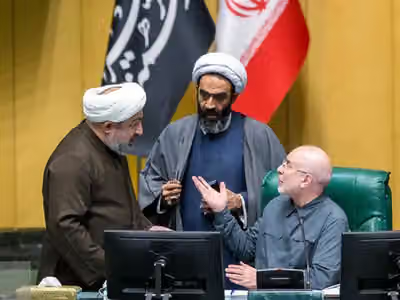
Ali Nikzad, the first deputy speaker of Iran’s parliament, said during a visit by members of parliament’s Construction Commission to Bandar Abbas that the 12-point plan would deny passage to Israeli ships “at any time.”
He said vessels belonging to “hostile countries” would also be barred from crossing the strait unless they first paid compensation for damage caused during the war.
He did not name any country other than Israel, but Iranian officials have used similar language in the past to describe the United States and some of its Arab allies in the Middle East as hostile states.
Two months into the US-led war with Iran, the vital waterway remains closed, choking off 20% of the world's oil and gas supplies. The strait was effectively closed after Iran started launching retaliatory strikes against its Arab neighbors in the Persian Gulf.
Since April 13, the United States has also imposed a naval blockade on Iranian ports, further restricting traffic through the strait with the aim of preventing Tehran from turning the waterway into a source of leverage or revenue.
Terms for non-hostile countries
Under the toll plan being reviewed by the parliament, other ships would be required to obtain permission from Iran before passing through Hormuz, Nikzad said.
He added that the measure would be adopted in line with international law and the rights of Iran’s neighbors, while insisting that Tehran would not return the strait to its pre-war status.
“We will not give up our rights in the Strait of Hormuz, and the movement of vessels through the Strait of Hormuz will not be the same as before the third imposed war,” he said.
He described Iran’s proposed new control over Hormuz as comparable in importance to the nationalization of the oil industry in 1951.
Mohammadreza Rezaei, head of parliament’s Construction Commission, said all ships applying for permission to pass through the strait would be required to use the name “Persian Gulf.”
He said 30% of the revenue collected from ships would be allocated to strengthening military infrastructure, while 70% would go to economic development and public welfare.
“Managing the Strait of Hormuz is more important than acquiring nuclear weapons,” Rezaei said.
While Tehran hopes its new toll system will compensate for part of the heavy damage caused by the US-led war, Washington has warned that companies and governments paying Iranian-imposed tolls could face sanctions.