• العربية
  • فارسی
Brand
  • Iran Insight
  • Politics
  • Economy
  • Analysis
  • Special Report
  • Opinion
  • Podcast
  • Iran Insight
  • Politics
  • Economy
  • Analysis
  • Special Report
  • Opinion
  • Podcast
  • Theme
  • Language
    • العربية
    • فارسی
  • Iran Insight
  • Politics
  • Economy
  • Analysis
  • Special Report
  • Opinion
  • Podcast
All rights reserved for Volant Media UK Limited
volant media logo
ANALYSIS

Unfinished yet irreversible: Iran's Woman, Life, Freedom three years on

Jamshid Barzegar
Jamshid Barzegar

Iran International political analyst

Sep 18, 2025, 18:48 GMT+1Updated: 00:39 GMT+0

Three years after the killing of Mahsa "Jina" Amini in the custody of Iran’s morality police, and in the shadow of the Islamic Republic’s recent 12-day war with Israel, the outlines of a durable social transformation are clear.

Commentators disagree on labels—uprising, movement, revolution—but most accept that the protests of 2022 and their afterlife have marked a foundational rupture. They drew in multiple strata of society, altered daily life and public discourse and forced the Islamic Republic into retreats that once seemed inconceivable.

The chant “Woman, Life, Freedom,” first voiced at Amini’s burial in the town of Saqqez in Iran's Kurdistan province, condensed demands for autonomy, dignity and equality into three words that spoke across class and region.

A society long fragmented by divide-and-rule tactics has moved toward solidarity. Women and men, Kurds and Persians, Baluch and Azeris, urban and rural citizens stood together in 2022, building a pluralism not seen in recent memory.

The movement challenged not only gender discrimination but the state’s entire normative order, and it did so through radically non-violent means. In compelling the regime to cede ground—above all on the legally-mandated hijab—it achieved changes that would once have been described as revolutionary in themselves.

Inside homes, younger generations have renegotiated relations with parents in ways that blunt the state’s intrusion into private life.

The state’s grip on the streets has been broken; unveiled women now walk freely in Tehran, Mashhad, Shiraz, and countless smaller cities. Equality and bodily autonomy, once dismissed as Western imports, have moved to the center of Iranian discourse.

An even more draconian hijab and chastity law passed by parliament was frozen by Iran's Supreme National Security Council in May out of concern it would spark unrest.

Not easy

But the obstacles remain—and repression is still lethal.

In 2022 at least 552 protesters were killed, thousands more jailed, and executions have mounted since. The ruling elite retain an effective coercive apparatus, even if their confidence has been shaken by war and domestic unrest.

Economically, decades of corruption, sanctions, inflation and environmental degradation have pushed both state and society into survival mode.

Families channel scarce energy into endurance, leaving less room for organized protest. A potential revolution’s strength—its horizontal, decentralized nature—has also limited its ability to produce leadership or coherent organization.

Opposition forces remain fragmented, particularly in the diaspora, and coordination inside Iran has faltered as street protests ebbed.

Even so, the balance of change is striking.

In just three years, the movement has embedded demands that no future order can ignore. Its art, slogans, and public faces have entered common life.

No credible opponent of the regime positions themselves against it; all align with or inherit from it.

Hopes for future

Looking forward, much will depend on four interlinked tasks.

Daily civil resistance appears to be institutionalized, above all the unveiled presence of women in public life.

Economic grievances and livelihood protests have yet to be joined to clear political demands. If and when they are, a broader front against misrule would come to life.

Fragmented opposition forces need to converge on a clearer vision for post–Islamic Republic Iran. And international sympathy must be translated into targeted support that strengthens civil society without dragging it into destructive conflict.

The Islamic Republic’s institutions still stand, but their legitimacy has been stripped to the bone. Voter participation has sunk to historic lows, public trust has collapsed, and governance has narrowed to the sheer mechanics of survival.

Those in power are now fixated on endurance rather than service. In this vacuum, civil society advances on a different track.

Three years on, “Woman, Life, Freedom” remains the principal engine of transformation. Street protests may have wound down, but the changes in culture and imagination look irreversible.

The revolution is unfinished, but it endures in daily defiance, in a pluralist solidarity that defies the state’s order, and in a vision of citizenship rooted in universal rights.

That, already, is an achievement historic in scale—one whose ultimate destination may yet be a secular, democratic Iran.

Most Viewed

Iran negotiators ordered to return after internal rift over Islamabad talks
1
EXCLUSIVE

Iran negotiators ordered to return after internal rift over Islamabad talks

2
ANALYSIS

US blockade enters murky phase as tankers spoof signals and buyers hesitate

3
ANALYSIS

Why the $100 billion Hormuz toll revenue is a myth

4

US tightens financial squeeze on Iran, warns banks over oil money flows

5
ANALYSIS

US blockade targets Iran oil boom amid regional disruption

Banner
Banner

Spotlight

  • Hardliners push Hormuz ‘red line’ as US blockade tests Iran’s leverage
    INSIGHT

    Hardliners push Hormuz ‘red line’ as US blockade tests Iran’s leverage

  • Ideology may be fading in Iran, but not in Kashmir's ‘Mini Iran'
    INSIGHT

    Ideology may be fading in Iran, but not in Kashmir's ‘Mini Iran'

  • War damage amounts to $3,000 per Iranian, with blockade set to add to losses
    INSIGHT

    War damage amounts to $3,000 per Iranian, with blockade set to add to losses

  • Why the $100 billion Hormuz toll revenue is a myth
    ANALYSIS

    Why the $100 billion Hormuz toll revenue is a myth

  • US blockade targets Iran oil boom amid regional disruption
    ANALYSIS

    US blockade targets Iran oil boom amid regional disruption

  • Iran's digital economy battered by prolonged blackout
    INSIGHT

    Iran's digital economy battered by prolonged blackout

•
•
•

More Stories

Two Tehran cafes shuttered over alleged alcohol, nudity and dancing

Sep 18, 2025, 18:08 GMT+1

Authorities in Tehran have shut down two cafe-restaurants over alleged violations including “serving alcohol, nudity, and mixed-gender dancing,” Revolutionary Guards-affiliated Fars news agency reported on Thursday.

Fars said the Suite Lounge café-restaurant in northern Tehran was shut down on those grounds and released a video of a police raid that did not show nudity, though women without the compulsory hijab were visible.

The Banichu café-restaurant in western Tehran, which had previously received a closure warning, was also shut down earlier this week after authorities said "six liters of homemade and foreign alcohol were discovered," and mixed-gender parties were held.

The main suspect linked to Banichu remains at large, and a judicial case is under review at the Tehran prosecutor’s office, the report added.

Possession and consumption of alcohol are illegal in Iran, carrying punishments ranging from fines and lashings to prison sentences. Despite the ban, underground networks and discreet venues continue to supply alcohol, often at high cost and under strict secrecy, according to both state and independent reports.

Separately, on Thursday, police in the western Iranian city of Doroud shut down 12 cafés and traditional teahouses for “failing to comply with trade regulations,” state broadcaster IRIB reported, adding that another nine businesses received written warnings.

In recent weeks, authorities have shuttered several cafes and restaurants across Iran, citing reasons ranging from live music and mixed-gender gatherings to customers failing to conform to Islamic dress codes.

Over the past two months, at least 20 cafes, garden restaurants, and wedding halls have been closed in Tehran, Dezful, Hamedan, Kashan and Maragh in Isfahan province over alleged hijab violations, according to a report by reformist daily Ham Mihan.

Last year, at least 536 businesses across Iran were shut down, mostly for non-commercial reasons such as enforcing mandatory hijab, operating during Ramadan, or holding events during religious mourning periods, according to US-based rights group Human Rights Activists in Iran (HRANA).

The group said the closures highlight growing intervention by judicial and security bodies in business activity, with significant impacts on individual and social freedoms.

Dissident Iranian filmmakers urge Oscars to reject state-linked submissions

Sep 18, 2025, 12:27 GMT+1

An association of independent Iranian filmmakers has called on the Academy of Motion Picture Arts and Sciences (AMPAS) to overhaul how it accepts films from countries under authoritarian rule, warning that the current system legitimizes state-controlled cinema bodies.

In a letter to the Academy this week, the Iranian Independent Filmmakers Association (IIFMA) said the Farabi Cinema Foundation, which oversees Oscar submissions from Iran, enforces censorship and sidelines independent voices at home and abroad.

The group proposed an international committee that could select Iranian films free of government influence, citing the cultural impact of the Woman, Life, Freedom protest movement.

The appeal came a day after Iran announced Ali Zarnegar’s Cause of Death: Unknown as its entry for the 98th Academy Awards.

The selection drew mixed reactions inside Iran, with the hardline daily Javan urging officials to choose a film that reflected “Islamic-Iranian values,” while veteran filmmaker Homayoun Asadian accused state authorities of trying to dictate the choice.

  • France picks Jafar Panahi’s ‘It Was Just An Accident’ as Oscar entry

    France picks Jafar Panahi’s ‘It Was Just An Accident’ as Oscar entry

  • Mahsa Amini’s death sparked irreversible change in Iran, Jafar Panahi says

    Mahsa Amini’s death sparked irreversible change in Iran, Jafar Panahi says

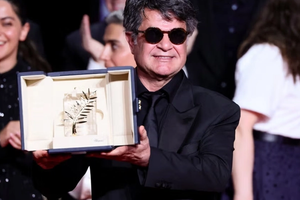
IIFMA argued that acclaimed works such as Jafar Panahi’s Palme d’Or-winning It Was Just an Accident -- which France has submitted this year -- demonstrate the global recognition of Iranian filmmakers when free of state oversight.

Panahi has long been barred from representing Iran, and supporters say his case highlights how government involvement excludes major artists.

Iran has a history of success at the Oscars, with Asghar Farhadi winning best international feature for A Separation (2012) and The Salesman (2017).

France picks Jafar Panahi’s ‘It Was Just An Accident’ as Oscar entry

Sep 18, 2025, 11:45 GMT+1

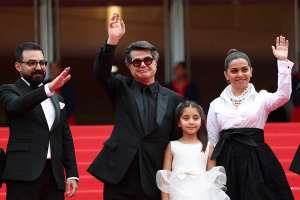
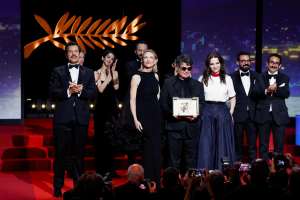
France has selected Iranian director Jafar Panahi’s It Was Just An Accident, winner of this year’s Cannes Palme d’Or, as its submission for the Academy Awards in the international feature category, giving the exiled filmmaker a path to Hollywood that Tehran was unlikely to offer.

The revenge drama, produced largely in France and shot in Iran without government approval, follows a group of former political prisoners confronting a man they believe tortured them decades earlier.

The decision, announced on Wednesday, was made by an 11-member committee convened by France’s culture ministry after reviewing five finalists, including Richard Linklater’s Nouvelle Vague and Rebecca Zlotowski’s A Private Life.

Panahi, long banned from working or traveling in Iran, has spent much of the past 15 years under house arrest or in prison. He was released from jail in 2023 after a hunger strike, and edited the new film in France.

  • France-Iran rift spills into cinema after dissident director wins in Cannes

    France-Iran rift spills into cinema after dissident director wins in Cannes

  • Jafar Panahi’s Cannes victory sparks praise and political reaction

    Jafar Panahi’s Cannes victory sparks praise and political reaction

  • Mahsa Amini’s death sparked irreversible change in Iran, Jafar Panahi says

    Mahsa Amini’s death sparked irreversible change in Iran, Jafar Panahi says

US distributor Neon has acquired the film and is planning an awards campaign, while Mubi has taken international rights.

“This Iranian drama, directed by the great Jafar Panahi and produced with the decisive support of France … is proof that our country, 130 years after inventing cinema, remains the beating heart of international co-productions,” Gaëtan Bruel, head of the CNC film body, said in a statement.

The move also highlights stark contrasts with Iran’s own Oscar choice. A day earlier, Tehran selected Ali Zarnegar’s Cause of Death: Unknown, a moral drama that won praise abroad but was pulled from Iran’s state-run Fajr Festival in 2022. Independent filmmakers in Iran continue to face censorship, surveillance and travel bans.

The 98th Academy Awards will take place in Los Angeles on March 15, 2026.

Khamenei-linked daily says Afghan expulsions failed to curb bread prices

Sep 18, 2025, 11:19 GMT+1

The Islamic Republic’s mass expulsions of Afghan migrants have not eased Iran’s economic strain nor slowed soaring bread prices, the hardline Kayhan newspaper, overseen by Iran's Supreme Leader Ali Khamenei, wrote on Wednesday.

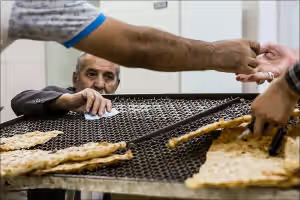
“The claim was that Afghan nationals were consuming so much bread that they were pushing prices higher. Yet even after more than 1.5 million have left, the price of Sangak [a popular traditional Iranian bread] has risen fourfold,” the paper said.

“Why should bread prices climb 300 percent compared to 2024 when no major shortage is expected?” the paper asked.

A loaf of subsidized Sangak bread cost 5,000 rials (about $0.05) in September 2024 but now sells for 200,000 rials (about $0.20), marking a 300-percent increase in one year.

Iran’s state news agency IRNA says that in Tehran Sangak priced at 100,000–150,000 rials has effectively disappeared; most customers now pay 200,000–500,000 rials per loaf, with sesame-topped bread commonly around 300,000 (about $0.30).

Official rates diverge from street prices, which vary by neighborhood and bakery. A government task force set a 600-gram sangak at 76,000 rials (about $0.07), but shoppers say loaves at that price are smaller and poorer quality.

Interior Minister Eskandar Momeni argued in August that expulsions reduced bread transactions by six percent, calling this a government achievement. Lower demand would help stabilize supply, he said.

  • Rampant inflation may ignite bread riots in Iran, economist warns

    Rampant inflation may ignite bread riots in Iran, economist warns

  •  Iran sees steep bread price hikes as inflation bites

    Iran sees steep bread price hikes as inflation bites

Deportations tied to security rhetoric

The Islamic Republic intensified deportations in recent months, especially after the 12-day war with Israel, when authorities accused some foreigners, notably Afghans, of working with Mossad. Such allegations have been used to justify expulsions while deflecting blame for economic hardship.

Decades of economic mismanagement, sanctions, and currency collapse have eroded household purchasing power, leaving low-income families most exposed.

“If inflation remains unchecked … Iran could witness a bread riot,” economist Hossein Raghfar told the moderate outlet Rouydad24 earlier this month, warning that inaction could have consequences far beyond the economy.

Focus on Society and Justice, by Narges Mohammadi

Sep 17, 2025, 21:00 GMT+1

Below is the full text of an editorial penned by Iranian Nobel Laureate Narges Mohammedi for Iran International on the occasion of the third anniversary of Mahsa "Jina" Amini's death in morality police custody:

From the very start of the killings, imprisonments, torture, murders and executions in the early days of the Islamic Republic, the pursuit of justice began in Iranian society.

In every era, under every condition and in every place, justice-seeking in Iran has taken on a form shaped by its social circumstances — but it has never been extinguished.

The images of the mothers and fathers of those killed and executed, the handwritten notes, the histories, the testimonies and memoirs of prisoners and torture survivors, and the protest actions carried out through public and private letters, petitions to judicial and security authorities, and appeals to international human rights bodies — all these have been part of the ongoing struggle over the past 46 years.

These acts — through their representation in poetry composed by renowned poets; in songs and ballads performed by celebrated singers from Marjan and Marzieh to the rap verses of young artists; in films created underground or in exile; in clandestine theater staged under fear; and in powerful stories penned by gifted and conscientious writers — have formed another part of our society’s effort to keep the pursuit of justice alive.

In truth, justice-seeking as a collective process has spread through every layer of society, accompanied by actions, reactions, creative and influential events and both individual and collective protests.

In recent years, civil activists have worked alongside prisoners, torture survivors, the wounded and the families of those killed and executed, bringing wider segments of society into this process and strengthening the justice-seeking movement.

Families and survivors of the executed, the killed, the imprisoned, the tortured, the abused, the oppressed and the wronged have all played a vital role in advancing this movement in Iran.

In the 1980s, when the solidarity of society, political and social forces and the broader public was not as widespread as in recent years, families endured indescribable suffering under government — and at times social — pressure, in order to plant the seeds of justice-seeking in society.

They made the historical tradition of justice-seeking in Iran richer and more meaningful.

With the continuation and intensification of the Islamic Republic’s oppression, every decade, every year and every day the number of justice-seekers has grown, as has the depth of their demand for justice.

Survivors of the 1980s executions and massacres, the chain murders, the 1999 student protests, the Green Movement, the protests of 2017 and 2019, and the “Woman, Life, Freedom” uprising have all been interconnected threads sustaining the pursuit of justice.

Together with civil, professional, social, political, and cultural circles, they have forged a powerful chain within society.

From the image of the Khavaran mother standing tall over an unmarked grave, to the embrace of Mahsa Jina Amini’s parents in a hospital corridor as they endured her final moments in pain and tears, countless scenes have been created that will remain eternal in the history of our nation’s quest for justice.

From the images of anti-execution activists outside prison walls who kept vigil with families through the night of darkness until the dawn of execution, to the journalists who paid the price of reporting and speaking with families through imprisonment, torture, solitary confinement and the silent suffering of exile — all attest to the hidden strength of the justice-seeking movement.

Justice-seeking is a path toward liberation through the realization of justice itself — justice trampled by a tyrannical government and stripped of the tools to achieve it. In the wasteland of injustice and oppression, justice-seeking is a lamp to light the way, a hope in the darkness of despair and an effort to resist defeat and passivity.

Our society, in its pursuit of justice and its struggle to expose oppression and discrimination so that history cannot erase them, stands among the greatest in the world.

Long live the justice-seeking movement.