• العربية
  • فارسی
Brand
  • Iran Insight
  • Politics
  • Economy
  • Analysis
  • Special Report
  • Opinion
  • Podcast
  • Iran Insight
  • Politics
  • Economy
  • Analysis
  • Special Report
  • Opinion
  • Podcast
  • Theme
  • Language
    • العربية
    • فارسی
  • Iran Insight
  • Politics
  • Economy
  • Analysis
  • Special Report
  • Opinion
  • Podcast
All rights reserved for Volant Media UK Limited
volant media logo

Israel hits Evin Prison, key security institutions in Tehran on 11th day of war

Jun 23, 2025, 14:46 GMT+1Updated: 07:59 GMT+0
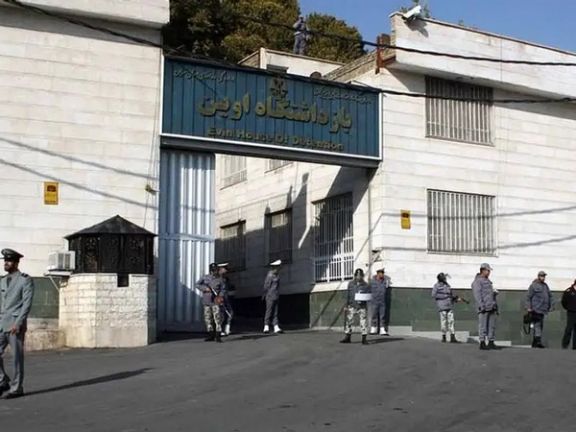
File photo of Evin Prison entrance

Israeli airstrikes on Monday targeted multiple sites linked to internal security and political control in the heart of Tehran, including the administrative and courtroom sections of Evin Prison — a facility long seen as a symbol of state repression.

The strikes, carried out under the direct orders of Israeli Prime Minister Benjamin Netanyahu and Defense Minister Yisrael Katz, focused on “regime targets and government repression bodies,” according to the Israeli Ministry of Defense.

Among the locations hit were the main gate and administrative buildings of Evin Prison.

There were no reported casualties among inmates, although several staff members were killed, according to information shared with Iran International.

Sources inside the facility confirmed to Iran International that office buildings, visitation areas, and judicial chambers were damaged in the strike.

Following the attack, families of political prisoners and local residents attempted to approach the site, according to witness accounts shared online.

Evin Prison, constructed in the 1970s, has long been associated with political detention and has housed journalists, activists, and dual nationals.

Strikes target multiple security bases

In addition to Evin, Israeli forces also struck a number of other prominent security and ideological institutions across Tehran and its suburbs.

Iran and Israel have not released an official list of the targets. Witness reports said they included the Basij headquarters, part of the IRGC’s paramilitary force, involved in controlling protests; the Tharallah Base (also known as Sarallah Base), an elite IRGC unit responsible for managing civil unrest in the capital; and the Seyyed al-Shohada IRGC base, a key provincial force in Alborz province, as well as the Intelligence Directorate of the national police.

Additionally, Iranian media reported strikes on the state media complex “9 Dey”, a technical hub for Iran’s national broadcasting system, including TV and radio transmission facilities.

Israel says goal is not regime change — but won’t rule out consequences

Israeli officials said on Monday again that the objective of the strikes is deterrence. “Our objective in Iran is not regime change,” a government spokesperson said on Monday. “But that may be the byproduct.”

Israeli Defense Minister Katz added, “For every shot fired at the Israeli home front, the Iranian dictator will be punished, and the attacks will continue with full force. We will continue until our war objectives are fully achieved.”

While Israel has previously struck infrastructure linked to Iran’s domestic security apparatus — including the headquarters of the Special Forces unit of the Islamic Republic’s Internal Security Forces and a main building of the state broadcaster IRIB — the latest campaign marks an escalation in the scope and scale of such attacks.

This wave of airstrikes has more explicitly targeted what Israeli officials describe as the “repression infrastructure” of the Islamic Republic— the institutions at the core of political surveillance, ideological enforcement, and suppression of dissent.

Tensions in the region remain high, with commercial shipping already diverting away from the Strait of Hormuz and Western governments reviewing security postures amid fears of a broader escalation.

According to data collected by rights group HRANA, 950 people were killed and 3,450 injured across Iran as of Monday. In Israel, 24 people were killed and over 2,500 injured.

Most Viewed

Iran negotiators ordered to return after internal rift over Islamabad talks
1
EXCLUSIVE

Iran negotiators ordered to return after internal rift over Islamabad talks

2
ANALYSIS

US blockade enters murky phase as tankers spoof signals and buyers hesitate

3
ANALYSIS

Why the $100 billion Hormuz toll revenue is a myth

4

US tightens financial squeeze on Iran, warns banks over oil money flows

5
ANALYSIS

US blockade targets Iran oil boom amid regional disruption

Banner
Banner

Spotlight

  • Hardliners push Hormuz ‘red line’ as US blockade tests Iran’s leverage
    INSIGHT

    Hardliners push Hormuz ‘red line’ as US blockade tests Iran’s leverage

  • Ideology may be fading in Iran, but not in Kashmir's ‘Mini Iran'
    INSIGHT

    Ideology may be fading in Iran, but not in Kashmir's ‘Mini Iran'

  • War damage amounts to $3,000 per Iranian, with blockade set to add to losses
    INSIGHT

    War damage amounts to $3,000 per Iranian, with blockade set to add to losses

  • Why the $100 billion Hormuz toll revenue is a myth
    ANALYSIS

    Why the $100 billion Hormuz toll revenue is a myth

  • US blockade targets Iran oil boom amid regional disruption
    ANALYSIS

    US blockade targets Iran oil boom amid regional disruption

  • Iran's digital economy battered by prolonged blackout
    INSIGHT

    Iran's digital economy battered by prolonged blackout

Tweet unavailable

•
•
•

More Stories

Iran after Khamenei? Israeli and US threats push succession into view

Jun 23, 2025, 14:25 GMT+1
•
Behrouz Turani

The question of succession has taken on new urgency in Tehran since Israeli missile strikes began and the Supreme Leader Ali Khamenei reportedly moved to a secure location as he was threatened by Israeli leaders and President Trump.

But is he truly preparing to loosen his four-decades grip on Iran?

Khamenei has named three senior clerics as potential successors in case he is killed during the war with Israel, the New York Times reported Saturday, citing Iranian officials familiar with his emergency war plans.

Last week, Iran International reported that the 86-year-old leader has delegated authority to the Revolutionary Guards’ high command, effectively empowering the IRGC to manage critical decisions if he dies.

While these steps fall short of a formal emergency decree, they suggest an extraordinary contingency effort as missile exchanges between Israel and Iran enter a second week. Khamenei’s move appears aimed at ensuring continuity of command in the event he is incapacitated or killed.

Defiant messaging, emergency measures

Following the leader’s line, President Massoud Pezeshkian also ordered cabinet ministers last week to delegate some authority to deputies and senior managers.

Yet even as both leaders brace for escalation, Khamenei struck a defiant tone on June 18.

“Normal life is going on in Iran,” he said, rejecting retreat in what appeared to be a response to U.S. President Donald Trump’s call for “unconditional surrender.”

If the IRGC power-sharing reports are accurate, they could mark one of the most significant shifts in Iran’s post-revolution political order. For nearly four decades, Khamenei has centralized power—political, religious, military, and economic—around his office.

A legacy of control—and a quiet succession talk

Even Iran’s clerical seminaries, once independent and funded by religious donations, now fall under state control. Since 1989, Khamenei has turned clerics and seminarians into government employees, paid by his office and subject to dismissal if their loyalty is questioned.

As commander-in-chief, Khamenei exercises unilateral authority over military matters, bypassing the Majles on decisions of war and peace.

He also controls the state broadcaster IRIB, directing both leadership and editorial content. His office oversees several Tehran dailies and scores of newspapers nationwide—all part of a state-aligned media network.

Khamenei’s economic vision, framed around his concept of a “Resistance Economy,” has similarly concentrated power.

Though cabinet ministers exist, all major financial decisions—especially the annual budget—are dictated by his office. Massive state-linked economic conglomerates dominate the landscape and stifle the private sector.

In recent years, he has further sidelined parliament, issuing implicit directives that override legislation and block ministerial impeachments.

Succession has long been the Islamic Republic’s most sensitive—and unspoken—question. Few dared to discuss it openly. But in recent years, and especially in the current crisis, the topic has crept into public discourse.

Khamenei’s son, Mojtaba, is frequently floated in both establishment and opposition circles, though never officially acknowledged.

The Israeli strikes have made the issue more urgent.

One can imagine the question of who—or what—comes next, and whether that includes a possible thaw with the United States, being debated in private among Iran’s ruling elite. But no one dares say it aloud. Not yet.

Who speaks for Iran? US bombs deepen factional divide

Jun 23, 2025, 04:57 GMT+1
•
Maryam Sinaiee

Iran’s political factions are in open conflict after the US strike on the Fordo nuclear site—hardliners are demanding military retaliation, while moderates and reformists warn of catastrophic consequences.

State television, dominated by ultra-hardliners, signaled escalation just hours after the attack.

“The Islamic Republic is no longer bound by red lines and considers all US military bases in the region legitimate targets,” ane anchor declared,

On platforms aligned with the regime, the rhetoric was even more aggressive.

“It is now our turn to act without delay,” wrote Hossein Shariatmadari, supreme leader Ali Khamenei’s representative at Kayhan newspaper.

“As a first step, we must launch a missile strike on the US naval fleet in Bahrain and simultaneously close the Strait of Hormuz to American, British, German, and French ships.”

'Beware the consequences'

But many moderate voices warned that such a drastic move would only place Iran in a more perilous position.

“Closing the Strait of Hormuz would drag neighboring countries—and even players like China and India—into direct confrontation with Iran,” journalist Ehsan Bodaghi posted on X. “Does our country have the capacity to endure that scale of conflict and hostility?”

Perhaps the most prominent figure to urge calm and foresight was former president Mohammad Khatami.

“All decisions, positions, and diplomatic or defensive actions must be taken with wisdom and long-term thinking, free from emotional reactions or a pure desire for revenge,” he was quoted as saying by reformist outlet Jamaran.

Economist and former official Reza Kashef echoed the call with a Gandhi quote: “True power lies in self-restraint and patience, not in hasty reactions.”

Ordinary Iranians silenced

A nationwide internet shutdown has sharply reduced the volume of public online discussion.

While insiders—hardliners, in particular—often retain privileged access, ordinary Iranians—and even moderate insiders—have been effectively silenced. The imbalance has further amplified hardline voices in the post-Fordo narrative.

“The main issue is that the US has officially entered a war with Iran, and Iran's deterrence will be lost if it does not respond strongly,” ultra-hardline MP Amir-Hossein Sabeti posted on X.

Abdollah Ganji, former editor of IRGC-linked daily Javan, was more specific—and dramatic.

Tehran’s actions should be withdrawing from the Nuclear Non-Proliferation Treaty, expelling UN inspectors and the silence. “This silence,” he posted on X, “will become the sound of a very powerful bomb explosion, and they will come to you with concessions.”

Activist Hatef Salehi posted a map of US bases in neighboring countries with the caption: “Which one should we strike first?”

Another reason such voices appear to have dominated in the past day or two is the risk built into advocating restraint.

Publicly questioning the wisdom of retaliation can be construed as contradicting Khamenei’s stance—and in the current wartime atmosphere, that carries serious consequences.

Still, some tried to tread the minefield.

“Most patriots don’t want to dampen the nation’s spirit during times of aggression,” prominent tech leader Nima Namdari posted on X. “But the realities of war … and our understanding of those in power make it impossible not to worry about the decision-making process.”

“So what’s the solution, really,” he asked, “should we just remain silent?”
Iran holds off hitting US as Trump hints at regime change

Jun 23, 2025, 02:21 GMT+1

Iran into Monday had so far held off retaliating against the United States for its surprise attack by submarine missiles and heavy bombers the previous day, as Supreme Leader Ali Khamenei saved his threats for Israel.

"The punishment continues," a post on the 86-year old leader's X account wrote.

"The Zionist enemy has made a grave mistake, committed a major crime; it must be punished—and it is being punished. It is being punished right now. #AllahuAkbar".

No mention was made of the United States in his remarks, the first since US President Donald Trump proudly declared his forces had bombed three nuclear sites.

His post came as Israeli military authorities said only a single missile was fired at it by Iran in an attack overnight, in a possible sign of depleted power.

The day after the attack, the hawkish president upped the ante yet again, suggesting regime change would be welcome if Tehran could not "Make Iran Great Again".

"It’s not politically correct to use the term, 'Regime Change,' but if the current Iranian Regime is unable to MAKE IRAN GREAT AGAIN, why wouldn’t there be a Regime change??? MIGA!!!" Trump wrote.

Protests

People attend a protest against the U.S attack on nuclear sites, amid the Iran-Israel conflict, in Tehran, Iran, June 22, 2025.
100%
People attend a protest against the U.S attack on nuclear sites, amid the Iran-Israel conflict, in Tehran, Iran, June 22, 2025.

Protests were held on Sunday in far-flung cities against the US attack on Iran's nuclear sites, including in Los Angeles, Karachi and outside a NATO meeting at The Hague.

Russia's United Nations ambassador Vassily Nebenzia hit out a what he called a rerun of the US Iraq War, based on weapons of mass destruction which were never found.

"Again we're being asked to believe the US's fairy tales, to once again inflict suffering on millions of people living in the Middle East," Nebenzia said.

US President Donald signaled he would accept little opposition as he tore into a lawmaker critic from his own Republican party on social media.

Kentucky congressman Thomas Massie had called out Trump, saying on X:"This is not America First folks.

What war wrought

Israel's attacks on Iran have so far killed 950 people and injured 3,450, human rights group HRANA reported on Sunday.

Meanwhile no clear picture had yet emerged on the impact of US attacks and whether it achieved its goal of ending Iran's nuclear ambitions.

The UN nuclear watchdog said Sunday that entrances to underground tunnels at Iran’s Isfahan nuclear complex were damaged in the strikes.

“We have established that entrances to underground tunnels at the site were impacted,” the International Atomic Energy Agency (IAEA) said in a statement.

The IAEA chief Rafael Grossi told CNN it was too early to assess the underground damage to Iran's Fordow site.

Iranian defiance

A graphic shows the timeline of "Operation Midnight Hammer", a U.S. strike on Iran's nuclear facilities, released by the U.S. Defense Department in Washington, D.C., U.S. June 22, 2025.
100%
A graphic shows the timeline of "Operation Midnight Hammer", a U.S. strike on Iran's nuclear facilities, released by the U.S. Defense Department in Washington, D.C., U.S. June 22, 2025.

Iran's foreign minister arrived in Moscow for talks with Russian President Vladimir Putin after appearing to vow Iranian retaliation in Turkey.

"The US crossed a very big red line by attacking Iran’s nuclear facilities," Abbas Araghchi said. Speaking in Istanbul, Araghchi said the US bore full responsibility.

“The attack on peaceful nuclear installations marks a dangerous precedent and will not go unanswered."

Relative moderate President Masoud Pezeshkian also promised a rejoinder.

“The US has attacked us. What would you do if you were in our position? Naturally, they must receive a response to their aggression,” Pezeshkian said.

Veteran security insider Ali Shamkhani said the strikes would not sink Iran's nuclear enterprise.

“Even if nuclear sites are destroyed, the game isn’t over... enriched materials, indigenous knowledge, and political will remain,” Shamkhani said on X.

“The initiative is now with the side that plays smart, avoids blind strikes. Surprises will continue!”

Russia, China sharply criticize US attack on Iran

Jun 23, 2025, 00:01 GMT+1

United Nations envoys from Russia and China on Sunday expressed strong objections to the US attacks on Iranian nuclear sites, deepening the superpowers' rift with Washington as their mutual friend Iran is bombed.

"Peace in the Middle East cannot be achieved by the use of force," China's United Nations Ambassador Fu Cong said.

"Diplomatic means to address the Iranian nuclear issue haven't been exhausted, and there's still hope for a peaceful solution."

China helped mediate a regional spat between Iran and Saudi Arabia and has signed vast but mostly unrealized economic deals with Tehran.

Iran supplies Russia with drones fired into Ukraine, and the two Western pariah states have drawn closer.

Russia's UN ambassador Vassily Nebenzia hit out a what he called the rerun of the US Iraq War, based on weapons of mass destruction which were never found.

"Again we're being asked to believe the US's fairy tales, to once again inflict suffering on millions of people living in the Middle East," Nebenzia said.

"This cements our conviction that history has taught our US colleagues nothing.

Trump hits out at critics of Iran attacks

Jun 22, 2025, 22:54 GMT+1

US President Donald Trump appeared to welcome the idea of Iran regime change and signaled he would accept little opposition as he tore into a lawmaker critic from his own Republican party on social media.

Kentucky congressman Thomas Massie called out Trump on the President's sharp post welcoming Iran regime change if Tehran doesn't "Make Iran Great Again".

"This is not America First folks," Massie wrote.

"He’s a simple minded “grandstander” who thinks it’s good politics for Iran to have the highest level Nuclear weapon, while at the same time yelling “DEATH TO AMERICA” at every chance they get," Trump blared back.

Massie, who describes his district as "Appalachiastan," said the congress should have agreed to a decision to lead the United States closer to a war with Iran.

"When two countries are bombing each other daily in a hot war, and a third country joins the bombing, that’s an act of war," Massie wrote on X after Trump announced that US forces had attacked Iranian nuclear sites.

"I’m amazed at the mental gymnastics being undertaken by neocons in DC (and their social media bots) to say we aren’t at war… so they can make war," Massie said.

Trump is facing the biggest rift yet with parts of his support base who strongly object to foreign military enterprises after failures in Iraq and Afghanistan.

Veteran commentators and influencers of Trump's Make American Again movement - Tucker Carlson and Steve Bannon - have come out strongly against war.

The President's rebuke of Massie showed the administration was trying to quickly quell any dissent in the Republican party, which Trump has firmly controlled.

"Iran has killed and maimed thousands of Americans, and even took over the American Embassy in Tehran under the Carter Administration," Trump said.

"We had a spectacular military success yesterday, taking the “bomb” right out of their hands (and they would use it if they could!) but, as usual, and despite all of the praise and accolades received, this “lightweight” Congressman is against what was so brilliantly achieved last night in Iran."

Most Republicans politicians have strongly praised Trump's decision to attack.