• العربية
  • فارسی
Brand
  • Iran Insight
  • Politics
  • Economy
  • Analysis
  • Special Report
  • Opinion
  • Podcast
  • Iran Insight
  • Politics
  • Economy
  • Analysis
  • Special Report
  • Opinion
  • Podcast
  • Theme
  • Language
    • العربية
    • فارسی
  • Iran Insight
  • Politics
  • Economy
  • Analysis
  • Special Report
  • Opinion
  • Podcast
All rights reserved for Volant Media UK Limited
volant media logo

Iran's oil exports drop amid China energy shift and Trump comeback

Dalga Khatinoglu
Dalga Khatinoglu

Oil, gas and Iran economic analyst

Dec 3, 2024, 10:44 GMT+0Updated: 12:15 GMT+0

Tanker tracking firms and energy consultants report a steady decline in Iran’s oil exports as top customer China eases buying and a second Trump administration looms.

The exports fell from over 1.8 million barrels per day (mb/d) in September to 1.5 mb/d in October, and further to 1.3 mb/d in November.

It comes amid a gradual shutdown of small independent Chinese refineries, known as "teapots," which are Iran's main oil buyers in China, and have been critical for Iranian oil sales amid US sanctions that target third parties for buying Iranian oil.

China accounts for 95% of Iran's oil exports, but it does not purchase the oil directly. Instead, small independent refineries buy Iranian oil after it is blended with crude from other countries, ensuring it is not labeled as Iranian by Chinese customs, in order to comply with sanctions against Iran.

China has opted to gradually phase out teapot refineries due to their low efficiency and significant environmental impact. They convert a large portion of crude oil into pollutants like fuel oil, which contributes heavily to air pollution.

In September, a Chinese court declared two refineries, Zhenghe and Huaxing, bankrupt. Reuters also reported in early November that teapots are now operating at half capacity.

For years, these refineries relied on 15-30% discounts from Iran, Russia and Venezuela to stay afloat. However, Iran reduced these discounts to $5-7 per barrel in October and $3-5 per barrel last month, according to industry sources who spoke with Iran International.

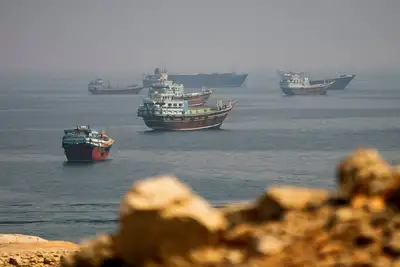
Ship-to-ship oil transfer aimed at blending crude and hiding the source of the oil.
100%
Ship-to-ship oil transfer aimed at blending crude and hiding the source of the oil.

These refineries typically delay payments for Iranian oil by at least three months, raising concerns about their ability to settle debts amid looming bankruptcies. Meanwhile, Russia has also scaled back discounts to Chinese buyers as it secures a stable customer base, possibly prompting Iran to reevaluate its competitive pricing strategy.

Shrinking market opportunities in China

Homayoun Falakshahi, a senior analyst at Kpler, told Iran International that China’s oil market is saturated, and demand is unlikely to grow further. He emphasized that even if the teapots avoid bankruptcy, China will gradually phase them out due to their environmental impact.

He said Iran has delivered only 1.33 mb/d of crude oil to China in November, 500,000 b/d less than the September level.

China, as the world’s largest emitter of greenhouse gases, is simultaneously one of the most vulnerable countries to climate change. It faces severe air pollution in major cities and is heavily investing in renewable energy. According to the International Energy Agency, China is expected to account for 60% of global renewable energy capacity additions by 2030.

Moreover, half of the cars sold in China in October were electric. State-run PetroChina predicts that China’s diesel demand peaked in 2023 and will decline by 5% annually in 2024 as LNG-fueled trucks replace diesel trucks. Gasoline demand is also declining.

The impact of Trump’s return

Before the Trump administration imposed sanctions in 2018, Iran exported 2.5 million barrels per day (mb/d) of oil. However, this figure plummeted to 350,000 barrels per day by the end of Trump's term in 2020. Under Joe Biden's more relaxed enforcement of sanctions, exports steadily increased year-over-year, reaching 1.6 mb/d by 2024.

The prospect of Trump reinstating his “maximum pressure” sanctions presents significant challenges for both Iran and China. New orders placed by Chinese refineries will take time to reach their ports, with less than two months remaining before Trump assumes office.

Circumventing sanctions—such as rebranding Iranian oil as Iraqi, Omani, or Malaysian—requires over a month of complex logistical operations. Additionally, Iran allows Chinese refineries up to three months to settle payments in yuan or through barter trade, further complicating deals going forward.

Although an immediate drop to 2020 export levels is unlikely, the $750 billion trade relationship between China and the US make further declines in exports highly probable during Trump’s presidency.

According to Vortexa tanker tracking data, about 60% of very large crude carriers involved in smuggling Iranian oil to China remain unsanctioned. Imposing US sanctions on these vessels could significantly increase the cost and complexity of bypassing restrictions.

Most Viewed

Iran negotiators ordered to return after internal rift over Islamabad talks
1
EXCLUSIVE

Iran negotiators ordered to return after internal rift over Islamabad talks

2
ANALYSIS

US blockade enters murky phase as tankers spoof signals and buyers hesitate

3
ANALYSIS

Why the $100 billion Hormuz toll revenue is a myth

4

US tightens financial squeeze on Iran, warns banks over oil money flows

5
ANALYSIS

US blockade targets Iran oil boom amid regional disruption

Banner
Banner

Spotlight

  • Hardliners push Hormuz ‘red line’ as US blockade tests Iran’s leverage
    INSIGHT

    Hardliners push Hormuz ‘red line’ as US blockade tests Iran’s leverage

  • Ideology may be fading in Iran, but not in Kashmir's ‘Mini Iran'
    INSIGHT

    Ideology may be fading in Iran, but not in Kashmir's ‘Mini Iran'

  • War damage amounts to $3,000 per Iranian, with blockade set to add to losses
    INSIGHT

    War damage amounts to $3,000 per Iranian, with blockade set to add to losses

  • Why the $100 billion Hormuz toll revenue is a myth
    ANALYSIS

    Why the $100 billion Hormuz toll revenue is a myth

  • US blockade targets Iran oil boom amid regional disruption
    ANALYSIS

    US blockade targets Iran oil boom amid regional disruption

  • Iran's digital economy battered by prolonged blackout
    INSIGHT

    Iran's digital economy battered by prolonged blackout

•
•
•

More Stories

Foreign minister seeks blessing of senior clerics for Western outreach

Dec 3, 2024, 09:30 GMT+0
•
Behrouz Turani

Foreign Minister Abbas Araghchi visited the homes of four senior clerics in Qom last week to secure their backing for negotiations with the West as the country finds itself ever weaker on the world stage.

State-run news outlets, including IRNA and ISNA, framed the visits as briefings on foreign policy and regional developments, highlighting Araghchi's portrayal of the recent ceasefire between Israel and Hezbollah as a victory for Hezbollah and a defeat for Israel.

This outreach to senior Shiite clerics, or Grand Ayatollahs, aims to shore up support from the country's ultra-hardliners, suggesting that negotiations with the West do not compromise the Islamic Republic’s ideological principles which have so long spoken of the West as the enemy.

The general public largely backs negotiations for potential financial relief in exchange for political, military, or nuclear concessions, no longer seek reassurance from clerics, many believing their influence has waned due to the Islamic government’s mismanagement of the economy and overall decline.

Recent protests by teachers and pensioners, as well as widespread demonstrations since 2018, have seen calls for the government to prioritize domestic issues over foreign commitments such as the wars in Lebanon and Gaza, led by Iran's military allies around the region.

The clerics Araghchi met are elderly and often in poor health, with their public statements typically prepared by aides. Ayatollah Abdollah Javadi Amoli (born 1933), the youngest of the group, highlighted the importance of valuing Iran’s human resources over its oil and gas wealth. Notably, he is the only cleric among the four who has previously addressed the financial struggles of Iranians and urged the government to take action.

In a public statement, Ayatollah Hossein Nouri Hamadani (born 1925) emphasized strengthening the "axis of resistance," or Iran's military allies around the region, warning against trusting Israel’s ceasefire promises in the deal with Iran's most powerful ally Hezbollah in Lebanon.

He also called for bolstering Syria in its fight against ‘takfiris,’ a term Shiites often use to describe Sunni Muslim extremists as the country now descends deeper into civil war.

Ayatollah Nasser Makarem Shirazi (born 1926) also publicly cautioned against trusting the United States and the West, urging the government to assist Lebanon and Gaza in rebuilding areas damaged by Israeli attacks since war broke out last year following Iran-backed Hamas's invasion of Israel.

Large swathes of Lebanon and Gaza have been razed as Hezbollah and Hamas bury their military infrastructure within civilian areas, which has led to the deaths of thousands amid the war under Israeli bombardment.

Ayatollah Jafar Sobhani (born 1929) made no public statements, and ISNA reported that Araghchi also met with a representative of Iraqi Shiite leader Ayatollah Ali Sistani in Qom.

On the same day, Friday prayer leaders offered contrasting takes on diplomacy. Ahmad Alamolhoda, the hardline cleric in Mashhad, questioned the value of negotiations with Europe and criticized talks with the United Kingdom, France and Germany who were recently behind a censure resolution against the Islamic Republic.

In Tehran, Friday prayer leader Mohsen Aboutorabi-Fard struck a more conciliatory tone, suggesting that if the West alters its behavior, negotiations could proceed based on mutual respect and recognition of Iran’s interests. However, it comes as Donald Trump prepares to take office for the second time, with a "maximum pressure" approach to Iran likely on the agenda.

The outreach to Qom clerics underscores the government’s attempt to navigate internal political pressures while addressing ever-growing external challenges. As the foreign minister was meeting with the Grand Ayatollahs, Syrian rebels began a surprise offensive against Iranian and Syrian government forces, swiftly capturing Syria’s second largest city, Aleppo, and threatening Iran’s 13-year presence in the country.

Political prisoner says Khamenei fueling corruption, poverty

Dec 3, 2024, 06:00 GMT+0

Imprisoned critic of Iran's Islamic government, Mostafa Tajzadeh, has accused Supreme Leader Ali Khamenei of fueling poverty and corruption in a letter written from Tehran's Evin Prison.

“After 35 years of Khamenei's rule, Iranians enjoy neither development nor prosperity; they have neither freedom nor justice,” he said in his letter shared with several media outlets.

Frequently described as a reformist, the activist’s letter follows the issuance of an additional six-year prison sentence by Tehran's Revolutionary Court.

Judge Abolqasem Salavati handed down the sentence on charges of “assembly and collusion against national security” and “propaganda against the system.” Salvati has been sanctioned by the US, for overseeing “the Iranian regime’s miscarriage of justice in show trials.”

This marks the third conviction issued against Tajzadeh since 2009.

Fakhrossadat Mohtashamipour, his wife and fellow activist, confirmed the news through a Telegram channel linked to the political activist.

She criticized the judiciary’s alignment with security forces, particularly the Islamic Revolutionary Guards’ Intelligence Organization, which she claimed orchestrated the charges.

In his letter, Tajzadeh argued the country’s economic struggles and international isolation stem from Khamenei's anti-American policies and his aggressive regional strategy, which is centered on the so-called Resistance Front.

The letter painted a grim picture of Iran’s trajectory, with the activist saying that systemic failures have eroded national sovereignty and public trust.

He argued that Khamenei’s leadership style—marked by suppression of dissent and reliance on a loyalist minority—has created a governance crisis.

“The Leader has surrounded himself with individuals who refrain from telling him the truth—either out of fear or opportunism,” Tajzadeh added.

He emphasized that the issues facing Iran are deeply entrenched in Khamenei’s policies, warning that no government could succeed under the current approach.

Tajzadeh also called for the removal of the Supreme Leader’s role from Iran’s Constitution, describing it as a harmful innovation deviating from Shia traditions.

He framed this change as essential for enabling democratic governance and resolving Iran’s enduring challenges.

“The concept of the Supreme Leader must be removed to enable democratic politics,” he wrote, saying that the current governance model has failed to resonate even within the Muslim world.

Tajzadeh’s comments reflect growing dissatisfaction among Iranian civil society, marked by years of protests and dissent.

Iranian cyberattacks target senior Israeli figures - Shin Bet

Dec 2, 2024, 20:49 GMT+0

Israel's internal security service Shin Bet assesses that Iran is behind more than 200 phishing attempts against senior Israeli officials, according to a report in the Times of Israel.

The scope of the targets was not limited to political figures, the newspaper reported citing officials from the agency, it allegedly also included Israeli media personalities, journalists and academics.

Shin Bet said the hackers approached their targets on WhatsApp, Telegram and email by trying to get them to download an app that would reportedly give Iran access to their devices.

Once the devices were hacked, the personal information that would have been obtained could have been used to carry out attacks against individuals inside Israel through local agents Iran allegedly recruited, the Shin Bet officials said.

In one case a hacker posed as Israeli Cabinet Secretary Yossi Fuchs, allegedly telling targets he was coordinating a meeting with Prime Minister Benjamin Netanyahu.

Last month Israeli police said they arrested seven Israeli citizens accused of being part of a spy network gathering information on Israel's military bases and energy infrastructure for Iranian intelligence.

In September, an Israeli citizen was arrested on suspicion of being involved in an Iranian plot to assassinate Netanyahu and other top officials.

Shin Bet said the individuals reportedly targeted have all been briefed.

Iran condemned 14 political prisoners to death last month, rights groups say

Dec 2, 2024, 20:36 GMT+0

Iran sentenced 14 political prisoners to death in November and executed at least 135 convicts, the second-highest monthly total in 2024, rights groups say, condemning capital punishment as means to quell dissent.

The executions included 127 men, 4 women, and a juvenile, with 11 Afghan nationals among those put to death, US-based rights group Human Rights Activists News Agency (HRANA) reported on Monday. Additionally, 37 individuals were sentenced to death, including 68 for drug-related offenses.

Fourteen fresh death sentences in political cases last month also indicated the ruling theocracy was determined to make a strong example of participants in the Woman, Life, Freedom protests which began in 2022.

166 people were executed in October in the deadliest month of 2024 so far, rights groups say.

Of those executed in November, one man was executed after surviving a previous execution in April.

On November 13, Iran put Ahmad Alizadeh to death in a prison outside Tehran for the second time on a murder charge. According to Oslo-based Iran Human Rights, Alizadeh, who was charged with murder, had previously been hanged for 28 seconds but was resuscitated at the plaintiffs' request.

Earlier in the month, Iran executed the first member of its Jewish minority in 30 years, Arvin Ghahremani, for the alleged murder of another man following a monetary dispute.

Woman Life Freedom activists sentenced to death

Six political prisoners were sentenced to death by Tehran’s Revolutionary Court in a joint case on charges of "armed rebellion" for allegedly belonging to "anti-regime groups," HRANA reported Monday.

The defendants — Akbar Daneshvar Kar, Mohammad Taghavi Sang-Dehi, Babak Alipour, Pouya Ghobadi Bistoni, Vahid Bani-Amerian, and Abolhassan Montazer — were sentenced to death.

In the same case, two other prisoners — Ali and Mojtaba Taghavi Sang-Dehi — were sentenced to prison, bringing the total prison term for all eight defendants to 54 years, along with 20 years of exile.

In northeastern Iran, prisoner Mohammad Mehdi-S was sentenced to death for allegedly fatally stabbing Basij member Rasoul Doost-Mohammadi during the 2022 protests in the city of Mashhad, HRANA said.

Mehdi-S, whose full name has not been disclosed, denied the charges. The court also sentenced him to 74 lashes, payment of blood money and two-and-a-half years in prison for possessing explosives.

Iran’s 2022 protests, sparked by the death of Mahsa Amini in police custody in September 2022, led to the detention of thousands.

In a high profile case in mid-November this year, Tehran’s Criminal Court sentenced six individuals connected to the 2022 protests in the Ekbatan neighborhood to death.

The defendants — Milad Armoon, Alireza Kafaei, Amir Mohammad Khosheghbal, Navid Najaran, Hossein Nemati, and Alireza Barmarzpournak — were accused of allegedly participating in the killing of Basij member Arman Ali Verdi during the Women Life Freedom uprising.

Similarly, political prisoner Mehrab Abdollahzadeh has been sentenced to death by the Revolutionary Court in Urmia, Hengaw reported on Friday.

The rights group said the sentence stems from allegations linking Abdollahzadeh to the killing of another Basij member during the 2022 Woman, Life, Freedom protests and added that he was tortured during his detention.

Women's rights activist Varisheh Moradi was also sentenced to death by Tehran's Revolutionary Court on charges of "armed rebellion." The court cited her alleged affiliation with the Free Life Party of Kurdistan (PJAK) as the basis for the sentence.

Rights groups have condemned the judicial process in these cases, citing a lack of due process, confessions coerced through torture and the targeting of political prisoners and protesters.

November's high number of executions and death penalties underscores the ongoing repercussions of the 2022 Woman, Life, Freedom protests and authorities' efforts to silence dissent through capital punishment.

This surge in executions is part of a broader trend. Last year, Iran executed at least 853 individuals, marking the highest number in eight years according to Amnesty International.

Tehran, Moscow pledge support for Assad as rebels gain in Syria

Dec 2, 2024, 16:05 GMT+0

Iranian president and his Russian counterpart discussed the situation in Syria during a phone call on Monday with both leaders expressing their commitment to supporting the Syrian government amidst escalating rebel offensives.

“The focus was on the escalating situation in the Syrian Arab Republic,” the Kremlin said, adding that “unconditional support was expressed for the actions of the legitimate authorities of Syria to restore constitutional order and to restore the political, economic and social stability of the Syrian State.”

Russia and Tehran reaffirmed their support for Syrian President Bashar al-Assad following significant territorial losses to rebel groups, including Hay’at Tahrir al-Sham (HTS) and the Turkey-backed Syrian National Army.

Kremlin spokesman Dmitry Peskov said Monday, “We continue to support Bashar Al-Assad. Contacts are continuing at the appropriate levels. We are analyzing the situation and a position will be formed on what is needed to stabilize the situation.”

President Masoud Pezeshkian also reaffirmed Iran’s readiness to bolster Syria in what he called combating terrorism.

“The Islamic Republic is ready to provide all kinds of support to Syria to eradicate terrorism and thwart the goals of its sponsors,” he said during a during a phone call with Bashar al-Assad on Monday.

Meanwhile, Iranian Foreign Minister Abbas Araghchi met with Turkish Foreign Minister Hakan Fidan in Ankara to discuss Syria.

Iran's FM Abbas Araghchi (left) held talks with his Turkish counterpart Hakan Fidan in Ankara on December 2, 2024.
100%
Iran's FM Abbas Araghchi (left) held talks with his Turkish counterpart Hakan Fidan in Ankara on December 2, 2024.

Araghchi acknowledged differences with Turkey over its backing of the Syrian National Army but emphasized a commitment to dialogue.

“We have decided to engage in closer discussions to collaboratively manage the regional situation toward peace and stability,” Araghchi said.

Fidan also expressed readiness to mediate between the Syrian government and opposition factions. However, he maintained that the Syrian conflict stems from unresolved issues over the past 13 years.

Rebel advances and humanitarian concerns

The UK-based Syrian Observatory for Human Rights reported 446 deaths over five days of intense clashes in northern Syria, including 244 rebel fighters, 61 civilians, and numerous Syrian army personnel.

Airstrikes conducted by Syrian and Russian forces targeting Aleppo and Idlib were blamed for the majority of civilian casualties, with several children among the dead.

The official Syrian news agency SANA confirmed that Russian and Syrian airstrikes in Aleppo’s eastern countryside had killed dozens of insurgents.

Assad has vowed to crush the rebels, describing the coalition of HTS and other groups as a threat to Syria’s sovereignty.

Regional and international reactions

Israel has been closely monitoring the developments in Syria. IDF spokesperson Rear Adm. Daniel Hagari said Monday that the military has observed Iran sending reinforcements to Syria.

He warned that Israel would act to prevent arms transfers to Hezbollah via Syrian territory.

“We need to make sure that we are not threatened. We are a sovereign country and we will make sure that Iranian weapons are not smuggled to Hezbollah,” he added.

“Hezbollah was defeated in the campaign and it is necessary to make sure that it does not receive weapons from Iran through Syria.”

Israel’s Foreign Minister Gideon Sa’ar earlier said that his country does not want to take sides in the Syrian conflicts.

"There is no good choice between the Syrian regime and the jihadist rebels," he said Sunday.

On the other hand, Iran’s ministry of foreign affairs blamed the US and Israel for exacerbating the situation in Syria.