Iran sells crude oil to 17 countries, says oil minister

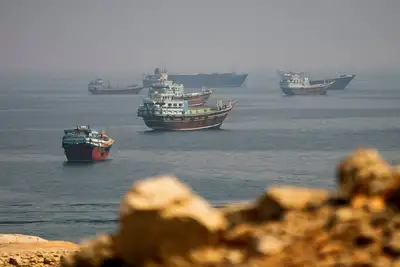
Iran’s oil minister Jawad Owji says the country is selling crude to 17 countries, including some in Europe, in spite of global sanctions.
Iran’s oil minister Jawad Owji says the country is selling crude to 17 countries, including some in Europe, in spite of global sanctions.
"We sell our oil wherever we want to," Owji said in a video shared by Mehr News Agency, defying sanctions which are in place to limit Iran's nuclear program. Others are in place for its support for Russia's war on Ukraine and human rights abuses at home.
Iran's oil exports plummeted from more than two million barrels per day to less than 300,000 by 2019, drastically reducing its primary source of foreign currency income.
However, following President Joe Biden's indication of a potential return to the nuclear agreement, China began purchasing large quantities of Iranian oil, with shipments reaching 1.3 million barrels per day in 2023.
Owji refrained from providing further details regarding the amounts sold or the identity of the buyers, the sales a key way to bypass sanctions and generate income for the country which is amid a dire recession.
The disclosure coincides with revelations from Majid Ansari, a member of Iran’s Expediency Discernment Council who said on Monday that a clandestine group, reportedly evading sanctions, offers substantial discounts to sell Iranian oil.
He revealed that the group claims to bypass sanctions using "diversionary paths," selling 1.3 million barrels daily at discounts ranging from $15 to $30 per barrel, averaging a $20 discount.
Ansari emphasized the financial loss to the Iranian people due to such discounts, stating that the sale of 1.3 million barrels per day at a $20 discount results in a daily loss of $26 million, or over $9 billion annually, exacerbating the country's shortage of hard currencies for essential imports.
Washington re-imposed sanctions on Tehran in 2018 after exiting a 2015 nuclear pact that allowed Iran to sell its oil in exchange for constraints on its nuclear program. Consequently, Iran's list of crude buyers dwindled, with most exports directed to China and smaller amounts to regional ally Syria.