• العربية
  • فارسی
Brand
  • Iran Insight
  • Politics
  • Economy
  • Analysis
  • Special Report
  • Opinion
  • Podcast
  • Live TV
  • Iran Insight
  • Politics
  • Economy
  • Analysis
  • Special Report
  • Opinion
  • Podcast
  • Live TV
  • Theme
  • Language
    • العربية
    • فارسی
  • Iran Insight
  • Politics
  • Economy
  • Analysis
  • Special Report
  • Opinion
  • Podcast
  • Live TV
All rights reserved for Volant Media UK Limited
volant media logo

Second Illicit Iranian Oil Shipment En-Route To Bangladesh

Apr 10, 2024, 14:20 GMT+1
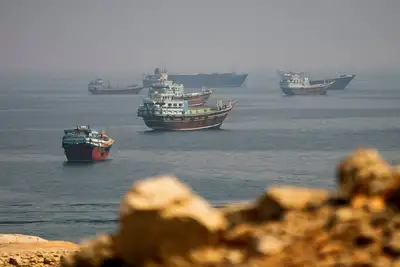
An Aframax-sized oil tanker sold to Venezuela is seen in Bushehr coast, Iran June 8, 2022.

Illicit Iranian oil is en route to Bangladesh for the second time with its arrival scheduled at Chittagong anchorage on Wednesday, as Iran continues to evade sanctions.

According to reports from NGO United Against A Nuclear Iran (UANI), the oil originated from Kharg Island, Iran, and was transferred in United Arab Emirates waters before being sent for delivery to Bangladesh.

UANI has urged Bangladesh to take a stand against the transaction and return the oil to Iran. The organization highlighted concerns over the use of ship-to-ship transfers by Iran to avoid detection of the destination of its cargo. This method involves turning off vessel transponders at sea and covertly transferring oil cargos.

The Islamic Republic employs various mechanisms, involving a network of entities and organizations, to sell its oil via third parties and evade sanctions.

Additionally, Iran has reportedly begun providing oil to state organizations, including the IRGC, as a means to bolster their budgets without direct financial allocation.

Such operations are typically orchestrated by state bodies and business figures with close ties to the regime, yielding substantial profits in the process.

Iran's oil exports have experienced a notable increase in recent years, rising from less than 500,000 barrels per day after the US re-imposed sanctions in 2019 to over 1,500,000 barrels per day.

Regime officials attribute the surge to strategies aimed at bypassing punitive measures rather than engaging in transparent dealings with the international community.


Banner

Most Viewed

After Muscat collapse, Tehran argues over what comes next
1
ANALYSIS

After Muscat collapse, Tehran argues over what comes next

2

Hormuz traffic plunges ahead of Iran-China talks

3
INSIGHT

Tehran political circles see US hand in postponement of Oman Hormuz talks

4

‘This is the cost you must pay’: Iran accused of denying food to death-row twin

5

Security forces deploy as shops in western Iran strike on Mahsa Amini anniversary

Banner

Spotlight

  • From Halkbank to Golden Global: Iran sanctions and Turkey’s banking ties

    From Halkbank to Golden Global: Iran sanctions and Turkey’s banking ties

  • A generation shaped by Woman, Life, Freedom refuses to go back
    ANALYSIS

    A generation shaped by Woman, Life, Freedom refuses to go back

  • Mahsa Amini and the century-long struggle of Iranian women
    INSIGHT

    Mahsa Amini and the century-long struggle of Iranian women

  • ‘This is the cost you must pay’: Iran accused of denying food to death-row twin

    ‘This is the cost you must pay’: Iran accused of denying food to death-row twin

  • January's unfinished love stories: Lives severed by Iran protest killings

    January's unfinished love stories: Lives severed by Iran protest killings

  • After Muscat collapse, Tehran argues over what comes next
    ANALYSIS

    After Muscat collapse, Tehran argues over what comes next

Banner
Banner