Iran's Statistical Center recently announced a decline in the country's unemployment rate to 7.6 percent this fall from 10.6 in the same period in 2019.
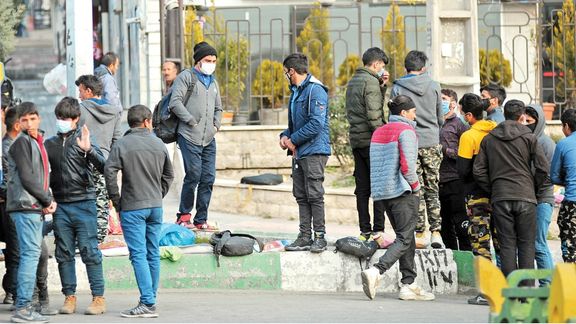
The report didn’t explain the reason for the decline, but, a comparison of the new numbers for the labor force (employed or seeking jobs) with four years ago indicates that in fact, 3.6 million job seekers have given up. This might explain the decline in the official unemployment rate.
The reason for the declining unemployment rate is not the creation of new jobs, but a decline of those seeking employment. This is more logical given deep recessions and an economic crisis since 2018, when the United States withdrew from the JCPOA nuclear accord and imposed economic sanctions.
The unemployment rate is defined as the ratio of unemployed individuals actively seeking jobs to the total active members of society, or the labor force. The unemployment rate can only decrease when either job seekers find jobs, or the unemployed give up looking for work. In Iran's case, the second scenario has occurred.
Iran's Statistical Center 's figures indicate that around 44.3 percent of individuals aged 15 and above were active (employed or in job search) during the fall of 2019. However, the recent report shows that the active labor force has declined to 41.5 percent.
If 3.6 million individuals were not discouraged from job hunting and remained active, the real unemployment rate this fall would have exceeded 18%.
Additionally, details from the Statistics Center's report indicate that two million of the country's 24.77 million employed individuals have incomplete employment, working less than 44 hours per week.
Earlier, the Parliament Research Center had highlighted that a large percentage of younger people had given up seeking employment, stating that the real unemployment rate in the country is 2.5 times higher than the official figures.
World Bank statistics also reveal a decrease in the ratio of employed individuals in Iran compared to the labor force population over the past four years.
President Ebrahim Raisi's administration, without acknowledging these realities, has claimed a significant reduction in the unemployment rate by only calculating unemployed individuals seeking jobs against the total active population.
Low Employment Rates among Educated Youth and Women
The details of the new report from the Statistical Center indicate that 43 percent of those seeking jobs hold higher education degrees.
This highlights a significant challenge for young graduates in finding jobs. Additionally, the economic participation rate of women is remarkably low, with approximately 11.4% of Iranian women in working age being employed.
In other words, nearly 91% of women above the age of 15 in Iran are without any occupation, even in family-related businesses such as farming and agriculture.
The World Bank statistics reveal that, among regional countries, only Iraq and Yemen have a worse employment situation than Iran.
In comparison, the employment ratio of working women to the total female population above 15 years of age is around 57% in Qatar and 49% in the UAE. A similar situation prevails in Kuwait and Bahrain, with the female workforce ratios above 56% in the Republic of Azerbaijan and Armenia.
Even in the traditionally conservative Saudi Arabia, which had a comparable employment ratio with Iran in early-2010s, the figure has now increased to more than 29%, surpassing Iran by 2.5 times. A similar situation is observed in Oman.
Economic Indicators: Inflation, Unemployment, and Wage Disparities
The combined rates of unemployment and inflation constitute the "misery index," with Iran consistently ranking among the top countries in the region, facing high misery scores.
It is evident that wage disparities in Iran are also the worst in the region, with the average income of employed individuals in Saudi Arabia, the United Arab Emirates, and Qatar being 7 times, 13 times, and 18 times higher than in Iran. Even in Azerbaijan and Armenia, the average wages are approximately double those in Iran.
This substantial wage gap exists while the Raisi administration has increased the minimum wage by about 20% for the coming fiscal year, starting on March 22. However, the increase is not even half of the the annual inflation rate in the country. Another notable point is that a significant portion of employed women in Iran do not receive wages as they work in family-related jobs, especially in agriculture.
The World Bank estimates that only 60 percent of employed women in Iran receive wages. In contrast, in Qatar, 100 percent of employed women receive wages, 94 percent in the United Arab Emirates, and in Saudi Arabia, it is over 88 percent.
Moreover, the International Monetary Fund (IMF) figures reveal that the gender pay gap in Iran is approximately 23 percent in public sector occupations and around 36 percent in non-governmental jobs, indicating a significant gender-based wage disparity in Iran.
People carry the coffin of one of the casualties of the attack in Kerman, after Friday prayers in Tehran, Iran, January 5, 2024.
Iran’s Interior Minister Ahmad Vahidi said Friday that a number of suspects have been arrested over the Kerman attacks claimed by Islamic State.
According to Vahidi, the country's intelligence bodies have found "very good leads" regarding individuals involved in the Kerman explosions. He added, "Some of those who played a role in this incident have been arrested."
Vahidi stated that comprehensive information on this matter will soon be communicated by the intelligence apparatus.
His remarks came in the aftermath of the twin bombings in Kerman, where a commemorative event for Qasem Soleimani, the late commander of the IRGC's Quds Force, was targeted. Nearly 90 people were killed in the incident and 284 were injured.
Majid Mohammadi, Vahidi’s deputy in security affairs, claimed later in the day that the suspects were arrested in five different cities.
The funeral for about half of the casualties was held on Friday.Crowds chanted "revenge, revenge" in state TV footage of the funerals in the city of Kerman, the scene of Wednesday's explosions, the bloodiest such attacks in Iran since the 1979 Islamic Revolution. The security lapses leading to the deadly attack have sparked public criticism and concerns about the Islamic Republic's ability to ensure the safety of its citizens during such events.
Despite the claim of responsibility by the Islamic State (ISIS), the Islamic Republic authorities, such as President Ebrahim Raisi and IRGC Commander-in-Chief Hossein Salami, blame Israel and the United States for the attack.
The Istanbul-based correspondent for the German public TV station ARD sparked anger over his report that claimed all Iranians worship IRGC’s late Qasem Soleimani.
“Every Iranian, whether opposition or not, worships him as a hero, “Markus Rosch told millions of viewers on Wednesday watching the popular ARD Tagesschau news program. Rosch’s comment about a man accused of fomenting bloodshed in the Middle East triggered widespread outrage on social media, prompting Rosch to walk back his statement.
Many Iranians view Soleimani as a destructive figure, labeling him a master terrorist, echoing the terminology used by the United States. Some critics argue that his primary focus was on developing Iran's regional proxy networks rather than addressing domestic concerns.
Bomb explosions may have killed as many as 94 people and there remain conflicting reports about the perpetrators behind the mass murder in the city of Kerman.
Sheina Vojoudi, who fled the Islamic Republic of Iran to Germany to escape persecution, told Iran International “Statements like this disrespect thousands of innocent Iranian lives taken away by Qasem Soleimani. Soleimani was responsible for the mass killing of the Iranian protesters in Bloody November 2019. One of the IRGC’s high ranking commanders confirmed Soleimani’s key role also in suppressing the protests in 1999 and 2009 with violence and thousands of Iranians were murdered, tens of thousands were arrested and tortured in the Islamic Republic’s prisons. “
Germany’s largest mass circulation paper, Bild, reported “The outrage is now having an impact on ARD correspondent Markus Rosch.” Bild wrote that Rosch wrote on X, “I apologize for this mistake. Soleimani is only worshiped as a hero by the Islamic Republic regime and its supporters.” It is unclear if ARD disciplined Rosch for his journalistic misconduct.
After rising anger on X, ARD published a correction on its website about Rosch’s false information.
Vojoudi, an associate fellow for the Gold Institute for International Strategy, said about the myth that the US and EU-designated terrorist, Soleimani, was beloved by Iranians. “This is the Islamic Republic’s propaganda and shockingly the western media help the Islamic regime to spread it. The Iranian people are the main victims of the Islamic Republic’s terrorism.”
She added “Soleimani was in competition with Ali Khamenei to gain the first place in killing the Iranian people and spreading terrorism in the whole region.”
Vojoudi went on to say that “The regime still kills Iranians in his name and recently the regime’s supporters started to identify the Iranian students who expressed their happiness on Soleimani’s death anniversary and started a campaign to share the identity, address and the name of the universities of the these students and promised them to arrest and torture them in prison.”
Behrouz Asadi, the head of the Democratic Forum of Iranians in Mainz, Germany also expressed shock about the ARD broadcast. He told Iran International, “It is shameful to call him a hero of the people.”
Soleimani “belongs to a regime that only has terror, arrest, torture and executions on its record. He belonged to the IRGC terrorist organization and is not a representative of the Iranian people,” said Asadi, an energetic campaigner against the Islamic Republic.
He added, “The regime tries to present him as a hero in the sense of a totalitarian regime. The majority of the people have a clear stance against him and the regime. He was instrumental in maintaining the regime. The people stood up several times for freedom and democracy and human rights. He and his perpetrators tried to nip every cry for democracy in the bud.”
Asadi said Soleimani “set up mercenaries abroad for terror. He was involved in Assad's stability through wars against the Syrian people. The Iranian people are fighting for peace and freedom.”
Iran’s prosecutor-general has threatened legal action against individuals publishing norm-breaking content about the twin bombing in Kerman this week.
Mohammad Movahedi-Azad issued the stern warning to curb the dissemination of ideas or news that may be deemed contrary to the government's narrative.
"Given the necessity of taking decisive action against individuals who have disrupted the mental security of society by producing, disseminating, and republishing illegal content, it is essential for intelligence and security agencies to identify all involved parties and perpetrators and introduce them to the relevant judiciary."
Despite the warning, numerous individuals have taken to social media to express their dissatisfaction with the government's perceived inadequate security measures leading to the deadly incident in Kerman. Critics argue that the failure to ensure the safety of public gatherings resulted in this deadly attack.
The bombing targeted a large public gathering commemorating Qasem Soleimani, the late commander of the IRGC's Quds Force, who was killed by a US drone strike in January 2020. Nearly 90 people were killed in the incident and 284 were injured.
Iranian dissidents view Soleimani as a controversial figure, labeling him a master terrorist, echoing the terminology used by the United States. Some critics argue that his primary focus was on developing Iran's regional proxy networks rather than addressing domestic concerns.
Questions are being asked about the veracity of the claim that ISIS was behind the twin bombings in Kerman. No one claimed responsibility for the attack for almost 30 hours, when reports appeared that ISIS (or Daesh) had issued a statement posted on the chat app Telegram. Immediately, many Iranians began to express doubt about the ISIS claim, convinced that the Islamic Republic itself was somehow responsible for one of the worst acts of violence against civilians.
Oil and gas tanks are seen at an oil warehouse at a port in Zhuhai, China October 22, 2018.
China's oil trade with Iran has stalled as Tehran withholds shipments, demanding higher prices from its top client, Reuters quoted refinery and trade sources as saying.
The cutback in Iranian oil, which makes up some 10 percent of China's crude imports and hit a record in October, could support global prices and squeeze profits at Chinese refiners.
Early last month Iranian sellers told Chinese buyers they were narrowing discounts for December and January deliveries of Iranian Light crude to between $5 and $6 a barrel below dated Brent, five traders who handle the oil or are familiar with the transactions told Reuters.
Those deals had been struck in November at discounts around $10 a barrel, the traders told Reuters.
The exclusive report did not say how Iran was going to manage its finances, as China is almost the sole buyer of its oil since the United States imposed full sanctions on Iranian crude exports in 2019.
Already Iran faces revenue shortfall despite shipments to China that the Biden administration allowed to surge from a low of around 250,000 barrels per day in 2019 to above one million barrels in 2023. Iran’s currency has fallen to near historic lows, trading at 510,000 rials per dollar, a 12-fold decrease since 2018.
In late December, Iran announced $26.5 billion in oil export revenues in nine months since March, but Iran International’s analysis indicated the number was closer to $22 billion.
A gas flare on an oil production platform is seen alongside an Iranian flag in the Persian Gulf, July 25, 2005.
A China-based trading executive told Reuters, "This is considered as an extensive default and the order to hike prices apparently came from the headquarters in Tehran, as they're holding back supplies also to the intermediaries."
An executive at a Chinese middleman that procures directly from Iran said Tehran was "holding back some shipments", leading to a "stalemate" between Chinese buyers and Iranian suppliers.
"It's not clear how things would end," this executive told Reuters. "Let's wait a bit and see if refineries are willing to accept the new price."
China has saved billions of dollars buying often deeply discounted oil from sanctioned producers Iran, Venezuela and, more recently, Russia - countries that supply almost 30 percent of China's crude imports.
The abrupt move, which one industry executive called a "default", could also represent the backfiring of an October US waiver on sanctions of Venezuelan oil, which diverted shipments from the South American producer to the US and India, elevating prices for China.
'TEAPOTS' SQUEEZED
It is not clear how extensive Iran's cutbacks to China are. At least one buyer has accepted higher prices: a Shandong-based refiner bought a cargo late last month at discounts between $5.50 and $6.50 on a delivered ex-ship basis, two traders said.
The discounts could narrow further, as the latest offer heard was $4.50, the traders said. Last year's average discount for Iranian Light, a key grade China buys with a high middle-distillates yield, was about $13, traders say.
"The buyers are still struggling to find a solution as the new prices are too high," said a Shandong-based buyer. "But since they have limited choices and the Iranian side is very tough, the room for price negotiations is difficult and is not favoring Chinese buyers."
China's smaller independent refiners, called "teapots", have become Tehran's top clients since first buying Iranian oil in late 2019. They replaced state-run refiners, which stopped dealing with Iran over concerns about falling afoul of US sanctions.
Teapots absorb about 90% of Iran's total oil exports, usually passed off as oil originating in Malaysia or the United Arab Emirates, trade sources say.
Amid the tussle over prices, Iran's overall exports and China's imports from Iran have fallen.
China imported about 1.18 million barrels per day (bpd) of Iranian oil last month, down from 1.22 million bpd in November and 23 percent off October's record 1.53 million bpd, tanker tracker Vortexa Analytics reckons.
That represents the bulk of Iran's global seaborne crude exports, which another tracker, Kpler, estimates at 1.23 million bpd for December, down from 1.52 million bpd in November. Floating storage off Iran and nearby waters rose by about 2 million barrels to 15.5 million barrels over the past week, Kpler says.
"The Iranians want to play catch-up in prices with (Russia's) ESPO. But they don't fully realize the extent of sanctions on Iranian oil is different from that on Russian," said a trading manager at an independent refiner.
Washington has sanctioned more than 180 people and entities related to Iran's petroleum and petrochemical sectors since 2021, identifying 40 vessels as blocked property of the sanctioned entities.
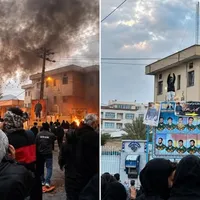
A scene in Kerman, Iran after the bombing on Jan. 3,2024
Questions are being asked about the veracity of the claim that ISIS was behind the twin bombings in Kerman, Iran, which killed between 84-94 people on Wednesday.
The bombing took place at an event commemorating Qasem Soleimani, the commander of the IRGC’s Quds force and Iran’s most powerful military figure, who was killed by a US drone strike in January 2020.
No one claimed responsibility for almost 30 hours, when reports appeared that ISIS (or Daesh) had issued a statement posted on the chat app Telegram.
Immediately, many Iranians began to express doubt about the ISIS claim, convinced that the Islamic Republic itself was somehow responsible for one of the worst acts of violence against civilians.
“How lovely of ISIS. They always come to the regime’s rescue at crucial moments,” wrote one dissident activist on social media. “The same thing happened last year [in Shiraz] during the protests, just as the regime was losing control.” This was a reference to a terror attack on Shahcheragh shrine at the height of anti-regime protests in 2022.
This sentiment is very common among Iranians. It is expressed in various forms and on various grounds, such as the fact that no official or figure of note, not even Soleimani’s family, were present at the ceremony. All such assertions arrive at the same conclusion that “it was the regime itself.”
So far there’s no evidence to validate such suspicion.
Curiously enough, the regime’s ultras (for once) seem to share the public’s view that it wasn’t ISIS, but they’re pointing in another direction.
“The ISIS statement has been issued with Zionists' supervision,” the IRGC-affiliated Tasnim proclaimed on its official X account. It then pointed out what it believed were inconsistencies and irregularities that proved the ISIS statement was not authentic.
But that post was deleted shortly after, creating more confusion and fueling speculations about the potential perpetrators and their motivation.
The question was then duly taken to US officials.
“We don't have any more detail in terms of how it happened or who might be responsible for it," saidJohn Kirby, the spokesperson for the US National Security Council, in a press conference Thursday. "We have no indication at this time at all that Israel was involved in any way whatsoever."
The State Department’s spokesperson Matthew Miller seconded Kirby’s statement.
"It's too early, at least, for us to be able to say what might have caused it,” he said in the department’s briefing. “The United States was not involved in any way, and any suggestion to the contrary is ridiculous… and we have no reason to believe that Israel was involved in this explosion."
The US and Israel have not yet been officially blamed by the Iranian government – possibly because doing so would put the IRGC in a difficult position: do nothing and look weak or retaliate and risk a costly confrontation that it seems to want to avoid. But a host of officials, and government media have blamed Israel and some have also named the US.
Fears of a full-blown regional war are growing by the day.
Over the weekend, Yemen Houthis attacked yet another commercial vessel. Americans responded by sinking three Houthi boats. On Tuesday, Israel killed a senior Hamas official by a drone attack in Beirut. Then came the bombing in Kerman. And Thursday, the US military killed an Iraqi militia leader in Baghdad.
Politico reportedThursday evening that US officials “are drawing up plans… to respond to what they’re increasingly concerned could expand from a war in Gaza to a wider, protracted regional conflict.”
Inside Iran, activists are concerned that the bombing in Kerman –whoever the perpetrator– could be used as an excuse to further suppress dissidents and regime critics.
“These circumstances empower the government to justify and implement actions that would be unjustifiable under normal circumstances.” posted the human rights organization Hengaw on X. “This situation may lead to a reduction in government transparency and accountability, resulting in widespread human rights violations.”