• العربية
  • فارسی
Brand
  • Iran Insight
  • Politics
  • Economy
  • Analysis
  • Special Report
  • Opinion
  • Podcast
  • Iran Insight
  • Politics
  • Economy
  • Analysis
  • Special Report
  • Opinion
  • Podcast
  • Theme
  • Language
    • العربية
    • فارسی
  • Iran Insight
  • Politics
  • Economy
  • Analysis
  • Special Report
  • Opinion
  • Podcast
All rights reserved for Volant Media UK Limited
volant media logo

Statement On Formal Threats To The Life Of Journalists On UK Soil

Nov 7, 2022, 10:40 GMT+0

Below is a corporate statement by Volant media published in full.

Statement released 07/11/2022, 11:00 GMT

“Iran International, the independent UK-based Farsi-language news channel is shocked and deeply concerned by the credible threats to life its journalists have received from the IRGC.

Two of our British-Iranian journalists have, in recent days, been notified of an increase in the threats to them. The Metropolitan Police have now formally notified both journalists that these threats represent an imminent, credible and significant risk to their lives and those of their families. Other members of our staff have also been informed directly by the Metropolitan Police of separate threats.

Our journalists are subject to abuse 24/7 on social media. But these threats to life of British-Iranian journalists working in the UK marks a significant and dangerous escalation of a state-sponsored campaign to intimidate Iranian journalists working abroad. These lethal threats to British citizens on British soil come after several weeks of warnings from the IRGC and Iranian government about the work of a free and uncensored Farsi-language media working in London.

Britain is the home of free speech. Iran International stands as part of that tradition, proud to serve the 85m people of Iran with independent, uncensored information. The Islamic Republic of Iran, and specifically the IRGC cannot be allowed to export their pernicious media crackdown to the UK. The IRGC cannot be allowed to act abroad with impunity.

We hope that the UK Government, international governments and other organisations will join us in condemning these horrific threats and continue to highlight the importance of media freedom.

We would like to thank the Metropolitan Police for their considerable efforts in keeping journalists safe.”
Most Viewed

Iran negotiators ordered to return after internal rift over Islamabad talks
1
EXCLUSIVE

Iran negotiators ordered to return after internal rift over Islamabad talks

2
ANALYSIS

US blockade enters murky phase as tankers spoof signals and buyers hesitate

3
ANALYSIS

Why the $100 billion Hormuz toll revenue is a myth

4

US tightens financial squeeze on Iran, warns banks over oil money flows

5
ANALYSIS

US blockade targets Iran oil boom amid regional disruption

Banner
Banner

Spotlight

  • Hardliners push Hormuz ‘red line’ as US blockade tests Iran’s leverage
    INSIGHT

    Hardliners push Hormuz ‘red line’ as US blockade tests Iran’s leverage

  • Ideology may be fading in Iran, but not in Kashmir's ‘Mini Iran'
    INSIGHT

    Ideology may be fading in Iran, but not in Kashmir's ‘Mini Iran'

  • War damage amounts to $3,000 per Iranian, with blockade set to add to losses
    INSIGHT

    War damage amounts to $3,000 per Iranian, with blockade set to add to losses

  • Why the $100 billion Hormuz toll revenue is a myth
    ANALYSIS

    Why the $100 billion Hormuz toll revenue is a myth

  • US blockade targets Iran oil boom amid regional disruption
    ANALYSIS

    US blockade targets Iran oil boom amid regional disruption

  • Iran's digital economy battered by prolonged blackout
    INSIGHT

    Iran's digital economy battered by prolonged blackout

•
•
•

More Stories

Iran Had To Warn Russia Against Use Of Its Drones, Editor In Tehran Says

Nov 7, 2022, 09:17 GMT+0

The well-known conservative editor of a government newspaper in Iran has asked the government why it did not ban Russia from using Iranian drones against Ukraine.

Massih Mohajeri, the editor of Jomhouri Eslami (Islamic Republic) newspaper said on Monday “the fact that you have changed your stance from denying the delivery of drones to Russia to admitting that we gave drones to Russia before the Ukraine war should be taken as a good sign.” But now the government must also admit that it failed to stop Moscow from using the drones in its war on Ukraine, he said.

Iran’s Foreign Minister Hossein Amir-Abdollahian said Saturday Tehran provided Moscow with a limited number of drones months before the war in Ukraine, but if it is proven that Russia has used them in the war against Ukraine, the Islamic Republic will not be indifferent to it.

Slamming regime’s approach to the war in Ukraine he also stated, “The minimum thing the authorities of the Islamic Republic of Iran could have done in the war in Ukraine was to first negotiate with both sides of the war by forming a mediation committee and encourage them to stop the war.”

He further wrote, “In the very days of the beginning of the war, Tehran could have announced to Moscow that it has no right to use the drones provided by Iran in the war on Ukraine,” stressed Mohajeri.

Four Dead As Soldier Opens Fire On Police Personnel in Iran

Nov 6, 2022, 11:15 GMT+0

An Iranian soldier has opened fire on personnel at a police station in Bampur in the flashpoint province of Sistan and Baluchestan killing four on Sunday.

Social media users say the incident is related to the heavy crackdown on protesters by government forces in the southeastern province.

However, the city police chief alleges that a personal dispute between the attacker and another soldier led to the shooting while other personnel present at the headquarters intervened.

“This incident led to death of three police staff and one soldier, and the assailant is under arrest,” added Bampur’s police chief.

Sistan and Baluchestan has been the hotbed of anti-regime demonstrations since September after protests against Mahsa Amini’s death spread to over 100 cities across Iran.

Security forces killed scores of Sunnis during protests on September 30, and the influential cleric of the provincial capital Zahedan Molavi Abdolhamid held Supreme Leader Ali Khamenei responsible.

The attack by the IRGC left more than 90 unarmed Baluch citizens dead as reported by human rights watchdogs in Iran and abroad.

Security forces once again opened fire at protesters with live ammunition while a huge crowd of people chanted “Death to Khamenei” and “Death to Dictator” during protests in Khash and Zahedan following Friday prayers November 4.

Molavi Abdolhamid, who called for a plebiscite in Iran during his Friday prayer sermon November 4, confirmed the death of at least 16 people and dozens of more injuries in Khash.

US Rejects Iran's Claim Of Giving Drones To Russia Before Ukraine War

Nov 5, 2022, 19:06 GMT+0

US Special Envoy for Iran Robert Malley has rejected a claim by Iran's foreign minister that Tehran supplied drones to Russia prior to its invasion of Ukraine.

In a tweet Sunday, Malley was reacting to Hossein Amir-Abdollahian's admission that Iran provided military drones to Russia, but before the Ukraine war. Tehran's top diplomat said his government will act if evidence exists of Iranian drones being used in the war.

Malley, however, said that "Iran didn’t give a limited number of drones before the war. They transferred dozens just this summer & have military personnel in occupied Ukraine helping Russia use them against Ukrainian civilians. Confronted with evidence, they need a new policy, not a new story."

The United States warned in July that Iran was preparing to supply drones to its ally Russia, as the war in Ukraine was going badly for Moscow. By October, Ukraine was showing evidence of dozens of Iranian Shahed-136 suicide drones targeting its infrastructure and cities.

Europe and the US have adopted a tough position on the issue, warning of more sanctions against the Islamic Republic.

Tehran first denied it had supplied weapons to the warring sides in Ukraine but has now admitted that it has supplied drones without any specifics.

In recent days reports have emerged claiming that Tehran is also preparing to supply ballistic missile to Moscow, as its stockpile of conventional missiles are running low.

Iran is already subject to US oil export and international banking sanctions over its nuclear program.

Iran's Currency In Freefall As Protests Sweep The Country

Nov 5, 2022, 17:27 GMT+0
•
Mardo Soghom

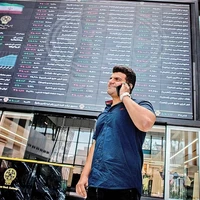
Iran's battered currency, the rial, was in a freefall on Saturday, hitting a historic low of more than 360,000 against the US dollar amid continuing protests.

Since August, when there were some hopes for a nuclear deal with the United States, the rial has lost more than 20 percent of its value, hit by the double impact of an impasse in the negotiations and nationwide protests.

The Iranian currency fell almost 20,000 points after the Friday weekend, from around 340,000 on Thursday to 360,000 when the markets reopened on Saturday. By evening, the rial made slight gains in what could have been a central bank intervention, but the fate of the currency remains bleak.

It is not clear how much foreign currency the government has injected into the market since the first week of September when the rial began to fall. Often, the Central Bank of Iran (CBI) withholds such information.

There have been unconfirmed reports that people associated with the government have been sending their capital out of the country as protests show no signs of stopping. Unlike past nationwide unrest, this time it is clear that protesters want an end to the clerical regime of the Islamic Republic and will not be easily satisfied with minimal concessions, even if the hardliner core of the regime decides to offer an olive branch.

The government insists that it is successfully circumventing US sanctions on its oil exports, selling more than one million barrels of crude per day, mostly shipped to China that silently ignores Washington's threat to penalize third parties for buying Iranian oil.

However, it is not clear how much discount Tehran is offering Chinese buyers and how much foreign currency it receives despite parallel US banking sanctions. Some have argued that most of Iran's oil is shipped in lieu of goods in illicit barter trades, which according to former Tehran officials costs the country more than 20 percent in lost value.

The freefall in the exchange value of the rial signals insufficient CBI resources to effectively intervene in the market. A relatively stable rial is politically vital for a government under siege by growing protests.

During the 1979 Iranian revolution the rial stayed at 70 to the dollar until after the overthrow of the monarchy when the currency began its 43-year-long decline, which has surpassed a 5,000-fold loss of value.

The unprecedented currency crisis will have a direct impact on inflation and especially food prices, which can lead to more people joining the protests and severely destabilizing the government. Annual inflation is already around 50 percent and food prices have risen by 100 percent since last year.

While the clerical regime still has hundreds of thousands of Revolutionary Guard troops, Basij militia and vigilantes to confront the people on the streets, and no major defections have been reported so far, the currency crisis will contribute to an image of a government in disarray, facing its most serious crisis in 43 years.

So far, hardliners in charge of the military, the presidency and parliament have shown no willingness to compromise with the populace, but even major concessions may prove to be insufficient to quell the young generation that has tasted success in defying a fearsome suppression machine fore almost 7 weeks.

The government is talking about a 20-percent raise for workers in its sprawling state-sector economy, but the rial's steep fall has already eaten away at any benefit for workers who make less than $200 a month.

On the contrary a big raise at this point would mean that the CBI has to print more money and push the inflation rate higher.

Iran Tests Satellite-Carrying Rocket - State TV

Nov 5, 2022, 16:29 GMT+0

Iran's Revolutionary Guards tested a new satellite-carrying rocket on Saturday, state media reported, a development likely to anger the United States.

Washington fears the same long-range ballistic technology used to put satellites into orbit could also be used to launch nuclear warheads. Tehran has regularly denied having any such intention.

"The flight test of this satellite carrier with a solid-fueled engine ... was successfully completed," state news agency IRNA reported.

The Ghaem 100, Iran's first three-stage launch vehicle, will be able to place satellites weighing 80 kg (176 lb) in an orbit of 500 km (310 miles) from the earth's surface, IRNA said.

Amirali Hajizadeh, head of the Revolutionary Guards' aerospace division which developed the Ghaem 100, said the rocket would be used to launch Iran's Nahid satellite for the telecommunications ministry, state media reported.

Saturday's operation tested the first sub-orbital stage of the rocket, the reports added.

Iran, which has one of the biggest missile programs in the Middle East, has had several failed satellite launches in the past few years, blamed on technical issues.

A UN resolution in 2015 called on Iran to refrain for up to eight years from work on ballistic missiles designed to deliver nuclear weapons following an agreement with six world powers.

Iran says it has never pursued the development of nuclear weapons and, therefore, the resolution does not apply to its ballistic missiles, which Tehran had described as an important deterrent and retaliatory force.

Reuters Report