• العربية
  • فارسی
Brand
  • Iran Insight
  • Politics
  • Economy
  • Analysis
  • Special Report
  • Opinion
  • Podcast
  • Iran Insight
  • Politics
  • Economy
  • Analysis
  • Special Report
  • Opinion
  • Podcast
  • Theme
  • Language
    • العربية
    • فارسی
  • Iran Insight
  • Politics
  • Economy
  • Analysis
  • Special Report
  • Opinion
  • Podcast
All rights reserved for Volant Media UK Limited
volant media logo

US Can Ask Belgium To Extradite Iranian Terror Convict
Iran International Newsroom
Jul 25, 2022, 23:32 GMT+1Updated: 17:42 GMT+1
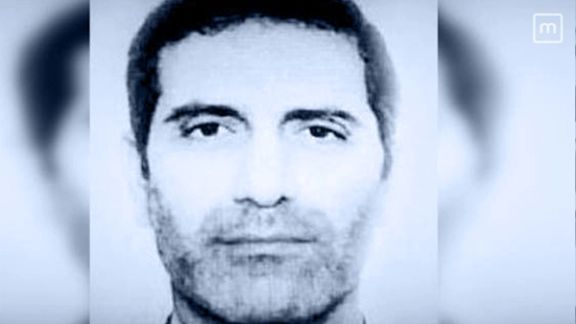
Iranian diplomat Assadollah Assadi serving his sentence in Belgium on a terrorism conviction

Iran's government has presented a Prisoner Exchange Treaty with Belgium to the Parliament, which was already ratified earlier this month by Belgian lawmakers.

He made the move on Monday as Tehran is pushing to finalize a deal on the expatriation of convicts between Iran and Belgium so that they would serve their sentences in their home countries. Critics fear that the treaty will pave the way for the release of Assadollah Assadi, a former Iranian diplomat serving a 20-year prison sentence in Belgium for “attempted murder and involvement in terrorism” for his role plotting to bomb a gathering of the exiled Albania-based opposition group Mujahedin-e Khalq Organization (MEK) near Paris in 2018.

Following several postponements and complaints by Belgian and US politicians, the contentious treaty was ratified by the Belgian parliament on July 20, however, a court in Brussels temporarily stopped Assadi’s extradition on July 22, pending “cross-examination before a judge” through an adversarial procedure – a hearing where both proponents and opponents of the prisoner-swap deal with Tehran -- including victims who had registered as civil parties to the trial – be present or represented by a lawyer.

Also on Monday, Belgian parliament member Michael Freilich told Iran International that the reports of a possible US request for Assadi’s extradition are not confirmed, but the possibility of a US request should not be underestimated.

He was referring to claims by Darya Safai, an Iranian-born member of Belgian parliament, who tweeted earlier in the day that Washington is planning to ask Belgium for expatriation of the former Iranian diplomat to the US in order to prevent his return home.

Freilich noted that the United States can make such a request because many senior American officials were also present at the gathering of the Iranian opposition group in France, which was supposed to be attacked by terrorists. He added that he is in correspondence with his contacts in the US Congress and the State Department regarding the issue.

Belgian parliament member Michael Freilich. FILE
100%
Belgian parliament member Michael Freilich

He said that today is a sad day for all those who take the issue of fighting terrorism seriously, because this agreement will actually embolden the Iranian regime in its terrorist activities.

Belgium’s Justice Minister Vincent Van Quickenborne says that the assessment of the Belgian security service was that the treaty would decrease security threats for Belgians living and working in Iran.

Two Belgian newspapers reported on Monday that Washington is considering to request Assadi’s extradition, saying that the Department of Justice plans to try him in the US.

There are unconfirmed reports about the possibility of an exchange to secure the release of a Belgian man jailed in Iran since February under “espionage” charges.

Iran International broke the news that Tehran has detained a Belgian aid worker, identified as Olivier Vandecasteele, another example of the often-used Iranian tactic of imprisoning foreigners as hostages to exchange them with certain Iranians jailed in Western countries. Iran arrested the 41-year-old aid worker just when it was negotiating the treaty in question, which shows its lack of good will.

In the past years, 49 European citizens have been arrested in Iran. Eighteen of them are still in prison. Two of them have been killed, one has been executed and one died due to lack of medical access, Van Quickenborne claimed earlier in July.

Iran’s chief justice Gholam-Hossein Mohseni-Ejei also reiterated calls on Monday to release Assadi as well as former Iranian jailor Hamid Nouri, who was sentenced to life in prison on July 14 for his role in a purge of political prisoners in Iran in 1988.

He was charged with “war crimes, crimes against humanity, torture, and participating in the continued crime of refusing to return the bodies of executed prisoners to their families.” He has denied any wrongdoing and said plaintiffs' allegations were a "completely imaginary story".

Sweden arrested Nouri, now 61, upon his arrival in Sweden in 2019 and in 2021put him on trial over the mass execution and torture of prisoners in July and August 1988. Most victims were linked to the MEK but there were also some with links to leftist and secular groups.

There are allegations that Iran seeks to exchange Nouri with Swedish-Iranian scientist and academic Ahmad-Reza Djalali arrested on vague charges of espionage and collaboration with Israel in 2016 and sentenced to death in 2017.


Most Viewed

Iran negotiators ordered to return after internal rift over Islamabad talks
1
EXCLUSIVE

Iran negotiators ordered to return after internal rift over Islamabad talks

2
ANALYSIS

US blockade enters murky phase as tankers spoof signals and buyers hesitate

3
ANALYSIS

Why the $100 billion Hormuz toll revenue is a myth

4

US tightens financial squeeze on Iran, warns banks over oil money flows

5
ANALYSIS

US blockade targets Iran oil boom amid regional disruption

Banner
Banner

Spotlight

  • Hardliners push Hormuz ‘red line’ as US blockade tests Iran’s leverage
    INSIGHT

    Hardliners push Hormuz ‘red line’ as US blockade tests Iran’s leverage

  • Ideology may be fading in Iran, but not in Kashmir's ‘Mini Iran'
    INSIGHT

    Ideology may be fading in Iran, but not in Kashmir's ‘Mini Iran'

  • War damage amounts to $3,000 per Iranian, with blockade set to add to losses
    INSIGHT

    War damage amounts to $3,000 per Iranian, with blockade set to add to losses

  • Why the $100 billion Hormuz toll revenue is a myth
    ANALYSIS

    Why the $100 billion Hormuz toll revenue is a myth

  • US blockade targets Iran oil boom amid regional disruption
    ANALYSIS

    US blockade targets Iran oil boom amid regional disruption

  • Iran's digital economy battered by prolonged blackout
    INSIGHT

    Iran's digital economy battered by prolonged blackout

•
•
•

More Stories

Zelensky Adviser Says Russia And Iran Allies In Ukraine War

Jul 25, 2022, 18:41 GMT+1
•
Iran International Newsroom

Russia and Iran are allies in the Ukraine war and it won’t be a surprise if Tehran supplies drones to Moscow, an adviser to President Volodymyr Zelensky says.

In an interview with Iran International on Monday, Alexander Rodnyansky an economist at Cambridge University commented on the possible provisioning of Iranian military drones.

“We have to view it in that perspective that Iran and Russia are allies in this conflict. In Ukraine, we obviously have no illusions about this. So, we are obviously very aware of what's going on, and we're going to be very careful about our relationship with Iran and what we hear from Iranian authorities when it comes to Ukraine,” he told Iran International.

United States National Security Adviser Jake Sullivan warned earlier this month that Iran was planning to sell drones to Russia to be deployed in Ukraine. US officials followed up by more warnings about a possible deal that could cause more civilian deaths.

Rodnyansky argued that he sees Russia increasingly resembling the authoritarian regime in Iran in recent years. Saying that repression and other dictatorial traits have been adopted by Moscow, he said, “Now it has really become a full autocracy, you could almost say a dictatorship…we should be very cognizant of the fact that Russia under its current leadership is trying to build the Iranian type of model as a state.”

He went on to say, “It's this repressive type of regime that uses deception, lies, manipulation and terror constantly to stay in power and pursue its agenda.”

Russia's Putin and Iran's Khamenei meeting in Tehran on July 19, 2022
100%
Russia's Putin and Iran's Khamenei meeting in Tehran on July 19, 2022

He argued that close ties between Moscow and Tehran and the possibility of a drone deal should be viewed from this perspective, although Iranian officials have been trying to deny reports of arms transfers.

“We know what type of regime it is, and we know that just as in Russia, you can't really trust any single word that comes out of the (Iranian) officials' mouths,” Rodnyansky said, underlining that Ukraine will believe Iranian assurances only when it sees concrete proof.

When the Russian invasion of Ukraine began in February, Iran tried to exhibit neutrality, calling for an end to hostilities, but blaming the West for triggering the war by expanding NATO. But since then, Tehran has adopted a more aggressive tone toward the West as it has refused to accept a nuclear deal offered in the Vienna talks to revive the 2015 agreement known as the JCPOA.

On July 24, two Iranian hardliner newspapers called for standing with Russia in the Ukraine war, after the country’s Supreme Leader Ali Khamenei threw his support behind Putin last week when the Russian leader visited Tehran. Khamenei called the attack on Ukraine a “praiseworthy initiative.” One newspaper close to the Revolutionary Guard called for “pre-emptive” war against NATO, arguing that if the West wins in Ukraine, Iran will be the next target.

Asked about this statement, Rodnyansky said it is nothing more than what Russia has been trying to advance even since before it commenced its invasion.

“And now we hear Iran is just repeating that exact same narrative. And that tells us that these regimes are very much in line, in sync, and very much allied when it comes to this conflict and the current war in Ukraine, and the conflict with the West,” he argued.

IRGC Threatens To Retaliate Against Any Sabotage By 'Enemies'

Jul 25, 2022, 15:45 GMT+1

The commander of the Revolutionary Guard says an explosion or a cyberattack may hit a facility at one point, but Iran’s enemies will receive multiple responses for such attacks.

Addressing an IRGC conference in Tehran on Sunday, Major General Hossein Salami said that “the whole world has gathered at our borders to pour evil into our country,” but Iran’s warriors respond to their attacks in their own territory multiple times. 

He added that the enemies censor the news of Iran’s responses and “currently we do not have a policy to publicize all the developments.”

Salami said the IRGC plans to manufacture and obtain the most advanced arms since "weapons play an effective role in wars."

Earlier on Sunday, Nour News, a website affiliated with the secretary of Iran's Supreme National Security Council (SNSC), Ali Shamkhani, claimed Iran arrested an “Israeli-linked” sabotage which had planned to destroy a sensitive facility in central Iran. “These individuals (Mossad-linked agents) had identified a sensitive center in Esfahan, planted strong explosives there, and only a few hours were left until the explosion” when they were arrested.

Since mid-2020 a series of high-profile mysterious attacks have hit Iran’s nuclear and military installations around the country, widely believed to have been Israeli sabotage operations.

In May, several IRGC officials were killed or died in suspicious circumstances, prompting Tehran to blame Israel -- which has never officially taken credit for these operations – and a a major reshuffling of IRGC intelligence and counter-intelligence leadership in the following month. 

Ten Years Jail For Iranians Sending Videos To Women’s Rights Activist

Jul 25, 2022, 14:54 GMT+1

After dozens of Iranian women unveiled in public and sent their videos to anti-hijab activist Masih Alinejad in New York, Iran says sending her footage can lead to up to 10 years in jail. 

Ali Khan-Mohammadi, the spokesperson of Iran’s Headquarters For Enjoining Right And Forbidding Evil, tasked with promoting the Islamic Republic’s interpretation of Islamic laws, said on Saturday that any cooperation and sending videos to Alinejad will be considered a violation of Article 508 of the Islamic Republic’s Penal Code, and can result in one to ten years imprisonment. 

He noted that the ban is not limited to sending photos and videos of protests against the compulsory Islamic dress code – or hijab, adding that any material that is deemed against the Islamic Republic will be punishable. According to Article 508, any collaboration with “enemies and hostile media networks” is a serious violation and lead to imprisonment.

Accusing Alinejad of being a CIA and UK foreign intelligence service MI6 agnet, Khan-Mohammadi said she is a “sworn enemy of the nation” who seeks to undermine the territorial integrity of the country and create division and polarization among the people. 

Iran’s security organs have also started arresting women who participated in a nationwide civil disobedience campaign July 12 against hijab. 

Following a call by women’s rights activists – including Alinejad -- for civil disobedience with the hashtag of ‘No2Hijab’ social media exploded with dozens of videos and photos of women unveiling in public.

Political Prisoners Transferred To Main Evin Prison in Tehran

Jul 25, 2022, 12:32 GMT+1

Iranian authorities have transferred female prisoners from two penitentiaries with harsh living conditions to the main Evin prison in Tehran, where they can be under better surveillance.

A few days after female political prisoners were transferred from Qarchak to Evin, the political prisoners of the Fashafouyeh prisonwere also transferred to Evin on Sunday.

The transfers from Qarchak, also known as Rey or Shahr-e Rey Women Prison on July 20, and Fashafouyeh, aka the Greater Tehran Central Penitentiary, to Evin both were carried out abruptly and without any explanation by the authorities. 

Normally political prisoners demand to be transferred to Evin because that is where the Islamic Republic holds most of its political prisoners and Qarchak and Fashafouyeh are usually for people convicted of violent felonies and common criminals.

However, former political prisoner and civil rights activist Arash Sadeghi wrote on social media that the transfers were done with the aim of imposing restrictions and having more control on political prisoners rather than separating them based on crimes.

He added that for example there is limitations in access to telephones in Evin's women’s ward and the Ward Six of Evin – where the political prisoners of Fashafouyeh are held – is close to Ward 209 that belongs to the Intelligence Ministry, making it easier to put pressure and restrictions on the prisoners of conscience.

Moreover, considering the disastrous situations of the Qarchak and Fashafouyeh detention centers, which were being leaked out by the political prisoners, the Islamic Republic preferred to transfer them to Evin instead of closing or changing the conditions of these two prisons, he said, noting that in this way no more news from these two prisons will go out. 

Iran’s Higher Oil Revenues Offset By Large Capital Flight

Jul 25, 2022, 11:40 GMT+1
•
Maryam Sinaiee

Iran’s revenues from oil and other exports have increased but so has the rate of capital flight, figures from the Central Bank of Iran (CBI) indicate.

The CBI report published last week indicates that in the fiscal year ending March 20, 2022, the country's revenues from exporting oil, gas, as well as oil and gas products and by-products, amounted to nearly $39 billion, $17 billion more than the previous fiscal year when oil prices were much lower.

The 84% increase in oil export revenues, however, was accompanied by a nearly 50% increase in capital flight in comparison with the previous fiscal year (ended March 20, 2021) as trust in the local economy and the political future of the country appeared to have diminished.

According to the latest OPEC figures, Iran earned more than $25 billion from selling crude oil in 2021. There have been numerous reports since late 2020 that Iran has been selling more oil, clandestinely, despite US sanction. Iranian shipments increased from as low as 200,000 barrels per day in 2019 to as high as more than one million barrels in January 2022. In 2020 Iran earned only around $8 billion due to enforcement of US sanctions.

The precise amount of capital leaving Iran is very difficult to calculate but it can be deducted from the official data on net capital account deficit. According to the CBI’s latest report, the net capital account deficit stood at $9.3 billion during the fiscal year ending March 20, 2022.

The hard currency outflow from the country is invested in various ways including in real estate, stocks, bonds, cryptocurrencies, or establishing of companies abroad. Investment in neighboring countries is particularly popular. The high rate of inflation and the huge drop in the value of the national currency have also hugely contributed to the urge to invest in such markets instead of domestic production and services.

In January this year Iran's central bank said that over $6 billion had been taken out of the country in six months (March 21-Sept. 20, 2021) because of political and economic uncertainty.

One of the indications of capital flight from Iran is the popularity of property acquisition in neighboring countries such as Turkey, the United Arab Emirates, and Georgia which often goes hand in hand with business investments.

According to a report by the state broadcaster’s Young Journalists Club (YJC) in April, the value of assets held by Iranians abroad was estimated at between 3 to 4 trillion dollars in 2015, about 10 times the country’s gross domestic production.

Experts say CBI figures indicate that Iranians are fearful about the safety of their investments despite promises of government officials last year that the 2015 nuclear deal, Joint Comprehensive Plan of Action (JCPOA) would be restored.

They argued that the administration of President Ebrahim Raisi does not tie the economy to the outcome of the nuclear talks and restoration of the JCPOA and therefore, the economy would not be damaged even if the talks to restore the deal failed and US sanctions continued.

Iran has also struggled to attract foreign investment since the United States withdrew from the 2015 nuclear deal and slapped sanctions on oil exports, international banking, and officials of the Islamic Republic. Any entity worldwide supplying dollars to Iran is vulnerable to punitive US action.

According to official figures, Iran's net capital account balance was positive from 2001 to 2005 when there was foreign investment. But in the following years, except in 2014, the balance has been in the negative.