• العربية
  • فارسی
Brand
  • Iran Insight
  • Politics
  • Economy
  • Analysis
  • Special Report
  • Opinion
  • Podcast
  • Iran Insight
  • Politics
  • Economy
  • Analysis
  • Special Report
  • Opinion
  • Podcast
  • Theme
  • Language
    • العربية
    • فارسی
  • Iran Insight
  • Politics
  • Economy
  • Analysis
  • Special Report
  • Opinion
  • Podcast
All rights reserved for Volant Media UK Limited
volant media logo

Iranian Lawmaker Warns Of More 'Serious, Dangerous' Unrest

Iran International Newsroom
May 11, 2022, 17:27 GMT+1Updated: 17:28 GMT+1
Protests in Tehran in the summer of 2018 as the economy deteriorated

Qasem Saedi, an Iranian conservative lawmaker says rising prices can trigger new unrest worse than nationwide protests that rocked Iran in 2018 and 2019.

Moderate news website Rouydad24 quoted Saedi as saying that the current situation is more serious because the people's livelihood and bread, as the bare minimum for survival, are at stake.

Bread prices jumped last week as the government ended import subsidies for wheat and other essential commodities.

The lawmaker from Khuzestan, where intermittent protests have taken place since last week, said that never in the past 43 years since the Islamic Republic came to existence people have been so concerned about back-breaking prices. Saedi added that millions of Iranians are unable to plan for their life because wrong government policies have made any prediction impossible.

Saedi added that the people's expectations from President Ebrahim Raisi have not been met and we must now acknowledge that his economic team is weak. "It looks like they have no plans and if they had any, those plans totally ignored the interests of low-income Iranians," Saedi said.

"It no longer makes sense comparing prices to what they were in the past months. People can find out about rising prices by comparing them to yesterday's prices," he added.

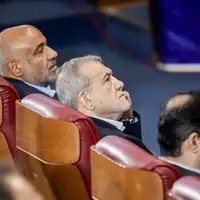
Qasem Saedi, conservative member of Iran's parliament
100%
Qasem Saedi, conservative member of Iran's parliament

The lawmaker explained that low incomes, high inflation, and the government's inability to provide essential commodities have made life difficult for Iranians who can no longer tolerate the shortages and high prices. "This is a situation our enemies in and out of the country have always wished for," Saedi stressed.

Meanwhile, Iran Monitor website quoted former lawmaker Mansour Haghighatpoor as saying that the current parliament (Majles) shares responsibility for the failure of Raisi's government as lawmakers laid a red carpet for Raisi following his election as President in 2021, although now they do not know what to do with the government they helped rise to power.

Haghighatpoor also criticized the Majles for failing to use its supervisory tools to correct the situation. The former lawmaker obviously ignored the fact that the Majles tried on several occasion to impeach Raisi's economic ministers but the its presidium shelved the calls thanks to Supreme Leader Ali Khamenei's support for the Raisi administration that many believe is the leader's creation.

The former lawmaker pointed out that Iran's economic problems are the outcome of an undeniable mismanagement. He charged that the Majles confirmed a group of ministers but cannot supervise or correct their behavior. Haghighatpoor characterized the parliament's performance in this regard as "treason." He said not doing anything about the ministers' failures and not protecting the country's national interests is tantamount to adding insult to injury.

This comes while Iranian political commentator Hassan Beheshtipoor said in an interview with Didban Iran that besides domestic political reasons, there are also international developments that indicate Iran is going to come under further economic pressures. Beheshtipoor added that the current situation in the energy market is not going to last long and at the same time, US Congress seems to be determined to prevent a nuclear agreement between Tehran and Washington that would inevitably bring about an improvement to Iran's ailing economy.

However, like most Iranian analysts, Beheshtipoor also said that the best option for Iran is to try to find a new solution to issues hampering an agreement with the United States, as Tehran is under immense economic pressures.


Most Viewed

Iran negotiators ordered to return after internal rift over Islamabad talks
1
EXCLUSIVE

Iran negotiators ordered to return after internal rift over Islamabad talks

2
ANALYSIS

US blockade enters murky phase as tankers spoof signals and buyers hesitate

3
ANALYSIS

Why the $100 billion Hormuz toll revenue is a myth

4

US tightens financial squeeze on Iran, warns banks over oil money flows

5
ANALYSIS

US blockade targets Iran oil boom amid regional disruption

Banner
Banner

Spotlight

  • Hardliners push Hormuz ‘red line’ as US blockade tests Iran’s leverage
    INSIGHT

    Hardliners push Hormuz ‘red line’ as US blockade tests Iran’s leverage

  • Ideology may be fading in Iran, but not in Kashmir's ‘Mini Iran'
    INSIGHT

    Ideology may be fading in Iran, but not in Kashmir's ‘Mini Iran'

  • War damage amounts to $3,000 per Iranian, with blockade set to add to losses
    INSIGHT

    War damage amounts to $3,000 per Iranian, with blockade set to add to losses

  • Why the $100 billion Hormuz toll revenue is a myth
    ANALYSIS

    Why the $100 billion Hormuz toll revenue is a myth

  • US blockade targets Iran oil boom amid regional disruption
    ANALYSIS

    US blockade targets Iran oil boom amid regional disruption

  • Iran's digital economy battered by prolonged blackout
    INSIGHT

    Iran's digital economy battered by prolonged blackout

•
•
•

More Stories

Economic Chaos Continues In Iran As Prices Rise And Currency Falls

May 11, 2022, 11:54 GMT+1
•
Maryam Sinaiee

Economic chaos continued in Iran on Wednesday, as the government raised more prices, and the rial declined to its lowest point against the US dollar in 2022.

In addition to bread, the cost of four other essential food items increased in Iran due to the removal of import subsidies, but Interior Minister Ahmad Vahidi said nothing else should be sold at higher prices.

In a televised interview aired at midnight Wednesday, Vahidi wearing Revolutionary Guard uniform, said foodstuff producers and retailers will not be permitted to increase the price of anything other than chicken, eggs, oil and dairy products. He also warned transportation companies and drivers that they will also not be allowed to increase the cost of their services. He added that government agencies in charge of market regulation will be invested with extraordinary powers to act against those who do not comply.

Iranian officials have frequently issued orders to producers and retailers to keep prices steady, but this has been more for public consumption than a serious measure to control the market.

The Iranian rial broke the 300,000 threshold to the dollar on Wednesday. The falling national currency is a serious warning to the government, as it would accelerate inflation by making imports more expensive. The government will be forced to print more money to discharge its financial obligations and this in turn will fuel even more inflation.

Last week the government announced that it would no longer allocate cheap dollars to flour imports which resulted in soaring bread prices, and economic chaos in the markets.

Admitting on Wednesday that the new measures may cause disruption in supply, Reza Fatemi-Amin, minister of industries, mines, and commerce tried to reassure Iranians that there was sufficient supply of all commodities and told them to avoid "panic-shopping".

President Ebrahim Raisi announced Monday that his government has begun the process of removing import subsidies for basic foods, animal feed, and medicine. He also confirmed that his government will pay cash assistanceto most Iranians as compensation, which will cost around $900 million a month.

The cash-strapped government decided to stop import subsidies for basic foodstuffs, animal feed and medicines late last year, which was costing the treasury up to $20 billion according to latest estimates by officials.

Many, including lawmakers, have opposed the hasty removal of the import subsidies, which they say is necessary nevertheless, and criticized the government for lack of a clear and cohesive plan to implement what it calls "a major economic surgery".

The $10-billion annual cash assistance that the Raisi government is planning to pay means printing more money and higher inflation. The country is already grappling with an annual inflation rate of above 40 percent and food prices have skyrocketed in the past twelve months by more than 60 percent.

The Food Safety Taskforce of the Ministry of Agriculture on Tuesday increased the prices of chicken, oil, eggs, and dairy products by almost 50 percent. It is not clear when the new prices will come into effect, but the expectation has already caused chaos in the market.

Despite Raisi's assurances that people will not be hurt by the new measures, many are worried that rising food prices will spread to other areas and raise the cost of services and housing even further.

Supreme Leader Ali Khamenei did not refer to the massive price increases in a speech to workers Monday, but he reaffirmed his support for the Raisi administration and its economic policies.

Iran Needs At Least 7 Million Tons Of Wheat Imports This Year

May 10, 2022, 23:59 GMT+1

Iran must import at least seven million tons of wheat to meet its domestic needs until March 2023, the chairman of Iran's Grain Union said on Tuesday, amid rising bread prices.

Iran imported a record eight million tons of wheat in the previous year to March 2022 due to the drought that had a huge toll on domestic production, Kaveh Zargaran said in a conference.

He added that the projected imports would be part of a total of 25 million tons of grains, soybean meal and oilseeds.

The forecast seems plausible as it is close to figures announced by other officials in the sector, such as the head of the Flour Producers Association who said earlier this month that the country needs to import at least 20 million tons of grain this year, including six to seven million tons of wheat. Mohammad-Reza Mortazavi admitted that the country has never been so dependent on imports.

Iran, which has in some years been self-sufficient in the production of the staple cereal, is among countries in the Middle East whose production is heavily dependent on the amount of rainfall and has been suffering from a dry spell as authorities have predicted even less precipitation this year.

The importers are now facing extra difficulties as Russia's invasion of Ukraine has disrupted Black Sea grain shipments, increasing the global prices.

In March, reports revealed that Iran has signed a deal with Russiato import 20 million tons of basic goods, including vegetable oil, wheat, barley and corn.

Former VP Says Iran's Foreign Policy Perpetuates Economic Crisis

May 10, 2022, 18:16 GMT+1
•
Iran International Newsroom

A former vice president, Mostafa Hashemi Taba, says the Islamic Republic's problematic foreign policy stands n the way of solving Iran's economic problems.

This foreign policy, he said, can in no way lead to any mitigation of economic hardships Iranians face, adding that the current policy of boosting cash subsidies can only temporarily silence anger and dissent.

Hashemi Taba further blamed the mixture of government control on the market and “revolutionary” policies for a major part of Iran's economic crisis.

President Ebrahim Raisi’s government decided to eliminate import subsidies for key imports of food and medicine that cost the government up to $20 billion annually, according to latest official estimates. As the subsidy was removed prices immediately jumped. To help the people cope, Raisi has promised to pay around $10 billion directly to the people as cash assistance.

The Iranian government has nicknamed its price rise policy as "setting the prices free," and started reducing subsidies for sensitive goods such as bread and flour. However, as parliament Speaker Mohammad Bagher Ghalibaf said recently, the price increases is will cover a wide range of household needs such as meat and cheese as well as other consumer goods and services.

In a televised interview Monday night, President Ebrahim Raisi deliberately did not talk about continuing to raise prices.

People withdrawing cash assistance government has deposited in their accounts.
100%
People withdrawing cash assistance government has deposited in their accounts.

Hashemi Taba whose long career included many executive posts including industry minister and vice president (1994-2001), warned in his interview with Khabar Online on Tuesday, that the continuation of the government’s policy will bring about higher inflation. He suggested that the country needs to sort out its relations with others, but Iran is following “revolutionary policies” that are not consistent with the rest of the world, Hashemi Taba said.

He added that pressures are being exerted on Iran because of its “revolutionary approaches.” On the other hand, "setting prices free" should follow a certain economic order which is non-existent. Hashemi Taba further suggested that the Islamic Republic should define its relations with the world and decide how it is going to survive before making decisions about raising prices.

He went on to say that liberalizing prices could be a good idea but not under the current economic regime. "You cannot control prices and at the same time set them free," he said.

Hashemi Taba warned that "Iran has long-standing economic problems that cannot be solved with temporary solutions…and our policies are inconsistent with our foreign policy.

He added that increasing cash handouts will inevitably lead to further inflation. The rate of exchange for the US dollar will increase within a day or two. [In fact, the dollar climbed by 5,000 rials in the morning after Raisi promised to boost cash handouts.] He also warned that a 5 percent shortage of goods in the market will lead to a 50 percent rise in prices.

Meanwhile, several Iranian politicians and lawmakers on Tuesday criticized the government for the way it has increased the prices. Former lawmaker Mansoor Haghighatpoor was one of those critics. He told Nameh News website that the government's performance has made life harder for Iranians even compared to the time when Iran was at war with Iraq in the 1980s. Haghighatpoor made it clear that "The decision was right, but the government implemented it in the worst possible way, making it hard for ordinary Iranians to obtain bread for their daily consumption."

Iran To Pay Cash Compensation To Most Citizens As Prices Rise

May 10, 2022, 14:28 GMT+1
•
Maryam Sinaiee

President Ebrahim Raisi has confirmed that the price of bread will rise drastically but says his government will pay cash to most Iranians as compensation.

Until further notice, Raisi said in a televised interview Monday evening, the government will pay monthly around 4 million rials (about $15) to 30 percent of the population at the lowest-income groups, and around 3 million to 60 percent of the population. The 10 percent at the highest income level will receive no cash handouts.

This means the government must spend the equivalent of $850-900 million a month to placate an impoverished population that has already been largely deprived of many daily food staples, such as meat, fruit and dairy products. Food prices have skyrocketed in the past year, by more than 60 percent.

The $10-billion annual cash assistance means the government will print more money and create more inflation.

Iranian pundits and politicians have been warning of possible unrest as bread and other food prices suddenly jumped last week when the government removed import subsidies costing up to $20 billion a year.

The government claims it has made elaborate plans to ensure traditional flatbreads cost the same as before although bread at the subsidized rate will be rationed. Raisi said the government will issue smart bread ration cards within two to three months.

For the first three months the cash handout will go to people’s accounts that they can spend for shopping. Later the payments will go to the smart cards to be spent only for bread.

The massive jump in the price of flour after removal of its subsidies will affect the price of a wide range of foodstuffs including bread, pasta, biscuits, and cakes but the cash handout that the government will pay will not compensate for anything other than traditional flatbreads. The price of western-style baguettes and buns which are widely consumed both at home and at restaurants for instance, has already sky-rocketed by around ten-fold.

Since last week, Iranian security forces have been on high alert in anticipation of possible bread protests and riots. Authorities resorted to shutting down the internet in the southwestern province of Khuzestan where some protests were first reported on Friday.

Before the 1979 revolution, the government subsidized fuel and other necessities, but with high oil exports and better financial management it balanced the books. The Islamic Republic continued and expanded subsidies relying on oil income, which wildly fluctuated due to the war with Iraq in 1980s and later international and US sanctions.

The head of the Planning and Budget Organization said Monday that fuel subsidies cost the government more than $100 billion annually, which is far more than the country’s oil export revenues..

Iran began paying cash handouts to compensate for removal of energy and other subsidies in December 2010 based on legislation proposed by President Mahmoud Ahmadinejad's government. That payment is still made but its purchasing power has declined as the national currency has lost most of its value.

Most Iranians at the time, around 68.5 million out of 75 million, signed up to benefit from the billions of dollars of handouts.

Payment of cash handouts at first brought popularity to Ahmadinejad, particularly among lower-income groups, but his government's failure in controlling inflation and ever-increasing cost of living dissipated the initial euphoria among the lower-income classes.

In a little over three years the depreciation of the national currency pushed down the purchasing power of the 450,000 rial cash handout per person by over 40 percent. The amount of cash handouts has remained the same since the introduction of the plan but the value of the national currency has hugely dropped.

In 2010, the average monthly shopping basket of urban families cost 700,000 rials but the same money buys just a few eggs now.

Venezuela Begins Imports Of Iranian Heavy Crude For Refining

May 10, 2022, 10:41 GMT+1

Venezuela is expanding crude imports from Iran to feed its refineriesas as both countries struggle with United States sanctions, Reuters reported Monday

Documents cited by the agency suggested at least 200,000 barrels of Iranian crude arrived in mid-April at the Cardon refinery, Venezuela's second largest, which processes 310,000 barrels per day (bpd), with another 400,000 barrels discharging this week at the country's Jose port from the tanker (VLCC) Dino I.

Fars News Agency recently reported that under a new agreement reached under Iranian President Ebrahim Raisi, Iran had exported to Venezuela 2 million barrels of condensate – a light liquid produced during gas extraction – in seven months, expanding trade begun under the previous administration in Tehran. Venezuela mixes condensate with its own heavy crude to produce a suitable feed for refining.

Iran in return is offering through National Iranian Oil Company (NIOC) a way for Venezuela to dilute and export its heavy crude, Reuters reported. The Dino I is scheduled to sail later this month with Venezuela oil for NIOC’s Naftiran Intertrade Company. Meanwhile the Venezuela-owned Maximo Gorki will discharge 2 million barrels of Iranian condensate at the port, while the Iran-flagged Derya waits in Venezuelan waters with another cargo.